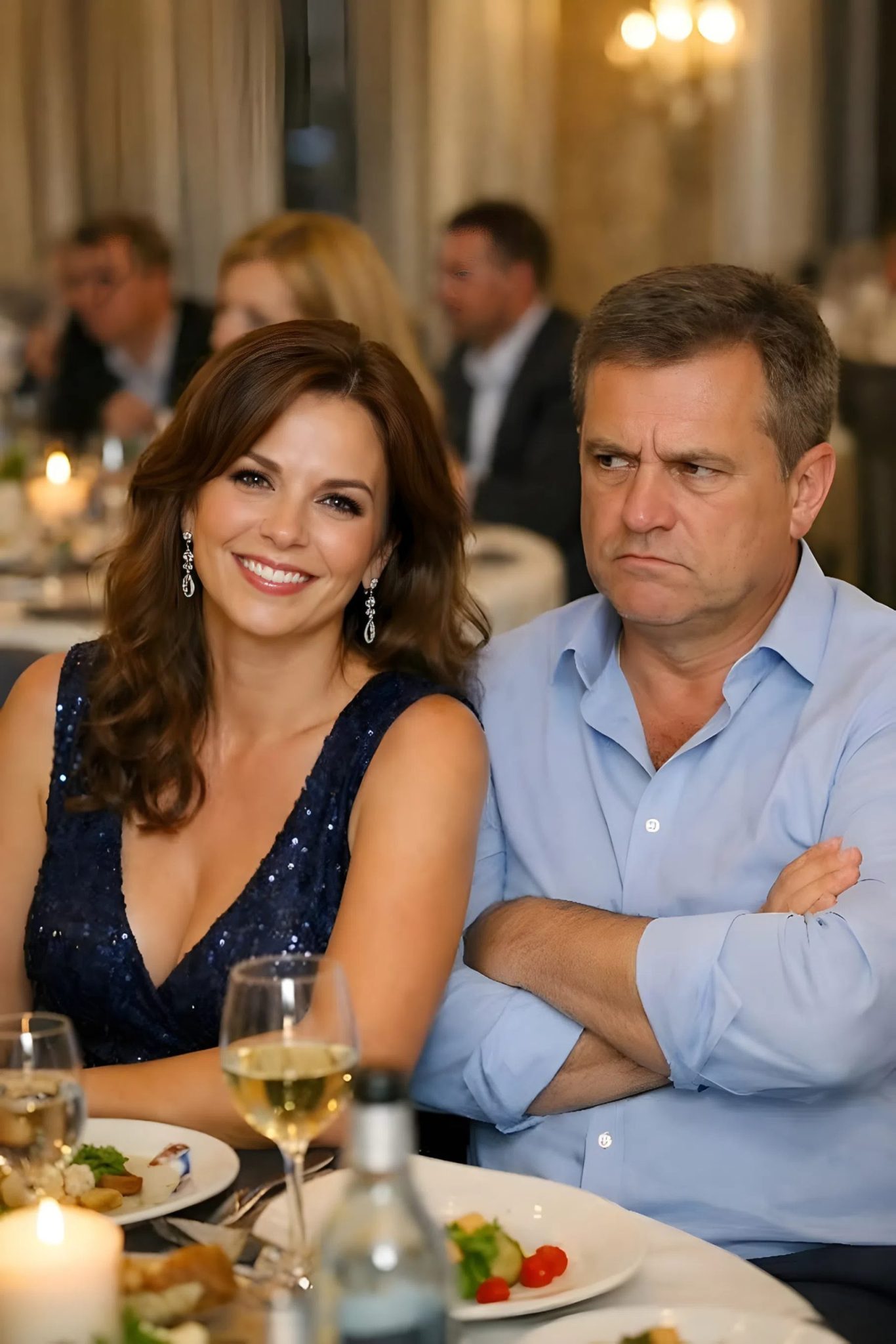
Denech didn’t even look up from his phone when he said those words.
‘I’m ashamed to take you to the banquet,’ he said coldly. ‘There will be people there. Normal people.’
Nora stood by the fridge, holding a carton of milk. For a moment, she thought she had misheard him. Twelve years of marriage. Two children. Joint loans, morning chores, illnesses, night-time conversations. And now — shame.
‘I’ll wear the black dress,’ she said quietly. ‘The one you bought me.’
‘It’s not about the dress,’ he finally looked at her. “It’s about you. The way you look. Your hair, your face… everything seems faceless. Victor and his wife will be there. She’s a stylist. And you… you know.
“Then I won’t go.
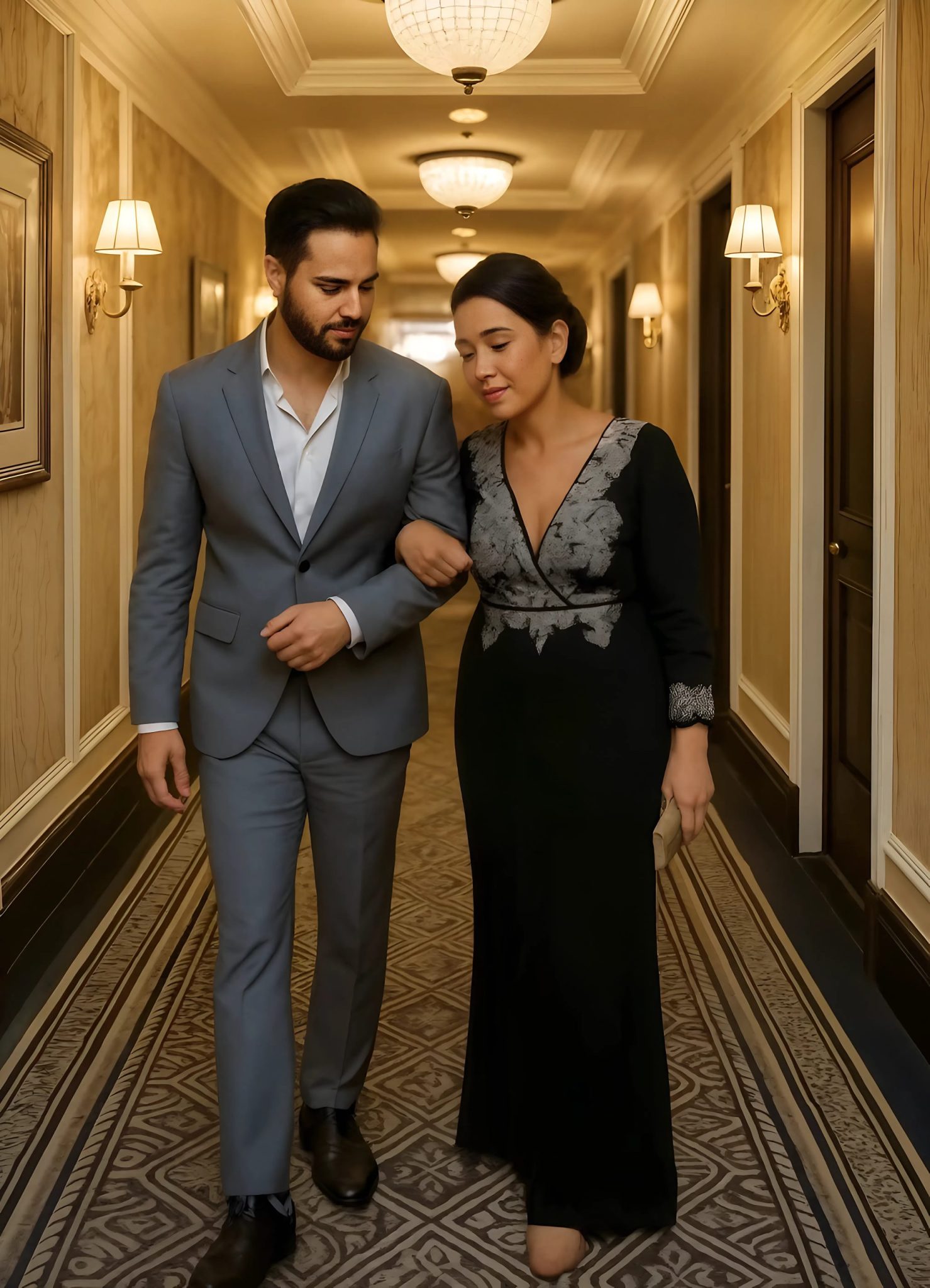
“Smart decision. I’ll say you have a fever. No one will ask any questions.
He disappeared into the bathroom, leaving Nora alone in the kitchen. She could hear the quiet breathing of her children from the nursery. Mark was ten, Lille was eight. Her whole life was here, in this flat, in the rhythm of school meetings and bills. And now her own husband was ashamed of her.
The next day, she sat in the salon of Erika, her old friend, a straightforward hairdresser.
‘He’s completely lost his mind,’ Erika said indignantly. ‘Ashamed of his own wife? What has he become?’
‘Warehouse manager,’ Nora replied emotionlessly. ‘He got promoted.’
‘And suddenly you’re not good enough for him?’ Erica clenched her jaw. ‘Do you remember what you did before you had children?’
‘I taught…’
“That’s not what I mean. You made jewellery. From stones. From beads.
I still have that necklace with blue stones. Everyone asks where it’s from.
Nora remembered. Aventurine. Long evenings when she was still seen. When Dénes looked at her with interest, not contempt.
‘That was a long time ago.’
‘A long time ago doesn’t mean never,’ Erica leaned closer. ‘When’s the banquet?’
‘Saturday.’
‘Great. Come to my place tomorrow. Hair, makeup. We’ll call Olivia — she has amazing dresses. And jewellery… you’ll make it yourself.’
‘Erika, he said that…’
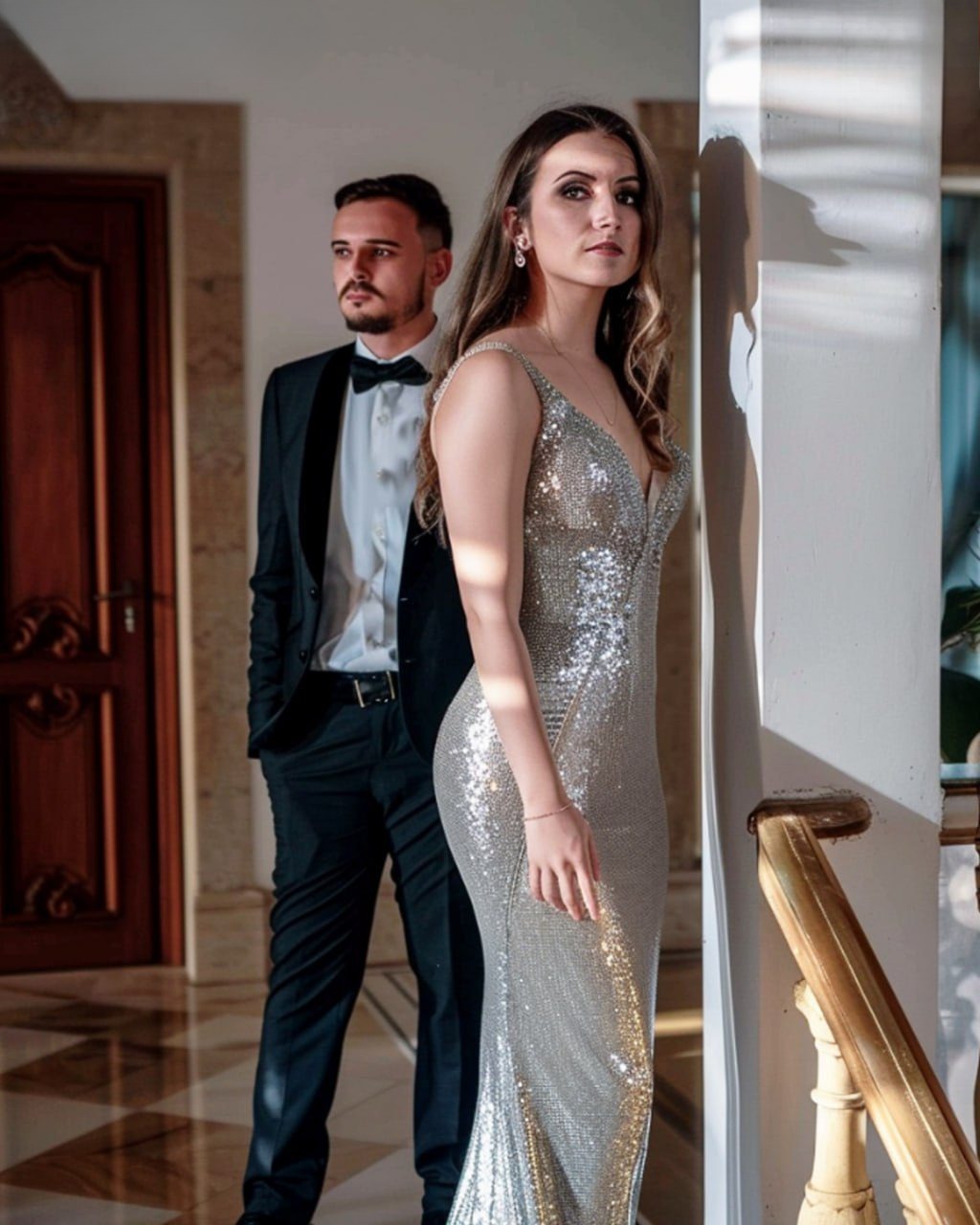
‘I don’t care what he said. You’re going. And I guarantee one thing — he won’t forget it.’
Olivia brought a ripe plum-coloured dress. It was long, with open shoulders, gently emphasising the lines of the figure. They spent an hour adjusting it, pinning it, shaping the silhouette.
‘This colour needs special jewellery,’ Olivia decided. ‘No silver or gold.’
Nora took out an old box. At the bottom, wrapped in soft fabric, lay a set: a necklace and earrings with blue aventurine. Her own handiwork. Eight years ago. For an occasion that never came.
‘This is… incredible,’ Olivia whispered. ‘You made this?’
‘Yes.’
Erika styled her hair in soft waves. The makeup was subtle, but it emphasised her eyes. When Nora put on the dress and fastened the jewellery, the stones felt cold and heavy on her neck, as if reminding her of who she really was.
‘Look at yourself,’ said Olivia, leading her to the mirror.
Nora looked. And she didn’t see the woman who had been cooking and cleaning for twelve years.
She saw herself. The woman she once was. And the woman she could still become.
The restaurant by the river was bathed in light. Suits, evening dresses, soft music. Nora deliberately arrived late.

The conversations fell silent for a moment.
Denezh was standing at the bar, laughing. When he saw her, his face froze. Nora walked past him silently and sat down at a table at the far end of the room. Her back was straight, she was calm, her hands clasped on her lap.
‘Excuse me, is this seat free?’
A man of about forty-five was standing nearby. He wore a grey suit and had an intelligent look in his eyes.
‘Of course,’ replied Nora.
The conversation flowed easily. The man’s name was András. It turned out that he ran a gallery of decorative and applied arts. His gaze lingered on Nora’s necklace.
‘Is that aventurine?’ he asked. ‘You don’t often see it in this form.’
‘I made it myself.’
‘Really?’ He smiled broadly. ‘You should show your work to a wider audience.’
A few metres away, Dénes watched the scene with growing unease. It was the first time he had seen others look at Nora with interest. With admiration.
After the banquet, he tried to stop her.
‘Nora… can we talk?’

She looked at him calmly.
‘We’ve been talking for twelve years. Now it’s my turn to think about myself.’
A few months later, Nora was teaching jewellery-making classes in a small, bright workshop. Her work appeared in galleries. András kept his word.
Dénes? He realised what he had lost — but it was too late. They divorced quietly, without shouting. For the sake of the children.
And Nora? Every morning she looked in the mirror and saw a woman she was not ashamed of. Never again.