When I went back to Sarah, she let me inside.
My father had not been secretly supporting a mistress. He had been making yearly payments to the woman whose life he believed his blind trust had ruined.
When I went back to Sarah, she let me inside.
I told her what I had learned, about the store, about Tom, about the papers my father signed without understanding. She sat with both hands wrapped around a cold teacup and said nothing for so long that I started to think I had said it wrong.
“He always thought the worst thing he did was trust Tom,” she said. “It wasn’t. The worst thing was believing he could pay me back forever.”
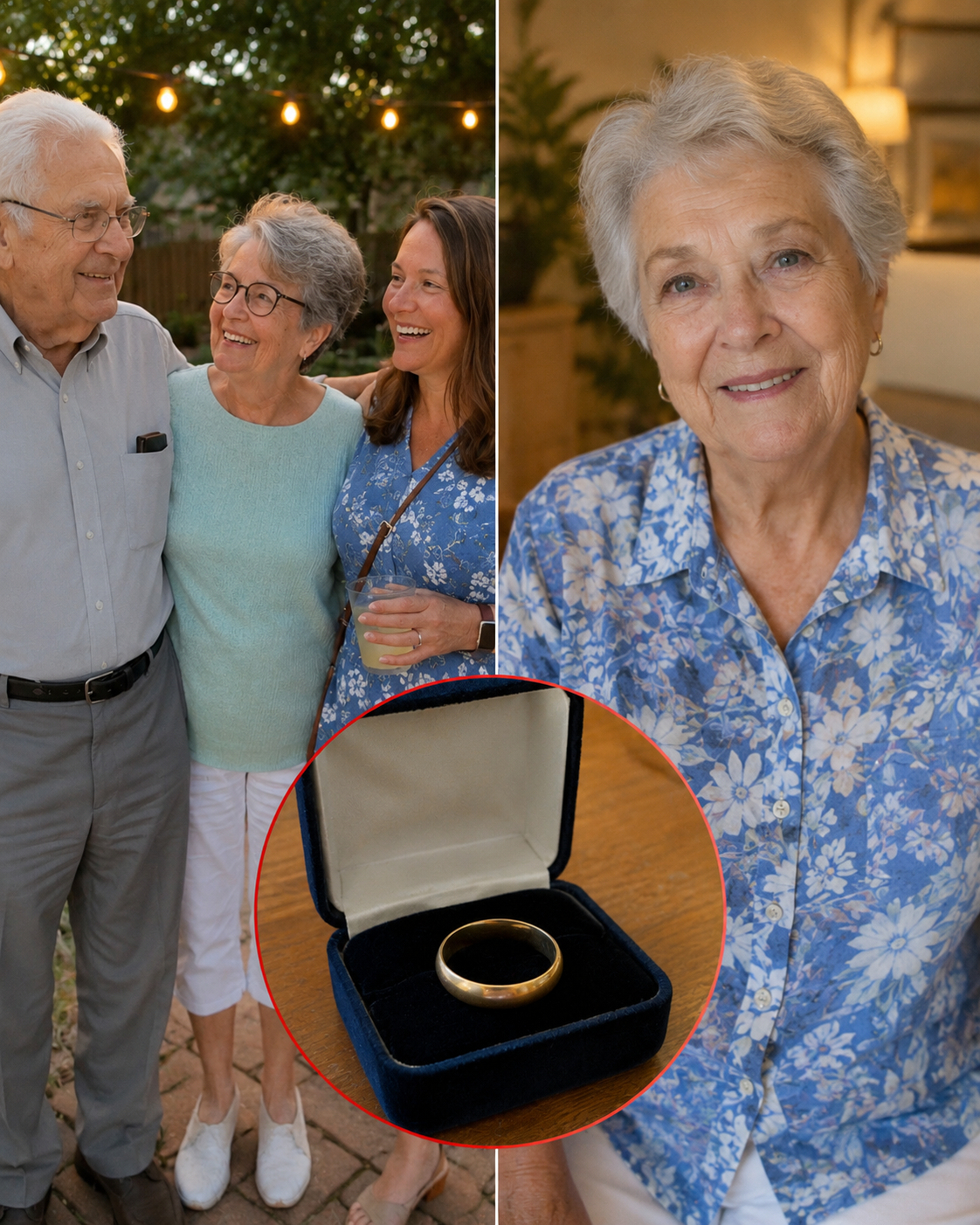
On the night the store closed, she had taken off her wedding ring.
That was when she finally told me about the ring.
On the night the store closed, she had taken off her wedding ring, handed it to my father, and said, “Keep it until you can give me back the life he took from me.”
“I said it because I wanted someone left in that room to bleed with me,” she said. “By morning, I wished I had taken it back. By then, pride had already sat down between us.”
“He kept the words literally,” she said.
Then she told me the part my father had buried deepest.
I asked why she had accepted the money all those years.
“Because I needed it at first,” she said. “Then I was too proud to admit I had built my life around being owed.”
She said gratitude and anger had tangled together until she could not tell one from the other.
“Some years I cashed the check and hated him,” she said. “Some years I hated myself more. Every year I told myself I would send the next check back. Every year I found a reason not to.”
Then she told me the part my father had buried deepest.
When I found Tom in a senior apartment three towns over, I didn’t go there for a showdown.
Tom had come back once, around fifteen years after the store collapsed. He had gone to my father first, not to Sarah. He wanted money, and he said he wanted to come home. My father gave him cash but did not tell Sarah he had returned.
“He thought he was protecting me from another disappointment,” Sarah said. “I spent twenty years believing Tom never looked back.”
That was the first time I felt angry with my father instead of sorry for him.
He had spent four decades paying for damage and still managed to leave one silence intact because it suited his idea of mercy.
When I found Tom in a senior apartment three towns over, I didn’t go there for a showdown.
I told him Sarah deserved to hear that in person.
He was thin, courteous, and smaller than the man I had built in my head. The man who could once sell a shovel during a drought now asked whether I wanted tap water because he did not keep coffee anymore.
He admitted more than I expected, but not everything at once.
Failure had made him feel too small to come home, he said.
I told him Sarah deserved to hear that in person.
He refused twice before he agreed.
“She had survived worse than discomfort. You could do the same.”
The first time, he said she was better off.
The second, he said he was too old to survive being hated properly.
I Simply responded, “She had survived worse than discomfort. You could do the same.”
Two days later I drove Sarah to his building with the ring in my pocket.
When Tom walked into the community room and saw her, all the air changed.
I set the ring on the table between them and sat back.
Tom said failure had made him small, and being seen while small had felt unbearable.
Tom looked at the ring as if it were a witness.
Sarah asked him why he came back and then left again.
Tom said failure had made him small, and being seen while small had felt unbearable. He said my father had looked at him with pity and money in the same hand, and he had mistaken that for permission to disappear.
Sarah listened without interrupting.
Then she said, “My life was shaped by two men. One ran from shame. One tried to pay for it forever. Neither asked me what I wanted.”
The laundromat owner agreed to let us hang the restored sign on the side wall under the awning.
Sarah touched the ring but did not put it on.
Then she turned to me, not to either of them, and said, “Stop the payments.”
I asked, “What do you want to do with the ring?”
She thought for a long time.
“Sell it,” she said. “Use the money to restore the old storefront sign. Hang it where the old bolt marks still show. Not to honor the business. To close it.”
On the drive home I stopped by my mother’s house.
The laundromat owner agreed to let us hang the restored sign on the side wall under the awning.
A month later, the old hardware name was bright again for the first time in decades.
Sarah stood beside me with her hands in her coat pockets while Tom watched from a folding chair the barber loaned us.
No speeches were made.
The sign went up.
On the drive home I stopped by my mother’s house.