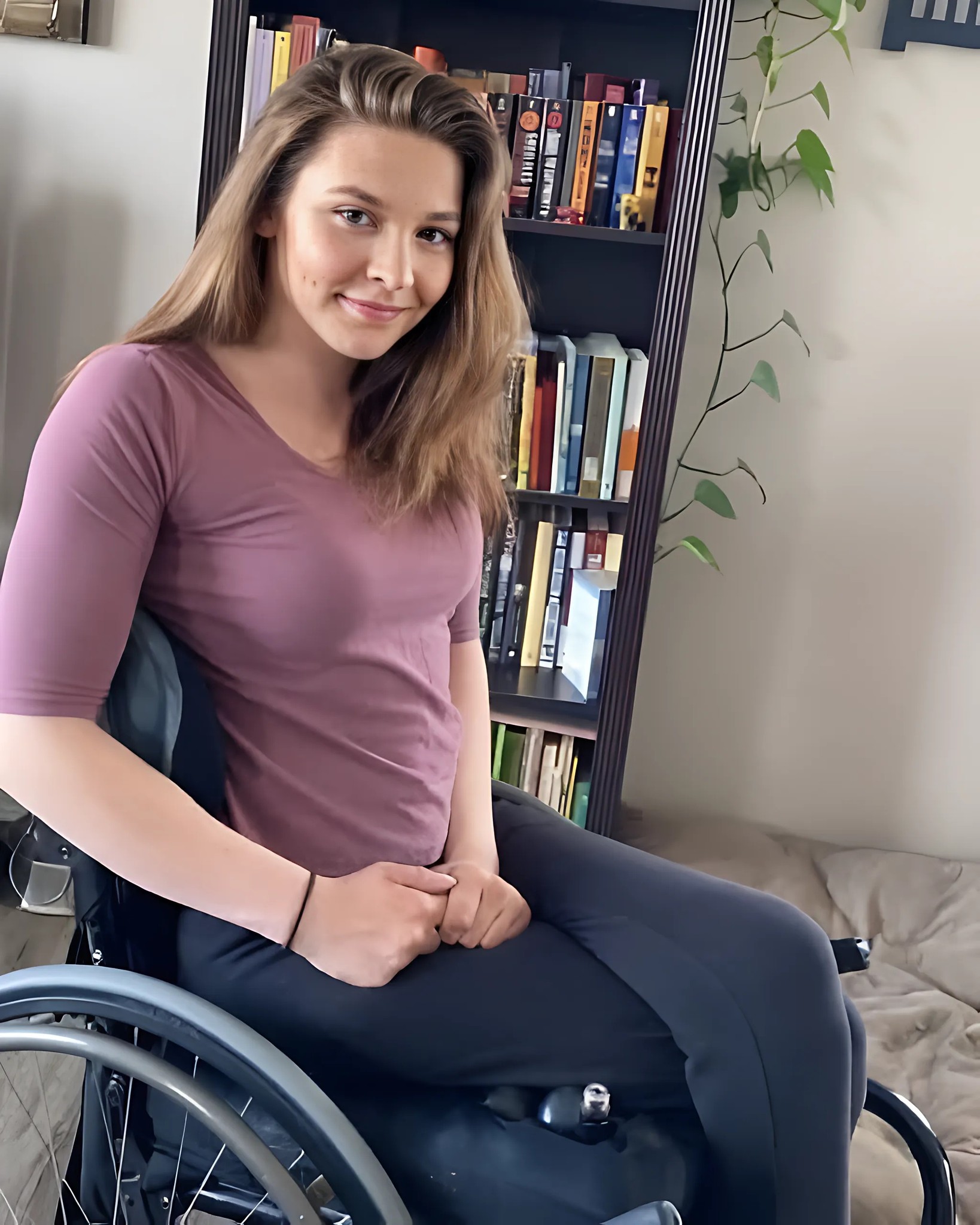
When I was first told that I would never walk again, I didn’t cry.
I just nodded, as if I’d heard a weather forecast.
Sunny, with a chance of paralysis.
I didn’t need pity. I didn’t need speeches about how “strong” I was.
I just needed space to feel that I’d lost something I couldn’t even name.
So, when the nurse said I’d need part-time help, I refused flat-out.
“I can manage,” I said.
But I couldn’t.
The kitchen became a battlefield, showers were impossible, and dropped spoons weren’t even worth mentioning.
That’s when Saara arrived.
She wasn’t what I expected. Younger than I’d imagined, and not particularly sweet.
She didn’t talk to me like I was fragile.
She simply asked, “Where’s your coffee?” and started making a cup, like she’d done it a hundred times before.
At first, I kept my distance. No personal questions, no chatting.
She helped with the basics and left.
But over time, I found myself laughing at her stupid jokes.
I started setting aside little things I thought she might like — books from my shelf, articles she might want to read.
Then one day I broke down over something ridiculous.
I dropped a bowl and couldn’t reach it.
I just sat there, furious at the whole world.
Saara didn’t rush to fix it.
She sat down on the floor beside me and said,
“It’s not really about the bowl, is it?”
And something broke open.
I didn’t need a caretaker. I didn’t need help.
But she made it feel like something else.
Like I hadn’t lost everything.
Maybe connection didn’t have to feel like defeat.
And then yesterday, she told me she was thinking of moving.
I didn’t know how to react.

Saara sat across from me in the living room, hands wrapped around a mug of tea.
Her dark hair was pulled back in its usual bun, and she wore that oversized sweater she always did.
She looked… serious.
That wasn’t like her.
Saara was the kind of person who could turn anything into a joke —
a spilled glass of water into an Olympic event, a burnt piece of toast into a cooking disaster worthy of its own TikTok channel.
But not today.
“I got offered a job,” she said finally, her voice quiet but steady.
“At a clinic. Full-time. More structure. They’re offering benefits, a retirement plan — the whole nine yards.”
“That sounds amazing,” I said, even as my throat tightened.
“You deserve it.”
She nodded, but her eyes flicked toward me, searching.
“It’s not here,” she added gently.
“It’s three hours away.”
The words hung between us like storm clouds.
Three hours.
Not another country, but far enough that this — whatever this was — would no longer exist.
“I see,” I said after a moment, forcing a smile.
“Well, you can’t pass something like that up. You’ve worked hard for this.”
She tilted her head slightly, studying me.
“Are you angry?”
“Angry? Why would I be angry?”
I laughed, but even I could hear how hollow it sounded.
“It’s good news, Saara. Really good news. You should take it.”
But inside, it felt like someone had hit me in the gut.
I wanted to scream, to beg her to stay, to tell her how much she meant —
not just as a helper, but as…
as someone who mattered.
Someone who had become part of my life, and I hadn’t even realized it until now.
Instead, I said nothing, picking at the corner of my blanket.
In the days that followed, Saara tried to bring it up again, but I avoided the topic.
I told her I understood, that I was happy for her, that I’d figure things out.
Maybe some of that was true.
But mostly, I was scared.
Scared of being alone again.
Scared of going back to the way things were before she came —
before someone cared enough to sit on the floor with me while I cried over a broken bowl.
One afternoon, while Saara was helping me sort through old photos (a task I’d avoided for months),
she paused and picked up a hiking photo of mine.
I remembered that day clearly — it was just before the accident.
My friends and I had climbed a mountain, exhausted but exhilarated, and snapped a selfie against a backdrop of endless trees and sky.
“You look so happy,” Saara said, handing me the photo.
“I was,” I admitted, tracing the edges of the frame.
“I used to love adventures. Now I’m lucky if I make it to the mailbox without needing a nap.”

Her expression softened.
“Do you miss it?”
“Of course I do,” I snapped, then immediately regretted it.
“Sorry. Just… yeah, I miss it. But it doesn’t matter, does it? I can’t go back.”
“No,” she agreed gently.
“But maybe you can move forward.”
“What do you mean?”
She leaned forward, resting her elbows on her knees.
“There are adaptive sports programs nearby. Have you ever looked into them?”
I stared at her.
“Adaptive sports? For people like me?”
“For anyone who wants to try,” she corrected.
“They have wheelchair basketball, handcycling, even climbing. I checked it out last week — thought it might interest you.”
My heart twisted.
“Why would you do that?”
“Because I care about you,” she said simply.
“And because I think you’re stronger than you realize.”