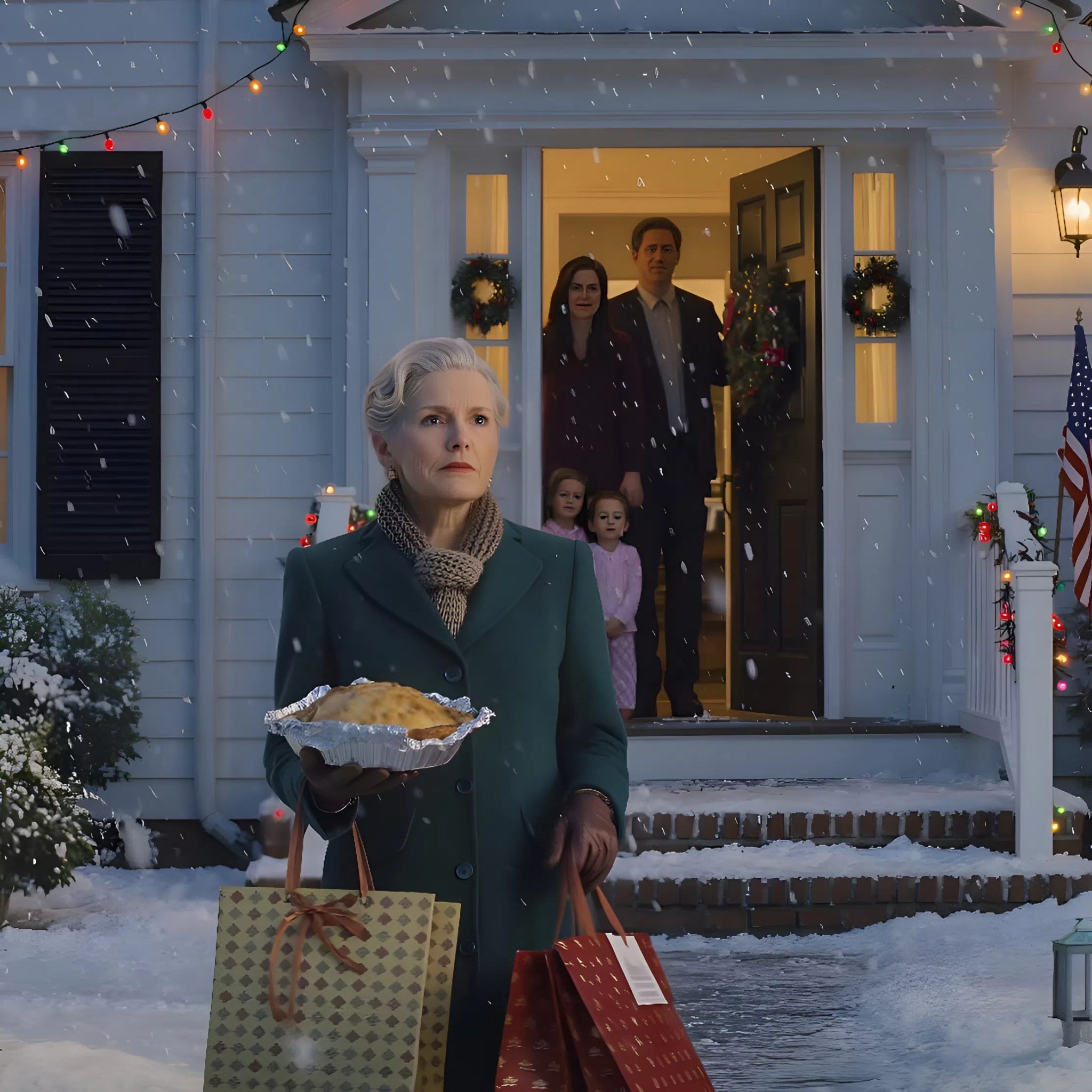
‘I’m listening.’
‘I need to apologise. I was awful to you, to be honest. I’ve been thinking about everything — Christmas, how we behaved towards each other — and I’m ashamed.’
She paused, and I heard a sob.
‘David and I are under a lot of stress. His job, the children, financial problems. I took it out on you, and it wasn’t fair. You always tried to help us.’
Financial problems.
Interesting.
Rita mentioned that they had been trying to refinance the house for several months, presumably to access the cash they needed. They couldn’t do that without my signature.
‘What do you want, Jennifer?’
‘I want to fix things. I want the children to know their grandmother. I want — I want us to be a family again. Can we try? Can you come over for dinner this Friday? The children would be so happy.’

It was a good performance. I’ll give her credit for that.
‘And in exchange,’ I asked calmly.
‘In return?’ Her voice faltered slightly.
‘Jennifer, let’s not play games. You want something. What is it?’
Pause. Then her voice became sweet again, but with a harshness underneath.
— We need to refinance the house, Margaret. The legal complications with you on the deed are causing problems. If you would just sign the papers to remove yourself, we would compensate you fairly, and then we could all move on. A fresh start.
Mhm.
There it is.
‘Margaret, please. For the family. For Emma and Jake. Don’t you want to see them?’
‘Of course I want to see them,’ I said, ‘but not like this. Not as a deal where I sign away my legal rights in exchange for crumbs of access to my grandchildren.’
‘You’re being illogical.’
‘No, Jennifer. I’m being clear. You want me out of this deed because it gives me power you don’t like. Well, that power is the only thing protecting me from being completely disowned. So I’m not signing anything.’
‘You’re making a mistake,’ she said.
Now the warmth was completely gone.

‘You don’t know what David and I are capable of.’
‘Actually,’ I said, ‘I’m beginning to understand.’
She hung up.
Three days later, a completely different approach.
An envelope was delivered to my house, handed to me personally.
Inside was a letter written in Emma’s childish handwriting.
“Dear Grandma, I miss you so much. Mummy says you’re ill and that’s why you can’t come to visit. Are you all right? I made you a drawing. I hope you get better soon. I love you, Emma.
Attached to the letter was a coloured pencil drawing of a little girl and an elderly man holding hands with a rainbow above their heads.
I stood in the kitchen with that letter and felt my resolve weakening.
They had used my granddaughter—used her innocence as a weapon.
I called Rita immediately.
‘They gave her a false narrative to manipulate me,’ I said, my voice shaking. ‘They told an eight-year-old girl that I was too sick to come. Now she’s worried about me, and they’re using her concern as emotional pressure.’
‘This could be useful for our case,’ Rita said grimly. ‘It will show parental alienation — lying to children about another family member. Document it. Save the letter.’
I wrote a reply to Emma. A carefully worded letter, which Rita checked first — nothing that could be used against me — telling her that I loved her, that I wasn’t ill, and that I hoped to see her soon.
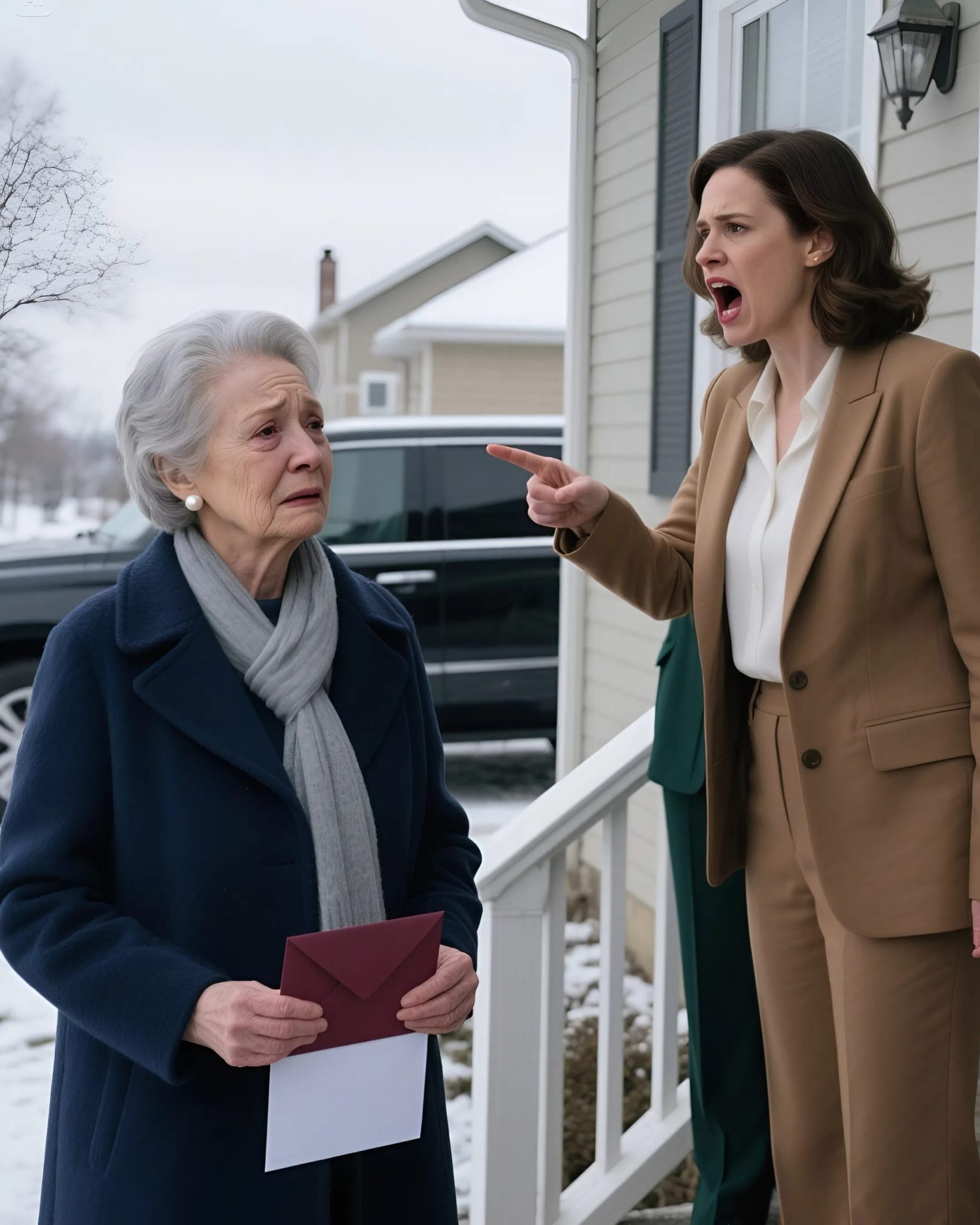
I sent it to the school, addressed to Emma’s teacher, Miss Chen, asking if she could give it to Emma personally. She agreed and later sent me the text.
Emma was so happy that she asked if she could write you a reply. But Jennifer found out. Miss Chen was reprimanded by the headmaster for interfering in a family dispute.
The attempts at manipulation continued.
David’s friends started calling me, people I had known for years, saying that I should be reasonable, that I was pushing David into depression, that the family should forgive and move on.
But I found my own support system.
My church group supported me. Pastor Williams, who had known me for thirty years, offered to write a character reference letter for the court. The women from my book club, from my volunteer work at the hospital, from my neighbourhood—they all took the initiative.
‘We’ve seen you with those children,’ my neighbour Dorothy said firmly. ‘We know what kind of grandmother you are. Don’t let them make you think the problem is you.’
I went to a support group for estranged grandmothers and found twelve other people fighting similar battles. We shared strategies, lawyer recommendations, and supported each other.
I wasn’t alone.
And with each passing day, my resolve grew stronger, like steel.
They came on Thursday evening without warning.
I was sitting with a book in my living room when I heard a car pull up. Through the window, I saw David and Jennifer walking down the path together — a united front, full of determination.
I opened the door before they had a chance to knock.