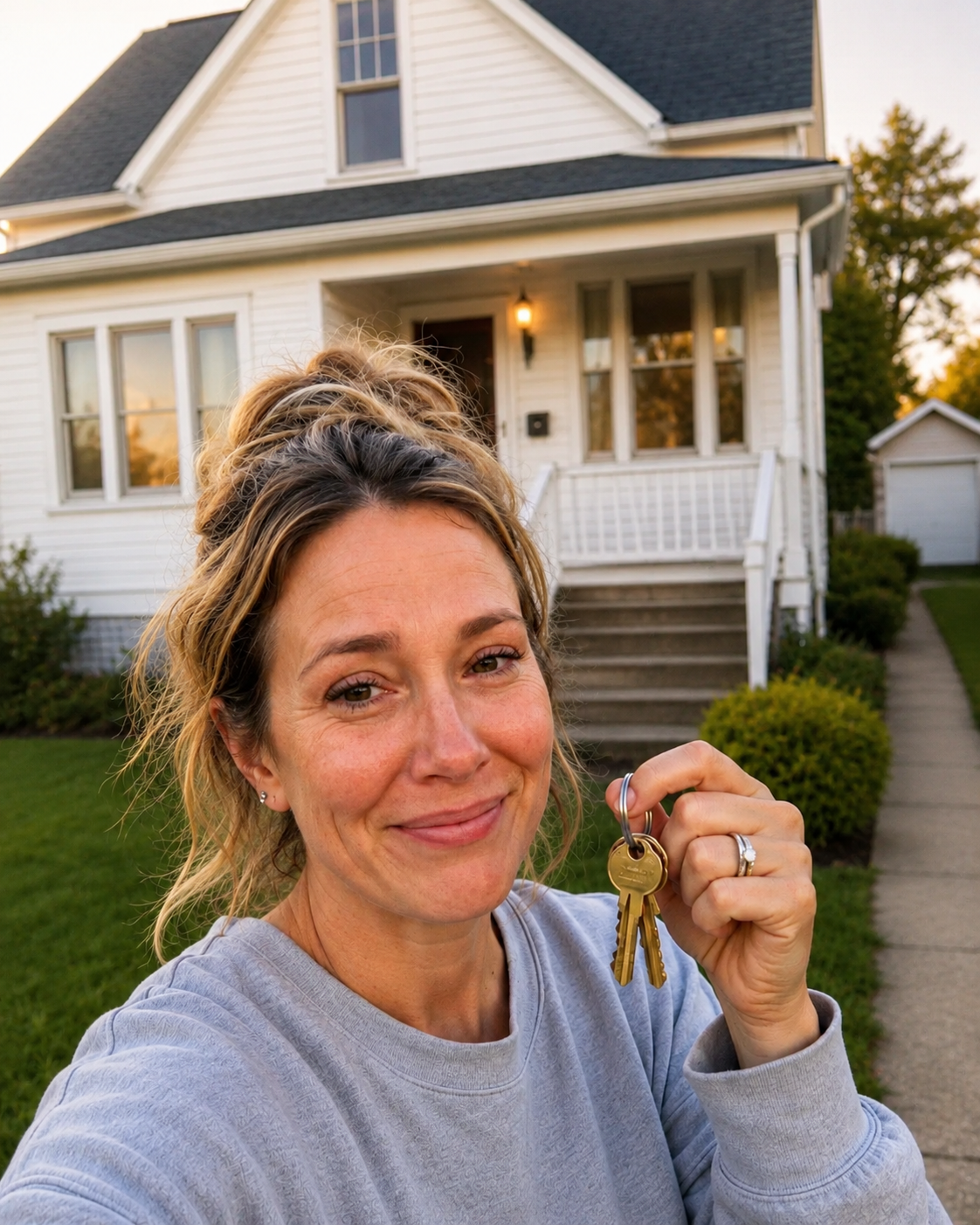
The moment we hung up, I stood motionless while the old house groaned around me.
Then I went into the garage.
Found an old hammer.
And came back.
I wasn’t sixteen anymore.
I was done living with unanswered questions.
The first strike hurt my wrists.
The second cracked the drywall.
The fifth opened a hole large enough to shine a flashlight through.
I expected something terrifying.
Something sinister.
Instead, what I found was almost disappointingly ordinary.
The hidden room was tiny.
Barely large enough for a folding table.
There was a metal filing cabinet.
Several boxes.
A single lamp.
Dust covered everything.
I widened the opening and climbed inside.
My flashlight landed on labels written in my father’s handwriting.
Mortgage.
Bills.
Tom.
A knot formed in my stomach.
I opened the first box.
Inside were letters.
Dozens of them.
Most written by Uncle Tom.
“Drew, I swear this is the last time.”
“Drew, I have nowhere else to go.”
“Drew, Mom would want us to help each other.”
Underneath the letters were copies of checks.
Loan agreements.
Payment schedules.
Handwritten notes from my father.
Tom missed another payment.
Mortgage due Friday.
Catherine says enough is enough.
Then I found an envelope.
My name was written across the front.
For Astrid. When she is old enough to understand.
My hands trembled.
For twenty years, my life had rested on one certainty:
Dad lost our house because he was irresponsible.
Because he failed.
Because he chose not to care.
That belief hurt.
But it was simple.
And simple truths feel safe.
Now that truth was beginning to collapse.
I called Mom.
“Come here,” I said.
“Astrid…”
“Now.”
She arrived less than an hour later wearing slippers and an oversized cardigan.
The moment she saw the broken wall, she covered her mouth.
Exactly the same way she had in the driveway twenty years earlier.
I held up one of the letters.
“Tell me these aren’t what I think they are.”
Tears immediately filled her eyes.
“Your father never wanted you children involved.”
I laughed bitterly.
“I became involved the day strangers carried my bed to the curb.”
“Astrid, please…”
“No.”
She slowly sat on the floor.
For a moment she looked impossibly small.
Then she picked up one of Tom’s letters.
“Your uncle was drowning,” she whispered.
“Bad decisions. Debt. Pride. Every time he promised things would improve.”
“And Dad kept saving him?”
“He believed every crisis would be the last.”
“And when it wasn’t?”
“He thought he could fix everything before you and Asher noticed.”
I laughed.
A harsh, painful sound.
“We noticed when we moved above a laundromat.”
She lowered her eyes.
That told me everything.
“You let me hate him,” I said.
“For twenty years.”
She cried harder.
“I thought protecting the family mattered.”
“No.”
I shook my head.
“You taught us that silence protects families. It doesn’t. It only protects the people who should be held accountable.”
The next morning I called Asher.
He arrived carrying coffee and donuts.
When he stepped inside the hidden room, he stopped cold.
“No way.”
I handed him one of Dad’s letters.
He began reading.
By the end, he had slid to the floor.
His voice cracked as he read aloud:
“Tom, if you cannot repay me this month, I have to stop. Asher’s belongings are gone. Astrid barely speaks to me anymore. I cannot continue saving my brother while failing my children.”
Asher lowered the paper.
“My trophies…”
I opened another box.
Inside were three dusty trophies.
His trophies.
Perfectly preserved.
“I thought they were thrown away,” he whispered.
“Dad must have saved them before we left.”
Asher stared around the room.
Then his expression hardened.
“Mom knew?”
I nodded.
“And Uncle Tom spent years showing up to holidays pretending nothing happened?”
“Yes.”
He looked at me.
“What are you going to do?”
I didn’t hesitate.
“Invite everyone over.”
The following evening, relatives filled the kitchen.
Folding chairs.
Takeout containers.
Forced smiles.
The atmosphere people create when they know something is wrong but hope dessert arrives first.
Then Uncle Tom walked in carrying supermarket flowers.
He smiled at me.
“Look at you. Buying back the old place. Your father would’ve been proud.”
I smiled back.
Then waited.
Later, while everyone sat around the table, he raised a plastic cup.
“To Astrid,” he announced.
“The one who finally fixed what Drew couldn’t.”
I stood.
Walked into the hidden room.
Returned carrying the letters.
Tom’s smile vanished.
“What’s that?”
“The truth.”
“Astrid,” he said carefully, “old letters don’t tell the whole story.”
“No.”
I placed the stack on the table.
“But twenty-seven of them tell enough.”