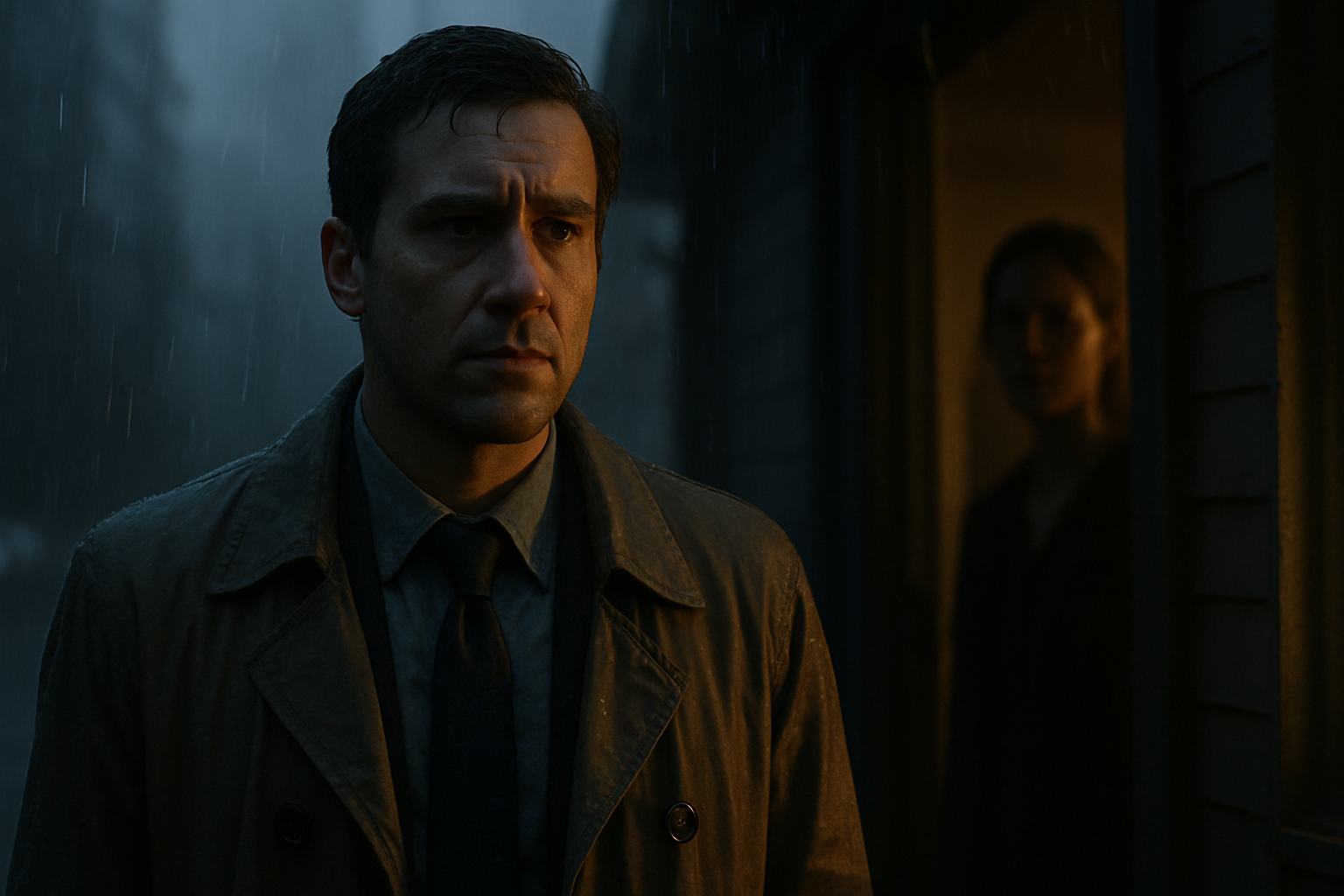
“Because my daughters knew my schedule better than they knew my thoughts. Because I knew the names of attorneys before me more readily than the names of Elise’s friends. Because Nora wrote an essay in college about grief and did not show me until last week because she assumed I would be too busy to read it.”
“That must’ve hurt.”
“It did. It should have.”
Whitcomb folded his arms.
“I cannot get the years back.”
“No.”
“But I can stop spending the ones left like spare change.”
Jonah smiled faintly.
“That sounds like something a judge would say.”
“I am trying to sound like a father.”
“You’re getting closer.”
In spring, Mercer Auto & Body received a city grant created for small businesses harmed by predatory redevelopment.
Jonah applied without asking Whitcomb for help, though Whitcomb had quietly sent him the public link and nothing more.
The grant let Jonah repaint the shop, replace the sign, and add two more bays in the vacant bakery space after Mrs. Delgado decided she did not want to reopen there.
She only wanted the building used by someone who would not turn it into a boutique candle store.
Jonah named the expanded space Delgado Bay without telling her.
When she saw the small plaque by the office, she cried so hard Theo panicked and offered her a tire rotation.
On the anniversary of the storm, it rained again.
Not as violently.
Just steady, with the patient rhythm of memory.
Jonah was closing the shop when a white Range Rover pulled up outside.
Elise and Nora stepped out under one umbrella, arguing because Elise held it too high and Nora accused her of “umbrella elitism.”
Behind them came Whitcomb carrying a paper bag from Mrs. Delgado’s new home kitchen business, which had become so popular she was considering a storefront after all.
“We brought dinner,” Elise said.
“And a complaint,” Nora added. “The Range Rover is making a noise.”
Jonah listened as the engine idled.
“That noise is your imagination.”
“Great. Fix that too.”
They ate in the shop office while Theo finished a brake job.
Rain tapped the windows.
The new sign outside glowed beneath the security light:
Mercer Auto & Body. Honest work. Fair price.
Under it, in smaller letters:
We stop when we can.
Nora had called the line sentimental.
Elise had called it perfect.
Jonah had pretended not to care and installed it anyway.
After dinner, Elise walked with Jonah into the bay while Whitcomb tried to help Theo sweep and did it so badly that Theo took the broom away.
Nora was on the phone with Mrs. Delgado, discussing pastry logistics.
For the first time since they met, Elise looked nervous.
“I never thanked you properly,” she said.
“You thanked me about forty times.”
“No. I thanked you for the car. For court. For Dad. But not for what you said before you left the motel that night.”
Jonah frowned. “What did I say?”
“You told us not to decide, in the worst hour of the night, what the rest of our life was going to feel like.”
She looked toward the rain-dark street.
“I was in a bad place then. Worse than Nora knew. Mom was gone. Dad was absent. School felt pointless. Every room in that house felt like a museum exhibit of a family. When the car died, I remember thinking, Of course. This is what happens. Things stop and nobody comes.”
Her voice shook, but she kept going.
“Then you came. You were exhausted. You were scared about your own life. And you still acted like we mattered. That did something to my brain. It made me think maybe the night wasn’t allowed to be the judge of everything.”
Jonah felt the words settle between them.
He had no memory of saying it.
Maybe exhaustion had spoken for him.
Maybe the sentence had been meant for himself and had reached her first.
“I’m glad,” he said softly. “I’m glad it helped.”
Across the shop, Whitcomb laughed at something Theo said.
It was a rusty laugh, still learning its way out.
Nora snapped a picture of him holding the confiscated broom like evidence.
Jonah watched them all and understood the final turn of that strange year.
He had thought the storm introduced him to people who could save him.
In truth, every person in that storm had needed saving from a different wreck.
His garage had been stranded by greed.
Elise and Nora had been stranded by loneliness.
Whitcomb had been stranded by grief disguised as duty.
Even Theo, who had not been there that night, had been stranded by a world demanding experience from people nobody trained.
None of them had fixed everything.
They had simply stopped for one another.
Then kept stopping.
Until motion became possible again.
When the others left, Jonah locked the office and stood beneath the awning.
The rain smelled like asphalt, oil, and spring dirt.
Across the street, the stalled Harbor Row lot sat fenced and empty, but weeds had begun pushing through the gravel.
He liked that.
It reminded him that even land marked for someone else’s vision could resist.
His phone buzzed.
A text from Nora appeared.
Movie night Saturday. Dad claims he won’t check email. We require a witness with mechanical integrity.
A second text followed from Whitcomb.
I saw that.
A third came from Elise.
Bring terrible coffee.
Jonah smiled and typed back.
I’ll be there.
Then he climbed into his truck and drove the long way home, past the service road where he had first seen two figures in the rain.
The shoulder was empty now.
Cars moved steadily through the wet night, each one carrying people with private emergencies, private hopes, private reasons to keep going.
Jonah slowed for a moment.
He remembered how close he had come to driving past.
Nobody would have blamed him.
He had been tired.
He had been broke.
He had been afraid.
But a life does not always change because someone makes a grand sacrifice.
Sometimes it changes because, at the lowest moment, a person still has enough decency left to pull over.
Jonah drove on.
Not rescued from hardship forever.
Not made rich.
Not made untouchable.
Just changed.
Because kindness is not a transaction. It is not a miracle either.
It is a seed thrown into weather.
Most days, you never see where it lands.
But somewhere, in some courtroom, some kitchen, some garage, some grieving house learning to laugh again, it breaks open.
It grows roots.
It pushes back against concrete.
And when the rain returns, as rain always does, it reminds the world that not every stranded thing stays stranded.