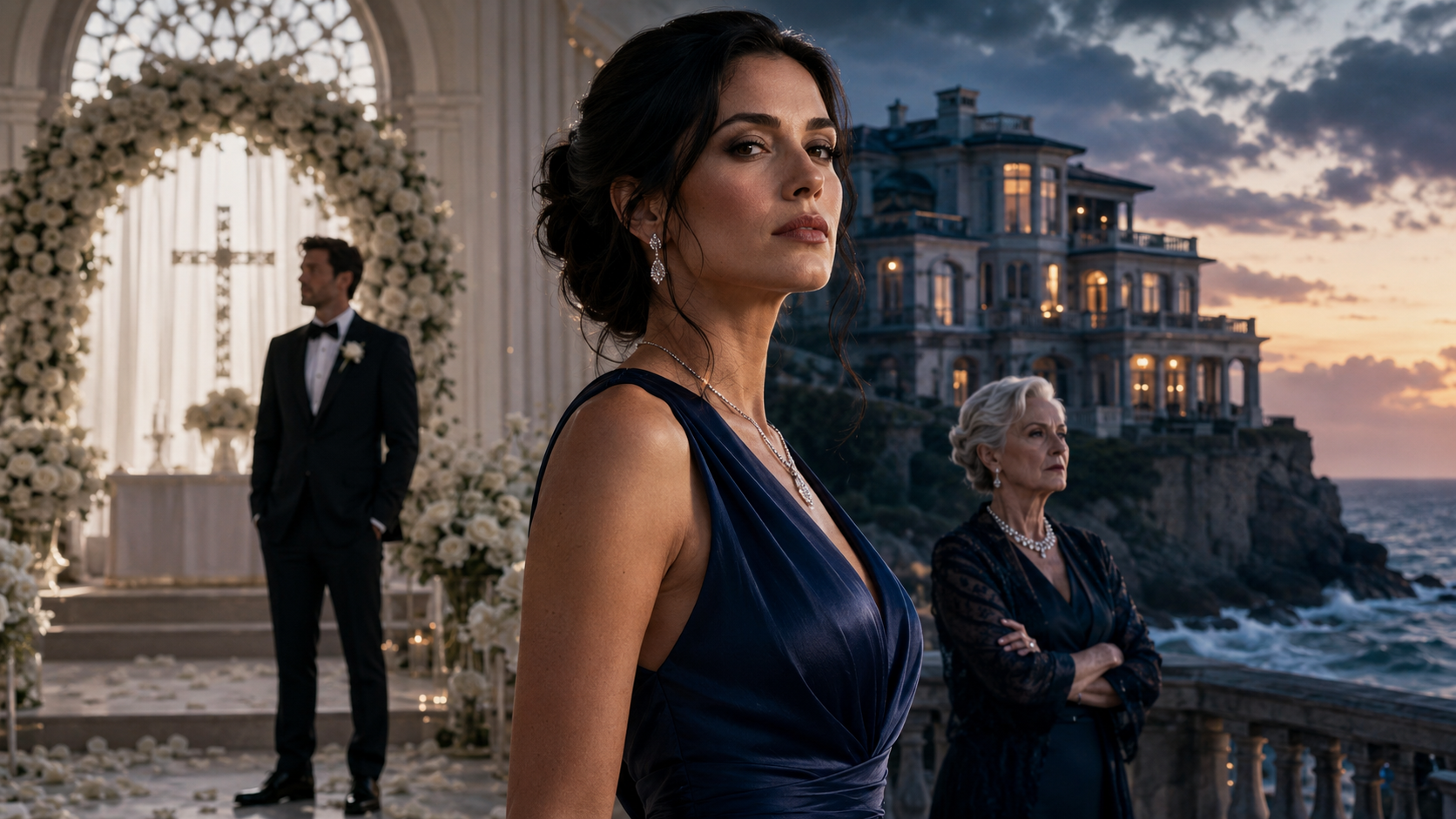
He handed her a mug. “Tea.”
“I drink coffee.”
“Not tonight. You’re angry. Coffee will make you fast. Tea might keep you accurate.”
Mara took the mug. “Is that concern?”
“Risk management.”
“Of my heart rate?”
“Of my investment memo.”
She laughed then, unexpectedly, and the sound startled them both.
Years passed in the strange way hard-working years do: slowly while lived, quickly when remembered.
Mara became the person who saw the flaw before the room had agreed there was a structure. She found a buried land option in Tacoma that saved a public housing project. She uncovered a chain of shell vendors in a ferry terminal renovation. She forced a renegotiation that kept two hundred warehouse workers employed when a cleaner spreadsheet would have erased them.
Eventually, she left Alderidge.
Nicholas read her resignation letter twice.
“You’re starting your own firm,” he said.
It was not a question.
“Yes.”
“Name?”
“Ellison Civic Recovery.”
“Clients?”
“Three.”
“Capital?”
“Enough for eight months if I remember I’m not rich yet.”
“Office?”
“My dining table.”
“Good.”
Mara blinked. “Good?”
“If the idea cannot survive your dining table, it has no business asking the market for rent.”
She folded her arms. “That was almost encouraging.”
“It was fully encouraging. You’re just accustomed to applause being louder.”
“Will you invest?”
“No.”
The answer landed harder than she expected.
Nicholas saw it and continued, “Not now. If I fund you, they’ll call you my extension. If you build without me, they’ll have to learn your name.”
Mara looked away.
It was one of the kindest refusals she had ever received.
On her last day, he walked her to the elevator.
“I’ll send work when you’re the best,” he said.
“And when I’m not?”
“I’ll send it elsewhere.”
“Romantic.”
His gaze held hers. “Under different circumstances, I have range.”
The elevator doors opened.
Mara stepped inside with a cardboard box of files, two dying plants, and the strange sensation that a door could close without abandoning her.
Ellison Civic Recovery began with three clients, one laptop, and a dining table that developed a permanent lean from the weight of legal binders.
By the end of the first year, Mara had six employees and an office with windows that stuck in the rain.
By the end of the second, she had advised creditor committees, public agencies, pension trustees, and community boards on more than half a billion dollars in distressed assets. A trade magazine called her “the woman who makes bad books confess.” She hated the headline and framed it anyway.
Money came slowly, then suddenly.
Not Blackwell money. Not marble-staircase money. Not money with portraits of dead grandfathers attached.
Hers.
Earned in conference rooms, taxed without hiding, reinvested in people who worked too hard and lied too little.
She bought her father a medical bed that did not squeak. She paid off Ruth’s mortgage. She gave bonuses big enough to make junior analysts cry in the hallway. She learned that security was not healing, but it did take away fear’s favorite weapon.
Nicholas remained near without hovering.
He referred clients when she was right for them. He argued with her when she was wrong. He took her to dinner after her first impossible close and again after a conference in Portland where they both pretended the meal was convenient.
Nothing between them moved quickly.
Mara would not become a rumor attached to a billionaire. Nicholas would not insult her by turning opportunity into suspicion. They were careful because both of them understood cost.
When he finally kissed her, it was outside a noodle shop in the rain, beneath a broken awning and a flickering streetlight.
He touched her wrist first.
Not grabbed. Not claimed. Asked.
“Mara,” he said quietly, “tell me to stop if I’m wrong.”
She looked at him, this man who could buy buildings but still waited for permission to cross one inch of air, and felt something inside her unclench.
“You’re not wrong,” she said.
The kiss was calm.
That was what nearly broke her.
No spectacle. No witnesses. No aisle. No flowers. No room waiting to approve her value.
Just a choice.
Hers.
Two years and nine months after Adrian Blackwell left her at the altar, Mara received an invitation thick enough to qualify as architecture.
Iris Bellamy was getting married at Blackwell House.
Mara sat at her kitchen island and stared at the envelope.
Blackwell House was not merely a mansion. It was a coastal estate outside Newport, built on cliffs and entitlement, famous for weddings, political fundraisers, and photographs of people pretending inheritance was taste. The Blackwells did not own it outright, not technically. Old coastal families rarely owned things simply when they could complicate ownership across trusts, leases, foundations, and holding companies.