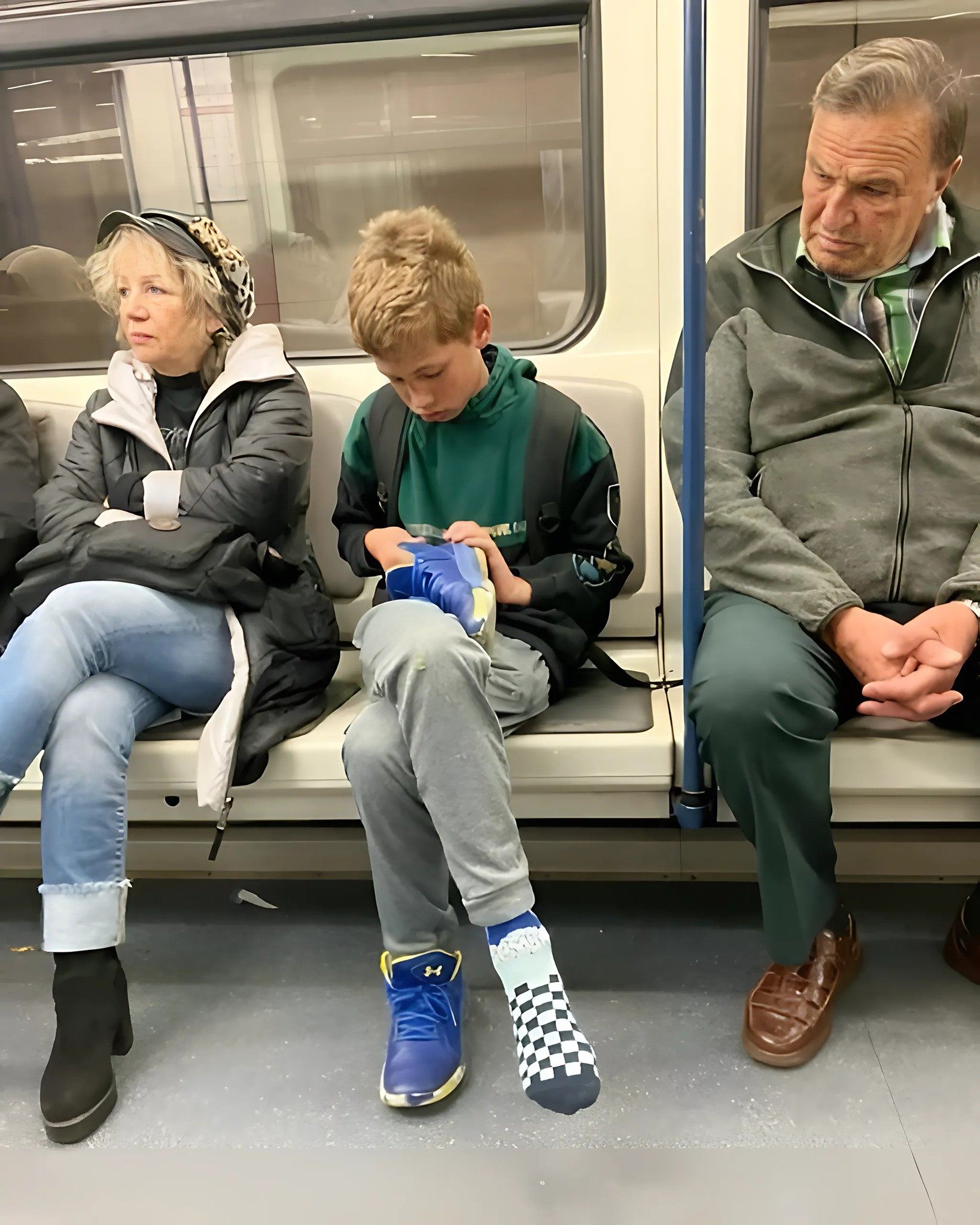
I was travelling home on the metro, as usual, deep in sleep, and then I noticed that at the next stop a boy entered the metro. It wasn’t his backpack or his messy hair that made him stand out, but the fact that he was barefoot, wearing one tattered trainer and one unmatched sock. He sat down between the two strangers and tried to pretend not to notice their stares.
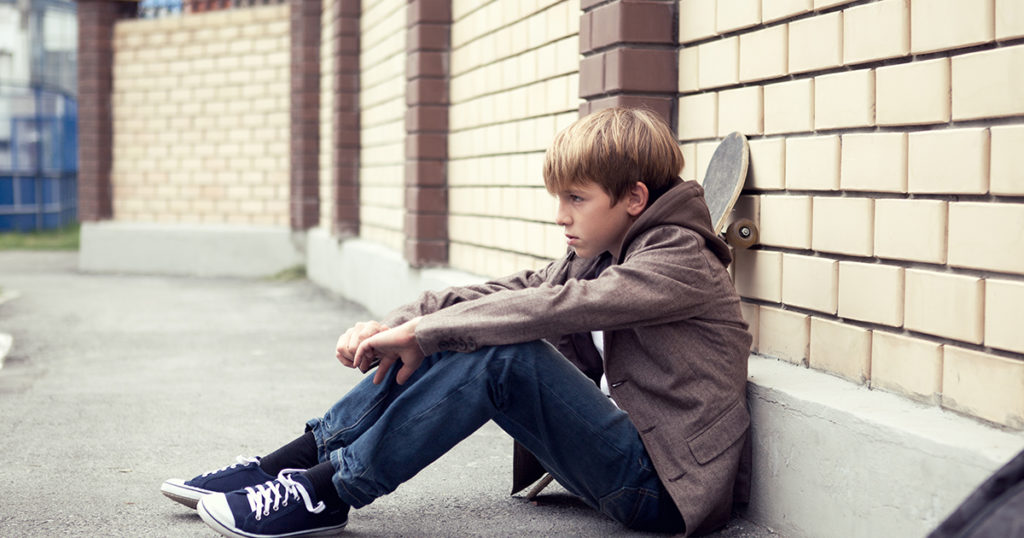
People are weird about this sort of thing. Some look away, some stare, but most just pretend not to notice. But the man sitting on the other side of the boy kept looking down at the bag at his feet. It was obvious that he was thinking about something.
After a few stops, the man leaned over, cleared his throat, and said quietly: “Hey, I just bought these for my son, but they might fit you better. He already has a pair.” The boy looked up, surprised and a little suspicious, but the man just handed him the brand new blue trainers with tags.
Everyone pretended not to look, but you could feel the mood in the carriage change. The boy stared at the trainers, then put them on. A perfect fit. He whispered a “thank you”, but the man only smiled and said: “Don’t worry, kid. You’ll do it someday.”
The woman sitting across from me gave the man a knowing look and a quiet, grateful smile that seemed to speak volumes. I, too, felt a warmth spreading through me, and not just because of the cold, stuffy air in the underground carriage. There was something about this simple gesture, so unassuming and yet filled with deep meaning, that made me feel that maybe the world wasn’t as bad as it seemed.
The boy seemed to relax a little after putting on his new shoes. He shifted in his seat, stopped fiddling with the mismatched toe and leaned back in his chair, eyes down on his new trainers as if they were a small miracle. And to him, perhaps they were. I thought about his story – how he ended up barefoot, walking around the city with a mismatched pair of shoes. Was he homeless? Maybe he was just having a bad day?

The train carriage filled with the familiar sounds of coins jingling, quiet murmurs and the rumble of the rails beneath us, but for a moment I thought time had slowed down. I looked round at the faces, all of us stuck in our own worlds, and thought: if only we could all be a little more like this man, offering help without expecting anything in return.
After travelling a few stops, I couldn’t help but notice the boy occasionally glance at the man, a look of contradiction on his face. It wasn’t that he didn’t appreciate the shoes, rather he didn’t know how to construe such kindness. He seemed to want to say something else, but remained silent.
Finally the boy got up to get off at his stop. Before he got off the train, he turned to the man who had given him the shoes.
‘Hi,’ the boy said, his voice trembling slightly. “Thanks. I…I don’t know what to say.”
The man nodded again with a slight smile that seemed to have no hint of pretence in it, just calm understanding. “You don’t have to say anything, kid. Just make sure you pass it on sometime.”
The boy nodded, lifting the straps of his rucksack slightly, and walked off the train, disappearing into the crowd. The others went back to their normal routines. Some were already immersed in their phones again, others were leafing through books or newspapers, but I couldn’t stop thinking about what had just happened.
I didn’t know what had happened to the boy, but I hoped that he would take this small act of kindness with him, that it would somehow make his life easier, give him hope when he needed it most. And as I thought about it, I wondered, What if we all did something like this every day?
A few weeks went by and I didn’t think back to that moment too often. Life became busy again. But then, on another trip on a crowded underground, I found myself in a situation I couldn’t ignore.
I was standing near the door, holding onto the pillar, when I noticed an elderly woman sitting in a wheelchair in the middle of the carriage. She was struggling to hold her purse, trying to keep it from slipping off her lap while keeping her hands steady. Her face was tired and rugged with age, but there was a quiet dignity to it, and I couldn’t help but notice that her shoes, old and worn, had clearly seen better days.
The train was crowded, and no one seemed to notice her struggle. I was tempted to turn away, to pretend I couldn’t see, but I couldn’t. The face of the boy from that underground ride a few weeks ago flashed through my mind. And I thought, if I don’t help now, what will that say about me?
Squeezing through the crowd, I knelt down beside her and held out my hand to help her lift her bag. She looked up in surprise, but her face softened at the sight of my offer.
‘Thank you,’ she said, her voice soft, almost hesitant. ‘It’s just so hard to keep it all together sometimes.’