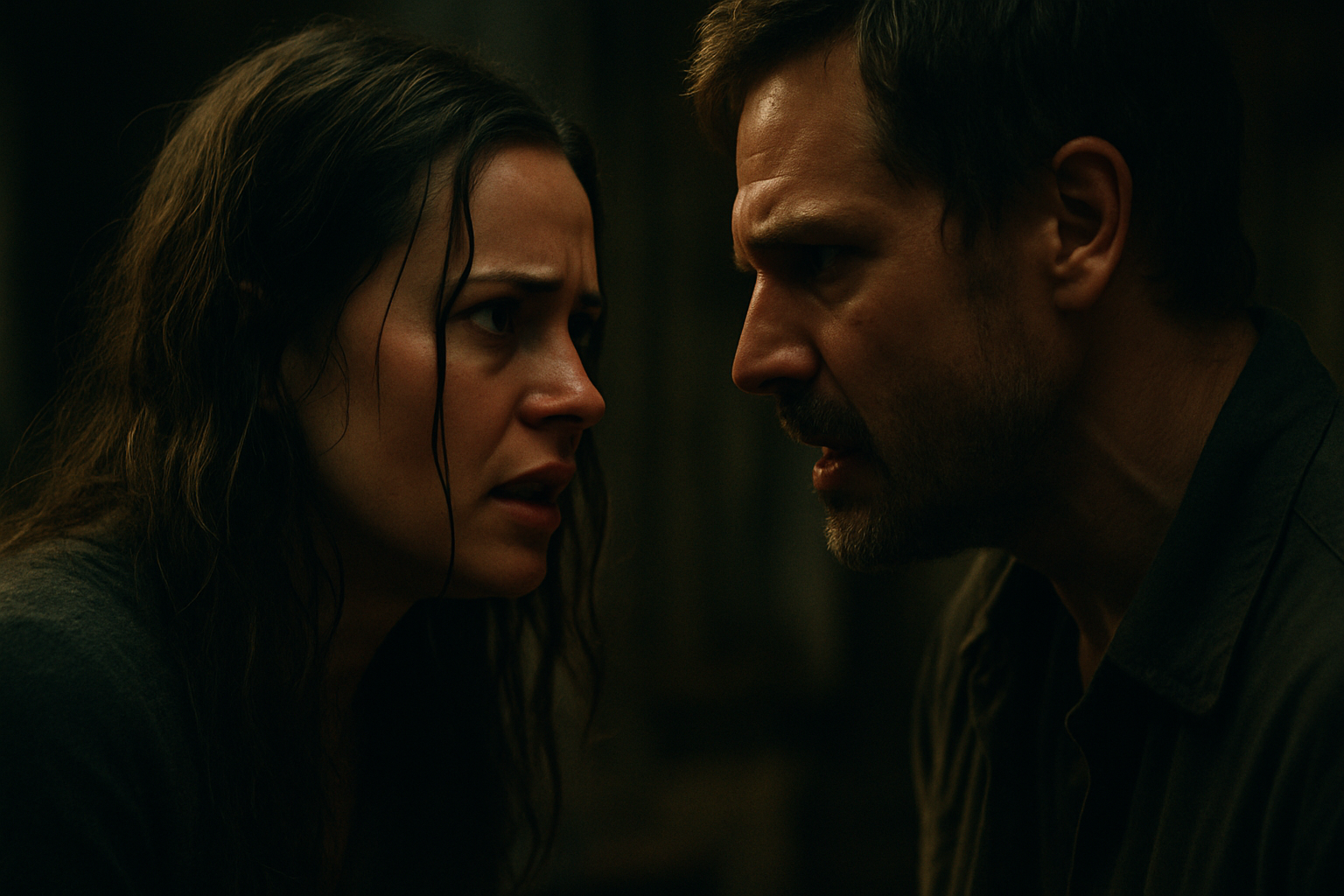
At first Clara apologized for every spoon of stew, every strip of clean cloth, every hour of care.
One morning Elias set down his axe and said, “Clara, if you thank me one more time for not letting you die, I may begin to feel unappreciated for chopping all this wood.”
She stared at him.
Then she laughed.
It was a small, rusty sound, unused for too long.
But it changed the room.
After that, they grew easier with each other.
She mended his shirts and told him his stitches looked like “a drunk spider had crawled through thread.”
He made her crutches from aspen and carved the handles smooth so they would not blister her palms.
She cleaned the windows, organized his shelves, and turned the cabin from a place where one man endured weather into a place where two people waited out winter.
At night, they read from his few books.
Sometimes she spoke of Lydia Harrow, her sister, whose laugh had been too loud for church and whose hands had always rested on her pregnant belly as if blessing the child inside.
Sometimes Elias spoke of Jonah as a boy, not as a ghost.
Clara listened as though she were giving the dead back their full names.
Grief did not vanish.
It became shared weight.
And shared weight became trust.
In January, a blizzard trapped them inside for four days.
Snow climbed the walls until the windows glowed blue. The wind screamed over the roof like something alive.
On the second night, Clara woke gasping.
“I heard Lydia,” she cried. “She was outside.”
Elias was beside her at once, kneeling where she could see him, careful not to grab her.
“You’re here,” he said. “You’re in my cabin. The door is barred. The fire is lit. Nobody is coming through that storm.”
Clara pressed a hand to her chest.
“I left her.”
“Jonah told you to run.”
“My sister was pregnant.”
“I know.”
“Her baby never saw the world.”
“No,” Elias said, and sorrow tightened his face.
She turned toward the wall. Her voice became thin and far away.
“Sometimes I think I lived by mistake.”
The fire popped.
The wind battered the shutters.
Elias did not answer quickly.
“After the war,” he said at last, “I used to count better men who died and wonder why I had not traded places with them. It felt like theft, breathing when they could not.”
“What changed?”
“Nothing at first. Then one morning I shot a deer, cooked breakfast, and realized guilt had not fed the dead. It had only starved the living.”
His voice roughened.
“If you live, Clara, live well enough to make their killers hate that they failed.”
She turned back to him.
It was not soft comfort. It did not ask her to forgive the unforgivable.
But it gave her something to hold.
“Live well enough,” she whispered.
“Yes.”
“Then help me do it.”
Something passed between them.
Not romance yet.
Not promise.
Recognition.
Two people dragged to the edge of death had discovered neither one could return alone.
By February, the snow began to settle.
So did the danger.
A rider came one bright morning when the world looked harmless.
Elias saw him below the tree line and took the rifle from its pegs.
“Behind the hearth,” he told Clara.
She went, carrying the revolver.
The rider stopped thirty yards from the cabin with both hands visible and a white cloth tied around one wrist.
“Elias Thorne!” he called. “I came with a Bible and a bad horse, and I hope you won’t shoot either one.”
It was Reverend Tobias Reed.
A narrow man with windburned cheeks and eyes too tired for his age.
Elias opened the door but kept the rifle ready.
“Reverend.”
“Amos Rusk sent me.”
“That doesn’t make you welcome.”
“No,” Reed said. “But maybe this will.”
He reached slowly into his coat and drew out a small book.
“Lydia Harrow’s prayer book. Her husband gave it to me two weeks before the massacre. He said if anything happened, I was to keep it until Clara Wren came asking.”
Behind the hearth, Clara made a broken sound.
Elias stepped aside.
When Clara came into view, Reverend Reed removed his hat.
The sorrow on his face was real enough to quiet suspicion.
“Miss Wren,” he said, “I buried what I could find of your sister.”
Clara swayed.
Elias moved near, not touching unless she needed him.
The reverend’s voice cracked.
“I’m sorry. I wanted to speak sooner. Creed had men watching the church. But things are moving now. Mrs. Wicks will testify that Crowe’s men came in with blood on their cuffs the morning after the wagon party vanished. Dr. Finch has records of bullet wounds. Three miners will swear they saw Henry Harrow’s papers in Crowe’s office after Crowe claimed there were no survivors.”
“And Judge Hart?” Elias asked.
“Gone south for a circuit hearing. Conveniently.”
“Or warned.”
“Maybe both,” Reed said. “A territorial deputy marshal is due in Briar Crossing in nine days. Amos got the message through under a false name. But there is a problem.”
“There usually is.”
“Creed knows something is wrong. He searched Mrs. Wicks’ store yesterday. He doubled the reward on Clara. And he told men at the saloon that whoever shelters her will hang beside her.”