The letter was not a masterpiece of remorse.
It had excuses in it.
It had self-pity.
It had sentences that tried to explain when they should have simply admitted.
But one line felt different from the rest.
I thought being powerful meant never being at anyone’s mercy, and now I understand that I confused love with control because control was easier to lose.
Vivienne folded the letter and placed it in a box labeled For Rowan, Someday, Maybe.
Not because Julian deserved preservation.
Because Rowan deserved truth that had not been edited by rage.
Spring came slowly.
The corporate investigation moved forward. Livia cooperated and avoided prison, though Stonebright Creative collapsed and her name became a cautionary whisper in marketing circles. She wrote Vivienne one final letter, not asking forgiveness this time, only admitting what she had done.
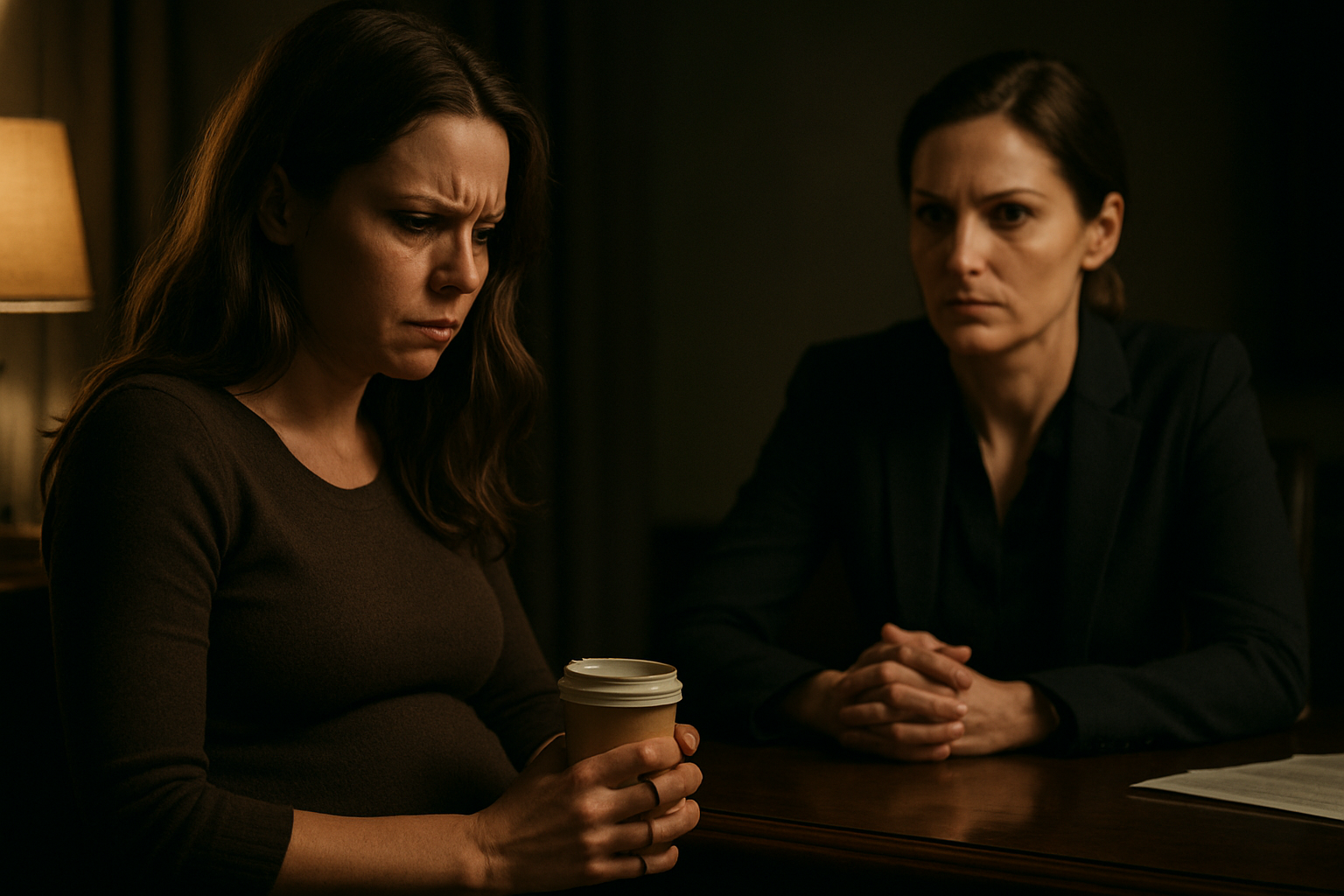
Vivienne read it in the quiet of Rowan’s nursery while he slept in a patch of morning sun.
Livia wrote that she had envied Vivienne for years. Not her money, not exactly, but the way Vivienne seemed loved without performing. She envied the calm apartment, the marriage, the baby, the softness she mistook for ease.
When Julian began confiding in her, Livia felt chosen over the woman she secretly resented.
By the time she understood Julian was using both of them, she had already become someone she did not recognize.
Vivienne did not answer.
But she did not throw the letter away.
Instead, she placed it in a separate folder, not for Rowan, but for herself.
A reminder that betrayal often begins long before the act people can name. It begins with comparison. With entitlement. With the private belief that someone else’s happiness must be undeserved simply because you do not have it.
By summer, Vivienne returned to work two days a week.
She accepted a supervisory role in pediatric care, not because she needed the salary, but because she needed the part of herself that had existed before Julian’s shadow.
She also took her seat on the Ashbourne Meridian board.
The first meeting was held in a conference room where Julian had once assumed he would stand in her place.
Vivienne arrived in a navy dress, Rowan’s spit-up hidden beneath a silk scarf, with Rowena at her side as temporary counsel. Several directors looked surprised by her calm. A few looked worried, which seemed to please Rowena immensely.
The chairman began with polite condolences for “recent personal difficulties.”
Vivienne let him finish.
Then she opened her folder and said, “My personal difficulties are not on the agenda. Governance reform is.”
By the end of the meeting, the board had approved an independent ethics committee, stricter vendor controls, expanded maternal health funding across Ashbourne-owned hospital properties, and a new grant program for women rebuilding after financial abuse.
Vivienne named it the Cordelia Fund.
Reporters later called it a bold philanthropic pivot.
Vivienne called it housekeeping.
The first Thanksgiving after the night everything broke arrived with rain instead of snow.
Vivienne had almost dreaded it.
Memory has a way of laying traps around anniversaries, and every grocery display of cranberries and stuffing seemed determined to drag her back to the penthouse kitchen, the forgotten earbuds, the cold turkey, and the sentence that had split her life in two.
But Rowan woke that morning laughing at his own feet, and grief found itself outmatched by a baby discovering socks.
Vivienne dressed him in a tiny blue sweater Gideon had bought and drove to the riverfront, where Rowena had insisted they meet for lunch at a restaurant overlooking the water.
Bellhaven shimmered beneath low gray clouds. The city looked gentler from this side of survival.
Rowena arrived with a gift bag and a warning.
“It’s educational, not extravagant.”
“That means it’s extravagant.”
“It’s a board book about Justice Lenora Quill.”
“For a nine-month-old?”
“He should start early.”
Gideon joined them with sweet potatoes. Dr. Bell stopped by after her hospital shift. Two women from Vivienne’s support group brought pies because, as one of them said, “No woman should have to reclaim Thanksgiving with store-bought dessert.”
They ate.
They laughed.
Rowan smashed mashed potatoes across his tray with the solemn focus of a board chairman approving a merger.
Halfway through lunch, Vivienne’s phone buzzed with an email from Julian’s attorney.
She stared at the notification for a long moment.
Then she turned the phone face down.
Rowena noticed.
“Do you want me to look?”
“Later,” Vivienne said.
The word felt like a victory.
Once, Julian’s messages had controlled the temperature of her entire body.
Now they could wait until after pie.
When lunch ended, Vivienne stepped outside with Rowan bundled against her chest.
The rain had stopped, leaving the pavement glossy and the river dark green beneath the bridges. Across the water, office towers reflected the afternoon light. Somewhere inside those buildings, people were still chasing control, still mistaking money for safety and admiration for love.