“Happy Thanksgiving, Julian”… But the Billionaire Chose Her Best Friend—Then His Pregnant Wife Reclaimed the Empire He Tried to Steal and Filed for Divorce

“Happy Thanksgiving, Julian”… But the Billionaire Chose Her Best Friend—Then His Pregnant Wife Reclaimed the Empire He Tried to Steal and Filed for Divorce

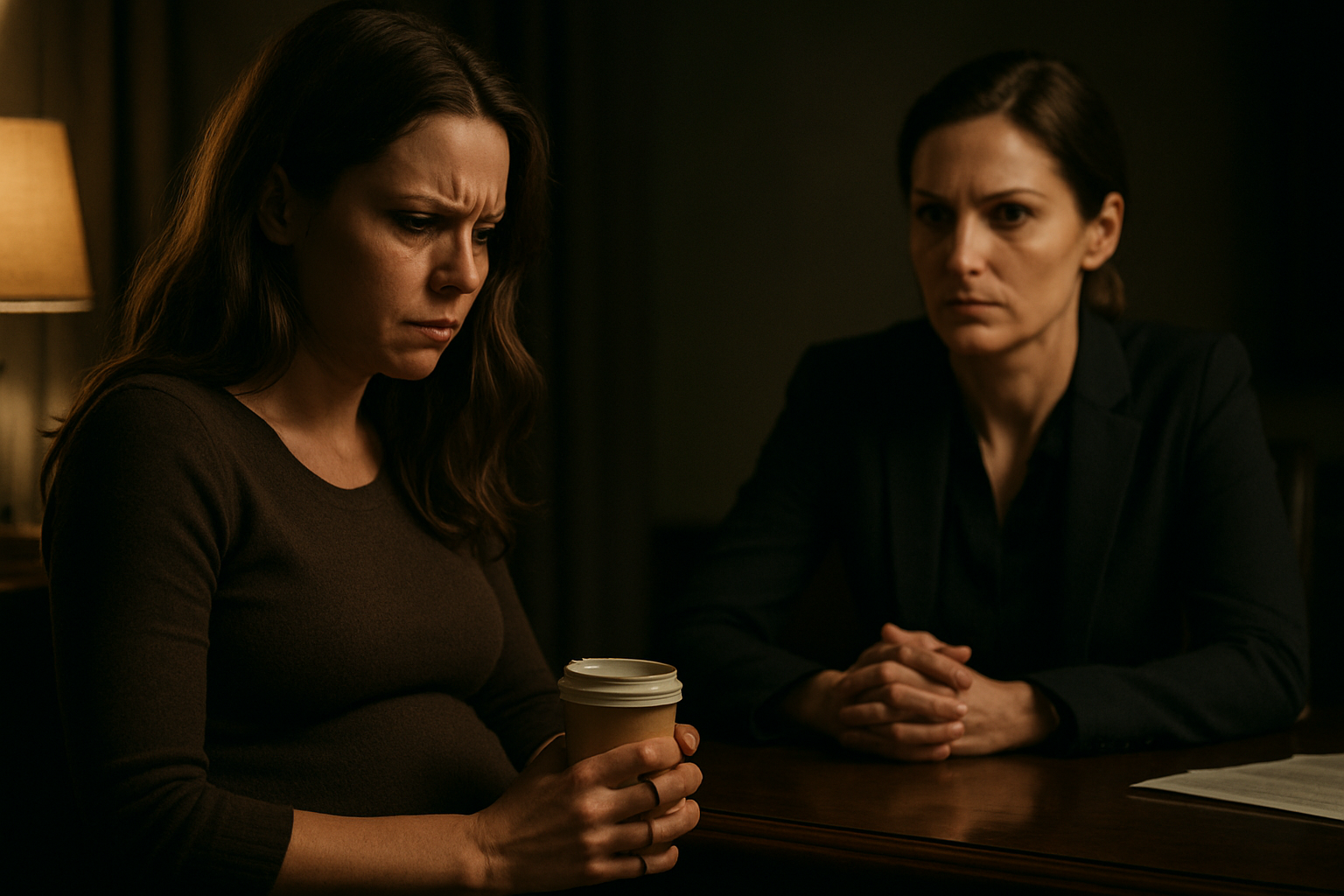
Vivienne’s fingers tightened around the paper cup of mint tea until the cardboard buckled beneath her grip.

“What did you just say?”

Across the polished walnut desk, Rowena Slate did not flinch. She was not the kind of woman who softened bad news by wrapping it in velvet. She delivered truth the way surgeons delivered incisions: clean, necessary, and with no wasted motion.

“Julian is not simply having an affair,” Rowena said. “He is trying to create a record. If he can persuade a court, or the protector of the Ashbourne Meridian trust, that you are medically or psychologically incapable of acting in your own best interest, he could seek temporary influence over your voting rights.”

Vivienne stared at her.

For a moment, the office seemed to loosen from its foundations. The walls stretched too far away. The city beyond the window blurred into a smear of silver towers and winter sky.

“That’s impossible,” she whispered.

“It is unlikely to succeed,” Rowena replied, “but it is possible enough to explain the pattern. Your mother structured Ashbourne Meridian so that your shares would remain insulated until either your thirty-fifth birthday or the birth of your first child, whichever came first. You are thirty-four. You are due in February.”

The baby shifted beneath Vivienne’s ribs, a slow rolling pressure like a tiny shoulder turning in sleep. She pressed her palm to the place where he moved, using the warmth of him to keep herself from floating out of her own body.

Rowena continued, her voice steady. “At your child’s birth, you gain direct control over a voting block worth approximately 1.8 billion dollars. That block includes controlling influence over Ashbourne Meridian’s healthcare real estate division. Julian knows this. He has been asking questions for months.”

Vivienne’s mouth felt dry.

“He told me the trust was sentimental family money.”

“It is family money,” Rowena said. “Your family. Not his.”

A laugh escaped Vivienne, small, brittle, and almost soundless.

She thought of Julian teasing her for keeping a seven-year-old hatchback when she could have had a chauffeured limousine waiting at every curb. She thought of the way he introduced her at charity dinners as “my wife, the pediatric nurse,” with that indulgent smile that made her vocation sound like a charming hobby. She thought of the way he had never truly understood that she did not live modestly because she lacked wealth.

She lived that way because she had watched wealth turn her childhood home into a battlefield after her father died.

Courtrooms. Trustees. Whispered strategy behind closed doors. Adults she once trusted speaking in numbers instead of grief.

“He married me for it,” Vivienne said.

Rowena’s face softened, but only by a fraction. “Perhaps not at first. Men like Julian are often sincere until opportunity teaches them greed. Then they recast hunger as destiny and betrayal as something they were forced into.”

Vivienne looked down at her belly.

“And Livia?”

Rowena slid a bank statement across the desk.

“Livia Stone owns Stonebright Creative, correct?”

“Yes.” Vivienne’s voice thinned. “A boutique branding firm. Small. Mostly social campaigns for restaurants, wellness brands, nonprofit galas.”

“Julian’s company paid Stonebright Creative nearly four hundred thousand dollars over eighteen months.”

Vivienne stared at the highlighted line items.

“For what?”

“That,” Rowena said, “is what we are going to find out.”

By the time Vivienne left Rowena’s office, the divorce petition had been drafted, the trust protector had been alerted, and a forensic accountant named Rafael Miro had been assigned to trace the corporate payments. Rowena gave Vivienne three instructions before she stepped into the elevator.

Do not answer emotional messages.

Do not meet Julian alone.

And do not underestimate Livia simply because she cries beautifully.

Despite everything, Vivienne almost smiled at the last one.

“She was my best friend,” she said.

Rowena looked at her for a long moment.

“Then she knows exactly where to cut.”

Julian came home at midnight smelling of whiskey, expensive hotel soap, and the cold confidence of a man who believed every locked door in the world would open if he spoke gently enough.

Vivienne was waiting in the living room.

Behind her, the windows framed the glittering heights of Bellhaven, all steel and wet light. On her lap lay an open folder. On the dining table, untouched Thanksgiving plates had gone cold beneath the chandelier: carved turkey, glazed carrots, cranberry compote, the stuffing Julian had always claimed to love.

He stopped just inside the door.

“You’re awake.”

Vivienne looked at him.

“Did the board call go well?”

His eyes flickered.

It lasted less than a second, but marriage had made her fluent in his smallest betrayals. The quick narrowing at the corners. The fractional pause before he chose a tone. The way his hand moved to his tie when he needed a moment to calculate.

He dropped his keys into the ceramic bowl by the door and loosened the knot at his throat.

“Viv, don’t start. You’ve been tense lately, and I understand. Pregnancy is hard.”

“That must be why you were in room 1806 with Livia.”

The apartment fell silent.

Julian’s face did not change immediately. It was almost impressive, the discipline of it. Vivienne could see him sorting through his options.

Denial.

Outrage.

Concern.

He dismissed the first two and selected the one he thought would wound her least while controlling her most.

“You followed me?”

“No,” she said. “You forgot your wireless earbuds.”

The color left his face.

Vivienne stood carefully. Her belly made the movement slower than she wanted, but she refused to rush for him. She crossed to the dining table, lifted the folder she had left beside his Thanksgiving place setting, and held it in both hands.

“You missed dinner,” she said. “You lied. You planned to question my competency after our son was born. And you paid my best friend through your company while sleeping with her. Did I leave anything out?”

Julian’s jaw tightened.

“You don’t understand what you heard.”

“I understood enough.”

“Livia and I—” He stopped, exhaled sharply, and rubbed his forehead like a man burdened by someone else’s unreasonable pain. “It was a mistake. A stupid mistake. But you and I have been drifting for months.”

“I was building a nursery.”

“You shut me out.”

“You came home at two in the morning smelling like another woman.”

“You became obsessed with the baby.”

Vivienne smiled then.

Julian seemed to dislike that far more than if she had screamed.

“Interesting defense,” she said.

His voice lowered. “You are emotional. Anyone would be. That is exactly why I didn’t want to bring up the trust yet.”

“There it is.”

“Vivienne, listen to me.” He took a step forward, hands raised slightly, as if she were a frightened animal he could soothe into stillness. “Your mother left complicated structures behind. You never wanted to deal with that world. I can help. I understand finance. I understand boards. You understand children’s medication schedules and hospital rounds. That is not an insult. It is reality.”

The old Vivienne might have cried.

She might have tried to explain that compassion was not stupidity. That choosing ordinary work did not make her ordinary. That a man who could not respect a nurse had no business asking to control a healthcare empire.

But this Vivienne was tired.

She slid the folder across the table.

Julian opened it.

First, he saw the divorce petition.

Then the hotel receipt.

Then the transcript of what she had heard through the earbuds he had forgotten.

Then the highlighted wire transfers to Stonebright Creative.

Finally, he saw a copy of the emergency notice Rowena had sent to the Ashbourne Meridian trust protector, freezing any attempted spousal influence over Vivienne’s voting rights.

His expression changed completely.

Not heartbreak.

Not remorse.

Fear.

“You called Rowena Slate?”

“She was my mother’s attorney.”

“She hates me.”

“She reads documents,” Vivienne said. “That’s different.”

Julian threw the folder onto the table.

“You have no idea what you’re doing. Rowena will turn this into a war.”

“No,” Vivienne said quietly. “You did that at 9:07 last night.”

He leaned forward, and for the first time since she had known him, the polish cracked wide enough to reveal the ugliness beneath.

“If you file, I will not go quietly.”

“I assumed.”

“I’ll ask for custody.”

“I assumed that too.”

“I’ll tell the court you’re unstable.”

Vivienne touched the phone in her pocket.

The recorder was already running.

“Say that again.”

Julian froze.

For one long moment, they stared at each other across the remains of Thanksgiving.

Then he laughed once, without humor.

“You’ve changed.”

“No,” Vivienne said. “I stopped translating disrespect into stress.”

He left twenty minutes later with a suitcase, three suits, and enough rage to slam the front door so hard that their wedding photograph shifted crookedly on the wall.

Vivienne stood in the silence after him, shaking from the force of her own adrenaline.

Then she walked to the fireplace mantel, removed the framed photograph, and placed it face down in a drawer.

Her son kicked.

She pressed both hands to her belly.

“He thinks we’re alone,” she whispered. “He’s wrong.”

The next week arrived like a storm made of paper.

Rowena filed the divorce petition on Monday morning. Julian was served at Vale & Ashbourne Capital in front of two junior analysts, a receptionist, and a visiting board member from Northhaven. By lunch, he had called Vivienne twelve times, texted her twenty-six times, and left one voicemail that began with, “You are humiliating both of us,” and ended with, “You will regret making me your enemy.”

Rowena listened to it in her office, smiled without amusement, and said, “Excellent. Keep everything.”

Livia sent an email that night.

The subject line read: Please Don’t Let Him Destroy Himself.

Vivienne opened it with a strange calmness, as if she were reading a note from a ghost.

Vivienne,

I know you hate me. You have every right. But Julian is under pressure you don’t understand. He loves the baby. He made mistakes because he was terrified of losing everything. Please don’t let Rowena make this public. If you ever loved me as a friend, handle this privately.

Vivienne stared at the sentence if you ever loved me as a friend until the screen dimmed.

Then she forwarded it to Rowena.

Rowena replied less than a minute later.

Cowardice often wears nostalgia as perfume.

The next morning, Julian appeared at Mercy North Children’s Hospital, where Vivienne worked part-time in pediatric oncology.

He wore his charcoal overcoat and his concerned-husband expression, the one that had charmed donors, nurses, board wives, elderly benefactors, and every person who mistook smoothness for goodness.

Vivienne found him outside the administrative office with Dr. Anika Bell, her department supervisor.

“Vivienne,” Dr. Bell said carefully, “Julian came by because he has concerns about your workload.”

Vivienne looked at Julian.

“Did he?”

Julian sighed. “I’m worried about you. That’s all. You’re pregnant, under extreme stress, not sleeping. I don’t want any of this affecting your patients.”

There it was.

The beginning of the paper trail.

Vivienne felt fear flash through her, hot and humiliating, because this was sacred ground. This hospital was the life she had chosen when everyone expected her to sit on boards and attend luncheons. She knew which children wanted orange ice pops after chemotherapy, which fathers paced before scan results, which mothers needed silence before they could ask questions.

She had earned her reputation here shift by shift, night by night, medication check by medication check.

Julian had no right to step into it with polished shoes and poisonous concern.

But Rowena had warned her.

He will try to make you explode. Do not hand him the match.

Vivienne turned to Dr. Bell.

“I have never missed a medication check, never received a patient complaint, and never allowed my personal life to interfere with my work. My husband, however, is currently being investigated by my attorney for financial misconduct involving my former best friend. I would prefer that the hospital not become a stage for his custody strategy.”

Dr. Bell’s expression cooled by several degrees.

Julian’s smile hardened.

“You see? This is what I mean. She’s making accusations in a professional setting.”

Vivienne removed her phone from her coat pocket and placed it on the desk.

“Then let’s keep the setting professional. Dr. Bell, would you like Rowena Slate’s office to send formal documentation that this is an active legal matter and that Julian should not contact me at work?”

Julian stepped toward her.

“Vivienne.”

Dr. Bell stood.

“Mr. Vale, I think it’s best if you leave.”

His eyes flashed.

For one second, the mask slipped so fully that even Dr. Bell took a step back.

“You’re making a mistake,” Julian said to Vivienne.

“No,” she replied. “I made one three years ago. I’m correcting it.”

That afternoon, Rowena filed for a temporary protective order.

That evening, Rafael Miro found the first false invoice.

Then another.

Then thirteen more.

Stonebright Creative had billed Vale & Ashbourne Capital for “digital positioning strategy,” “donor sentiment analysis,” “regional brand architecture,” and other phrases carefully designed to sound both urgent and expensive. The problem was that the campaign files did not exist. The deliverables were blank templates. The listed meeting dates overlapped with hotel stays.

By Friday, Rafael had traced nearly six hundred thousand dollars in questionable payments to Livia’s firm, some approved personally by Julian, others routed through a shell vendor in Glassmere.

Vivienne sat at Rowena’s conference table as the explanation unfolded in front of her. Printed invoices lay in neat stacks. A timeline stretched across a whiteboard. Every date was a pinprick. Every transfer, a betrayal with a transaction number.

“So he risked prison,” Vivienne said slowly, “to pay for an affair?”

Rowena shook her head.

“No. That is the false twist. He risked prison because he needed Livia tied to him financially.”

Vivienne frowned.

“What does that mean?”

“It means Livia was not only his mistress. She was useful. If Julian gained influence over your shares, Stonebright Creative would likely have received major contracts through Ashbourne Meridian’s healthcare portfolio. Julian was building a private pipeline. Your inheritance would have funded both of them.”

Vivienne sat back.

For a moment, she could not speak.

All week, she had believed the worst pain was being replaced.

Now she understood the deeper insult.

She had not even been replaced by love.

She had been targeted by strategy.

Livia had stood beside her at baby showers. Livia had helped choose nursery colors. Livia had cried over ultrasound pictures. Livia had brought lemon cookies when Vivienne had morning sickness and sent links to cribs and asked whether she wanted a woodland theme or something softer.

And all the while, Livia had been waiting for the birth of Vivienne’s child to unlock money they planned to steal.

Vivienne looked at the ultrasound photo propped on Rowena’s desk.

“My son was their business plan.”

Rowena’s voice softened.

“Yes.”

The room narrowed.

A band tightened across Vivienne’s abdomen. For one frightening moment, she thought the stress had reached the baby. Rowena noticed immediately and stood.

“Water,” she called.

Rafael stepped out at once.

Vivienne breathed through the pain, slow and careful, one hand gripping the conference table, the other spread protectively over her belly.

After a minute, it passed.

“I’m okay,” she said.

“You are not okay,” Rowena replied. “You are functioning. There is a difference.”

Vivienne almost argued.

Then stopped.

The truth of it loosened something in her chest. She had been so determined to appear strong that she had forgotten strength could include needing help.

“What do I do now?” she asked.

“You let us expose the fraud. You let the court protect you. And you find somewhere Julian cannot turn every wall into a memory.”

That night, Vivienne packed two suitcases and moved into a quiet townhouse in Alder Park owned by the trust but never used.

The house had old brick walls, tall windows, creaking stairs, and a nursery painted soft green by some previous tenant who must have loved gentle colors. There were no photographs of Julian. No bar cart stocked with his preferred whiskey. No dining table haunted by a cold Thanksgiving meal.

For the first time in weeks, Vivienne slept more than three hours.

At 6:12 the next morning, Livia appeared on the front steps.

The doorbell camera showed her wrapped in a camel coat, hair loose and messy, mascara smudged under both eyes. She clutched a paper coffee cup like an offering.

Vivienne watched from the upstairs landing as Livia rang once.

Then again.

Then pressed her forehead briefly against the door.

“Vivienne,” Livia called. “Please. I know you can hear me.”

Vivienne should have called Rowena first.

She knew that.

But grief is not always obedient, especially when it wears the face of someone who once knew your favorite cereal, your first heartbreak, and the exact song you played on repeat the summer you turned nineteen.

Vivienne opened the door with the chain still latched.

Livia’s face crumpled.

“You look exhausted.”

Vivienne almost laughed.

“That’s your opening?”

“I’m sorry.”

“No,” Vivienne said. “You’re scared.”

Livia flinched.

Vivienne kept her voice low.

“Are you here because you hurt me, or because Rafael Miro found your invoices?”

Tears filled Livia’s eyes with impressive speed.

“Julian told me it was legal.”

“Sleeping with my husband?”

“The payments.” Livia wiped her cheeks with the heel of her hand. “He said it was consulting. He said the work would come later, that once he had influence over Ashbourne Meridian, everything would be formalized. I didn’t understand the trust stuff.”

“You understood hotel rooms.”

Livia looked down.

“Yes.”

The simplicity of the answer hurt worse than denial would have.

Vivienne leaned one shoulder against the doorframe because standing too long made her back ache.

“You held my hand during the anatomy scan.”

Livia covered her mouth.

“You said he had Julian’s nose.”

“I know.”

“You helped me choose the crib.”

“I know.”

“You asked me whether I was afraid of labor, and I told you I was afraid of becoming a bad mother. Do you remember what you said?”

Livia sobbed.

“I said bad mothers don’t worry about being bad mothers.”

“And then you went to a hotel with my husband and planned to use that fear against me.”

Livia shook her head hard.

“No. I didn’t want the custody thing. That was Julian. I swear. I thought he was just going to leave you after the baby. And yes, that’s awful, I know it’s awful, but then he started talking about medical records and postpartum instability and temporary authority. I told him it was too much.”

Vivienne went cold.

“When?”

“What?”

“When did he start talking about medical records?”

Livia hesitated.

Vivienne’s fingers tightened around the edge of the door.

“Livia.”

“Two months ago.”

The hallway seemed to tilt beneath Vivienne’s feet.

Two months ago, she had gone to the hospital after a dizzy spell. Julian had insisted on coming. He had sat beside her bed, held her hand, and told the doctor she was anxious. He had asked whether stress could make pregnant women irrational. He had asked whether her workload was safe. He had asked whether she had seemed unlike herself.

Vivienne had thought he was worried.

He had been planting seeds.

Livia whispered, “I’ll testify.”

Vivienne looked at her.

“I mean it,” Livia said quickly. “I’ll tell Rowena everything. The invoices, the hotels, what Julian said about the trust. I’ll cooperate. I just need you to tell them I helped.”

There it was.

Not redemption.

Negotiation.

Vivienne felt something inside her finally detach.

The friendship did not shatter in that moment. It had shattered long before, in hotel rooms and wire transfers and whispered strategies.

This was only the sound of Vivienne setting down the pieces.

She closed the door, removed the chain, and opened it wider.

Livia’s eyes brightened with hope.

Vivienne reached into the small table drawer beside the entrance and took out a velvet pouch. Inside was the bracelet Livia had given her before the wedding, engraved with Sisters by choice.

She placed it in Livia’s palm.

“You left this long before I returned it,” Vivienne said.

Livia broke into a fresh sob.

“Vivienne, please.”

“You can tell Rowena the truth because it is right, or you can tell her because you want a deal. That’s between you and whatever conscience you have left. But do not come to my home again asking me to turn your panic into forgiveness.”

Livia’s hand closed around the bracelet.

“Do you hate me?”

Vivienne thought about it.

Hate seemed too heavy to carry with a baby pressing beneath her ribs and an entire life waiting to be rebuilt.

“No,” she said. “I’m done making space for you.”

Then she closed the door.

Livia testified three days later.

Not out of nobility, Rowena said, but because Julian had already begun blaming her for everything. Once the company’s internal auditors called, he claimed Livia had fabricated invoices and manipulated him emotionally during a difficult time in his marriage.

Livia, realizing she had been promoted from mistress to scapegoat, arrived at Rowena’s office carrying emails, texts, hotel receipts, and one recording.

On it, Julian’s voice was clear.

“Once Vivienne is declared unstable, nobody will question what I sign.”

That sentence changed everything.

The temporary protective order became permanent. Julian was removed from his position at Vale & Ashbourne Capital pending investigation. The board froze his access, then referred the matter to federal authorities because some of the funds had crossed regional lines.

By breakfast the next morning, business papers and gossip columns alike had devoured the scandal.

BELLHAVEN FINANCE STAR SUSPENDED AMID TRUST FRAUD PROBE.

Reporters called Vivienne’s hospital. Old acquaintances texted with carefully disguised curiosity. Women who had once envied her penthouse whispered that she had always seemed too quiet, as if quietness were proof of hidden drama rather than the armor of a woman who had learned young that spectacle never protected anyone.

Vivienne ignored almost all of it.

The one call she answered came from Gideon.

“I’m outside,” he said.

Vivienne opened the door to find him standing on the townhouse steps in a navy coat, holding two paper bags from a bakery and looking older than he had at her mother’s funeral.

Gideon Price had been her mother’s closest friend, occasional advisor, and the only man from that glittering old world Vivienne had never distrusted. He had known Cordelia Ashbourne before the illness, before the legal battles, before grief sharpened her into something formidable and remote.

He did not ask for details.

He did not tell Vivienne she should have seen it coming.

He simply set the bakery bags on the kitchen counter and said, “Your mother would have burned down half of Bellhaven.”

Vivienne laughed before she could stop herself.

The sound cracked open into tears.

Gideon crossed the kitchen and held her while she cried into his coat.

It was not a graceful cry. It was not cinematic. It was ugly, breathless, and full of months of swallowed humiliation. Gideon said nothing. He only kept one hand on her back and the other steady at her shoulder, as if grief were a storm he could help her stand inside.

When she finally pulled away, embarrassed, he handed her a napkin.

“I’m sorry,” she whispered.

“Don’t apologize for telling the truth with your body.”

That sounded so much like her mother that Vivienne cried again, softer this time.

Over coffee and cinnamon rolls, Gideon told her what Cordelia had never managed to say before illness stole her strength: the trust had not been built to make Vivienne powerful.

It had been built to keep powerful people from owning her.

“Your mother knew you hated that world,” Gideon said. “But she also knew money doesn’t vanish because you dislike it. It only waits for someone less decent to use it.”

Vivienne looked toward the empty nursery.

“Julian thought I was weak because I didn’t want the empire.”

“No,” Gideon said. “He thought wanting it made him stronger than you. That was his mistake.”

The settlement hearing took place the following week in a Merrow County courtroom that smelled faintly of coffee, wool coats, and old paper.

Julian arrived with a new attorney, a bruised reputation, and the hollow-eyed look of a man who had discovered consequences were not reserved for poorer people.

He did not look at Vivienne at first.

When he finally did, she felt almost nothing.

That surprised her.

She had imagined rage. Triumph. Maybe even the old ache of wanting him to apologize in a way that reached backward and made everything hurt less.

Instead, she saw a man in a tailored suit who had mistaken access for love and proximity for ownership.

Rowena sat beside her, calm as winter.

Julian’s attorney tried to argue for shared decision-making after the child’s birth.

Rowena responded with recordings.

He tried to suggest Vivienne’s stress made her vulnerable to manipulation by advisors.

Rowena responded with Julian’s visit to her hospital.

He tried to separate the divorce from the corporate investigation.

Rowena responded with emails showing Julian’s plan to use the baby’s birth to influence trust control.

The judge, a woman with silver hair and a voice like a door closing, listened without interruption.

Finally, she looked at Julian.

“Mr. Vale, the court is not inclined to reward conduct that appears designed to destabilize a pregnant spouse for financial benefit.”

Julian’s mouth tightened.

The judge continued.

“Temporary sole legal and physical custody upon birth will be granted to Mrs. Vale, subject to review. Any visitation by Mr. Vale will be supervised until the criminal and civil matters are clarified. The protective order remains in effect. Financial restraints remain in effect. Counsel will submit revised settlement terms within ten days.”

The gavel came down.

Vivienne exhaled for what felt like the first time in a year.

Outside the courtroom, Julian approached despite his attorney’s warning.

Rowena stepped slightly in front of Vivienne, but Vivienne touched her arm.

“It’s fine,” she said.

Julian stopped a few feet away.

Up close, he looked less like a fallen king than a tired man who had built his throne out of paper and seemed offended by rain.

“Vivienne,” he said quietly. “I made mistakes.”

She waited.

“I was scared,” he continued. “Your family’s world, the trust, the baby, all of it. I felt like I was becoming irrelevant in my own marriage.”

Vivienne studied him.

There had been a time when that sentence would have undone her. She would have reached for his hand. She would have said, Why didn’t you tell me? She would have tried to make his insecurity her assignment.

Now she only said, “So you tried to make me irrelevant first.”

He looked away.

“You don’t have to forgive me.”

“That’s true.”

His eyes flashed with irritation before he hid it.

Even now, some part of him had expected generosity as proof of her goodness.

Vivienne placed a hand on her belly.

“One day, our son may ask about you. I won’t tell him you’re a monster. I won’t poison him with adult pain. But I also won’t lie. I’ll tell him his father made choices that hurt people, and that love without responsibility is not love.”

Julian swallowed.

“Can I know his name?”

She hesitated.

It was the first thing he had asked that sounded human rather than strategic.

“Rowan,” she said. “Rowan Gideon Vale.”

His face changed.

“Gideon?”

“After the man who showed up.”

The wound landed.

Julian nodded once, as if accepting a verdict no court had written.

Rowena guided Vivienne toward the elevator. As the doors slid closed, Vivienne saw Julian still standing in the hallway, surrounded by marble, lawyers, and the ruins of his own ambition.

She did not feel happy.

She felt free.

Rowan arrived during a February snowstorm.

Labor began at three in the morning with a pain so sharp that Vivienne gripped the kitchen counter and laughed, because after everything, her son had chosen drama as his entrance.

Gideon drove her to Mercy North with one hand on the wheel and the other hovering uselessly near her arm, as if he could somehow protect her from contractions by worrying harder.

Rowena met them at the hospital because Rowena, apparently, considered childbirth a legal-adjacent emergency.

“You do realize this is not a deposition,” Vivienne panted as another contraction rolled through her.

Rowena removed her coat.

“Then why does everyone keep asking you questions while you’re in pain?”

Dr. Bell delivered Rowan just after noon.

He came into the world furious, red-faced, and loud enough to make three nurses laugh.

When they placed him on Vivienne’s chest, every headline, every betrayal, every courtroom sentence fell away.

He was warm.

He was real.

He was not a trust trigger.

Not evidence.

Not leverage.

Not a future witness to anyone’s failure.

He was her son.

Vivienne kissed his damp forehead and whispered, “You were never the thing that trapped me. You were the reason I opened the door.”

Gideon cried openly.

Rowena pretended not to, then failed.

Dr. Bell announced that Rowan had excellent lungs, which seemed obvious to everyone within range.

Julian was notified through counsel.

He sent flowers, which Rowena redirected to the nurses’ station.

He sent a letter, which Vivienne did not read until three weeks later, after sleep deprivation had softened her anger but sharpened her boundaries.

The letter was not a masterpiece of remorse.

It had excuses in it.

It had self-pity.

It had sentences that tried to explain when they should have simply admitted.

But one line felt different from the rest.

I thought being powerful meant never being at anyone’s mercy, and now I understand that I confused love with control because control was easier to lose.

Vivienne folded the letter and placed it in a box labeled For Rowan, Someday, Maybe.

Not because Julian deserved preservation.

Because Rowan deserved truth that had not been edited by rage.

Spring came slowly.

The corporate investigation moved forward. Livia cooperated and avoided prison, though Stonebright Creative collapsed and her name became a cautionary whisper in marketing circles. She wrote Vivienne one final letter, not asking forgiveness this time, only admitting what she had done.

Vivienne read it in the quiet of Rowan’s nursery while he slept in a patch of morning sun.

Livia wrote that she had envied Vivienne for years. Not her money, not exactly, but the way Vivienne seemed loved without performing. She envied the calm apartment, the marriage, the baby, the softness she mistook for ease.

When Julian began confiding in her, Livia felt chosen over the woman she secretly resented.

By the time she understood Julian was using both of them, she had already become someone she did not recognize.

Vivienne did not answer.

But she did not throw the letter away.

Instead, she placed it in a separate folder, not for Rowan, but for herself.

A reminder that betrayal often begins long before the act people can name. It begins with comparison. With entitlement. With the private belief that someone else’s happiness must be undeserved simply because you do not have it.

By summer, Vivienne returned to work two days a week.

She accepted a supervisory role in pediatric care, not because she needed the salary, but because she needed the part of herself that had existed before Julian’s shadow.

She also took her seat on the Ashbourne Meridian board.

The first meeting was held in a conference room where Julian had once assumed he would stand in her place.

Vivienne arrived in a navy dress, Rowan’s spit-up hidden beneath a silk scarf, with Rowena at her side as temporary counsel. Several directors looked surprised by her calm. A few looked worried, which seemed to please Rowena immensely.

The chairman began with polite condolences for “recent personal difficulties.”

Vivienne let him finish.

Then she opened her folder and said, “My personal difficulties are not on the agenda. Governance reform is.”

By the end of the meeting, the board had approved an independent ethics committee, stricter vendor controls, expanded maternal health funding across Ashbourne-owned hospital properties, and a new grant program for women rebuilding after financial abuse.

Vivienne named it the Cordelia Fund.

Reporters later called it a bold philanthropic pivot.

Vivienne called it housekeeping.

The first Thanksgiving after the night everything broke arrived with rain instead of snow.

Vivienne had almost dreaded it.

Memory has a way of laying traps around anniversaries, and every grocery display of cranberries and stuffing seemed determined to drag her back to the penthouse kitchen, the forgotten earbuds, the cold turkey, and the sentence that had split her life in two.

But Rowan woke that morning laughing at his own feet, and grief found itself outmatched by a baby discovering socks.

Vivienne dressed him in a tiny blue sweater Gideon had bought and drove to the riverfront, where Rowena had insisted they meet for lunch at a restaurant overlooking the water.

Bellhaven shimmered beneath low gray clouds. The city looked gentler from this side of survival.

Rowena arrived with a gift bag and a warning.

“It’s educational, not extravagant.”

“That means it’s extravagant.”

“It’s a board book about Justice Lenora Quill.”

“For a nine-month-old?”

“He should start early.”

Gideon joined them with sweet potatoes. Dr. Bell stopped by after her hospital shift. Two women from Vivienne’s support group brought pies because, as one of them said, “No woman should have to reclaim Thanksgiving with store-bought dessert.”

They ate.

They laughed.

Rowan smashed mashed potatoes across his tray with the solemn focus of a board chairman approving a merger.

Halfway through lunch, Vivienne’s phone buzzed with an email from Julian’s attorney.

She stared at the notification for a long moment.

Then she turned the phone face down.

Rowena noticed.

“Do you want me to look?”

“Later,” Vivienne said.

The word felt like a victory.

Once, Julian’s messages had controlled the temperature of her entire body.

Now they could wait until after pie.

When lunch ended, Vivienne stepped outside with Rowan bundled against her chest.

The rain had stopped, leaving the pavement glossy and the river dark green beneath the bridges. Across the water, office towers reflected the afternoon light. Somewhere inside those buildings, people were still chasing control, still mistaking money for safety and admiration for love.

Vivienne kissed Rowan’s hat.

“One day,” she told him softly, “I’ll explain all of this in a way that doesn’t make you carry it.”

He blinked up at her, unimpressed and perfect.

Rowena came to stand beside them.

“You okay?”

Vivienne thought about the woman she had been a year ago, waiting beside a perfect dinner for a husband who thought her peace was weakness.

She thought about Livia’s laugh.

Julian’s threats.

The courtroom.

The hospital.

Rowan’s first cry.

She thought about her mother building a fortress Vivienne had mistaken for a burden.

“I am,” she said. “Not every minute. But right now, yes.”

Rowena smiled.

“That’s how peace works. It comes in minutes first.”

Vivienne looked out at the river.

“Last year I said Happy Thanksgiving like a curse.”

“And this year?”

Vivienne adjusted Rowan against her heart.

He was warm, solid, alive.

Around her stood the people who had shown up without needing ownership, without turning love into leverage, without asking her to become small so they could feel powerful.

“This year,” she said, “I mean it.”

That evening, after everyone left and Rowan finally fell asleep, Vivienne sat by the nursery window with her journal open.

The townhouse was quiet except for the hum of the baby monitor and the distant sound of rainwater sliding from the gutters.

She wrote:

One year ago, I thought my life ended because a man chose someone else. I know better now. My life began when I chose myself and my son. Julian wanted the trust. Livia wanted my place. I wanted only to be loved honestly. I lost the illusion, but I kept the truth. I kept my child. I kept my name. I kept my soul.

Vivienne paused, listening to Rowan breathe.

Then she added one final line:

Happy Thanksgiving to the woman who stopped waiting at the table and finally stood up.

She closed the journal, turned off the lamp, and walked into the nursery.

Rowan slept with one fist open beside his cheek, as if even in dreams he was learning how to let go.

Vivienne leaned over the crib and whispered, “We made it, sweetheart.”

Outside, Bellhaven glowed beneath the rain, bright and imperfect and alive.

It was the same city that had watched her break.

Now it watched her rise.

Not as Julian Vale’s abandoned wife.

Not as a scandal.

Not as an heiress dragged into war.

But as a mother, a leader, and a woman who had learned that freedom does not always arrive with applause.

Sometimes it arrives as silence after the door closes.

Sometimes it arrives as a child breathing safely in the next room.

And sometimes it arrives on Thanksgiving night, when the man who thinks he has chosen someone better forgets his earbuds and hands his wife the truth.

THE END

“Happy Thanksgiving, Julian”… But the Billionaire Chose Her Best Friend—Then His Pregnant Wife Reclaimed the Empire He Tried to Steal and Filed for Divorce
My daughter took my grandson and disappeared – three weeks later I received a phone call that broke my heart