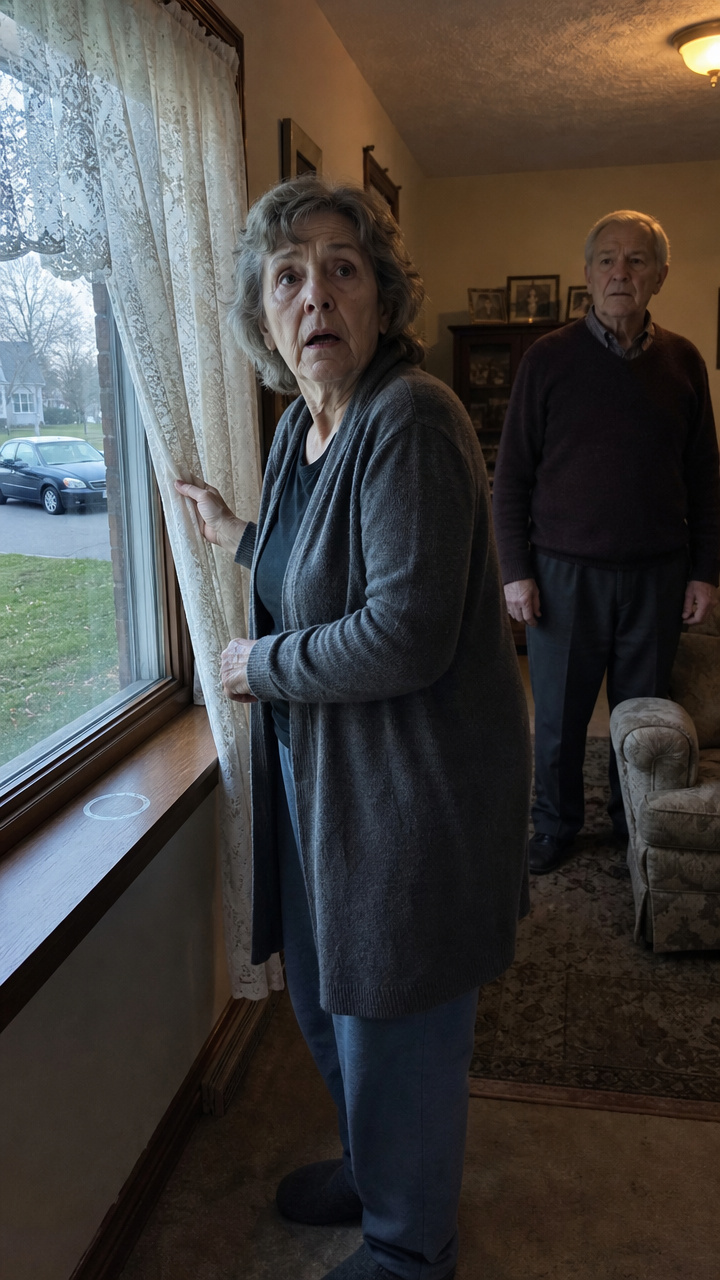
Thomas and I had been married for forty-seven years when I first began to wonder whether my husband was keeping something important from me.
It had nothing to do with money.
It wasn’t an ordinary family secret, either.
It all began with a single cup of tea.
Ten years earlier, on an otherwise uneventful Sunday, I was preparing dinner in the kitchen when Thomas came in and asked, quite unexpectedly:
“Eleanor, could you brew one cup of tea at four o’clock?”
I didn’t even turn around.
“Of course. For you?”
For some reason, he fell silent.
“No. No one is going to drink it.”
I looked at him, puzzled.
Thomas was completely serious.
“Then why make it at all?”
He opened the cupboard, took out one of our old blue cups, placed it carefully on the table, and said:
“Pour the tea into this one. Then put it beside the living-room window. And don’t touch it until the sun goes down.”
I laughed.
I thought my husband was playing some strange little joke on me.
But Thomas didn’t smile.
That Sunday, I did exactly as he asked.
I brewed the tea.
I set the cup beside the window.
And that evening, I poured the cold drink down the sink.
A week later, Thomas reminded me again.
“Eleanor, please don’t forget the tea today.”
The third Sunday passed in exactly the same way.
So did the fourth.
After several months, the peculiar ritual began to wear on my patience.
“Thomas, who are you always leaving that tea for?”
“Just do it, please.”
“But I want to know why.”
Every time, he gave me almost the same answer:
“One day, you’ll understand.”
Years went by.
Every Sunday, precisely at four in the afternoon, I poured the same tea.
No sugar.
Always into the same blue cup.
Always placed in the same spot beside the window.
At first, I assumed it was simply one of my husband’s unusual habits.
But eventually, I started noticing something else.
A few minutes before four each Sunday, Thomas would walk over to the window.
He would stand there, staring at the street for a long time.
Sometimes he would carefully draw back the edge of the curtain.
Then he would step away as if nothing had happened.
One day, I finally lost patience.
“Thomas, who are you waiting for out there?”
He looked at me in such an unfamiliar way that I decided not to press him any further.
But from that moment on, troubling possibilities began crowding my thoughts.
Was there another woman?
Someone he had known before me?
Could that cup truly be some kind of secret signal meant for a person from his past?
Again and again, I told myself it was foolish.
We were no longer young.
We had spent nearly half a century together.
Still, once suspicion takes root, it refuses to disappear simply because you ask it to.
One Sunday, I decided to watch the street myself.
As usual, I placed the tea beside the window, then quietly settled into a chair at the far end of the room.
At 4:12, an old dark-colored car stopped across the street.
It remained there for about a minute.
Then it drove away.
Thomas had seen it, too.
I immediately noticed the tension in his hands.
“Who was that?” I asked.
“I have no idea.”
But I knew at once that he was lying.
That night, I barely slept.
The following Sunday, the same car appeared again.
This time, I could make out a woman behind the glass.
She was no longer young.
She was looking directly toward our house.
More precisely, she was watching the cup by the window.
My heart began to pound.
I said nothing to Thomas.
A week later, I decided to conduct a small experiment.
I simply didn’t make the tea.
Four o’clock came.
Then 4:05.
Then 4:10.
Thomas entered the living room, saw the empty windowsill, and raised his voice for the first time in ten years.
“Eleanor, where is the cup?”
“I’m not putting anything there today.”
His expression changed immediately.
“Please. Not today.”
“I’ve followed your instructions for ten years. I think I’ve earned the right to know what this is about.”
He was silent for a long time.
Then he finally said:
“If you don’t put the tea there today, we may never get another chance.”
A chill went through me.
I went into the kitchen and prepared the drink.
My hands were trembling badly.
After placing the blue cup beside the window, I stayed there and waited.
What happened next is something I will never forget.
At 4:17, the familiar dark car stopped across the street again.
But this time, the woman didn’t remain inside.
The door opened.
She stepped out.
She looked to be around seventy. Her gray hair framed her face neatly, and she was carrying a small box in both hands.
Slowly, she began walking toward our house.
I looked at Thomas.
He was sitting in his chair.
And he was crying.
In all the decades we had shared, I had hardly ever seen tears in his eyes.
“Thomas… who is that woman?”
Someone knocked at the door.
I wanted him to answer it.
Instead, he looked at me and said very quietly:
“Eleanor, you open it.”
I walked to the door.
The woman from the car was standing on the porch.
For several seconds, she simply stared into my face.