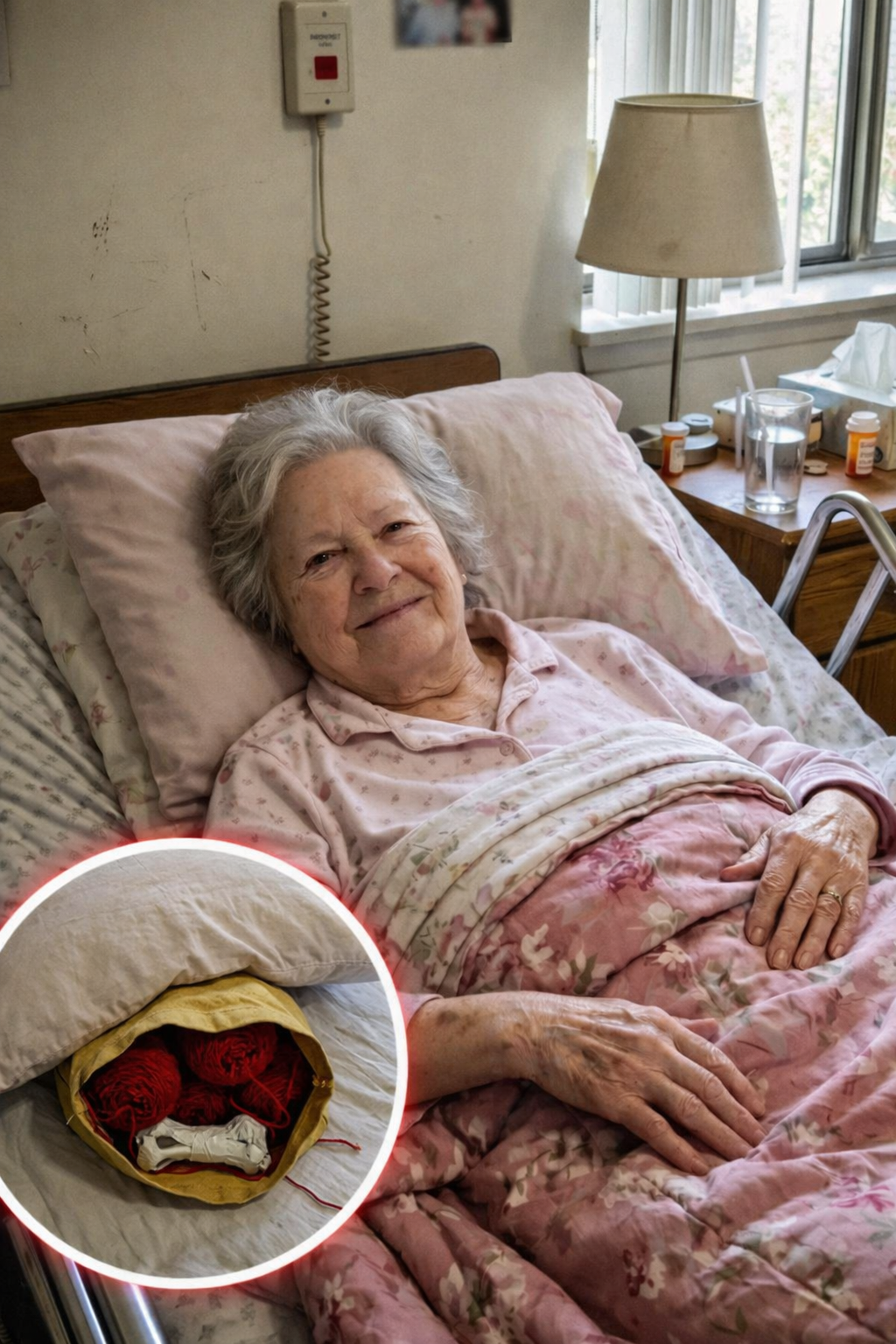
I worked exhausting hours and drained myself financially to keep the woman who raised me in assisted living. I never questioned the cost—until one afternoon, when I arrived early and overheard something that made me realize I had completely misunderstood everything.
I’m 40 years old, and the woman I call Mom isn’t my biological mother.
My real mom died when I was eight.
Later, my dad married Linda.
And over time… she simply stayed.
She never tried to replace my mother. Never touched her belongings without asking. Never pushed me to call her “Mom.”

She just showed up—again and again—until one day, without noticing when it happened, she was my mom.
Then, two years ago, my dad died.
After the funeral, after the paperwork, after the last casserole dishes stopped arriving…
It was just the two of us.
I wish grief had made me more attentive. More present.
It didn’t.
I buried myself in work.
Twelve, sometimes fourteen hours a day. Bills piling up. Debt from my dad’s medical care. A constant feeling that I was always running behind in my own life.
I called her.
Visited when I could.
But never enough.
Then her health started slipping.
Nothing dramatic at first.
Fatigue. Instability. A fall in the kitchen she brushed off with a laugh—but I saw the bruise, and it scared me.
I suggested home care.
She refused.
Then one Sunday, she sat me down and said:
“I found a place.”
“Place?” I asked.
“Assisted living.”
She had already toured it.
Already decided.
“It’s small. Good staff. There’s a garden,” she said calmly.
Then she added something that made it easier to accept:
“Because of an old arrangement, I’ll get a reduced rate.”
I frowned. “What kind of arrangement?”
“Years ago, I donated part of my sister’s estate to help renovate one of their wings. I also served on their advisory board. They offer discounts to legacy residents.”
“How much?”
She hesitated.
“$2,500 a month.”
I didn’t even let her finish.
“No. I’ll cover it.”
“You don’t have to—”
“I want to.”
And I meant it.
The lie came later.
After she moved in.
She told me billing worked differently for legacy residents.
That I should just write the check to her, and she’d handle payment through her private account.
It sounded believable.
And part of me didn’t want to dig deeper.
Details made it real.
So every month—for a year—I brought her a check.
Same routine.
I’d arrive after work.
Hand her the check.

Stay for an hour.
Maybe a little longer if I could.
She’d sometimes say, “Stay a bit more.”
And I’d say, “Next time.”
There was always a next time.
Last Thursday, I arrived early.
A client had canceled.
As I walked toward the sunroom, I heard her voice.
“…I told her not to bring flowers again,” she was saying. “I don’t even know what to do with orchids.”
Another woman laughed.
“At least your daughter visits,” she said.
Linda laughed too—but softer this time.
Then she said something that stopped me cold.
“She thinks she’s paying for me to be here. That’s the only reason she shows up every month.”
I froze.
The other woman said gently, “Linda…”
“I know how that sounds,” she replied quietly.
And just like that, everything shifted.
I stepped back before they saw me.
My mind couldn’t catch up.
A few minutes later, she came out and saw me.
“You’re early,” she said.
“Let’s go to your room,” I replied.
Something in my voice made her pale.
Inside, I closed the door.
“What did you mean?” I asked.
“What?”
“I heard you.”
Silence.
Then:
“Am I paying for you to live here?”
She sat down slowly.
“Not exactly.”
I laughed—sharp, humorless.
“That’s not an answer.”
I found her knitting bag.
Dumped it onto the bed.
Yarn. Needles.

Then folders.
Bank statements.
Investment summaries.
Every check I’d given her—tracked.
Saved.
Invested.
Not spent.
My stomach dropped.
“What is this?” I asked.
Her voice broke.
“It was the only way I knew you’d keep coming.”
That hit harder than anything else.
She kept talking.
After my dad died, she said, I started drifting.
Shorter visits.
Delayed calls.
“Next week.”
Always next week.
“You could’ve told me you were lonely,” I said.
She shook her head.
“I wanted you to want to come.”
That broke something in me.
“I was ashamed,” she whispered. “I didn’t want to beg my own daughter for time.”
My chest tightened.
“Then don’t call me your daughter while tricking me into paying for it.”
She handed me a letter.
I tore it open.
She had written everything.
That she never saw me as a stepdaughter.
That she was afraid of being left behind—not suddenly, but slowly.
That she convinced herself she’d “return the money later.”
That it didn’t make it right.