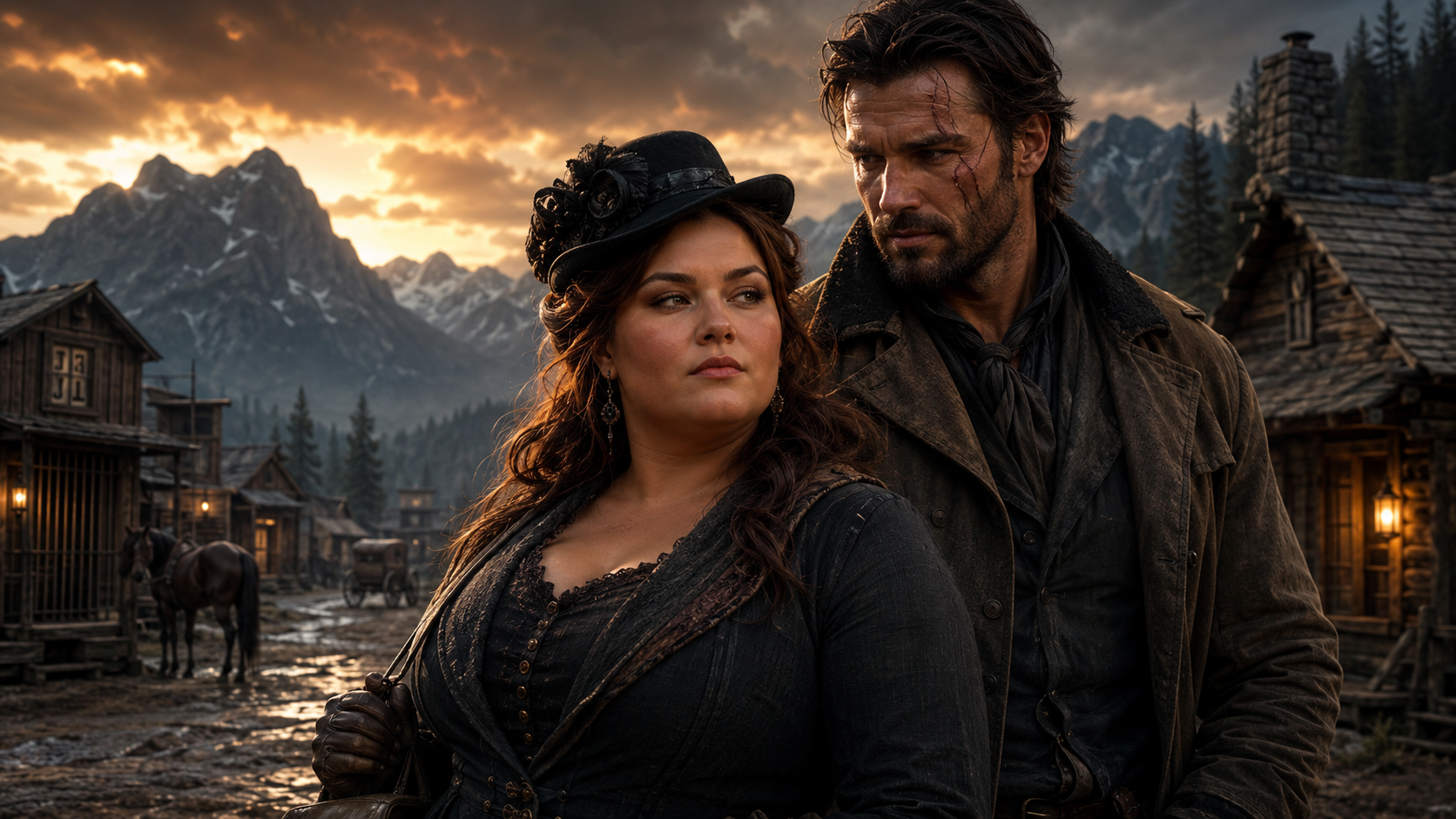
Then through Nell’s testimony.
Then through the first snowmelt survey that proved Gideon’s land included part of the Raven Spur vein.
Then, somehow, through spring.
One evening, she stood on the porch of the Blackpine cabin while Gideon repaired the second chair.
“You don’t need to fix it,” she said.
“Yes, I do.”
“Why?”
He did not look up. “Because you keep sitting on the step.”
“It is a good step.”
“It is a poor chair.”
She smiled.
The creek flashed silver below. The aspens moved in the wind. The cabin no longer looked like a place waiting to be abandoned. There were curtains now. A pot of herbs near the door. Books on the shelf beside the ammunition. A blue ribbon tied around the handle of Miriam’s trunk in memory of Beatrice.
Gideon tightened a screw and set the chair upright.
“There,” he said.
Miriam sat.
The chair held.
“So,” she said, “now what?”
He leaned against the porch post. “Now you go back to Helena, I suppose.”
“Do you want me to?”
“No.”
The answer came quickly.
Too quickly for him to hide.
Miriam’s heart gave one hard beat.
“Gideon Rusk,” she said softly, “that was nearly a clear statement.”
He looked at her, scar silver in the evening light.
“I don’t want you to go.”
She folded her hands in her lap.
“Why?”
“Because the cabin sounds wrong when you’re not in it.”
“That is not romance.”
“It’s true.”
“Truth is a beginning.”
He stepped closer.
“I don’t know how to ask a woman to stay without making it sound like a trap.”
“Then don’t ask like a man setting one.”
“How should I ask?”
“Like a man opening a door.”
He looked toward the cabin door, then back at her.
“Miriam Bell,” he said, voice rough, “there is room here if you want it. Not because I need a wife to silence a town. Not because you need a man to protect you. Not because loneliness is easier with any warm body beside it. There is room because I want you here. Because you see me plain. Because when trouble came, you stood your ground. Because I have spent years thinking I was the thing women ran from, and you were the first person to ask who taught them to run.”
Miriam’s throat tightened.
For once, she had no clever answer ready.
Gideon looked terrified by his own honesty.
She stood.
“Gideon.”
“Yes?”
“I did not come here to be your bride.”
“I know.”
“I came to bury a lie.”
“I know.”
She stepped closer.
“But I may stay to plant something honest.”
His eyes changed.
Slowly, giving her every chance to move away, he lifted one hand and touched her cheek.
His palm was rough.
His touch was not.
“May I kiss you?” he asked.
Miriam smiled.
“All this time on a mountain, and you finally ask a sensible question.”
He laughed then.
A real laugh.
Warm, startled, alive.
Then he kissed her beneath the darkening pines, on the porch where five women had once been frightened away by lies, while the sixth woman stayed—not because she was desperate, not because she was fearless, and not because the town had been wrong about her size.
She stayed because the town had been wrong about everything.
And because some graves, once opened, do not only give up the dead.
Sometimes they give the living back their names.