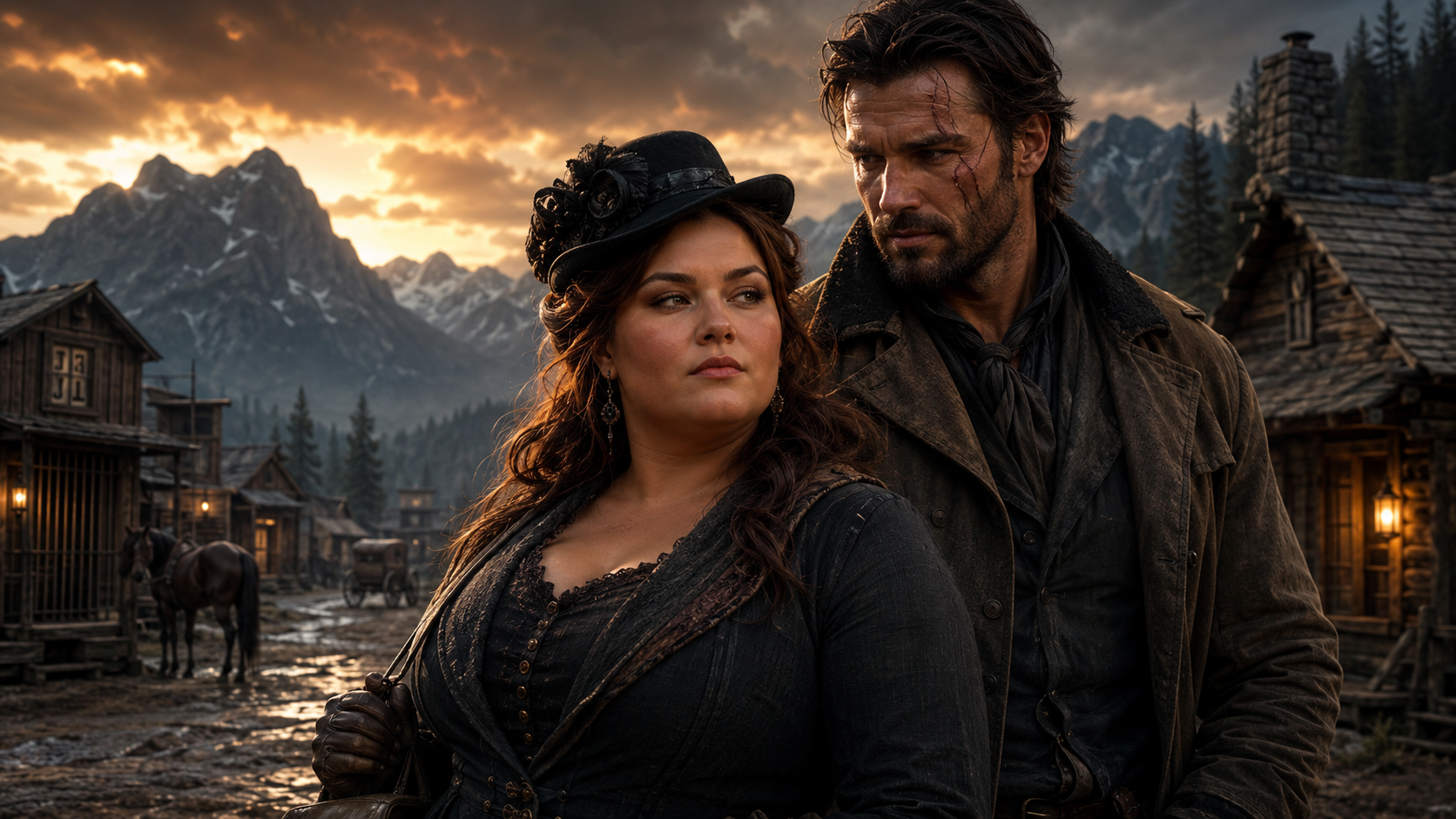
Farther up the ridge, they found a second trick: a line of black feathers tied to fishing wire, arranged so they would flutter against a window in the wind. Near it, nailed to a tree, was a strip of rotted leather from a child’s shoe.
Gideon touched it as if it were a bone.
“Nell,” he said.
Miriam wrote everything down.
“What did Nell know?” she asked.
“What do you mean?”
“Five women were frightened off. Not robbed. Not killed. Frightened. That suggests they were obstacles, not targets.”
“To what?”
“To you.”
He looked at her.
“Your land,” she said. “Your name was in my sister’s dress with parcel numbers. You own something someone wants.”
“I own rocks, trees, bad weather, and debt.”
“Who holds the debt?”
“Crowe bought my note from the bank last winter.”
Miriam closed her notebook.
“There it is.”
“No. If he wanted my land, he could foreclose.”
“Not if there is something beneath it that would make a court ask questions.”
Gideon’s eyes shifted toward the upper ridge.
“The old Raven Spur claim,” he said.
“What is that?”
“An abandoned mine. My father said part of it crossed under our pasture, but no survey ever proved it.”
“Who owned the claim?”
“A company from Denver. Gone now.”
“Companies rarely vanish. They become other companies wearing cleaner gloves.”
He almost smiled.
Then a gunshot cracked across the ridge.
Bark exploded from the tree beside Miriam’s shoulder.
Gideon threw himself into her, driving her behind a boulder. She hit the ground hard enough to knock the breath from her lungs.
A second shot sparked against stone.
Gideon crouched over her, rifle in hand.
“Miriam.”
It was the first time he had used her name.
She heard it through the ringing in her ears.
“I’m not hit,” she said.
“You’re sure?”
“I am angry, which suggests I am alive.”
Another shot struck high.
Gideon lifted his rifle, waited, and fired once.
Somewhere through the trees, a man cursed.
Then came crashing footsteps, retreating fast.
Gideon started after him.
Miriam grabbed the back of his coat.
“Don’t chase a man who wants to lead you somewhere.”
He froze.
His breathing was hard.
“You were almost killed.”
“Yes. Which makes my advice unusually informed.”
He looked down at her, still half-sprawled in mud and pine needles, her hat crooked, her cheek scratched, her eyes furious.
Something changed in him then.
Not softness.
Respect.
He held out a hand.
She took it.
He pulled her to her feet as if her weight did not surprise him, offend him, or require comment.
Miriam brushed mud from her skirt. “Now we know they will shoot before they will let us reach that mine.”
“Then we go back.”
“To the cabin?”
“To town.”
She blinked. “Town?”
“You wanted truth. Truth needs witnesses.”
“Briarfall will not believe you.”
“No.”
His jaw tightened.
“But they might believe you.”
By afternoon, they rode into Briarfall with the broken crying device tied to Gideon’s saddle and the strip of child’s shoe wrapped in Miriam’s handkerchief.
The town gathered immediately.
People always found time for disgrace.
Elias Crowe came out of the general store, wiping his hands on a linen cloth.
“How surprising,” he said. “The bride returns alive.”
Miriam dismounted slowly. Her whole body hurt. She refused to show it.
“Disappointed, Mr. Crowe?”
His smile held.
“Relieved, of course.”
Gideon untied the device from his saddle and threw it into the mud at Elias’s feet.
The crowd leaned closer.
Sheriff Dobbs stepped out of the jail. “What’s this?”
“A voice,” Miriam said. “A false one.”
Elias glanced at it, then back at her. “I have no idea what that means.”
“It means Ruthie Crane did not hear a ghost. Someone built a machine to make her believe she did.”
A murmur went through the crowd.
Miriam held up the strip of leather. “Nell Ward did not find a child’s shoe by chance. Pieces of it were planted above the creek.”
Gideon looked at the faces around them.
Some curious.
Some ashamed.
Some afraid.
Miriam continued, “Five women were driven away from Blackpine Ridge. Each fright was tailored to what each woman feared. The stories spread afterward made Gideon Rusk look dangerous, unstable, cursed.”
Elias laughed softly.
“This is quite a tale.”
“Yes,” Miriam said. “But not as impressive as the one you have been telling.”
His eyes sharpened.
Sheriff Dobbs frowned. “Careful now.”
Miriam turned to him. “My sister died in your town two years ago. You signed the notice.”
Dobbs paled.
Elias went still.
The crowd shifted.
“Beatrice Bell,” Miriam said. “Seamstress. Buried after a supposed fever. Her belongings were searched before they were returned. Someone missed the paper hidden in her dress.”
Elias’s voice lowered. “Mrs. Bell, grief can twist memory.”
“My memory is excellent.”
“That does not make your accusations sane.”