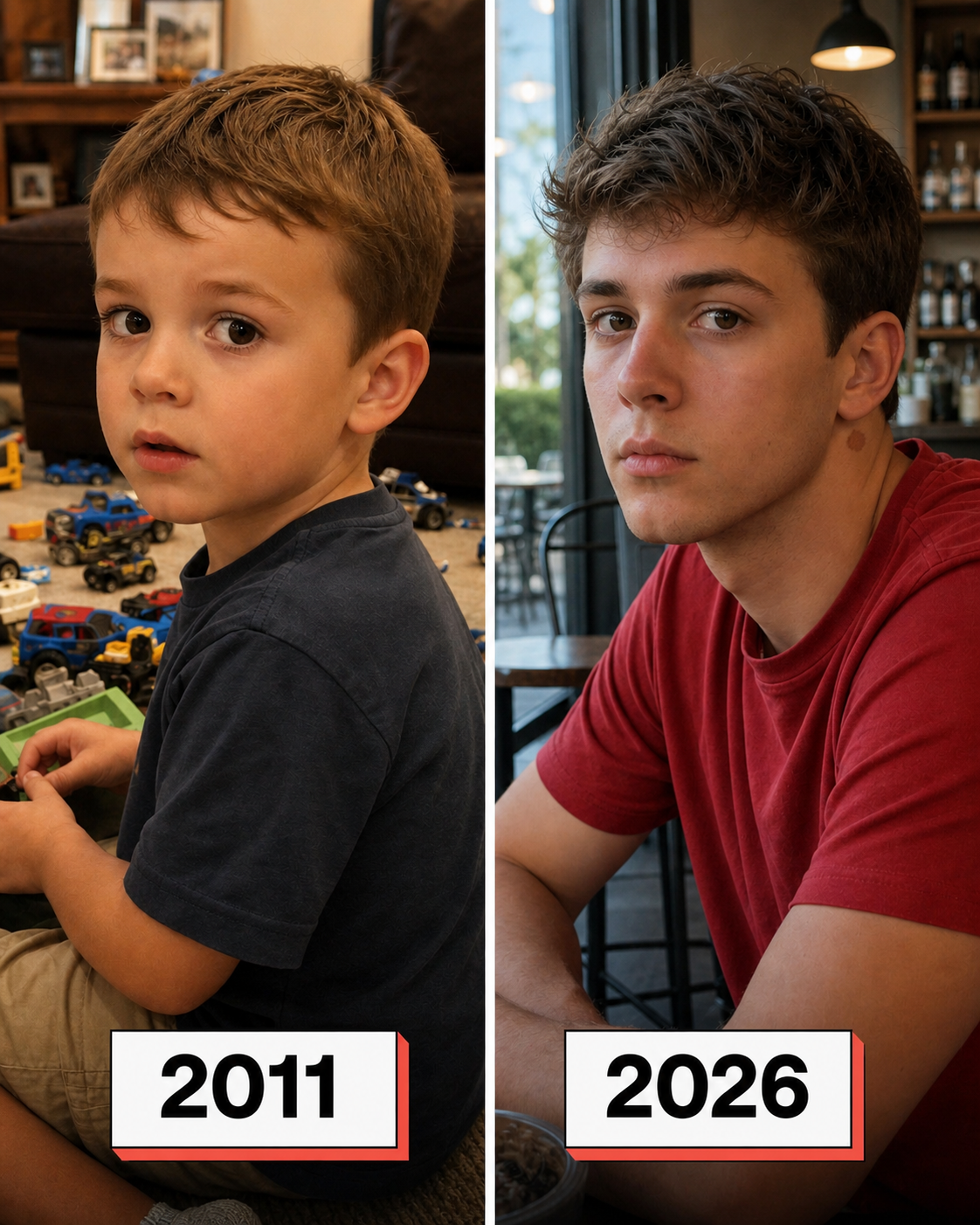
Fifteen Years After Losing My Four-Year-Old Son, I Served Coffee to a Mysterious Stranger Bearing the Same Unique Birthmark — Then He Stared Directly at Me and Said, “Wait a Second… I Recognize You!”

Fifteen years after laying my four-year-old son to rest and struggling to rebuild a quieter, emptier life, an ordinary shift at the small café where I worked reopened wounds I believed had long scarred over. A young man walked in, ordered a plain black coffee, stared at me as if he recognized me from somewhere impossible, and spoke a sentence that has echoed in my head ever since.

I lost my son fifteen years ago.

His name was Howard. He was only four years old. Far too young for a funeral. Far too small for the unbearable grief that followed.

Doctors told me it had been a sudden infection — aggressive, rare, unstoppable. The kind that steals a child before anyone even realizes how serious things have become.

All I truly understood was this:

My little boy was gone.

I still remember signing hospital papers with shaking hands and blurred vision. I remember a nurse gently squeezing my shoulder and whispering,
“Don’t look too long. It’s kinder to remember him alive.”

And I listened.

I listened because I was shattered beyond reason. Because that night the hospital was in complete disarray. A violent storm had knocked out part of their system, computers failed, paperwork piled everywhere, exhausted staff rushed between rooms, and people trusted whatever chart or wristband was in front of them.

At the time, I knew none of that.

I only knew my son had disappeared from my life forever.

Howard had a birthmark beneath his left ear.

Years later, I moved away to another town and started over in silence. I found work in a café where no one knew me as the grieving mother who had buried a child. I made coffee, wiped tables, smiled at strangers, and learned how to survive without ever truly healing.

But some memories never fade.

Howard’s birthmark sat just below his left ear — small, uneven, oval-shaped. Every night before bed, I used to kiss that exact spot.

For years, I forced myself not to think about it.

Until yesterday.

The café was packed. Machines hissing. Customers waiting. Orders stacking one after another.

Then a young man stepped up to the register.

“Black coffee,” he said casually.

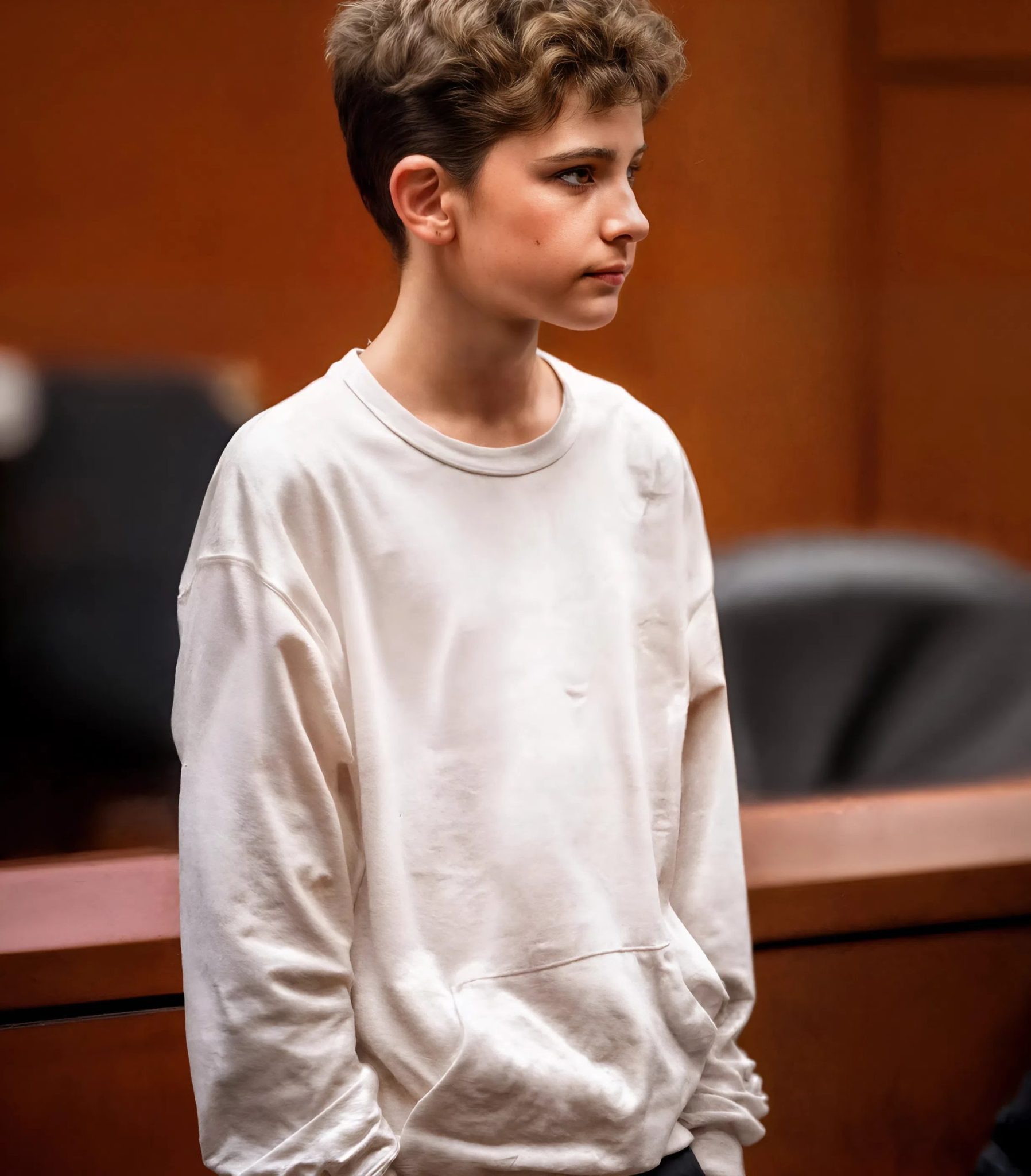
He looked about nineteen, maybe twenty. Dark hair. Tired eyes. Nothing remarkable.

I turned to prepare the drink, and as he tilted his head slightly, my entire body froze.

I saw the mark.

My hands stopped moving instantly.

Same shape.
Same place.

For a moment, I couldn’t breathe.

“No,” I told myself. “No. Birthmarks are common. Grief creates illusions.”

Still, my fingers trembled badly enough to spill coffee over the lid. When I handed him the cup, our fingers brushed briefly.

Everything around me suddenly felt distant and hollow.

Then he looked directly into my eyes.

Really looked at me.

His expression changed.

And quietly, almost under his breath, he said:

“Wait… I know who you are.”

I stared at him.

“What?”

He frowned thoughtfully.

“You’re the woman from the photograph.”

The noise around me seemed to disappear.

“What photograph?” I asked immediately.

He stepped backward.

“I probably shouldn’t have said anything.”

“Wait!”

But he grabbed his coffee and walked out before I could stop him.

One of my coworkers glanced over nervously.

“You okay?”

“No,” I answered honestly.

I barely survived the rest of my shift. All I could see was the birthmark. All I could hear was the word photograph.

After closing, I checked the mobile order information on the payment tablet.

Name: Eli.

I wrote it down on the back of a receipt and sat in my car staring at it for nearly an hour.

Maybe it meant nothing.

But for the first time in fifteen years, I felt something stronger than grief.
Hope.

Fear.

Movement.

The next afternoon, he returned.

The second I spotted him through the café window, cold rushed through me again.

When he approached the counter, I forced a steady voice.

“Black coffee?”

He nodded.

I prepared it slowly before finally asking:

“Could we talk for a moment?”

He immediately tensed.

“I shouldn’t have said what I said.”

“You mentioned a photograph,” I replied softly.

He glanced toward the exit.

“I really shouldn’t have.”

“But you did.”

After a long silence, he exhaled deeply.

“It was an old picture. You were younger. You were holding a little boy.”

The mug nearly slipped from my hands.

A chill spread through my chest.

He noticed my reaction instantly.

“Where did you see it?” I whispered.

“At home,” he answered. “Years ago. Hidden inside a sealed envelope in an old storage box. I only saw it once, but I remembered your face because my mom panicked when she caught me looking at it.”

My throat went dry.

“What did she say?”

“She told me you were someone who once tried to take me away.”
I swallowed hard.

“What’s your mother’s name?”

“Marla.”

I nearly dropped the cup entirely.

Marla.

She had been one of the nurses on Howard’s hospital floor.

Not a doctor. Not someone important enough for me to remember clearly afterward. Just always there — calm voice, soft smile, reassuring words. Telling me to rest. Promising the staff would take care of everything.

Once, while I was crying so hard I could barely stand upright, she had told me:

“Sometimes the kindest thing a mother can do is let go.”

Back then, I believed she was comforting me.

Now those words sounded rehearsed.

I looked at Eli carefully.

“Will you meet me after work?”

“Why?” he asked cautiously.

“Because I had a son,” I said, my voice breaking, “and I think you deserve to hear about him.”

That evening we met at a quiet diner nearby.

I didn’t accuse him of anything.

I simply told him about Howard.

“He used to hum while eating cereal,” I said with a shaky smile. “Not actual songs. Just random sounds. He called pigeons ‘city chickens.’ And he had a birthmark beneath his left ear.”

Eli went completely still.

“My mother used to tell me my birthmark came from my real family’s bad luck,” he admitted quietly.

My heartbeat pounded in my chest.

“Your real family?”

“That’s what she called them. Then she’d stop talking.”

“Do you have a birth certificate?”

He laughed bitterly.

“I have documents. That’s not necessarily the same thing.”

He explained how they had moved multiple times before he started school. Every time records were requested, Marla always had an explanation ready — house fire, missing paperwork, delayed filings, corrected adoption forms.

Then I asked his birthday.

When he answered, my blood ran cold.

It was exactly two months later than Howard’s birthday.

Then he added:

“She always said my records had been corrected later.”

That was the moment I stopped doubting myself.

The following morning, we went together to the county records office.

Eli requested his own file while I stood silently beside him.

The clerk examined the records, frowned, and finally said:

“These documents appear to have been reissued when you were six years old.”

Outside in the hallway, Eli immediately called Marla.

“Was I born to you?” he asked directly.

Silence.

Then her voice came sharply through the phone:

“Come home. And stay away from that woman.”

We should have called the police first.

I know that now.

But shock doesn’t think clearly.

We drove to Marla’s house instead.

When she opened the door and saw us standing together, all color drained from her face.

“Eli,” she said quickly, “come inside.”

He stayed exactly where he was.

I remained silent. This had to come from him.

He looked straight at her.

“Why did you keep a photograph of her holding me?”

Marla froze.

“Come inside,” she repeated.

“No. Answer me.”

“She’s confused,” Marla stammered. “She lost someone and—”

“Answer me.”

Her mouth trembled violently.

Inside that house, the truth finally shattered open.

Howard had been sick, yes — but he had been recovering.

Around the same time, Marla had lost her own young son. Same age. Similar appearance. Same soft brown hair.

And somewhere inside her grief, boundaries had begun disappearing.

She called Howard “my brave boy” when she thought I was asleep. Stayed too long beside his bed. Watched us too closely.

Then, during the chaos of a shift change, another child died in the hospital.

A state ward.

No family waiting for him.

No parents to claim him.

Marla didn’t need an elaborate plan.

She only needed exhausted staff, confusion, paper charts, switched wristbands, and people too overwhelmed to question anything.

She swapped identities.

Redirected paperwork.

Placed documents in front of me while I was barely conscious from grief.

And told me not to look too closely at the dead child in the room.

Because it wasn’t Howard.

“You let me bury another child,” I whispered.

Marla burst into tears.

“I loved him.”

Something inside me snapped.

“You do not get to begin with that.”

She sobbed harder.

“I loved him every single day.”

“And you stole him from me with a lie.”

Eli stood silently against the wall, pale as paper.

Marla reached toward him desperately.

“I was a good mother.”

He stepped away from her.

Quietly, he asked:

“Did you ever plan to tell me the truth?”

She said nothing.

That silence answered everything.

I turned to Eli carefully.

“I’m not asking you to make any decisions today. I’m not asking you to call me Mom. I only want one thing.”

“A DNA test.”

Marla shook her head frantically.

“No. That will destroy everything.”

Eli stared at her for a very long time before finally saying:

“No. It will tell me whose life I’ve actually been living.”

The DNA results arrived six days later.

I opened mine alone in my kitchen.

Parent-child match.

My legs collapsed beneath me.

Not “Howard survived.”

Howard had become Eli.

A real person.

Nineteen years old.

Breathing.

Angry.

Lost.

Alive.

Later, I drove to his apartment.

He opened the door already holding his copy of the results. He looked exhausted, like sleep had abandoned him completely.

For a long time, neither of us spoke.

Finally, he whispered:

“I don’t know how to be Howard.”

I sat across from him quietly.

“Then don’t,” I said gently. “Just let me know who you are now.”

That was when he cried.

Softly. Almost angrily.

Several weeks have passed since then.

There’s an investigation now. Court hearings will follow. I don’t know what justice looks like after fifteen stolen years.

But Eli has started visiting the café after closing time.

The first night, I made him black coffee.

He took one sip and grimaced immediately.

“I only order this because it sounds adult.”

For the first time in years, I laughed — genuinely laughed.

“So what do you actually like?”

He looked embarrassed.

“Too much sugar. Too much cream.”

“That sounds familiar.”

“Why?”

“Because Howard used to beg for extra honey in his tea.”

He stared at me for a second.

Then smiled.

Small.

Real.

Last night, I finally opened the memory box I’d kept hidden for fifteen years.

A red mitten.

A toy train.

A child’s crayon drawing with a giant yellow sun.

A blue sweater missing one button.

Eli picked up the sweater slowly and fell silent.

Then he whispered:

“I know this.”

My throat tightened.

“What do you mean?”

He rubbed the empty buttonhole gently with his thumb.

“Not clearly. Just… sitting on the floor. Being frustrated because I couldn’t fix it. Someone laughing nearby.”

I covered my mouth with my hand.

Because I remembered that too.

Today, I brought him into the room I never had the strength to clean out.

He stood in the doorway for a very long time, staring at the dust floating through the light and the old toys still sitting untouched on the shelves.

Then he walked inside.

He picked up the toy train and looked at me.

“Can you tell me about him?” he asked quietly.

I smiled through tears.

“I can tell you about you.”

Fifteen Years After Losing My Four-Year-Old Son, I Served Coffee to a Mysterious Stranger Bearing the Same Unique Birthmark — Then He Stared Directly at Me and Said, “Wait a Second… I Recognize You!”
I married a friend of my father’s and was stunned when I saw what he started doing on our wedding night.