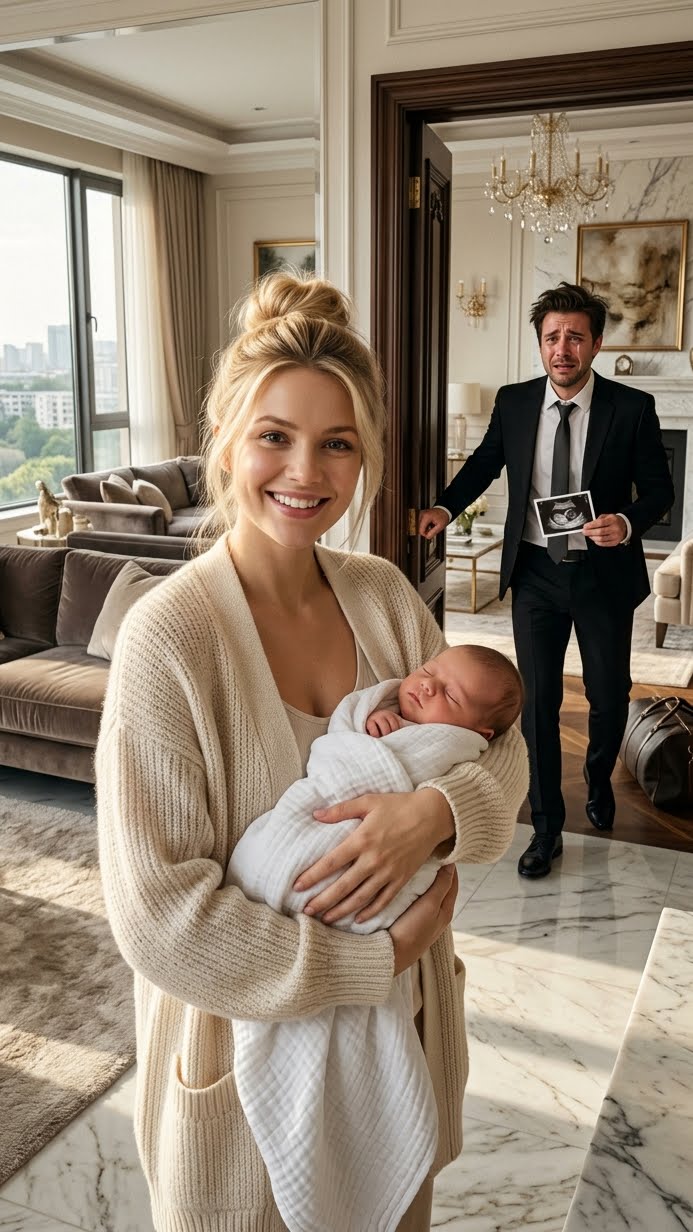
I had built an empire on the ruthless precision of predicting the future, yet I remained entirely, pathetically blind to my own.
From the forty-fourth floor of Vanguard Sustainable Tech—known simply as VST to the breathless financial press—the sprawling city of Seattle looked like a massive circuit board of pulsing light and endless, exploitable potential. I was its architect. At thirty-four years old, I had successfully steered Vanguard from a scrappy, underfunded clean-energy startup into a multi-billion-dollar titan of industry. I controlled the corporate narrative. I controlled the global market share. I genuinely thought I controlled absolutely everything in my orbit.
It was a late Tuesday evening in November, raining the kind of relentless, freezing Pacific Northwest drizzle that seemingly seeps straight through the glass and into your bones. The executive floor was completely empty, save for the low, constant hum of the server rooms and the distant, muffled wail of a police siren far below on the wet streets. I was alone, searching for the original incorporation documents. It was a rare, nostalgic impulse before signing a massive, landscape-altering merger the following morning. I wanted to see where I had started before I swallowed another competitor whole.
To find those old papers, I had to unlock the bottom right drawer of my massive mahogany desk—a heavy, stubbornly misaligned drawer I had not touched in nearly two years. The brass key turned with a stiff, protesting grind that echoed sharply in the silent office. I pulled it open. Inside, amidst stale-smelling tax folders, obsolete marketing brochures, and forgotten encrypted USB drives, lay a pristine, unmarked manila envelope.
I didn’t recognize it. It bore no corporate seal, no return address, no handwriting.
A strange hesitation gripped me, but I broke the seal anyway. A small, laminated square of thermal paper slid out, tumbling onto the dark, polished wood of my desk.
My breath caught sharply in my throat, snagging on a sudden block of ice. It was an ultrasound.
Beneath it, tucked carefully into the bottom corner of the envelope, was a tiny, clear plastic hospital bracelet. The ink was slightly faded, but perfectly legible under the sharp, unforgiving glare of my desk lamp. Baby Boy Hayes. 7 lbs, 4 oz. Hayes. Rachel’s maiden name. The name she had proudly reclaimed.
My mind raced, violently pulling dates and timelines together until they aligned with a cold, devastating precision that made my stomach bottom out entirely. The ultrasound in front of me was dated exactly two weeks before she calmly handed me the divorce papers in the foyer of our home. The hospital bracelet was dated exactly eight months ago. During the precise window of time I was sitting in a luxury suite in Geneva, ruthlessly negotiating a lithium supply chain and drinking champagne to celebrate my solo cover feature on Forbes, my ex-wife was lying in a sterile hospital room, bringing a child into the world.
My child.
A cold dread coiled tight in my gut, wrapping around my spine. My palms went slick with sweat, slipping against the smooth surface of my desk. I stared at the tiny plastic band, desperately trying to reconcile the earth-shattering magnitude of what I was holding with the absolute, indifferent silence of my office. I had a son. He had been breathing, crying, learning to look at the world for eight months, and I had been completely, unforgivably oblivious, buried alive under stock reports and endless board meetings.
I didn’t call my private driver. I couldn’t bear the thought of another human being looking at me. I took the private elevator down to the underground garage, my heart hammering furiously against my ribs like a trapped bird desperately seeking an exit. I got into my own car and drove aggressively out into the blinding rain. The tires hissed loudly against the slick asphalt as I sped toward Mercer Island, my knuckles white on the steering wheel, my mind a fractured kaleidoscope of guilt, anger, and profound terror.
The house looked exactly the same as the day I left it. The porch light was a warm, yellow beacon cutting through the downpour, mocking my arrival. I didn’t knock. I still had my heavy brass key on my keyring. I shouldn’t have used it—the polite rules of civilized engagement had evaporated the absolute moment my eyes registered that tiny hospital bracelet.
The front door clicked open. The house smelled instantly of lavender and something warm, like baking bread. The living room was softly, intimately lit by a single floor lamp.
And there she was.
Rachel was standing near the stone fireplace, swaying gently side to side in a rhythmic, practiced motion. She wore a faded gray cashmere sweater, her dark hair pinned up haphazardly with a silver clip. Resting against her chest, tightly swaddled in a pale blue knit blanket, was a baby.