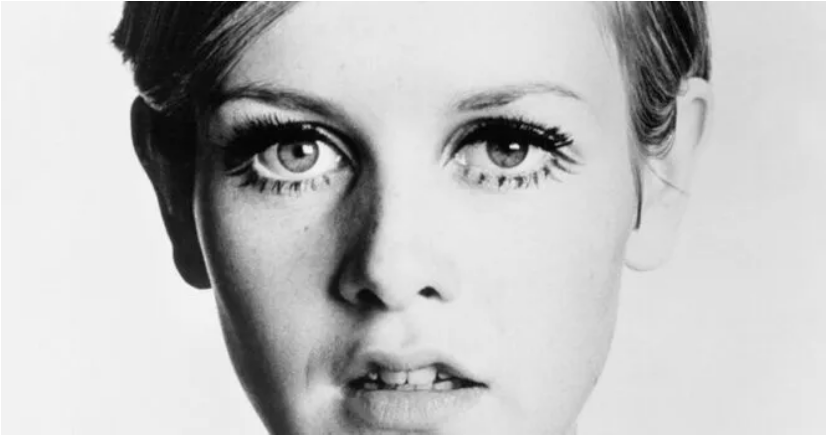
Not wanting to go over the top, Twiggy complemented her pixie face and big blue eyes with a pixie hairstyle, creating a unique look that has been repeated for decades.
Although she changed the fashion industry with her youthful style, the legendary cover girl recently revealed that she didn’t want the androgynous hairstyle that defined the Swinging Sixties look and that she was simply too shy to turn down a job from a celebrity hairdresser at a ‘posh salon’.
As we celebrate her 74th birthday on 19 September, we take you back to the 1960s when Twiggy first inspired the famous baby doll hairstyles we still see today!
In 1966, British-born Twiggy, whose birth name was Leslie Hornby, was looking for a new fashion look to help launch her career. At only 5 feet 6 inches tall, the young model was told she was too short in stature to succeed in the competitive fashion industry.
On 19 September, the former supermodel turned 74 and recalled styling her shoulder-length hair for trial ‘head shots’ at House of Leonard in London and meeting renowned British stylist Leonard Lewis (professionally known as Leonard of Mayfair).
Lewis was looking for models to try out his new haircut.
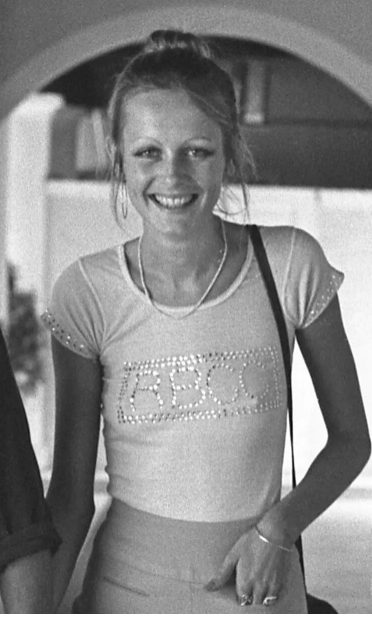
In a recent appearance on Jessie Ware’s Table Manners podcast, the former style icon revealed that she never wanted to cut her hair short.
‘I came in to shampoo and style my hair and Leonard saw me and said: ‘Let me give you a new haircut,’’ Twiggy told the Ware podcast. ‘I was growing my hair out, and for a moment I even thought, ‘I don’t know if I want a haircut.’ But I was at a very posh salon in Mayfair, so I was a bit embarrassed to say I didn’t want a haircut, so I just nodded.’
Twiggy returned to the salon the next day and sat in Lewis’ chair, prepared for what was to come.
‘I went back the next day and sat there for seven hours: he cut my hair, then I went out and got my hair coloured and then cut my hair again. Oh, it was crazy,’ she said with a laugh.
And while the androgynous look wasn’t what Twiggy was looking for, she quickly realised why Lewis had earned fame as a stylist.
After perfecting her golden blond, Lewis asked British photographer Barry Lategan to take pictures of Twiggy.
‘Leonard hung them up in the salon and a journalist saw them,’ Twiggy said, referring to Daily Express fashion editor Deirdre McSharry, who, when Lewis was styling her hair, saw Twiggy’s bold hairstyle in the photos. ‘That’s how it happened… When that haircut was done, when that photo was taken, that was the turning point.’
The pixie haircut emphasised her big blue eyes, which she highlighted with mascara on her lower lashes.
Speaking to Vogue, Twiggy explained the inspiration behind her lash eyes, ‘I was also constantly playing with makeup at home. I had a rag doll with false eyelashes, so I bought myself false eyelashes and created what became known as my distinctive ‘look’.’
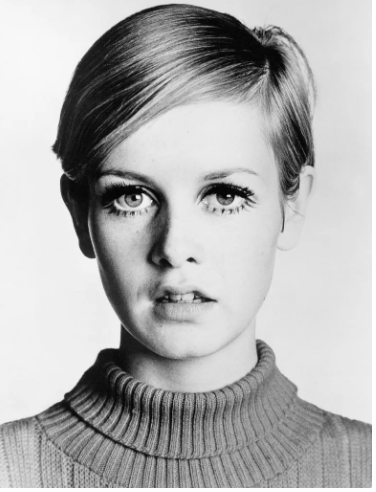
British supermodel Twiggy poses for a portrait during the filming of ‘Twiggy in Hollywood,’ directed by Bert Stern as part of a three-part documentary series shown in the spring of 1967 on ABC-TV, in Los Angeles, California. (Photo by Michael Ochs Archives/Getty Images)
The former supermodel also revealed that as a young girl, when she wasn’t within the strict confines of her school, she rebelled by wearing make-up and miniskirts to Saturday night fashion clubs with her friends.
‘I went to grammar school, so it was quite strict. We wore uniforms and make-up was forbidden. So at weekends me and my mates would sit around like most teenage girls and play with make-up.’ She continued: ‘And that’s how that make-up evolved.’
And the eyes became part of her signature look.
A few weeks after the shoot for the Daily Express, several photos – the iconic black and white shots that launched her modelling career – appeared in the newspaper’s pages, along with the headline ‘Twiggy-The Face Of “66”.
The following month, she did her first shoot for Vogue, and her ‘life became a whirlwind.’
The quintessential fashion icon, Twiggy was a role model for many women and, as a teenager, was the first celebrity that Mattel used as a model to create Twiggy Barbie.
Over the next few years, Twiggy’s name became synonymous with that of groundbreaking British designer Mary Quant, who revolutionised fashion with a short hemline that freed up a woman’s leg.
After only a few years in modelling, Twiggy retired in 1970 and took up acting on stage and screen, as well as singing.
Her film credits include starring roles in 1971’s Boy Friend, for which she won two Golden Globes, and Club Heaven (1986), where she starred alongside the late Robin Williams.