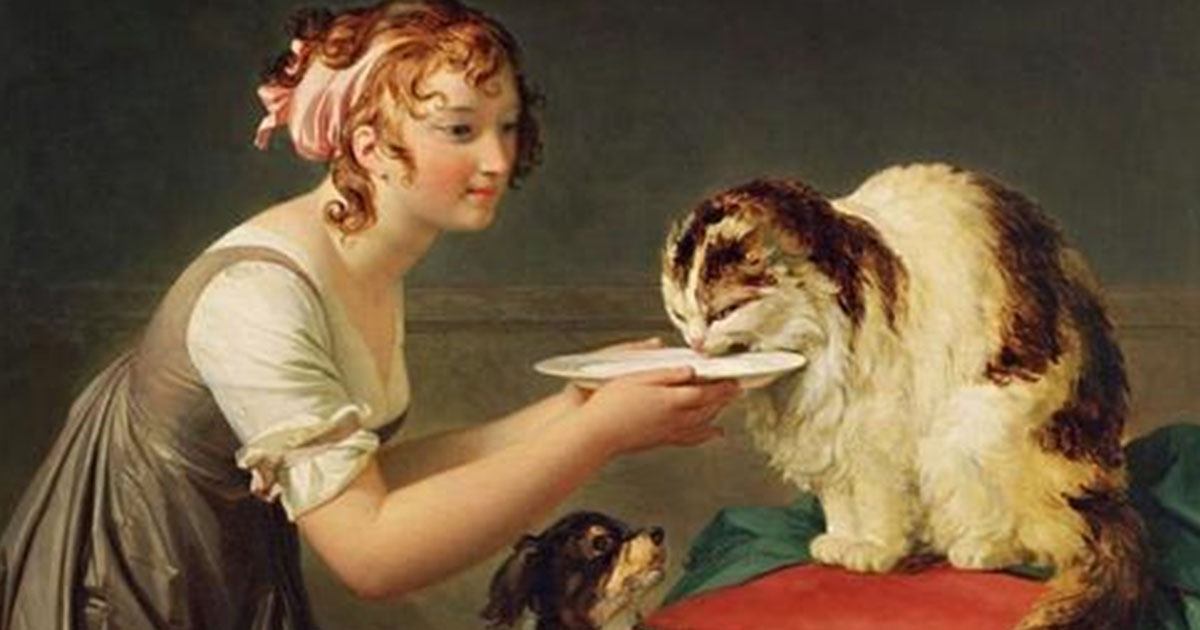
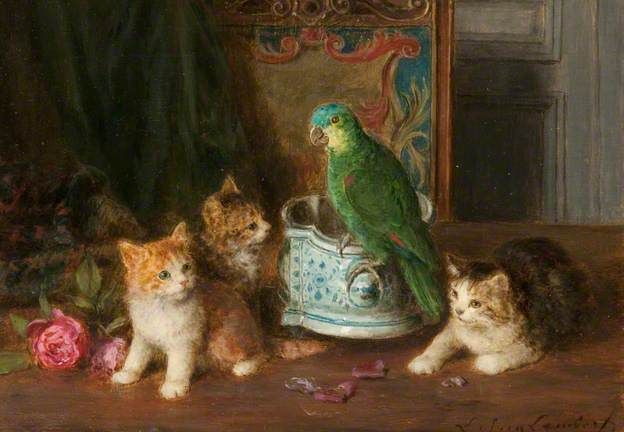
“Cats and the Parrot,” Louis Eugène Lambert
Marguerite Gérard
The artist drew ideas for her works from observing the life of the middle class and high society of the late 18th and early 19th centuries, and in these circles of that time, pets were often kept. Marguerite’s work is distinguished by its own style – it is very feminine, filled with warmth, comfort and motherly love. Critics thought her subjects were primitive, but that’s often exactly what viewers wanted. They wanted to see that simple life could be joyful and carefree. One of Marguerite Gerard’s most famous paintings, entitled “The Triumph of the Cat,” is in the Pushkin Museum in Moscow, although, in our opinion, the painting “The Cat’s Lunch” turned out to be no less triumphant.
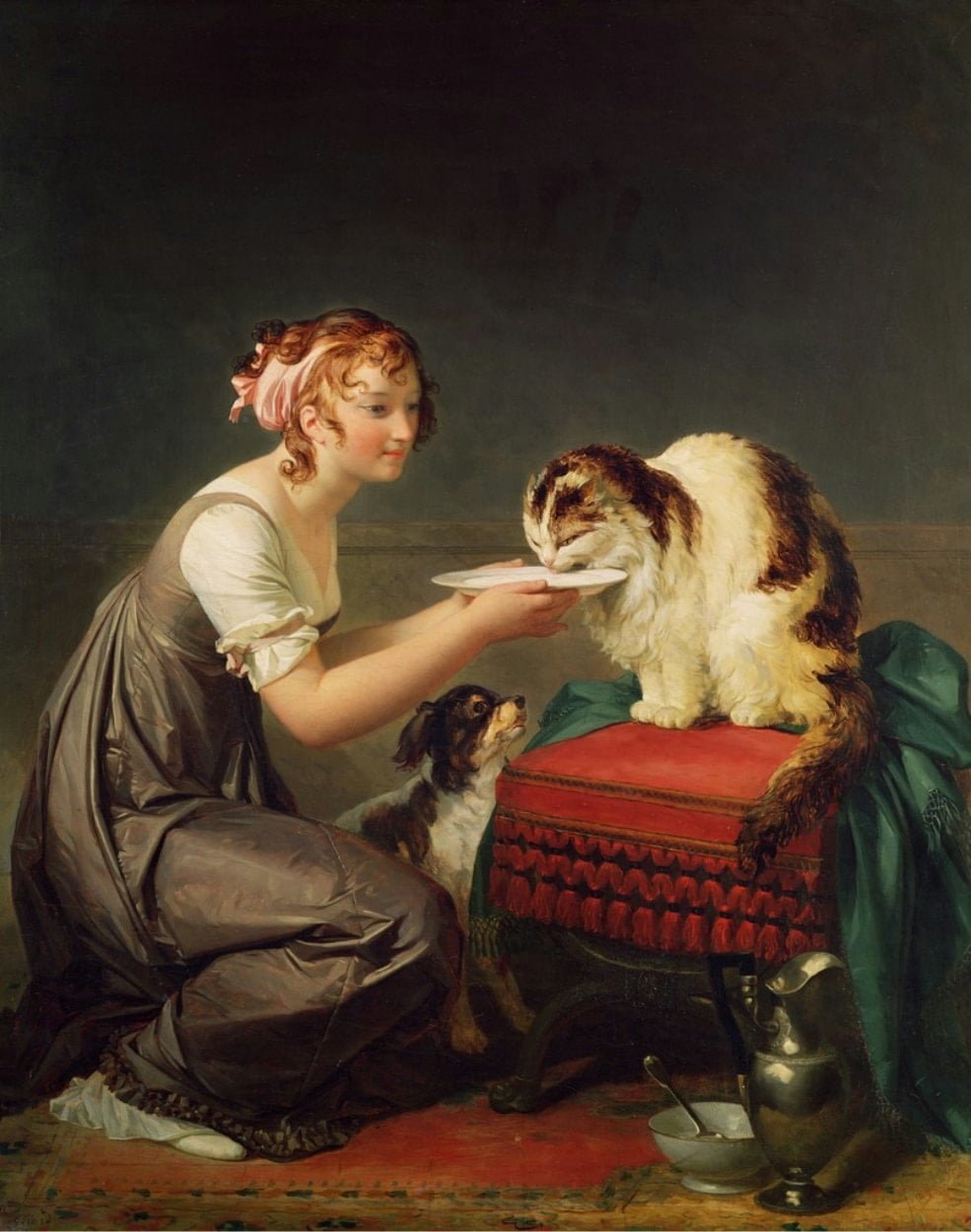
“The Cat’s Lunch,” Marguerite Gerard
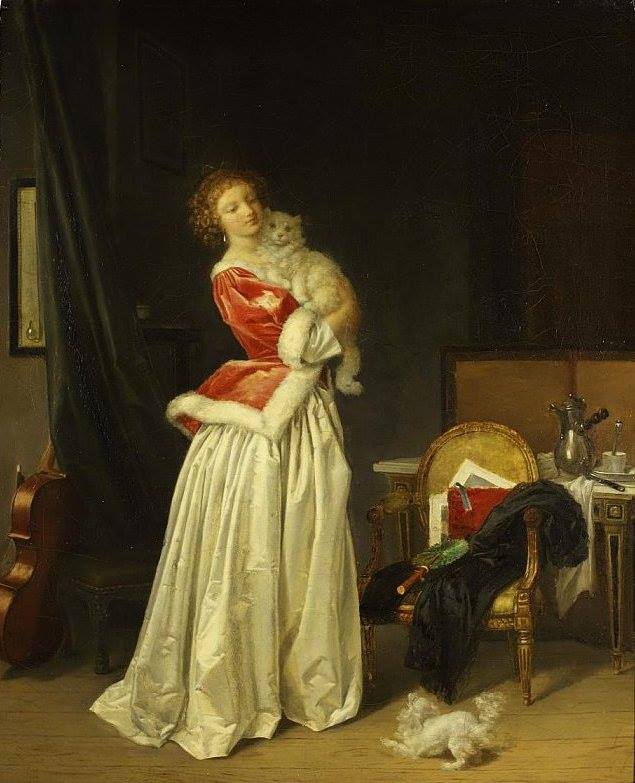
“Pussycat Triumph,” Marguerite Gerard
Louis William Wayne.
This distinguished artist not only painted in a Victorian fairy-tale style, but also worked as an illustrator and was a graphic artist.
Often animal lovers tend to humanize their pets. Here, too, Louis William Wayne’s cats look like people. Thus, the artist sought through creativity to eradicate the hatred of cats, characteristic of English society. Because of this, he can rightly be considered one of the first animal advocates.
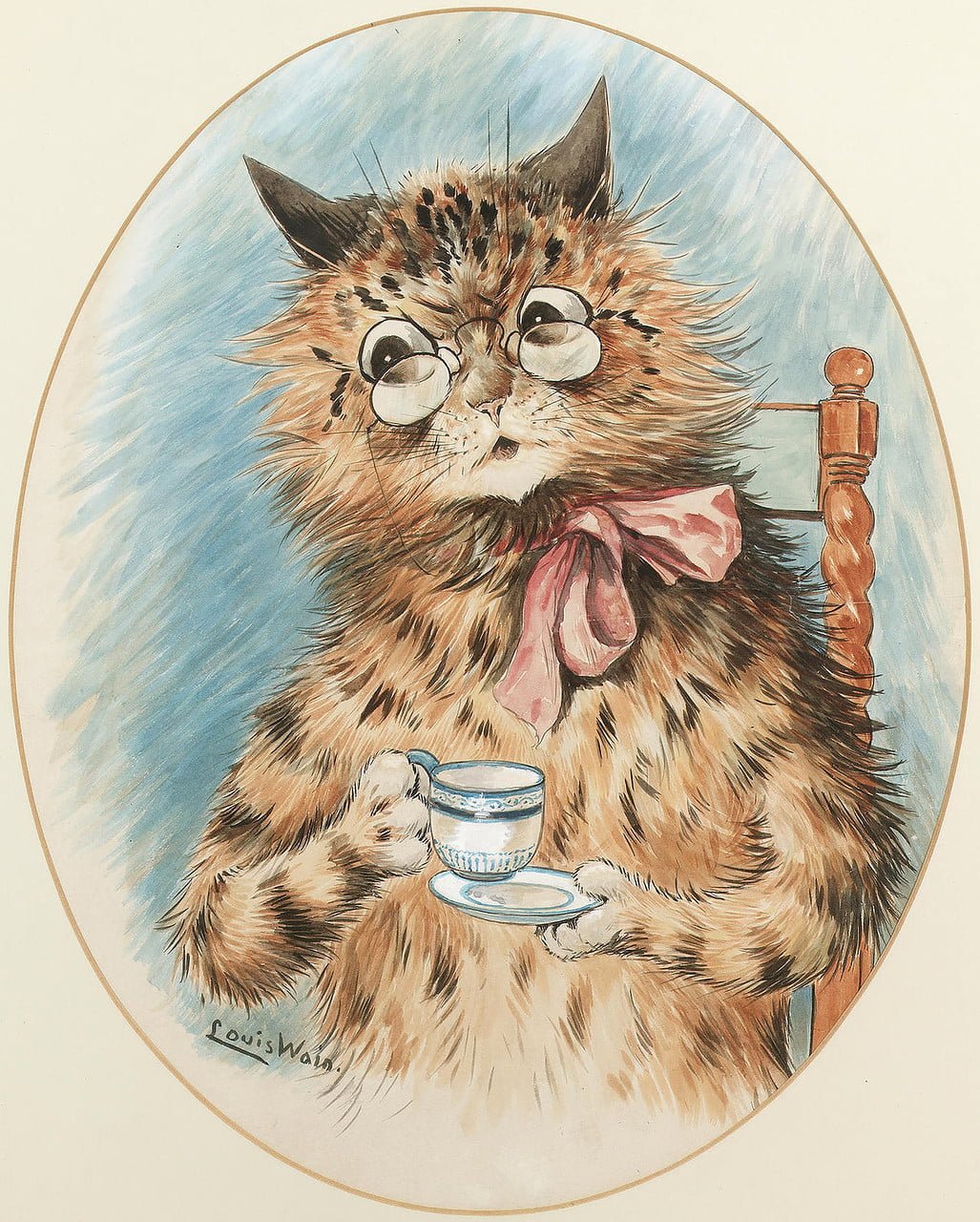
“The Intelligencer,” Louis William Wayne
The painter married against the will of his family. He began to paint his cats when his beloved wife became seriously ill. To entertain her somehow, the artist invented different scenes with Peter the cat, and then he drew them. At first, the hero of his plots only read and wore glasses. Subsequently, Wayne’s cats learned to smoke, play cards and dance. In Louis William’s paintings, they live a human life – they quarrel, make peace, and attend social events. Unfortunately, these cats became a classic illustration of schizophrenia in psychology textbooks – by the end of his life the artist was increasingly suffering from this disease, and you can clearly see from his works how the master’s reality was changing.
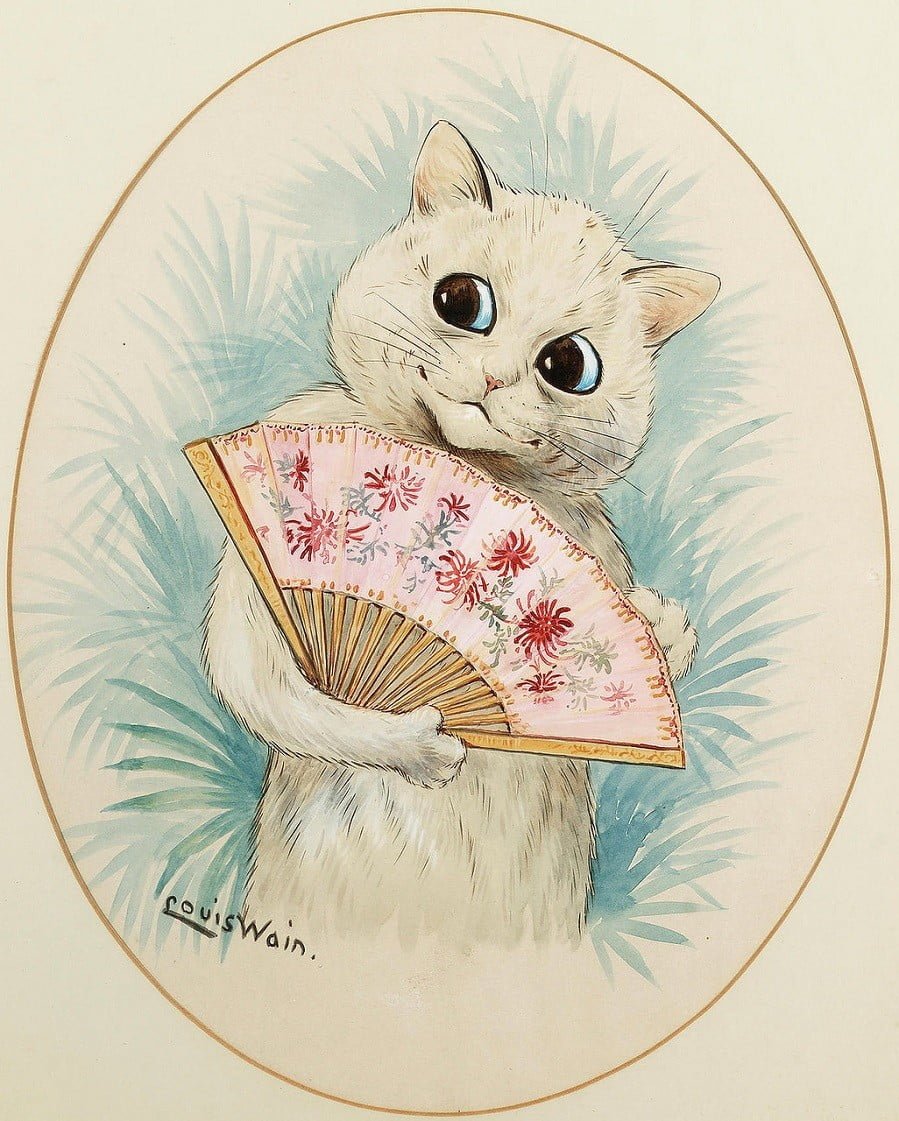
“The Cat with the Fan,” Louis William Wayne