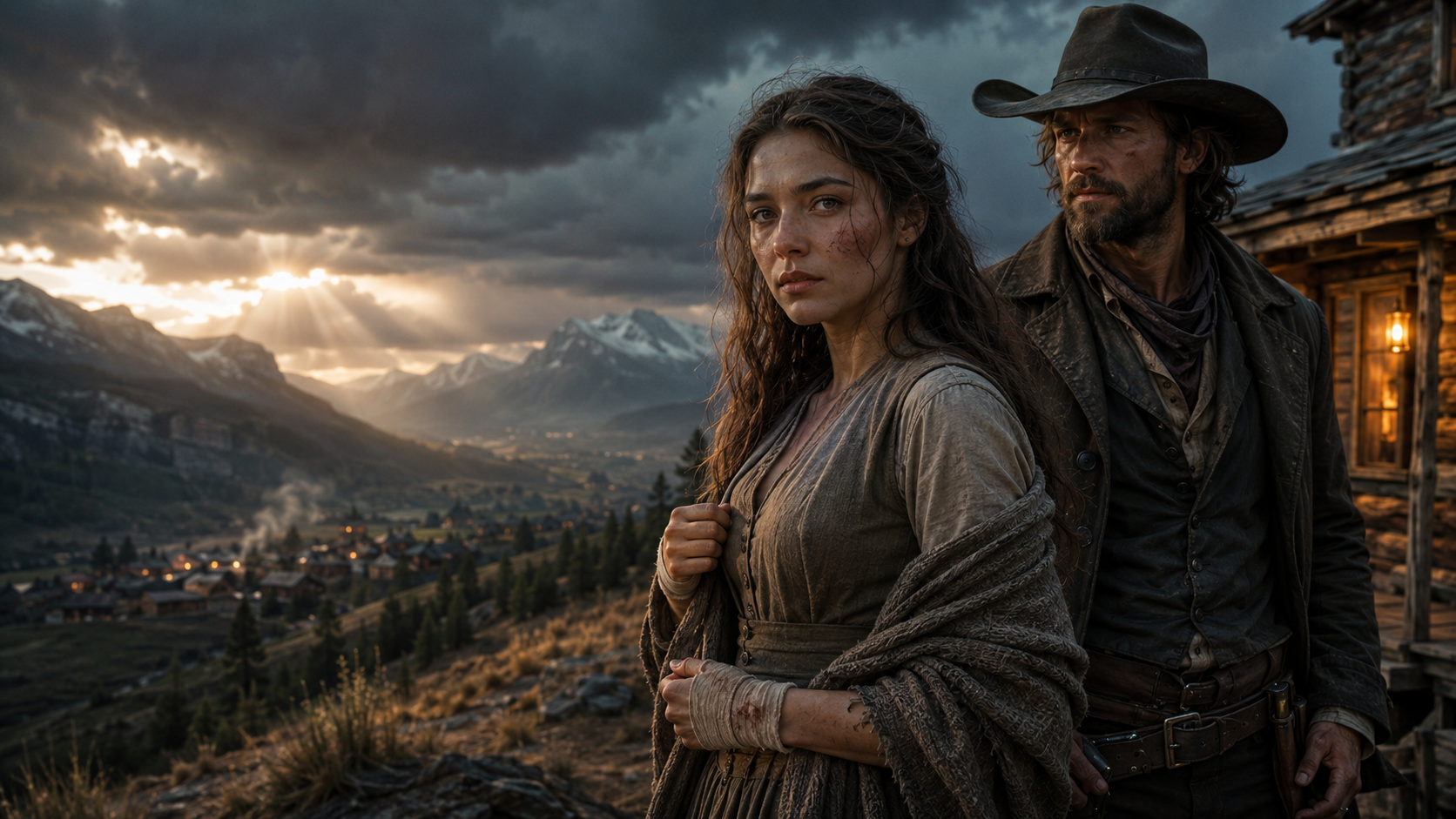
He pushed.
She pushed back.
Trust grew between them not like a flower, but like a trail worn into rock by repeated steps.
When Mara rode to Denver for her licensing examination, she wore a blue cotton dress she had sewn herself from fabric tested twice and washed three times. It fit her body without apology. It did not hide her scars. It honored the woman who had climbed the mountain in the rain.
Three days later, she returned with a certificate.
Rowan waited in the clearing, leaning against the porch post as if he had not been watching the trail for hours.
“Well?” he asked.
Mara held up the paper.
For once, Rowan Pike smiled without hiding it.
“Congratulations, Dr. Wren.”
The title struck her like sunlight.
That evening, the mountain cabin filled with people. Mrs. Roake brought bread. The trapper brought a fiddle. Nell brought Lydia’s child, now walking unsteadily and laughing at everything. Even Mrs. Calder came, older, quieter, carrying a bolt of undyed cotton and shame she had not yet learned how to hold.
“I was cruel,” Mrs. Calder said.
Mara looked at the woman who had helped make her a ghost.
“Yes,” she said. “You were.”
Mrs. Calder’s eyes filled. “I was afraid.”
“That explains it. It does not excuse it.”
“No.”
Mara touched the cotton. “But you came back with cloth instead of stones. That is a beginning.”
Ten years after the storm, the cabin was no longer a cabin.
People called it Pike Ridge Infirmary, though Rowan argued the mountain had not consented to branding. Then they called it Wren House after patients began asking for Dr. Wren more often than Mr. Pike. Eventually the sign over the door read:
Wren House School of Practical Medicine
Beneath it, Mara carved the rule Rowan had taught her before either of them knew he was teaching.
See the person before you name the wound.
Healers trained there rode out across Colorado, Wyoming, Montana, and beyond. They carried instruments, ledgers, clean cloth, stubborn questions, and the knowledge that sometimes the first treatment was refusing to believe a cruel diagnosis.
Rowan grew older and slower, though never gentler in standards. Mara grew into authority with scars on her hands and silver beginning at her temples. People who had once crossed the street to avoid her now traveled two days to ask her opinion.
One autumn evening, Mara stood in the clearing where she had first unwrapped her hands.
Below, Briar Glen glowed in the valley. She no longer hated it. Hate required a room in the heart, and her life had grown too large to spare one.
Rowan came to stand beside her, leaning more heavily on his cane than he admitted.
“Thinking?” he asked.
“Remembering.”
“Dangerous habit.”
“You taught it to me.”
The infirmary behind them shone with lamplight. Students moved between rooms. A baby cried. Someone laughed. The garden smelled of rain, mint, and clean earth.
“I climbed this mountain because they said I was dying,” Mara said.
Rowan looked at her. “Were you?”
She thought of the woman she had been: ashamed of her body, afraid of her hands, starving for kindness, carrying other people’s verdicts like scripture.
“Yes,” she said softly. “But not from the rash.”
Rowan nodded once. “No. Not from the rash.”
Mara lifted her scarred hands into the last amber light of evening.
They were not pretty hands.
They were better than pretty.
They had closed wounds, delivered children, held the grieving, steadied the dying, and taught other hands to do the same.
Once, a town had called her monster because it was easier than admitting the sickness lived in its own fear.
Once, a mountain rider had said, Bring me the monster.
And when she showed him, he had not seen a curse.
He had seen evidence.
He had seen a witness.
He had seen a future.
Mara Wren looked toward the road leading down to every frightened person still waiting to be believed.
Then she smiled.
She had not survived the mountain to become small again.
She had survived to make room for others to live.
And that, finally, was enough.