Mara stared at them. “Those are yours.”
“They’re cotton.”
“They’re men’s clothes.”
“They’re clean.”
“I can’t wear trousers.”
“You can wear cotton, or you can bleed into that dress until pride kills you faster than Harrow’s diagnosis.”
She hated that he was right.
By noon, she wore the trousers.
By sundown, she had chopped carrots badly, spilled half a bucket of water, and learned that Rowan Pike did not consider invalids useless unless they insisted on being useless.
“You’ll help where you can,” he said. “Rest where you must. Learn the difference.”
“I’m not afraid of work.”
“No,” he said, tying a fresh bandage around her wrist. “You’re afraid that work is the only thing people valued you for.”
She jerked her hand back.
He let her.
“You don’t know me.”
“I know what people look like when they apologize for taking up space.”
Mara turned toward the window.
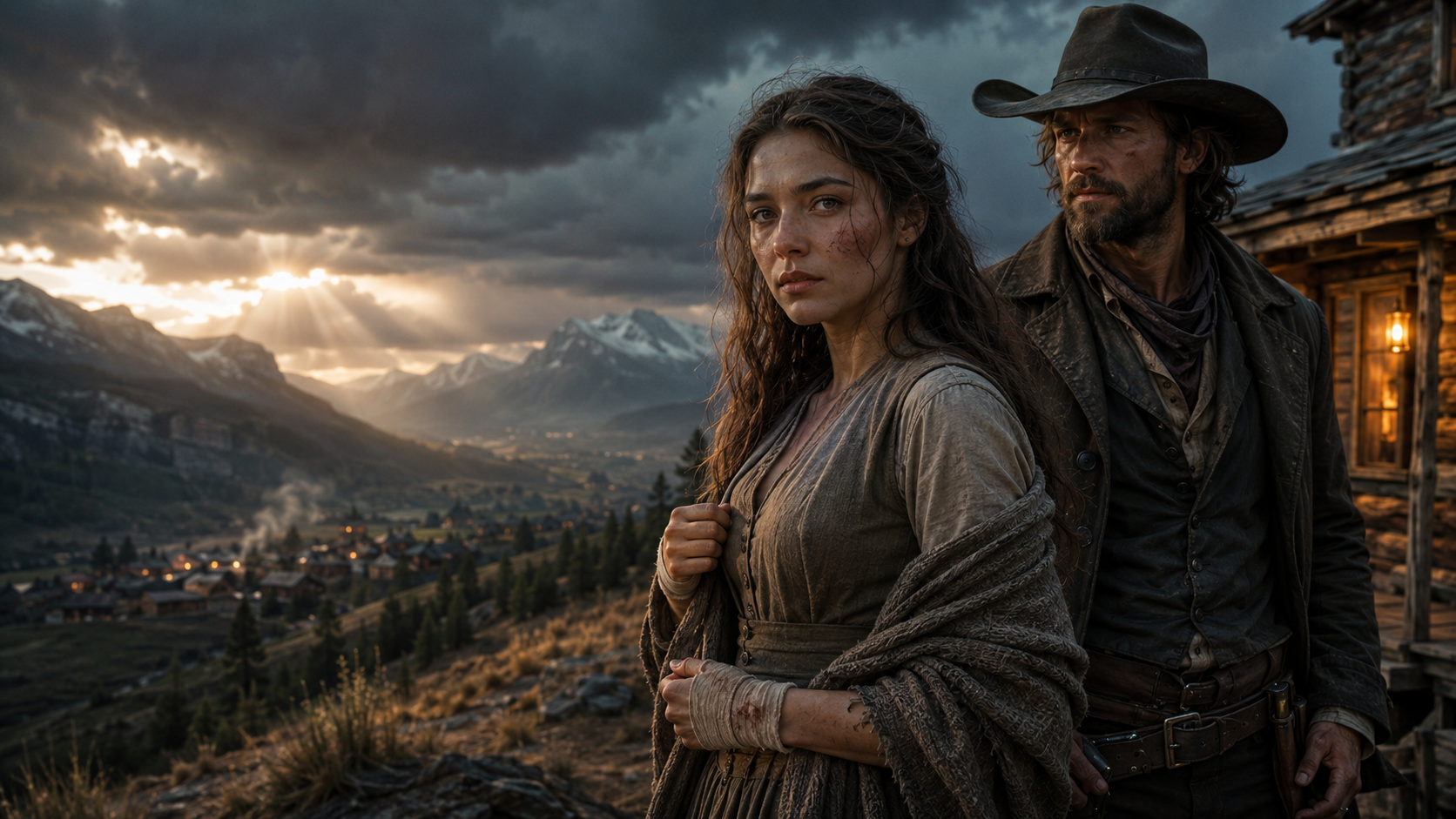
Outside, the clouds had broken open over the mountain. Far below, Briar Glen sat in the valley, small and neat and cruel in the morning light.
“I was useful once,” she said. “Before this. I sewed their dresses. Mended their coats. Hemmed mourning black for women who would not look me in the face when I became the one grieving.”
Rowan said nothing.
His silences were not empty. They made a person hear herself.
For two weeks, Mara healed in increments so small they felt insulting.
The itching did not vanish. Her skin did not become beautiful. Her strength did not return in a grand sunrise moment. It crept back while she ate eggs, broth, beans, bitter greens, and meat when Rowan had it. It returned while she hauled one log, then three. While she slept four hours without scratching. While she learned to wash her skin without tearing it open.
Every morning Rowan unwrapped her hands and inspected the changes.
Every morning she looked away.
On the fifteenth day, he said, “Look.”
“I don’t want to.”
“You should.”
“I know what they look like.”
“No. You know what they were.”
Mara forced herself to look.
The wounds had closed in several places. The swelling had receded. The skin remained scarred and pink, but it looked less like punishment and more like skin.
Her hands.
Still hers.
A sound rose in her throat.
Rowan began reaching for a cloth, then stopped. Perhaps he knew this was not the kind of crying that needed wiping away.
“Better?” he asked.
She nodded.
“Words.”
“Yes,” she whispered. “Better.”
“Good. Don’t become stupid about it.”
She almost laughed.
That afternoon he rode to town for supplies.
Mara stood on the porch long after the horse disappeared into the trees. The mountain seemed too large without him. The cabin, too quiet. She hated that she had begun to feel safer in a strange man’s house than in the streets where she had spent her whole life.
He returned near dusk with flour, salt, coffee, thread, a sack of apples, and a face like bad news.
Mara knew before he spoke.
“They know I’m here.”
Rowan set the supplies down. “Harrow knows.”
Her stomach tightened. “How?”
“Silas Voss saw smoke from the ridge and sold his guess for a drink.”
Silas Voss had once asked Mara to sew a wedding vest on credit, then told people she had begged him for attention when she asked for payment.
“What will Harrow do?”
“What weak men do when cornered. Call fear duty.”
Three days later, fear climbed the mountain.
They came in the cold afternoon: five men on horseback and one carriage that had no business on the narrow ridge trail. Dr. Lucian Harrow stepped down first, coat black, gloves gray, silver watch chain glinting against his waistcoat. Behind him came Constable Reed, Silas Voss, two hired hands from the mill, and Mrs. Calder, the cloth shop owner, wrapped in fox fur and righteousness.
Mara watched from the porch with her bandaged hands at her sides.
Rowan stood beside her, rifle held low.
Harrow smiled as if arriving for tea.
“Miss Wren. What a mercy to find you alive.”
Mara said nothing.
He looked at Rowan. “Pike. I should have known decay would find its way to your door.”
Rowan’s expression did not change. “You brought a crowd to admire it?”
“I brought witnesses. This woman is under quarantine by my medical order. You have no authority to keep her here.”
“She walked here.”
“She is sick.”
“She is healing.”
Harrow’s smile thinned. “You were a battlefield butcher. Not a physician.”
“And yet I had to ask the questions you didn’t.”
Constable Reed shifted uncomfortably. “Doc says she’s dangerous, Pike.”
Rowan looked at him. “Then ask him how.”
Reed blinked.
Harrow’s gaze sharpened. “This is not a public lecture.”
“No,” Mara said.
Everyone looked at her.
Her voice shook, but she continued. “It should be.”
Harrow’s face cooled. “Miss Wren, you are confused.”