For the first time since I found the receipt, I felt something close to relief. Not because I was driven by a thirst for revenge—though perhaps part of me was already ready for it even then—but because there was another person in the room who saw the same pattern as I did. Whitman didn’t need to translate everything into the language of emotion to take it seriously. He looked at the evidence and saw not pain. He saw leverage.
For the next month, he was the only person apart from me who knew the full extent of Kevin’s downfall. We proceeded with caution. The divorce petition was filed in such a matter-of-fact manner as to avoid causing a panic. Kevin reacted exactly as Whitman had predicted. He started acting all high and mighty. Making a loud fuss. He hired a lawyer called Sterling — slick, brilliant, confident, with cufflinks more expensive than propriety demanded. Kevin offered me such an insulting settlement that, had it not been printed on official letterhead, one might even have laughed: a small settlement, a section on ‘remaining liquid assets’, no questions about personal expenses, and a transparent hint that any resistance would be ‘costly and impractical’. Put simply, he wanted to throw me a bone whilst keeping all the hidden structures intact.
Whitman called after reading the document.
‘He thinks you’ve run out of steam,’ he said.
‘No.’
‘I know. That’s exactly why it’s going to hurt him.’
The disclosure process began to widen the cracks. Sterling raised far-fetched objections. Kevin dragged his feet over the declarations. Whitman let him. Every delay reinforced the case of obstruction. Every incomplete disclosure gave us a new opportunity to compare the official version with what we could verify independently. We brought in a digital forensics specialist to analyse the forged mortgage authorisation and IP logs. We hired a handwriting expert whose dry, and therefore particularly convincing, conclusion was simply devastating. We requested documents from Kevin’s employer regarding the reimbursement of entertainment expenses — ostensibly to verify expenses relevant to the division of assets. The company’s legal department responded reluctantly, but quickly. Apparently, a nagging suspicion had already taken hold within their ranks too.
Meanwhile, Kevin was behaving like someone who was already dividing up money that no one had yet awarded him. Sophie was appearing alongside him in public more and more often. He posted a photo from a rooftop bar with the caption: ‘New chapters call for bold decisions’. Someone sent me a screenshot, not out of malice, but with that guilty look people usually have when they think they’re doing someone a favour by passing on information. I thanked them and saved the image.
The more confident he was about the future, the more careless he became. It’s a classic prelude to collapse. People who honestly prepare for loss brace themselves, tighten their belts, and become more cautious. People confident of victory relax and start to make mistakes.
A week before the hearing, Kevin rang me directly for the first time in months. I almost let the call go to voicemail, but answered more out of habit than anything else. His voice was smooth, indulgently weary, almost magnanimous.
‘Laura,’ he said. ‘There’s no need to drag this out. You’ve never liked conflict. Accept the settlement. Buy yourself a smaller flat, keep your little business, and move on. We both know you’re not cut out for a fight.’
I stood in the kitchen, looking at the basil on the windowsill.
‘Whatever you want to say, say it through the solicitors,’ I replied.
He chuckled quietly.
‘Always so formal. That’s your problem. Life isn’t a spreadsheet.’
‘No,’ I said. ‘But divorce is settled in spreadsheets.’
And I hung up.
On the morning of the hearing, I put on a graphite-coloured suit. Not black. Not mourning. Not theatrical. Just graphite. A sharp cut, no jewellery apart from my watch, hair tied back. I looked exactly as I was meant to look: a woman who had come to discuss documented facts. Kevin appeared in a dark blue Italian suit and a silk tie the colour of aged wine. Sophie glided behind him like a fashion season that had accidentally mistaken itself for destiny. Sterling carried a leather briefcase that looked very expensive and, as it soon turned out, not expensive enough for what he was about to go through.
And so we returned to the corridor, to that very moment when Kevin whispered to me that by evening I would be nothing.
After a brief warning from Whitman, the bailiff opened the doors and we entered the courtroom.
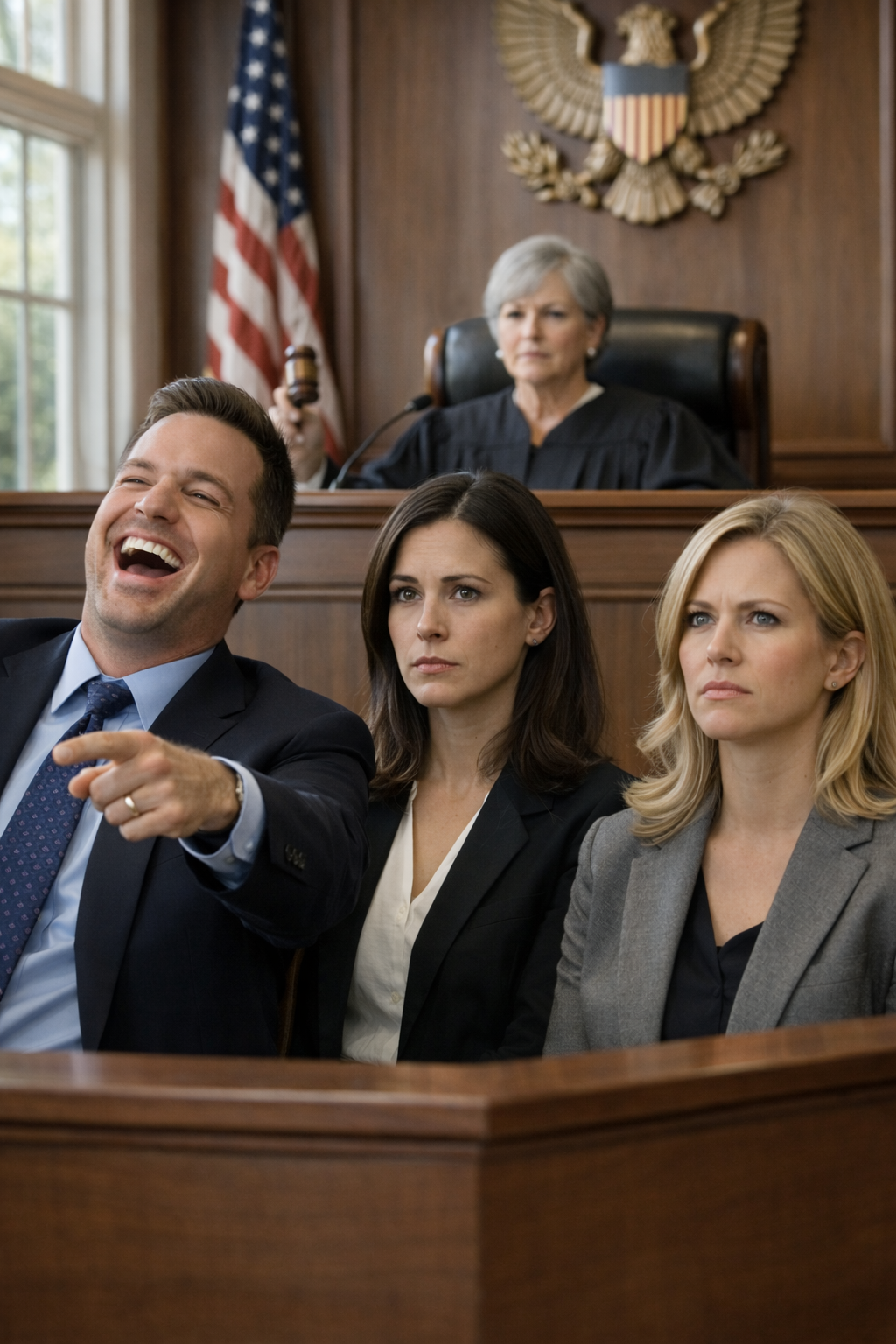
Real courtrooms are generally far less dramatic than those on television. This courtroom was smaller than Kevin would have liked for his performance: polished wood, worn at the edges, a flag in the corner, fluorescent lighting, slightly softened by narrow windows, the smell of paper, dust and old ventilation. The judge—a woman in her sixties—looked as though she had already heard every possible excuse and had long since lost patience with their fancy versions. I liked her straight away.