Sterling’s pen stopped.
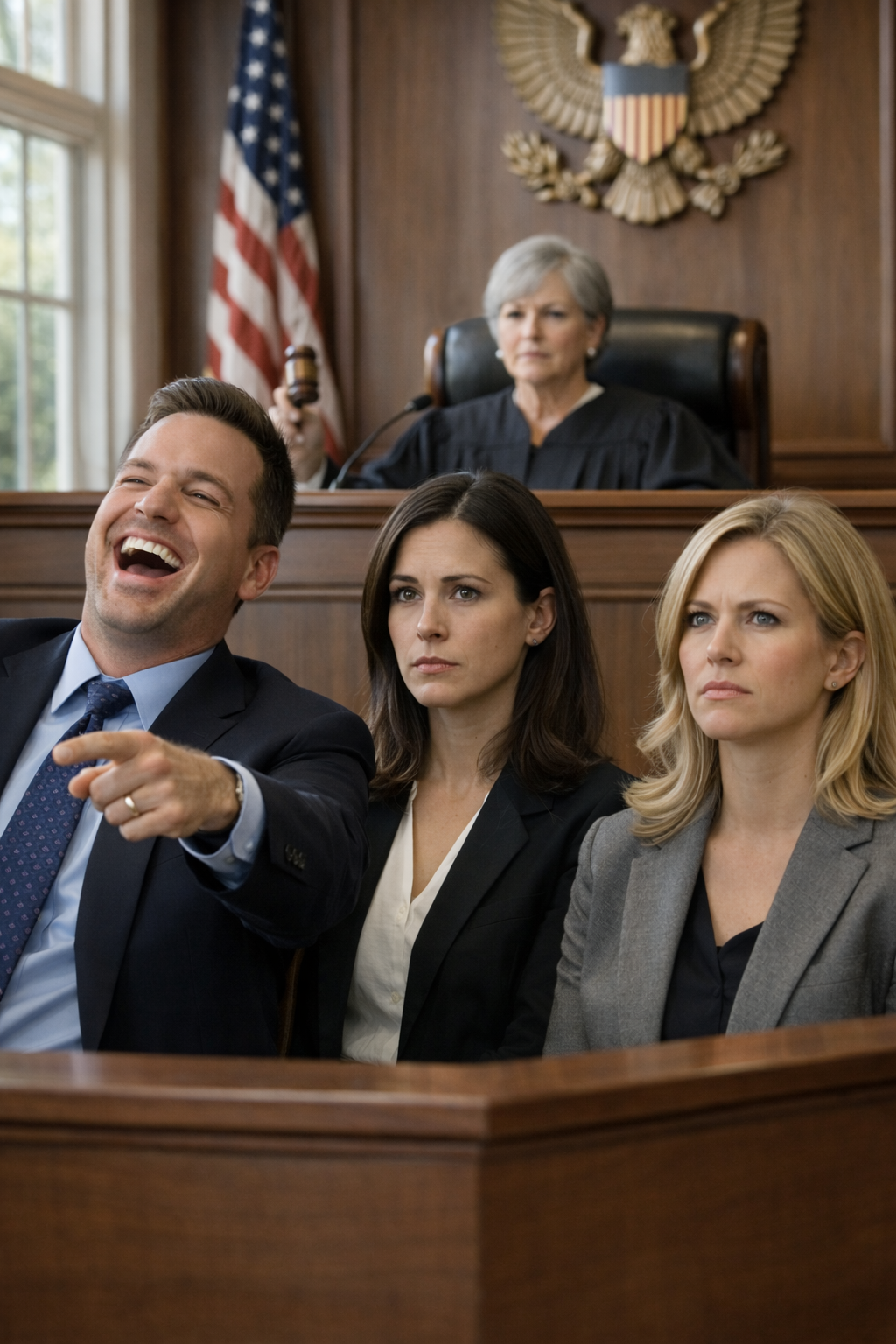
‘The Audi registered in the defendant’s name shall remain with him, together with all associated liabilities,’ the judge declared.
The statement was almost technical, but something inside me gave way. Kevin had always loved symbols more than substance. Let him keep the symbol—along with the payments on it.
Then the judge turned her gaze directly to him.
‘And finally, given the facts of the forged agreement, undisclosed structures and obvious discrepancies in the financial information, the court is referring part of the case to the relevant authorities for further consideration. These matters are not being considered here today. But Mr Bennett should understand: my patience with dishonesty ends here.
The silence that followed was not a silence of relief. It was the silence of a blow. Kevin stared at the table. Sterling looked as though he were calculating how quickly he could professionally distance himself from a client who had become a liability. Sophie had gone so pale that no amount of foundation could help.
The hearing was over. The papers were gathered up. The bailiff announced the end of proceedings. People began to stand up. The courtroom exhaled.
I didn’t smile. I didn’t need to. An acquittal isn’t always a resounding one. Sometimes it takes the form of dry conclusions read out by a woman in a judge’s robe, who couldn’t care less about your feelings, but the facts are so clear that justice becomes almost mundane.
In the corridor, Sophie stood by the window, her arms wrapped too tightly around herself. The diamond bracelet on her wrist now looked not like a triumph, but a pitiful attempt to hold on to the way things used to be. When she saw Kevin, she understood everything immediately from the look on his face.
‘Did we win?’ she asked.
That ‘we’ sounded almost pitiful.
Kevin lowered his gaze.
‘It’s all over,’ he muttered. ‘It’s all gone.’
She stared at him, and I could literally see the calculations running through her mind. No flat. No financial cushion. No lavish divorce from a wealthy man, temporarily held back by his ‘evil ex’. Just debts, audits and a narrowing future. It seemed she’d latched onto the hatch leading down, not the staircase leading up.
‘You said there was money,’ she said sharply — for the first time, I heard something genuine in her voice. ‘You said you had everything under control.’
Kevin didn’t reply.
She turned her gaze towards me—no longer a fleeting glance, but a genuine one. Something indistinct flashed across her face: shame, anger, perhaps a fleeting realisation that this quiet woman in comfortable shoes had just blown the entire room away, a room she had entered as if it were the future scene of her triumph. Then Sophie turned and walked away. Her heels clacked against the courtroom floor, hard and angry. She didn’t look back.
A few seconds later, Kevin’s phone vibrated. He automatically pulled it out of his pocket, like a man who hadn’t yet realised that his old reflexes were no longer of any use to him. He looked at the screen — and turned even paler.
‘Who?’ Sterling asked sharply.
Kevin swallowed.
‘HR.’
Whitman had mentioned in passing that certain documents, once they appeared in the case file, would inevitably require a professional response. Kevin had probably heard this as an abstraction. People like him always regard the rules as theory — until the department capable of blocking his access pass calls.
He stood in the same corridor where he had arrived as a winner, and now looked like a man who had lost his bearings. No job security. No mistress. No flat. Eighty-two thousand in compensation. A possible tax audit. And Audi payments hanging around his neck like an anchor, crafted with German precision.
As I walked past, he tried to say something:
— Laura…
Perhaps he wanted to apologise. Perhaps to ask for something. Perhaps he still believed that somewhere there was a final door to negotiation, if only he could find the right words. I didn’t stop to find out.
The weather had cleared up outside. The rain that had threatened all day had gone, and the steps of the courthouse gleamed as if they’d been specially washed for proper upkeep. People were coming and going in groups — some exhausted, some relieved, some simply drained. Harold Whitman stood below, one hand in his pocket, the other lazily rolling an unlit pipe. He looked up as I approached.
‘You handled it well,’ he said. ‘Most people in your position seek catharsis. Catharsis is usually very expensive.’
I exhaled slowly, feeling the air fill the parts of my body that had been constricted for months.
‘The numbers don’t lie,’ I replied.
‘No,’ said Whitman with a barely perceptible smirk. ‘But sometimes they take their revenge with great skill.’
I laughed. Quietly. Without bitterness. Just a single, pure sound I hadn’t heard from myself in a long time.