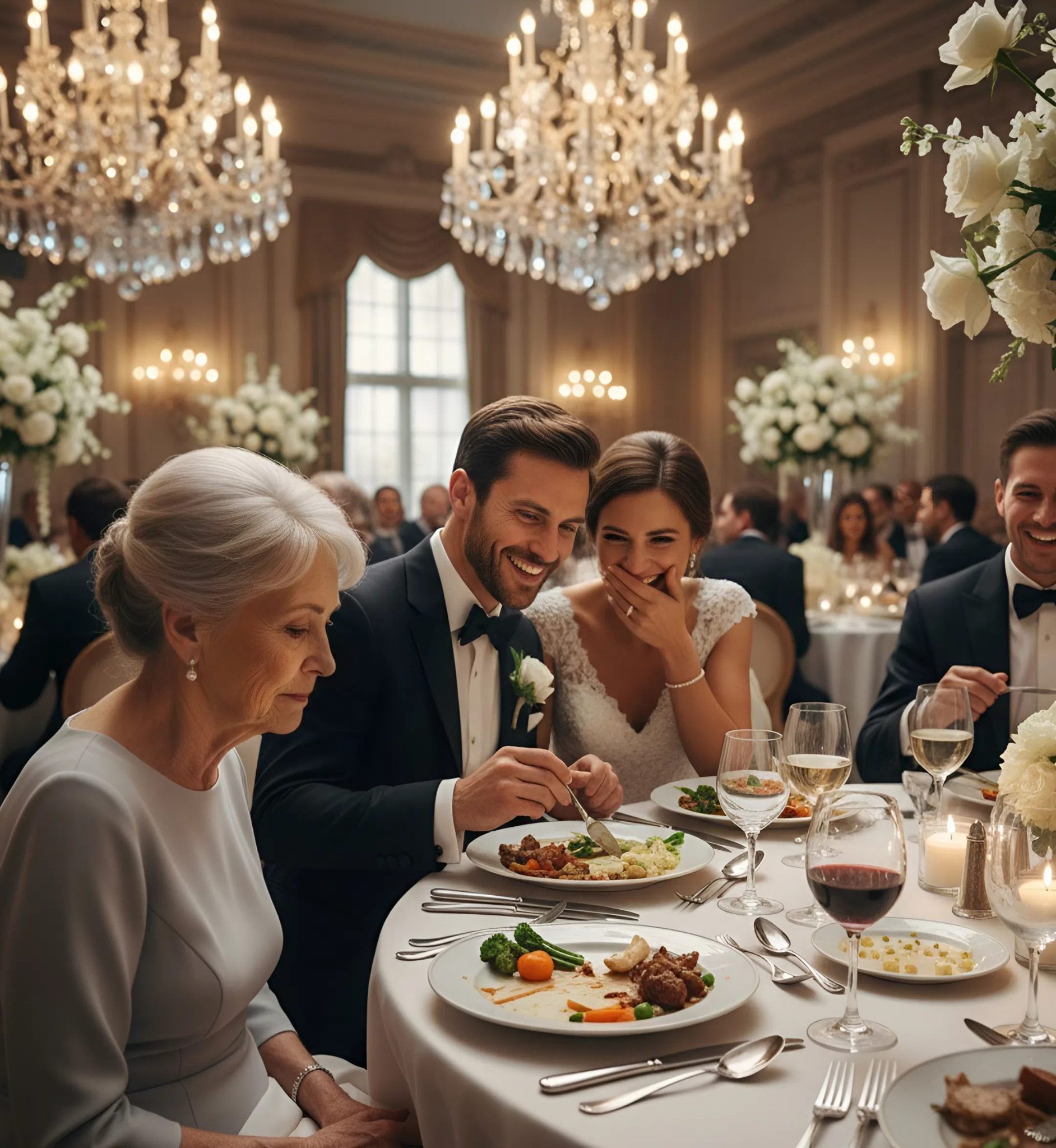
On my son’s wedding day, I was the very last person served—and they gave me a plate of cold leftovers. He chuckled and told his new wife, “She’s used to taking whatever life scraps together.” The guests laughed along. No one noticed when I slipped away. But the next morning, his hands shook as he read the email I sent.
Linda Carver had always pictured her son’s wedding as a memory she would cherish forever—her only child, Michael, stepping into a new chapter of his life. The Napa Valley ceremony had been everything she’d hoped for: cloudless skies, rolling vineyards, and a gentle breeze that lifted the bride’s veil just so. But as the reception moved into the dinner hour, Linda felt a subtle shift.
Plates were being delivered swiftly to every table. Guests laughed, toasted, and dug into their meals while servers weaved around them with practiced ease. Linda waited quietly, hands resting in her lap, her smile steady even as a knot formed in her stomach. When a server finally stopped at her place, he set down a cold plate—congealed potatoes, limp salad greens, and a piece of chicken that looked like it had been salvaged from someone else’s abandoned dish.
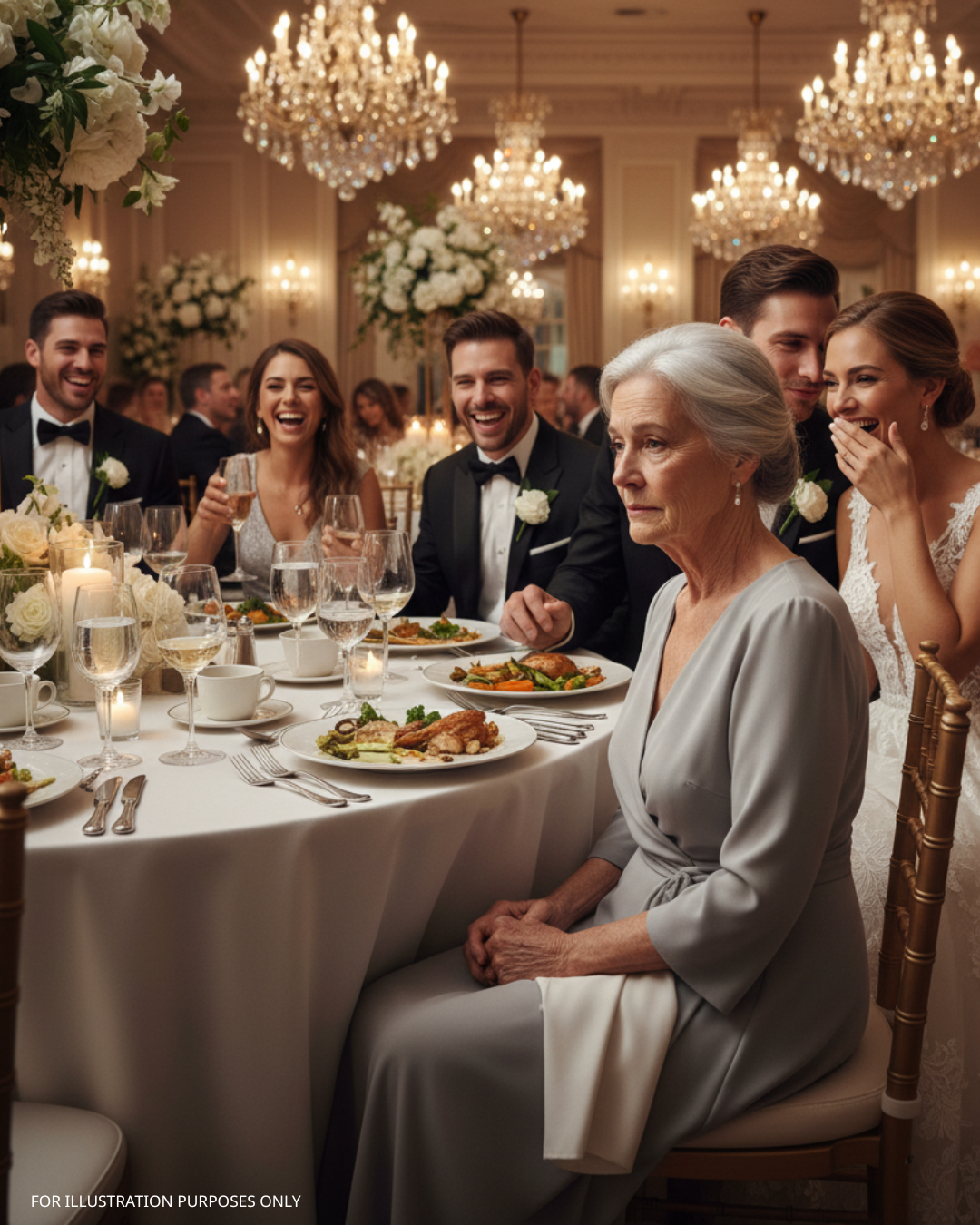
She opened her mouth to object gently, but before she could, Michael noticed—and laughed.
“Mom’s used to eating whatever life leaves behind,” he joked, turning to his new bride, Emma, who let out an awkward giggle.
A few guests laughed louder than necessary, though some looked uncertain, unsure if it was appropriate. But Michael didn’t stop there; he leaned into the joke, waving his fork like a comedian who’d found his rhythm. “Seriously, she made an art of leftovers. You should’ve seen the things she’d throw together when I was a kid.”
Linda felt her cheeks burn, but she simply nodded and forced a polite smile. The room seemed to blur around her. No one noticed when she eased her chair back and slipped out a side door into the fading light, where the vineyard lamps glimmered like distant, indifferent stars.
She drove to her hotel without a word. She didn’t cry—not that night. But the next morning, after hours of reliving the humiliation she’d endured at the wedding of the son she had once worked double shifts to support, she opened her laptop and wrote him an email. It wasn’t angry. It wasn’t emotional. It was calm, deliberate, and brutally honest.
By the time Michael woke up, his phone buzzed with notifications. Friends were posting brunch photos. Family members were sharing snapshots of the happy couple. But the moment he saw the subject line—“From Mom”—his hands trembled. He opened it, and as he read, his smile faded, his face drained of color.
And that was where the real story began.
Michael Carver had grown up thinking his mother, Linda, was unshakeable. She worked six days a week at a medical billing office in Sacramento, often taking on extra weekend shifts wherever she could find them. She wasn’t the overly affectionate type, but she was constant—dependable in all the ways that kept their home stable and their fridge stocked. For a child, that had always seemed like enough.
But adulthood had shifted Michael’s perspective. He went off to college on scholarships Linda had all but sacrificed herself to secure—endless applications, appointments, part-time jobs, and weekend tutoring sessions she paid for even when it meant she sometimes skipped meals.
et when he graduated and moved to San Francisco, he rarely looked back. Linda visited when invited, which wasn’t often, and always stayed in a motel so she “didn’t get in the way.” She told herself it was normal. Children grew up. They built their own lives. She repeated it enough times that she almost believed it.
The wedding planning had only widened the distance between them. Emma, always courteous, still treated Linda as an afterthought—more like a standard guest than the groom’s mother. Decisions were made without her, and she heard about them only in quick, obligatory updates. At the reception, she was placed in a seat halfway back in the hall, far from the head table. She told herself it didn’t matter. It was their celebration; her own comfort wasn’t important.
But some things were harder to swallow. At the rehearsal dinner, no one introduced her to a single person until she forced herself to speak up. When Emma’s mother handed out matching silk robes to the bridesmaids and both mothers, Linda was quietly left out. The photographer repeatedly nudged her to the outskirts of family photos, positioning her like a distant relative rather than the woman who had raised the groom by herself.
By the time the wedding day arrived, Linda was already worn down. Still, she pitched in wherever she could—helping zip bridesmaids’ dresses, attaching boutonnieres, gathering up misplaced garment bags.