
“No,” I said softly, watching him struggle against his restraints, a pathetic, cornered animal. “My son died a long time ago. You’re just a bad investment I’m finally, and completely, writing off.”
Thomas was dragged away, homeless, penniless, and utterly alone. But he still had his freedom. That, however, was about to change.
Epilogue: The Gavel and the Gift
Stripped of his assets and his family, Thomas spiraled. He moved into a dingy motel on the outskirts of the city and did exactly what a cornered narcissist does: he tried to control the narrative. He launched a series of rambling, incoherent livestreams on social media. “My mother is a vindictive liar,” he ranted to the camera, his eyes wild and bloodshot. “She poisoned the kids herself to frame me! She’s trying to steal my inheritance!”
It was pathetic. But the internet is a cruel and curious place. People began to ask questions he couldn’t answer. “If you’re innocent, why did you run away when your children got sick?” “Why are there public records of your gambling debts and the fraudulent second mortgage?”
Then, Channel 5 News, catching wind of the salacious story, invited me for an exclusive interview. I sat in the bright, cold studio, composed and calm. “How does a mother feel,” the anchor asked, her voice dripping with a sympathetic curiosity, “when she discovers her own son has tried to kill her?”

“Liberated,” I said, looking directly into the camera. “Because I realized that enabling a predator, even one you love, is not an act of love. It is an act of complicity. And my complicity ended the day my grandchildren ate poisoned chocolates.”
The interview went viral. Thomas became a national pariah. He was fired from his accounting firm. His few remaining friends blocked his number. He was radioactive.
Then came the trial. Stanley had timed the filing of the criminal charges perfectly. We had the hospital’s medical reports, the audio recording of his unhinged confession at Aunt Natalie’s (courtesy of a tiny, discreet bug Robert had planted in my purse before I went to her house), and Laura’s powerful, emotional testimony.
The courtroom was packed. Thomas sat with a public defender, looking shrunken, gray, and utterly defeated. When I took the stand, he tried to catch my eye, to manipulate me one last time with a look of sad, puppy-dog regret. I looked through him as if he were a pane of glass.
“He told me I was a burden,” I testified, my voice clear and steady. “He told me that he had ‘calculated the risk’ of killing his own children. He valued my death at a mere $200,000.”
The jury was out for less than two hours.

Guilty. Attempted murder in the first degree. Child endangerment. Grand Larceny. Fraud.
The judge, a woman known for her stern demeanor, looked at Thomas with an expression of profound disdain. “Mr. Peterson, your actions show a chilling and profound lack of basic human decency. I sentence you to twelve years in state prison, with no possibility of parole for the first eight.”
As the bailiffs hauled him away, he finally broke, screaming my name. “Mom! You can’t let them take me! I’m sorry! I’m sorry!”
I stood in the gallery, flanked by Laura and my grandchildren. I felt no triumph, only a deep, settling peace. The storm was over. The air was clear.
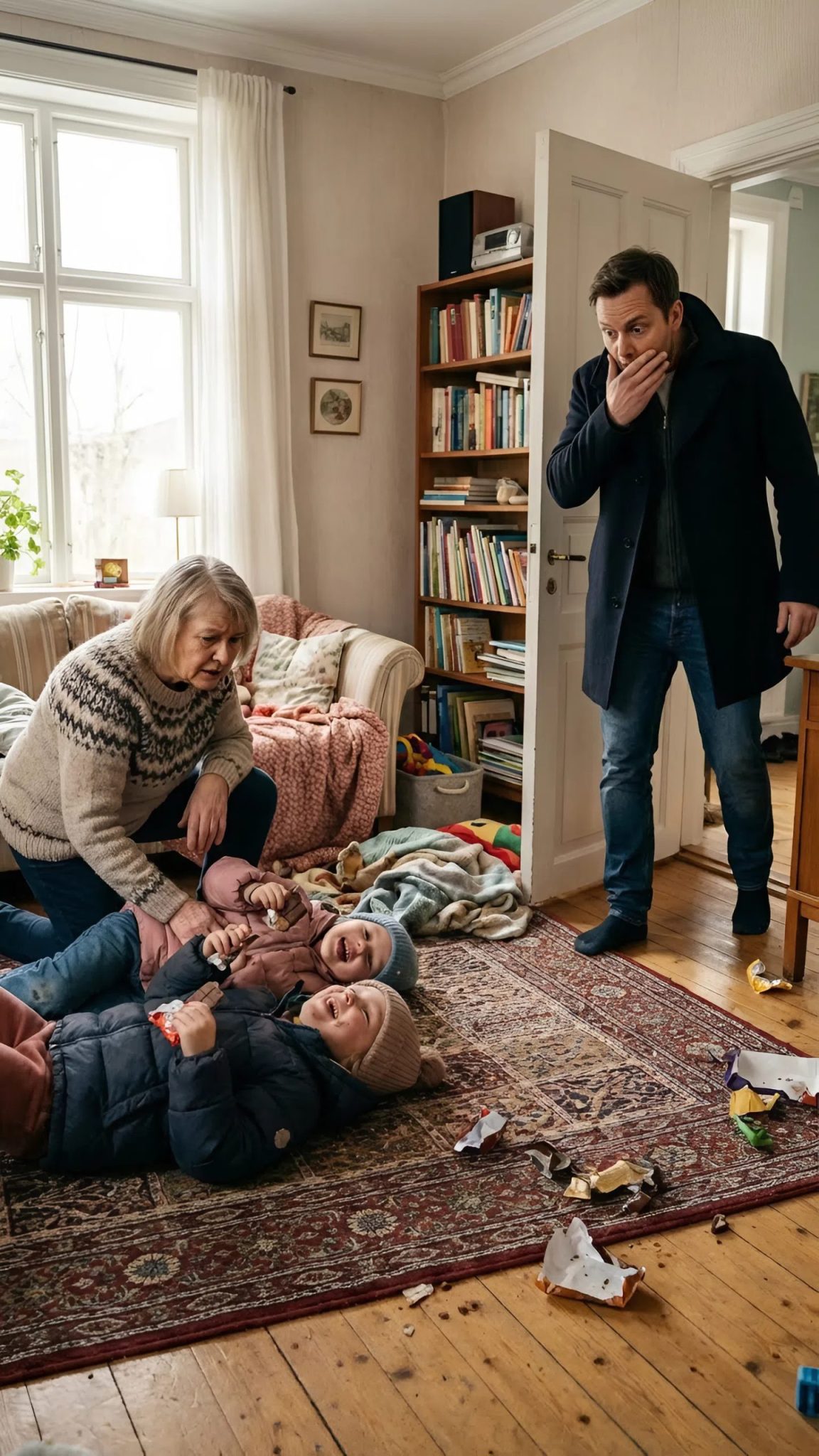
I turned to Laura. “Let’s go get some ice cream,” I said. “I know a place that sells the most excellent chocolate.”
Ten years have passed since the gavel fell. My life today is unrecognizable from the quiet, lonely existence I led before the chocolates. I did not retreat into the shadows. Instead, I used the fire that Thomas had lit under me to warm others. I founded the Dorothy Foundation for the Dignity of Elder Women. We provide legal aid, financial counseling, and safe housing for grandmothers who, like me, were being financially or emotionally abused by their own families. It turns out, I was far from alone.

Laura remarried a wonderful man, a kind pediatrician who treats Anne and Charles as his own. Anne is studying law at Columbia now; she wants to be a prosecutor. Charles is a gentle, talented boy, an artist whose paintings fill my penthouse, which is now always filled with light and laughter.
Five years ago, Thomas came up for parole. I attended the hearing. I didn’t have to say much. I simply told the board that a man who calculates the death of his mother and his own children as a ‘risk’ is not rehabilitated by time, only paused. His parole was unanimously denied.
And then, yesterday, the call came. The prison warden informed me that Thomas had died in his sleep. Heart failure. A natural death—the kind, peaceful end he had tried to fake for me.
He had left a letter. I held it in my hands for a long time before finally opening it.
“Mom,” it read, in a scrawling, almost illegible script. “I know I don’t deserve your forgiveness. I just want you to know that the only good thing I ever did in my life was fail to kill you. Because the world is a better place with you in it. I’m sorry.”
I didn’t cry. I folded the letter and placed it in a drawer.

That evening, I stood on the balcony of my apartment, watching the city lights of New York twinkle like scattered diamonds on a field of black velvet. It was my seventy-ninth birthday.
I poured a glass of vintage wine and raised it to the moon.
Thomas had wanted to kill me to steal my wealth. Instead, he had forced me to find my own. He had wanted to silence me, but he had given me a voice that had, in turn, saved thousands. He had wanted to bury me, but he didn’t realize that I was a seed.
I took a sip of the wine. It was sweet, complex, and lingered on the tongue.
“Happy birthday, Dorothy,” I whispered to the wind. “You finally got the gift you always deserved.”
I turned and walked back into the warmth of my home, leaving the cold night behind me, finally, and completely, free.