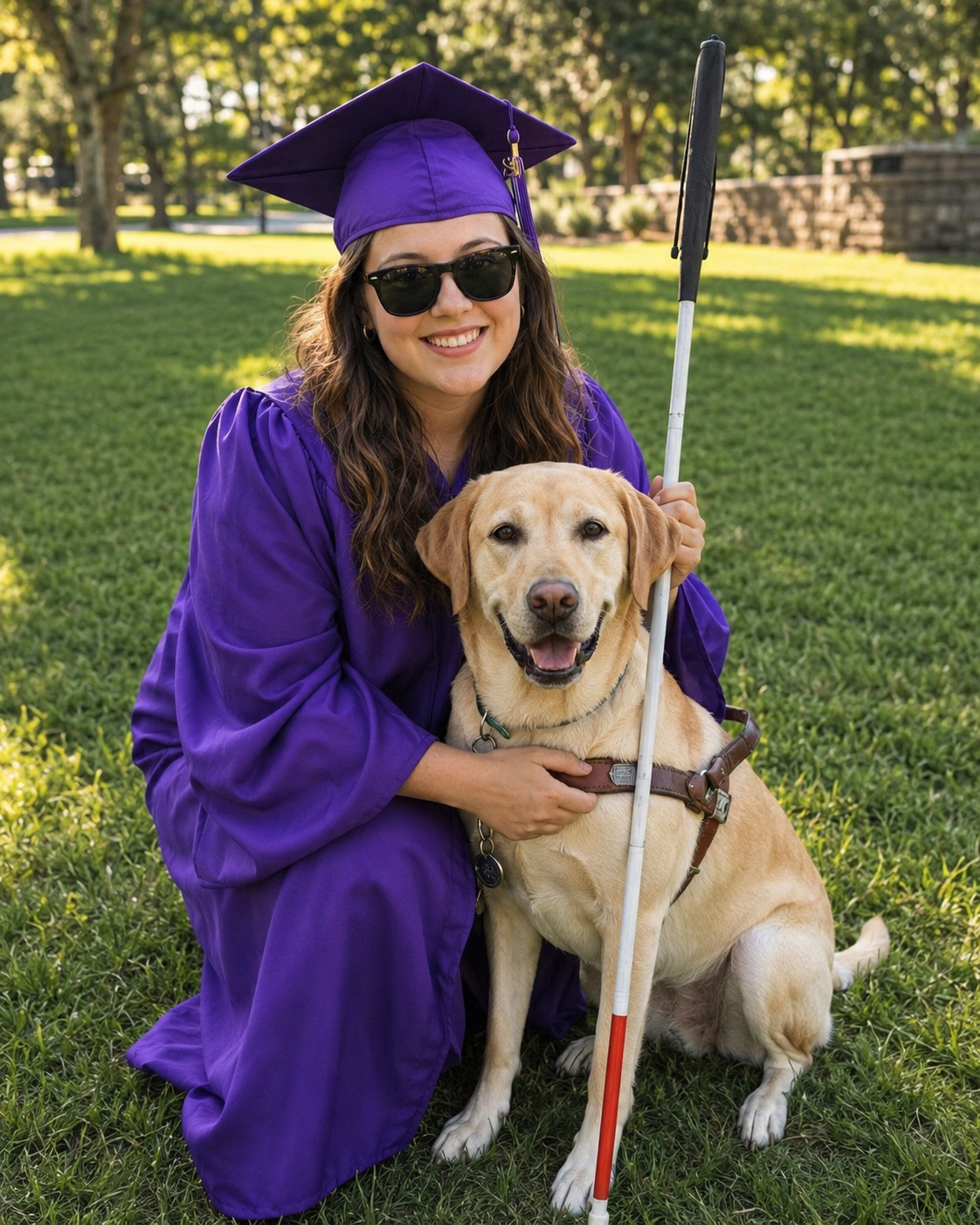
I brought him home anyway, because there was no universe where I was letting him disappear with answers.
The second we got inside, Nora took off her cap and said, “Okay. Why did Scout try to arrest a stranger, and why does the stranger have Dad’s stuff?”
Jonah stood in my kitchen looking like a man who had rehearsed this moment and still hated it.
Mark worked in accounting for a medical supply distributor.
He said Mark hired him before the crash.
Mark worked in accounting for a medical supply distributor. According to Jonah, he had started finding records that did not make sense. Shipments billed to clinics that never received them. Payments moving through strange accounts. Old employee signatures appearing on current forms.
“He thought it might be fraud,” Jonah said. “But he didn’t know how big it was or who inside the company he could trust.”
I said, “So he hired a private investigator and never told me.”
Jonah gave me a tired look. “From what I gathered, he planned to tell you when he had proof. He didn’t want to scare you with half a story.”
Then he said the part that changed the attitude of the room.
Nora asked, “Why do you have Dad’s guitar pick?”
“Because he gave it to me as a recognition item,” Jonah said. “He said if I ever had to approach his family after the fact, they’d know I wasn’t making him up.”
Then he said the part that changed the attitude of the room.
“Mark paid me in advance to deliver a package to Nora on her eighteenth birthday if anything happened to him.”
Nora went very quiet.
I said, “Did he think he was in danger?”
Then Jonah admitted the reason he had been gone for seven years.
Jonah hesitated, then nodded.
He told us that the morning before the crash, Mark handed him a folder of notes and records and said, “If I’m wrong, I’ll feel stupid in a week. If I’m right, I may not get a week.”
I felt sick.
Then Jonah admitted the reason he had been gone for seven years.
The day after the crash, his office was broken into. The folder Mark gave him was the only thing taken. Jonah went to the police with what little he had left, but without the original records it got treated as possible workplace fraud and a tragic accident, not anything bigger. A few days later, he got a message naming his daughter and telling him to let it go.
I read the letter first because Nora asked me to.
“I let it go,” he said quietly. “And I’ve hated myself for that ever since.”
He handed Nora the package.
Inside was a letter, a small digital recorder, and a storage key with a faded number tag.
I read the letter first because Nora asked me to.
It was pure Mark. He told her he loved her. He told her blindness did not make her smaller. He called me the bravest person he knew, which was rude because he was not even there to deal with the aftermath of that sentence.
Then Nora said, “Play the recorder.”
He told her that he loved her.
So I did.
Hearing Mark’s voice after seven years felt like getting hit in the chest.
He sounded normal. Warm. Dry. A little tired.
“Nora,” he said, “if you’re hearing this, then something went properly sideways.”
Nora made this awful little laugh that turned into crying halfway through.
He told her that he loved her. He told her she had more courage than most adults he knew. He made a joke about how she used to bang on the piano with one finger and call it jazz.
Before I let Jonah help, I made him hand over copies of his license.
Then his tone changed.
“The person I’m afraid of is closer than I wanted to believe.”
I said, immediately, “His boss.”
Jonah said, “That was my first assumption too.”
Before I let Jonah help, I made him hand over copies of his license, every note he still had, and everything Mark ever gave him besides the package. I was not about to get dragged into another half-trust situation by a man with a messenger bag and a guilty face.
We visited the old company building, now renamed. We found former employees. We pulled public records. Two clinics Mark flagged had been billed for equipment they never got.
She listened to Mark’s recording over and over with headphones on.
Nora refused to stay out of it.
I told her, “This is ugly.”
She said, “It’s my father.”
That ended that argument.
She listened to Mark’s recording over and over with headphones on. Then she said, “There’s a church bell behind him.”
I could barely hear static.
She said, “No. It’s St. Anne’s. Four low bells, pause, then one high. We passed it every week going to piano when I was little.”
And on the final page, one name had been circled twice in Mark’s handwriting.
That grounded it.
Jonah searched storage places within a mile of that church. At the second one, the number on Mark’s key matched a lockbox in the back office.
Inside were copies of the missing records.
And on the final page, one name had been circled twice in Mark’s handwriting.