Sometimes I thought about the old house, now just a shell with “condemned” notices on its door. I thought about the photograph in the window, the one of my parents. In my imagination, I brought that photo into the new kitchen and set it on the counter next to the still-folded letter. I liked to think they would have approved — not just of the house, but of me finally letting someone help.
I also thought about the cost.
Because there had been one, no matter how kindly it was wrapped. Saying yes meant allowing my story to be told over and over, in newsletters and videos and donor meetings. It meant occasionally standing up in front of strangers and letting them see the parts of my life I once tried to hide. It meant trusting that the people using my story were doing so with integrity.
But it also meant stability. It meant my boys could grow up somewhere that didn’t scare them every time thunder rolled in. It meant dentist appointments and pediatrician visits and a savings account that wasn’t always empty.
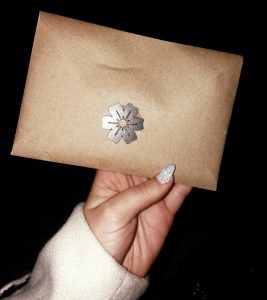
I still kept the letter in a drawer, its edges softened from how many times I’d unfolded it.
Sometimes I pulled it out and reread the lines that had scared me the most at first: “I am not rescuing you; I am investing in what you’ll build from here.”
On my worst days, that sentence felt like pressure, another expectation I might fail to meet. On my better days, it felt like a hand extended, not to drag me, but to steady me as I climbed.
One evening, after putting the boys down and washing dishes in our not-leaking sink, I sat at the kitchen table with a cup of tea and realized something that made my chest ache in a new way.
I wasn’t just a recipient anymore.
At the foundation, I was the one calling families after fires, floods, and storms. I was the one listening to the catch in their voices as they tried to pretend they were fine. I was the one walking them through forms the way Jenna once walked me through mine. I found myself writing my own letters — shorter, less polished, but trying to carry the same message: You are not alone in this.
Somewhere along the way, the house had stopped feeling like a loan from a stranger and started feeling like a base from which I could reach back for others.
As I write this now, the boys are asleep down the hall, their breathing soft and even. The nightlight in their room glows like a tiny moon. Through the living-room window, I can see the porch swing swaying gently in the evening breeze.
I think about the storm that tore my old life apart, about the photograph in the broken window, about the man who saw it and decided my story wasn’t over. I think about the letter that almost made me say no, and about the version of myself who signed it anyway, hands shaking.
Am I glad I agreed to his terms? Yes. Not just because of the roof over our heads or the job that lets me pay my bills without constant panic, but because of what I’ve learned in the process.
I’ve learned that accepting help doesn’t mean you’re weak; sometimes it means you’re wise enough to know you can’t do everything alone. I’ve learned that gifts can come with conditions and still be real, still be valuable. I’ve learned that survival is rarely graceful and that rebuilding is often messy.
Most of all, I’ve learned that being seen — really seen — in your most vulnerable moment can be terrifying, but it can also be the first step toward healing.
If this story has touched you, there’s another one that has stayed with me. It’s about a woman whose life shifted the morning she decided not to ignore a small, trembling voice at the back of a school bus. The air was bitterly cold that day, and she was exhausted, lost in her own thoughts, until she heard quiet sobs behind her. What she discovered when she went to check on the child changed not only his world, but hers as well.

This tale, like mine, is a piece of fiction rooted in the kinds of real events that happen every day. Names, places, and details have been changed to protect privacy and to respect the people whose experiences inspired it. Any similarity to actual individuals or situations is coincidental. The writer and publisher cannot guarantee complete accuracy and are not responsible for how anyone interprets or relies on this story.
If you’d like to share your own journey — the one you carry quietly in the back of your mind — you can send it to info@amomama.com. Somewhere out there, another person might need to hear it to believe that their own life isn’t over yet.