A Powerful Woman Shoved a Child Into a Puddle — But One Birthmark Changed Everything
Five years ago, Isabella Reed’s world ended. Once a beloved mother in Beverly Hills, she was reduced to a shadow of herself after her only son, Liam, vanished from right outside their home. No ransom note. No witnesses. Just silence. She spent millions searching, hiring detectives, scouring every clue—but nothing returned him to her arms. The grief hardened her, and Isabella became someone cold, controlling, untouchable—draped in couture, wielding power like armor.
On a rainy Manhattan afternoon, Isabella stepped out of her white Rolls-Royce in front of Le Verre, the city’s elite restaurant. Her white designer suit gleamed in the wet light; every movement screamed control. But life has a way of humbling even the most untouchable.
A young boy—maybe nine—darted past her, clutching a greasy paper bag of leftovers. His clothes were tattered, soaked, his hair plastered to his forehead, and his eyes—so tired—spoke of a life far too heavy for his age.
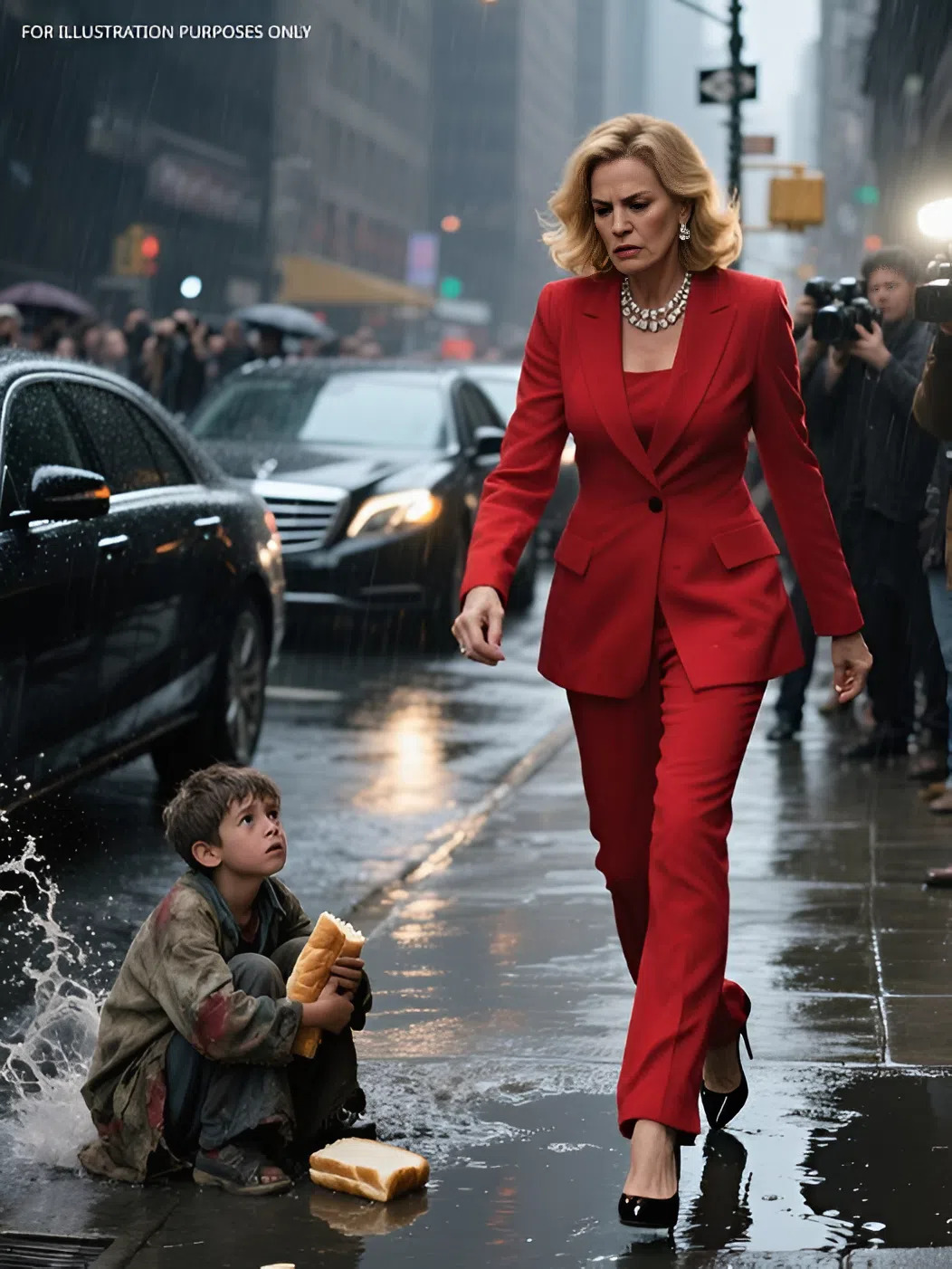
He slipped. Muddy water splashed onto Isabella’s pristine skirt. Gasps echoed through the crowd.
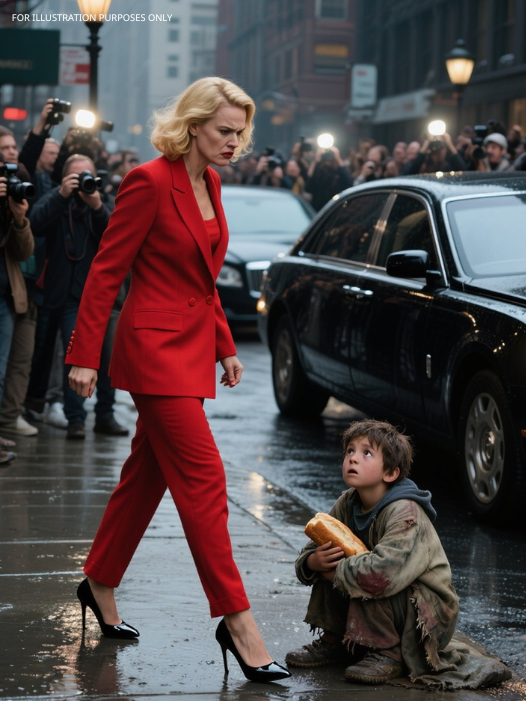
“Watch where you’re going,” she snapped, her voice sharp enough to cut glass.
“I—I’m sorry,” the boy stammered. “I just wanted the food…”
For illustrative purpose only
“This outfit costs more than your life,” she spat, oblivious to the crowd’s whispers and the phones capturing every second.
And then she did it. She pushed him. Into the puddle. Water soaked him from head to toe.
The murmurs grew louder. Isabella Reed—philanthropist, fashion icon—was caught shoving a homeless child.
But then—her breath stopped.
On his left wrist, partly hidden under mud and rain, was a small crescent-shaped birthmark.
The exact same mark Liam had.
Her heart slammed. Her legs froze. The world tilted.
The boy looked up. Not angry. Not crying. Just quietly broken.
“I’m sorry, ma’am,” he whispered, and walked away.
That night, Isabella could not sleep. She replayed the moment over and over—the birthmark, the eyes, the faint laugh that sounded hauntingly like Liam’s. By dawn, she made a single call to her aide.
“Find him. The boy in the photographs from yesterday,” she said, her voice barely recognizable to herself.
Two days later, she had his name: Eli. No records, no certificate, no school. Only stories from locals about a kind old man named Walter who cared for him.
That evening, Isabella walked the streets in disguise. She found Eli curled up under a piece of cardboard, shivering, small and alone. Beside him, Walter’s aged eyes softened when he looked at her.
“He holds onto that necklace like it’s the last thing he owns,” Walter said. Isabella leaned closer. Around Eli’s neck hung a tarnished silver pendant: “Liam.”
Her hands shook. Her lungs tightened.
She left food, blankets, medicine. She took a few strands of his hair for a DNA test. Every moment without confirmation felt unbearable.
Three agonizing days later, the envelope arrived.
For illustrative purpose only
99.9% match. Eli was Liam.
The relief, the grief, the guilt—it all crashed over her. She had pushed him, unknowingly, and now, she had to reclaim her son.
The next day, Isabella arrived at the temporary shelter where Eli was supposed to stay. Chaos greeted her.
“Eli ran away,” a caretaker said, panic in her voice.
Isabella didn’t think. She ran through streets, alleys, and rain-soaked sidewalks, calling his name until the city seemed to answer back.
Finally, beneath a bridge, she found him—alone, huddled in blankets. “He always said you’d come back,” Eli whispered. “But you never did.”
Isabella dropped to her knees, rain drenching her. “I’m here now, Liam. I’ll never leave you again.”
For a long moment, only the rain answered. Then Eli slowly reached out, his small hand touching her cheek.
“You came back,” he whispered.
And she held him—finally, completely, never letting go.
Months later, Isabella founded The Reed Foundation for Missing Children, giving other families hope that she once thought was lost forever. Every rainy day, mother and son return to that bridge—not to relive pain, but to remember that love, eventually, always finds its way home.
Share this story to remind the world: even the smallest gestures of compassion can change a life forever.