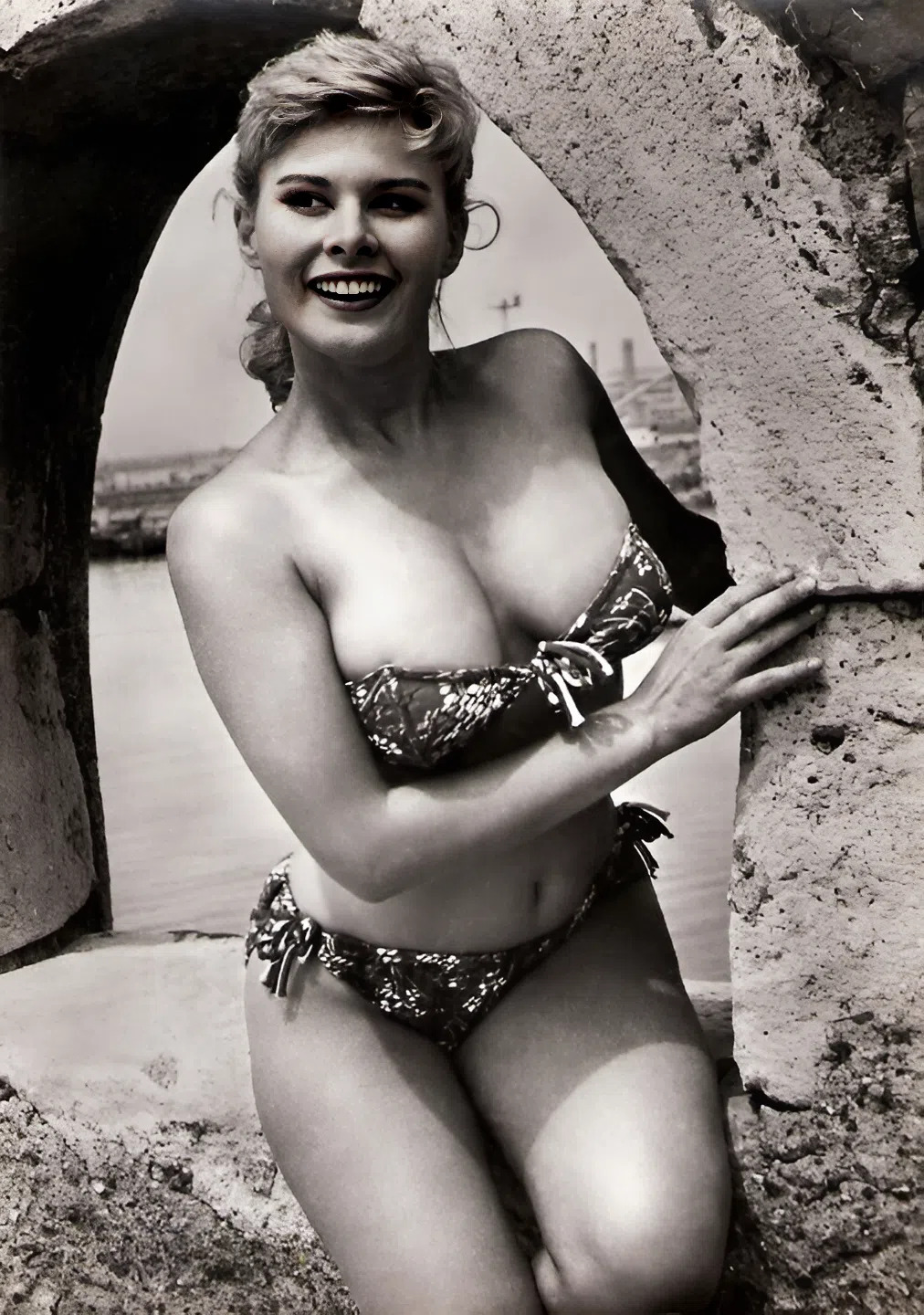
She was an actress who didn’t have to try hard — the screen came alive with her mere presence.
Her sunny smile, bright red hair and natural charm made Marisa Allasio a favourite with audiences and directors alike. It seemed that her path in Italian cinema was predetermined. But at the height of her success, she made an unexpected decision that surprised everyone: she chose to leave. Thus began the story of a woman who combined beauty, courage and quiet protest against the world that idolised her.
Marisa, whose full name was Maria Luisa Lucia Allasio, was born on 14 July 1934 in Turin. Her father, Count Federico Allasio, was a hero of the First World War, a famous footballer and coach of Genoa. From him she inherited strength of character and nobility. From her mother, she inherited gentleness and warmth, which later manifested themselves in each of her roles.
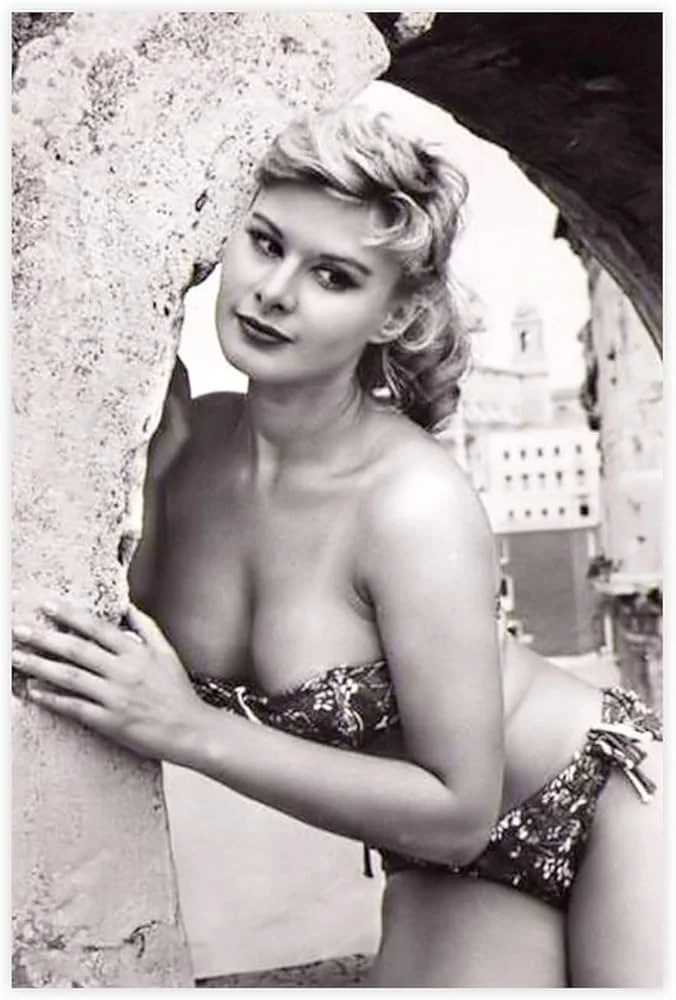
In the post-war years, she did not dream of fame at all — she wanted freedom and new horizons. But fate led her to cinema.
Her path to the screen began almost by accident: in 1952, at the age of eighteen, she starred in Mario Costa’s film Forgive Me! Although the role was tiny, her liveliness and energy made her immediately noticeable.
Italian directors quickly realised that Marisa Allasio embodied the new post-war Italy — young, modern and full of vitality. Almost immediately, she starred in Heroes of Sunday (1952) and Mother’s Heart (1953), creating the image of a bright, lively girl on screen, whom viewers instantly took a liking to.
By the mid-1950s, Marisa had become one of the leading figures in Italian cinema. While Gina Lollobrigida charmed with her passionate sensuality and Sophia Loren with her regal splendour, Allasio represented something else: freshness, lightness and an inexhaustible spark of life. She embodied the ragazza moderna — the ‘modern girl’ — confident, playful, independent — a symbol of a new generation of women in a rapidly changing country.
Her real breakthrough came in 1956 with Dino Risi’s Poor But Beautiful. In the role of Giovanna, a lively and stubborn Roman woman torn between two charming idlers, Marisa won over the audience with her naturalness. The film reflected the optimism of the era, and she was its heart.
The success was deafening: sequels followed — Beautiful but Poor (1957) and Poor Millionaires (1959). The trilogy became a classic of Italian romantic comedy, cementing Allasio’s status as a national favourite.
Her name appeared alongside the country’s biggest actors, and her smile graced magazine covers across Europe. Marisa became a symbol of young, energetic Italy. During these stellar years, she starred alongside Alberto Sordi in Il conte Max (1957) and Vittorio Gassman in La ragazza del Palio (1957), where she played a passionate young woman caught up in the whirlwind of Sienese entertainment and rivalry.
Allasio moved easily from comedy to drama, from boldness to tenderness — audiences adored her for her sincerity and liveliness. But behind the glamour of fame, she was increasingly burdened by the constraints of her profession. In Italian cinema at that time, actresses were often seen as mere decorative embellishments. Marisa dreamed of a more real, deeper life.
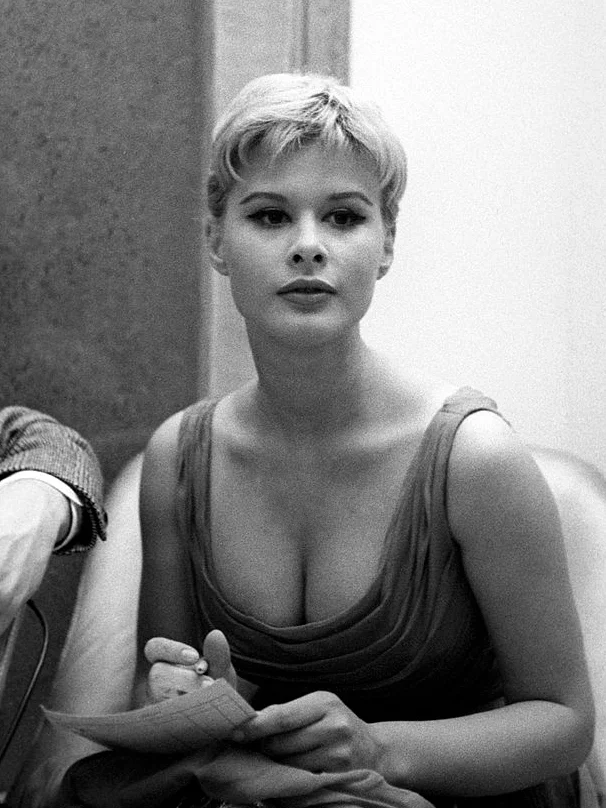
And fate soon gave her a sign.
In 1958, at a social reception in Rome, she met Count Pier Francesco Calvi di Bergolo, a representative of an ancient family and son of Princess Yolanda of Savoy, daughter of the last Italian king. A strong mutual attraction blossomed between them, and Italy soon began to talk about their romance. Their wedding was called a fairy-tale union between a film star and an aristocratic family.
But it was precisely this wedding that marked her departure from the cinema.
She was only twenty-four, at the height of her fame, and decided to give it all up for her family. ‘I wanted a real life, not one that consisted of spotlights and cameras,’ she would later say. And this decision was entirely in keeping with her character: Marisa always followed her heart.
After the wedding, Marisa completely withdrew from public life. The couple had two children and lived a quiet, harmonious life away from the hustle and bustle and the spotlight. While her colleagues continued to chase roles and press attention, Marisa seemed to be perfectly happy, leaving cinema behind as a fond memory. She gave interviews extremely rarely, hardly ever appeared in public, and over time became a mysterious figure of the past — a reminder of the golden age of Italian cinema, full of laughter, lightness, and youth.

Marisa Allasio passed away on 17 July 2024, just three days after her 90th birthday. Her death sparked a wave of warm responses from fans and film historians across Italy. She was remembered not only as a beautiful actress, but as a symbol of an entire generation — a generation that survived the war and learned to enjoy life again. Although her career was very short, the mark she left behind was surprisingly deep.
Marisa was more than a film star — she was a phenomenon. Effortless, sincere, filled with inner light, she embodied the spirit of her time. Her short but brilliant presence in cinema reminds us that true strength and nobility are sometimes revealed in the simplest choices. She did not seek eternal fame — she chose love, peace and a quiet, fulfilling life. And in doing so, she proved that sometimes the most dazzling act is to step away from the spotlight.