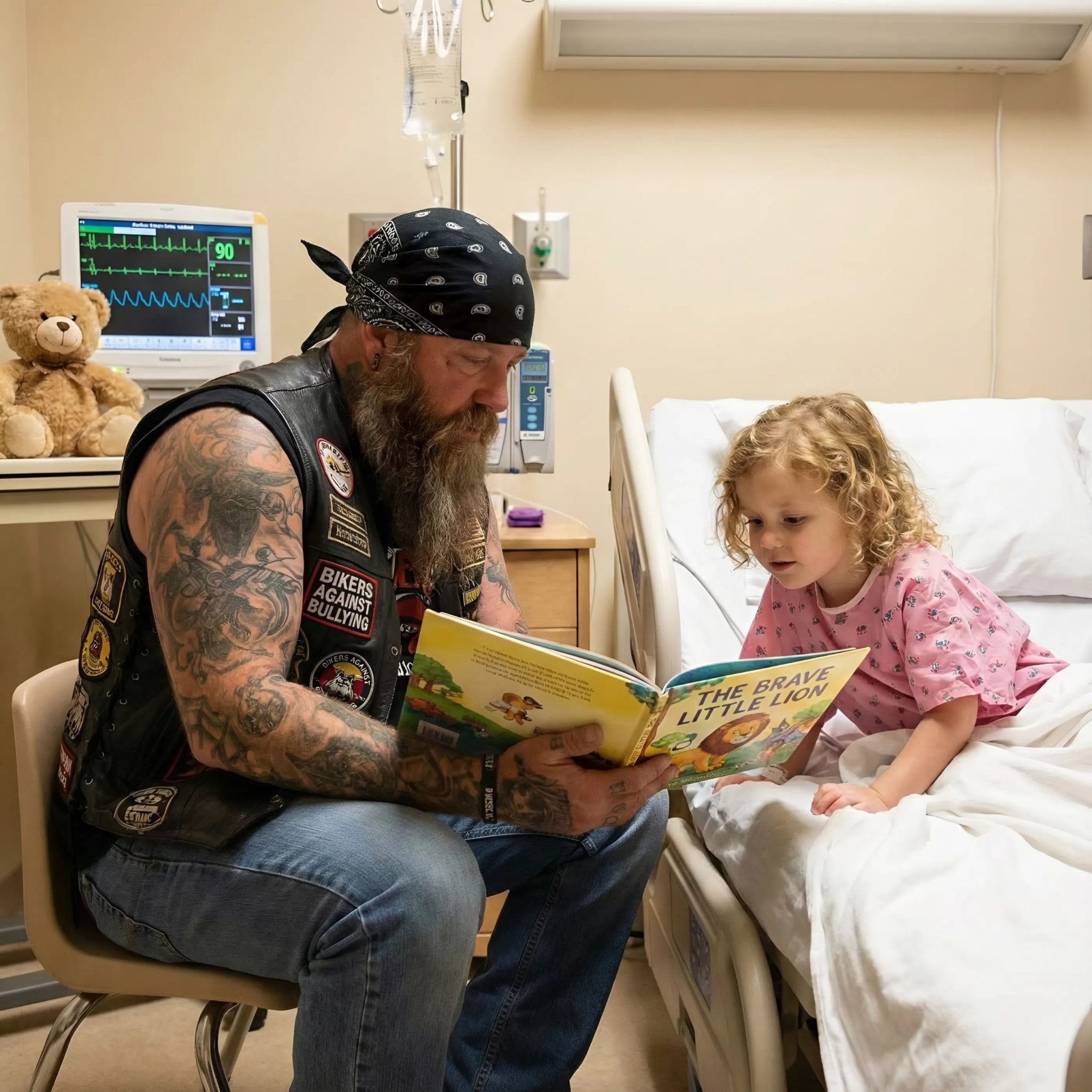
After that, I came every day. I started arriving around 2 p.m., staying until visiting hours ended at 8. Six hours a day with Amara—reading, watching cartoons, playing simple games when she felt up to it, or just sitting quietly while she slept, holding her hand.
The nurses started calling me “Amara’s dad.” Doctors began updating me like I was legal family. CPS stopped searching for a foster placement. On paper, Amara still had no one. But in reality, she did: me.
Two weeks in, she had another question. “Daddy Mike, do you have a picture of your daughter? The one who died?”
I took my wallet out. “This is Sarah,” I said, handing her the photo. “She was sixteen here. We took this a week before the accident.”
Amara studied it. “She’s really pretty,” she said. “She looks nice.”
“She was the best kid you could imagine,” I said. “Smart, funny, kind. Wanted to be a vet. Loved animals more than anything.”
“I bet she loved you lots.”
“I hope so,” I said quietly. “I loved her more than life.”
Amara handed the picture back. “Daddy Mike, do you think Sarah would be okay with you being my daddy now? I don’t want her to be sad.”
That did me in. I started sobbing right there beside her bed. This little girl, who knew she was dying, was worried about my dead child’s feelings.
“Baby girl,” I said through tears, “Sarah would have loved you. And she would be so happy that I found you. That I get to be a daddy again.”
Amara reached up and patted my cheek. “Don’t cry, Daddy,” she said. “It’s okay. We found each other.”
That night I called my club president. “Brother, I need the club,” I said. “I’ve got a situation.”
Within a day, around fifteen of my brothers had come to see Amara. They brought stuffed animals, books, toys. They made her an honorary member of the Defenders MC. We gave her a tiny leather vest with her name stitched on it.
Her room transformed from cold and empty to full of life, laughter, and love.
The guys started taking turns sitting with her when I couldn’t be there, so she always had someone—an “uncle,” a “grandpa,” a friend. She was never alone again.
Three months later, her body began to fail faster than expected. The cancer spread. Her pain increased. She slept more and ate less.
One evening, I was reading Goodnight Moon to her for what felt like the hundredth time when she stopped me mid-sentence.
“Daddy Mike, I need to tell you something.”
“What is it, baby girl?”
“I’m not scared anymore,” she said softly. “Before, I was really scared. Scared to die alone. Scared no one would remember me. Scared I didn’t matter.” She squeezed my hand as best she could. “But you made it not scary. You and my uncles. You made me feel like I matter.”
“You matter more than you’ll ever know, Amara,” I told her. “You matter to me. You matter to all of us. You changed our lives.”
“Good,” she whispered. “Because you changed mine too. I got to have a daddy. I got to have a family. Even if it’s just for a little while.”
“It’s not just for a little while,” I said. “You’re my daughter forever. Even when you’re not here. You’ll always be my girl.”
She smiled. “Forever?”
“Forever, baby girl.”
Amara died on a Saturday morning in June. I was holding her hand. Three of my brothers stood beside us. She went peacefully, no pain, just drifting away while we sang her favorite song.
The hospital let us hold a memorial service in the chapel. Over two hundred bikers came. We filled the chapel, the hallways, the parking lot. Nurses, doctors, janitors, other families, food service workers—every person who had met Amara in those three months showed up.
Because in just three months, that little girl had touched more hearts than some people do in a lifetime.
CPS eventually tracked down her mother. She didn’t come to the service. Didn’t call. But she signed the papers so I could claim Amara’s body. The social worker cried telling me.
“In thirty years of this work,” she said, “I’ve never seen anything like what you did for that child. You gave her a father’s love.”
We buried Amara in the same cemetery where my daughter Sarah is buried, right beside her. Amara was right—Sarah would’ve loved her. Now they rest together.
Her headstone reads:
“Amara ‘Fearless’ Johnson. Beloved Daughter. Forever Loved by the Defenders MC and her Daddy Mike.”
That was four years ago. I still go to her grave every Sunday. I still read her stories. I still tell her about my week, about what her uncles are up to.
And every Thursday, I’m still at Children’s Hospital, reading to sick kids. But now, when they ask if I have children, I answer differently. I tell them I have two daughters. One who’s been in heaven for twenty-four years. One who’s been there for four. Both of them forever in my heart.
Because of Amara, the nurses started a program called the Defender Dads program. Men sign up to be a steady presence for kids in the hospital who don’t have family around. They come regularly and become whatever that child needs—a dad, a grandpa, an uncle, a friend.