I’m 62F, and I’ve spent nearly forty years teaching high school literature. My days follow a steady pattern: hallway supervision, Shakespeare, lukewarm tea, and essays that seem to multiply overnight. December is usually my favorite time of year—not because I expect miracles, but because even teenagers soften a little when the holidays arrive.
Every year, right before winter break, I give the same assignment:
“Interview an older adult about their most meaningful holiday memory.”
They groan. They complain. And then they return with stories that remind me why I chose this profession in the first place.
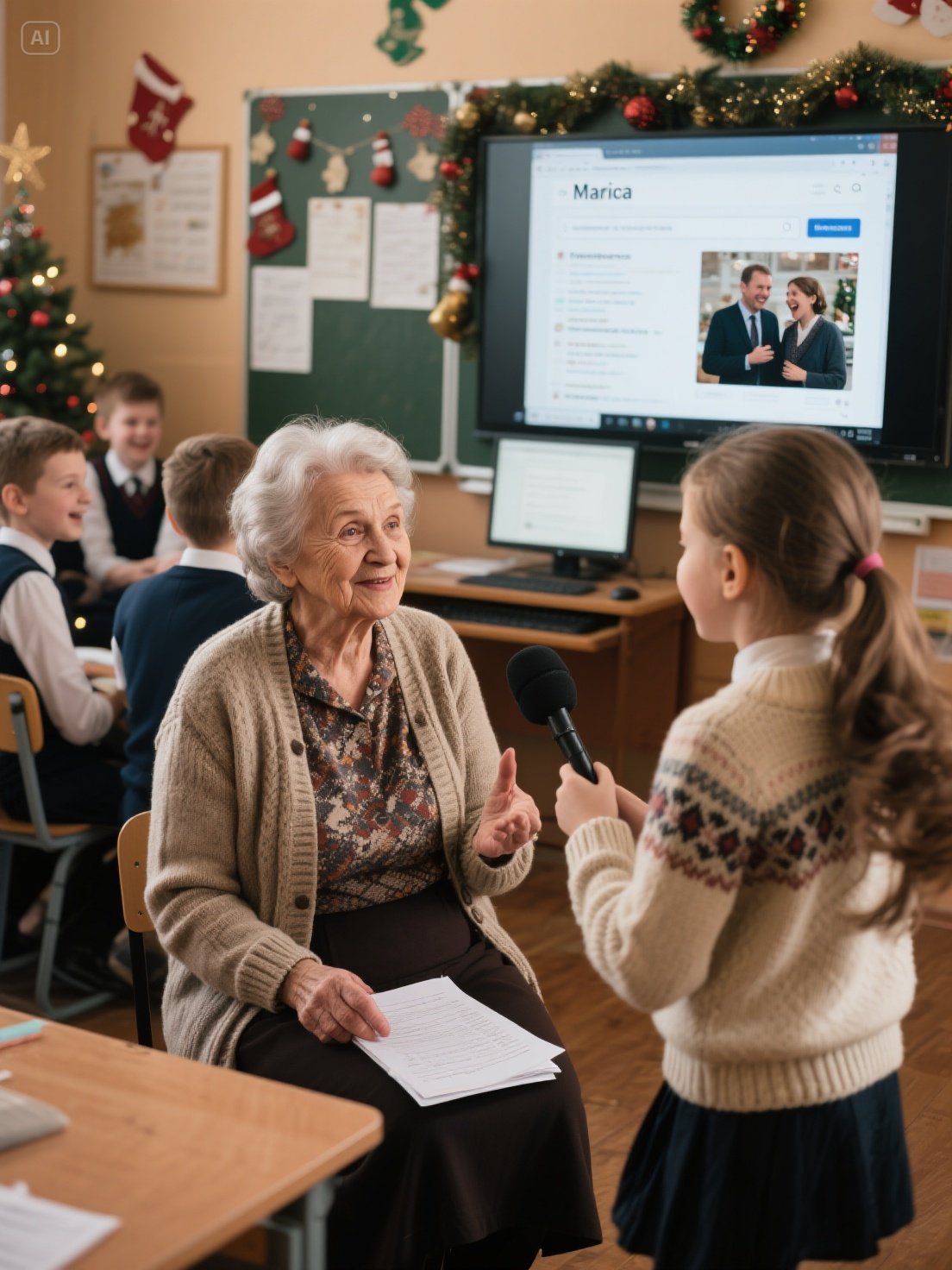
This year, quiet little Emily lingered after the bell and approached my desk.
“Miss Anne?” she said, clutching the assignment sheet like it mattered. “Can I interview you?”
I laughed. “Oh honey, my holiday memories are boring. Interview your grandma. Or your neighbor. Or literally anyone who’s done something interesting.”
She didn’t waver. “I want to interview you.”
“Why?” I asked.
She shrugged, but her gaze didn’t drop. “Because you always make stories feel real.”
That landed somewhere soft. I sighed and nodded. “Fine. Tomorrow after school. But if you ask me about fruitcake, I’ll rant.”
She smiled. “Deal.”
The next afternoon, she sat across from me in the empty classroom, notebook open, feet swinging beneath her chair.
She began gently.
“What were holidays like when you were a kid?”
I gave her the safe version: my mom’s awful fruitcake, my dad blasting carols, the year our tree leaned like it had given up. Emily scribbled quickly, like she was gathering treasure. Then she paused, tapping her pencil.
“Can I ask something more personal?” she said.
I leaned back. “Within reason.”
She inhaled. “Did you ever have a love story around Christmas? Someone special?”
That question pressed on an old bruise I’d spent decades avoiding. His name was Daniel.
Dan.
We were 17, inseparable, and recklessly brave in the way only teenagers can be. Two kids from unstable homes making plans like we owned the future.
“California,” he used to say, like it was a promise. “Sunrises, ocean, you and me. We’ll start over.”
I’d roll my eyes and smile anyway. “With what money?”
He’d grin. “We’ll figure it out. We always do.”
Emily watched my face like she could see the past moving behind my eyes.
“You don’t have to answer,” she said quickly.
I swallowed. “No. It’s fine.”
So I gave her the outline. The cleaned-up version.
“I did,” I said. “I loved someone when I was 17. His family disappeared overnight after a financial scandal. No goodbye. No explanation. He was just… gone.”
Emily frowned. “Like he ghosted you?”
I almost laughed at the modern phrasing. Almost.
“Yes,” I said softly. “Like that.”
“What happened to you?” she asked.
I kept it light, because that’s what adults do when they’re bleeding inside.
“I moved on,” I said. “Eventually.”
Emily’s pencil slowed. “That sounds really painful.”
I gave her my teacher smile. “It was a long time ago.”
She didn’t argue. She simply wrote it down carefully, like she didn’t want to hurt the paper.
When she left, I sat alone at my desk, staring at the empty chairs.
I went home, made tea, and graded essays as if nothing had changed.
But something had. I felt it—like a door had cracked open in a part of me I’d boarded shut.
A week later, between third and fourth period, I was erasing the board when my classroom door flew open.
Emily rushed in, cheeks red from the cold, phone in her hand.
“Miss Anne,” she panted, “I think I found him.”
I blinked. “Found who?”
She swallowed hard. “Daniel.”
My first reaction was a short, disbelieving laugh. “Emily. There are a million Daniels.”
“I know. But look.”
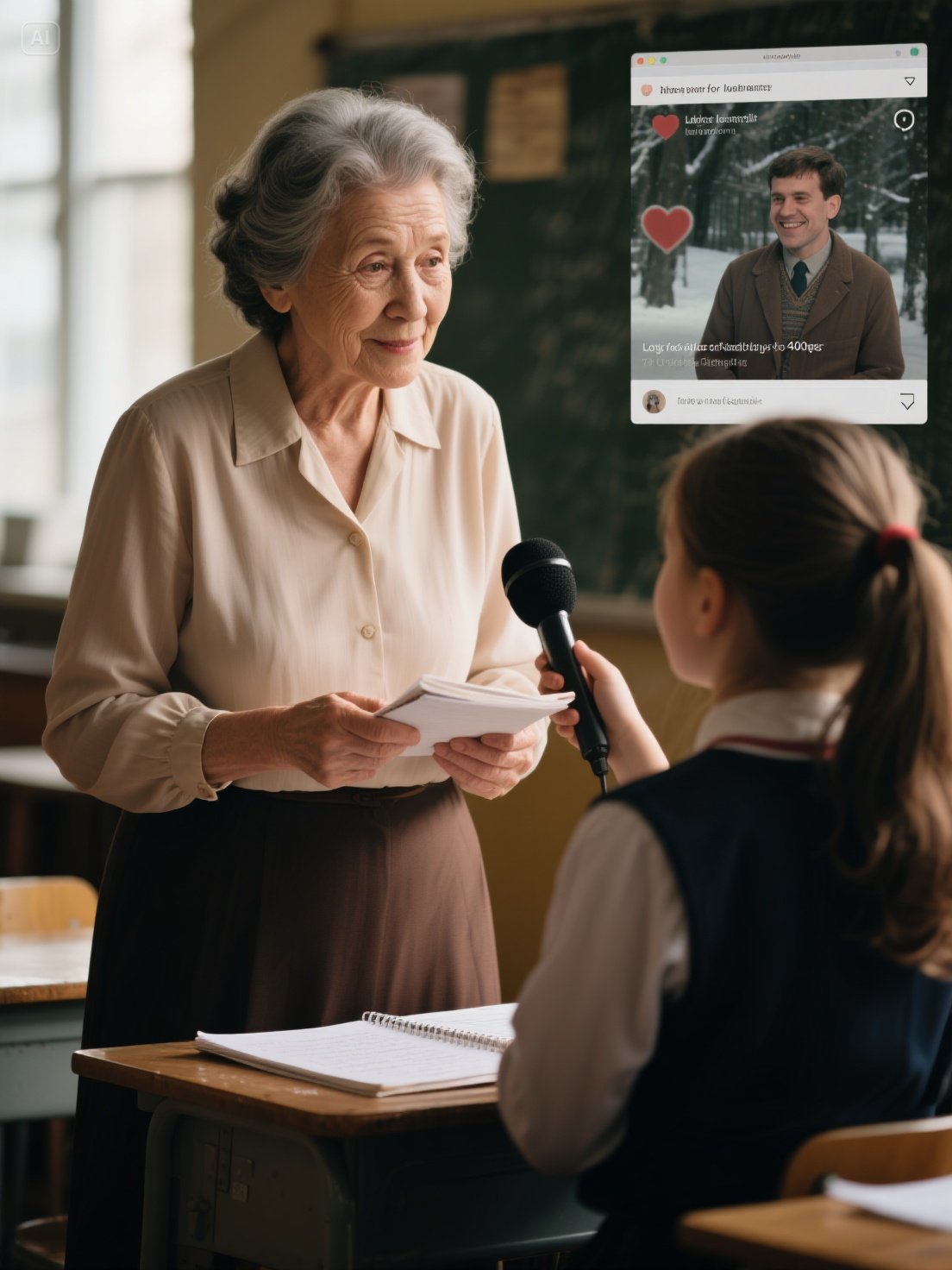
She held out her phone. On the screen was a local community forum post.
The title made my stomach drop.
“Searching for the girl I loved 40 years ago.”
My breath caught as I read.
“She had a blue coat and a chipped front tooth. We were 17. She was the bravest person I knew. I know she wanted to be a teacher, and I’ve checked every school in the county for decades—no luck. If anyone knows where she is, please help me before Christmas. I have something important to return to her.”
Emily whispered, “Scroll down.”
There was a photo.
Me at 17, in my blue coat, chipped front tooth visible because I was laughing. Dan’s arm around my shoulders like he could shield me from everything.
My knees weakened. I grabbed the edge of a desk.
“Miss Anne,” Emily said, voice trembling now, “is that you?”
I barely managed it. “Yes.”
The room went too bright, too loud, like my senses couldn’t decide how to process reality.
Emily’s eyes were huge. “Do you want me to message him? Should I tell him where you are?”
I opened my mouth. Nothing came out.
So I did what I’ve always done—tried to shrink it.
“It might not be him,” I said. “It could be old.”
Emily gave me a look that said, Please don’t lie to yourself.
“Miss Anne,” she said gently, “he updates it every week. The last update was Sunday.”
Sunday.
A few days ago.
So he wasn’t reminiscing. He was still searching.
Something stirred beneath my ribs—hope and fear knotted so tightly I couldn’t separate them. Emily waited, perfectly still, like if she moved I’d retreat.
Finally, I exhaled. “Okay.”
“Okay as in yes?”
“Yes,” I said, voice shaking. “Message him.”
Emily nodded like a professional.
“I’ll be careful,” she said. “Public place. Daytime. Boundaries. I’m not getting you abducted, Miss Anne.”
Despite myself, I laughed. It came out shaky and wet.
“Thank you,” I said. “Truly.”
That night, I stood in front of my closet like it was an exam I hadn’t studied for.
It’s humiliating how quickly your brain can turn back into a teenager. I held up sweaters. Rejected them. Put them back. Pulled them out again. I stared at my hair in the mirror and muttered, “You are 62. Act like it.”
Then I called my hairdresser anyway.
The next day, after the final bell, Emily slipped into my classroom with a conspiratorial smile.
“He replied,” she whispered.
My heart jumped. “What did he say?”
She showed me the screen. “‘If it’s really her, please tell her I’d like to see her. I’ve been waiting a long time.’”
My throat tightened.
Emily said, “Saturday? Two p.m.? The café near the park?”
I nodded before fear could overtake me. “Yes. Saturday.”
She typed quickly, then grinned. “He said yes. He’ll be there.”
Saturday arrived too fast. I dressed carefully: soft sweater, skirt, my good coat. Not trying to look younger—just trying to look like the best version of who I am now.
On the drive there, my mind was merciless.
What if he doesn’t recognize me? What if I don’t recognize him? What if the past is prettier than the truth?
The café smelled of espresso and cinnamon. Holiday lights blinked in the window.
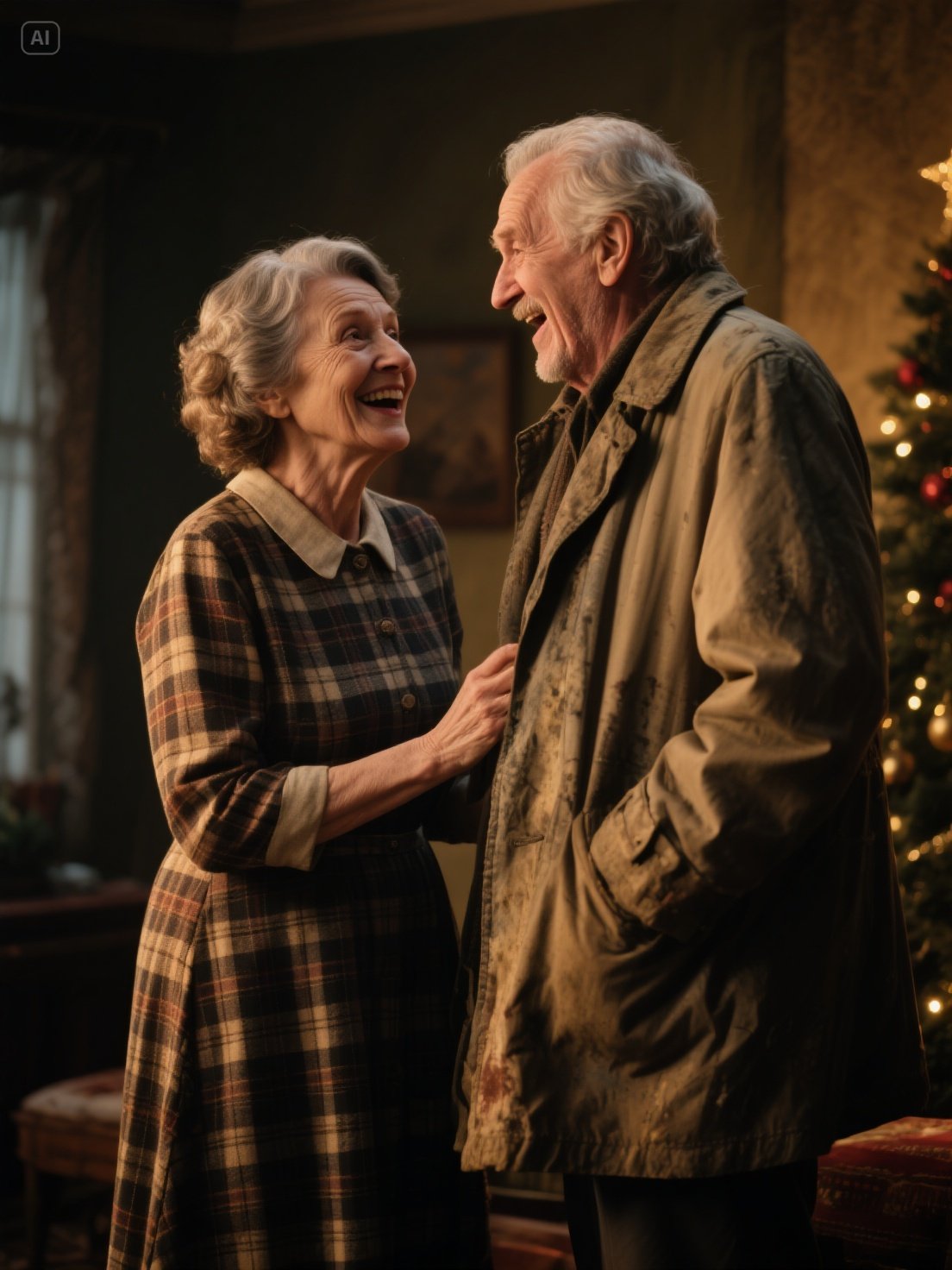
And I saw him immediately.
Corner table. Back straight. Hands folded. Scanning the door like he didn’t trust luck.
His hair was silver now. His face lined by time’s quiet hand.
But his eyes were the same.
Warm. Attentive. Slightly mischievous.
He stood the instant he saw me.
“Annie,” he said.
No one had called me that in decades.
“Dan,” I managed.
For a moment, we just stared at each other, suspended between who we were and who we’d become.
He smiled—wide and relieved, like something inside him finally loosened.
“I’m so glad you came,” he said. “You look wonderful.”
I snorted because I needed air. “That’s generous.”
He laughed, and it hit me like a familiar song.
We sat. My hands trembled around the coffee cup. He noticed and pretended not to. That small mercy nearly undid me.
We started with the safe updates.
“You’re a teacher?” he asked.
“Still,” I said. “Apparently, I can’t quit teenagers.”
He smiled. “I always knew you’d help kids.”
Then came the silence—the one I’d carried for forty years.
I set my cup down.
“Dan,” I said quietly, “why did you disappear?”
His jaw tightened. He looked at the table, then back at me.
“Because I was ashamed,” he said.
“Of what?” I asked, softer than my anger.
“My father,” he said. “It wasn’t just taxes. He was stealing from his employees. People who trusted him. When it came out, my parents panicked. We packed the house in one night and left before sunrise.”
“And you didn’t tell me,” I said, my voice cracking despite myself.
“I wrote a letter,” he said quickly. “I had it. I swear I did. But I couldn’t face you. I thought you’d see me as part of it. Like I was dirty too.”
My throat tightened. “I wouldn’t have.”
He nodded, eyes glossy. “I know that now.”
He took a breath.
“So I promised myself I’d build something clean,” he said. “My own money. My own life. Then I’d come back and find you.”
“When?” I asked.
“Twenty-five,” he said. “That’s when I finally felt… worthy.”
“Worthy,” I repeated, tasting the sadness in it. “Dan, you didn’t have to earn me.”
He looked like he wanted to argue, then didn’t.
“I tried to find you,” he said. “But you’d married. Changed your last name. Every lead died.”
I looked down at my hands.
“I was heartbroken,” I admitted. “I ran into marriage like it was a life raft.”
He nodded slowly. “Mark.”
“Yes,” I said. “Mark.”
I didn’t give him a novel. Just the truth. Two kids. A functional life. And then, at 40, Mark sat me down at the kitchen table and said, “The kids are grown now. I can finally be with the woman I’ve loved for years.”
Dan’s face hardened. “I’m sorry.”
I lifted one shoulder. “I didn’t scream. I didn’t throw things. I just… absorbed it.”
Like I’d been trained to take abandonment quietly.
Dan stared at his hands. “I married too,” he said. “Had a son. It ended. She cheated. We divorced.”
We sat there, two people carrying lives full of ordinary damage.
Then I asked the question that mattered most.
“Why keep looking?” I whispered. “All these years?”
Dan didn’t hesitate.
“Because we never got our chance,” he said. “Because I never stopped loving you.”
I let out a breath that felt like it had been trapped in me since I was 17.
“You love me now?” I asked, half-laughing through the sting. “At 62?”
“I’m 63,” he said, smiling gently. “And yes.”
My eyes burned. I blinked fast because I hate crying in public.
Then I remembered the post.
“The important thing,” I said. “What did you need to return?”
Dan reached into his coat pocket and set something on the table. A locket.
My locket.
The one with my parents’ photo inside. The one I lost senior year and mourned like a body.
“I found it during the move,” he said softly. “You left it at my house. It got packed in a box. I kept it safe. I told myself I’d give it back someday.”
My fingers shook as I opened it. My parents smiled up at me, untouched by time. My chest tightened so hard it hurt.
“I thought it was gone forever,” I whispered.
“I couldn’t let it go,” he said.
We sat in a quiet pocket of the café while the world moved on around us.
Finally, Dan cleared his throat.
“I don’t want to rush you,” he said. “But… will you give us a chance? Not to redo 17. Just to see what’s left for us now.”
My heart pounded.
“I’m not giving up my job,” I said immediately, because apparently that’s who I am.
Dan laughed, relieved. “I wouldn’t ask you to.”
I took a slow breath.
“Yes,” I said. “I’m willing to try.”
His face softened. “Okay,” he said quietly. “Okay.”
On Monday morning, I found Emily at her locker.
She saw me and froze. “Well?”
“It worked,” I said.
Her hands flew to her mouth. “No way.”
“It did,” I said, my voice thick. “Emily… thank you.”
She shrugged, but her eyes shone. “I just thought you deserved to know.”
As she walked away, she called over her shoulder, “You have to tell me everything!”
“Absolutely not,” I called back.
She cackled and disappeared into the crowd.
And I stood there in the hallway, 62 years old, my old locket in my pocket and a brand-new kind of hope in my chest.
Not a fairytale.
Not a do-over.
Just a door I never thought would open again.
And for the first time in decades, I wanted to step through it.