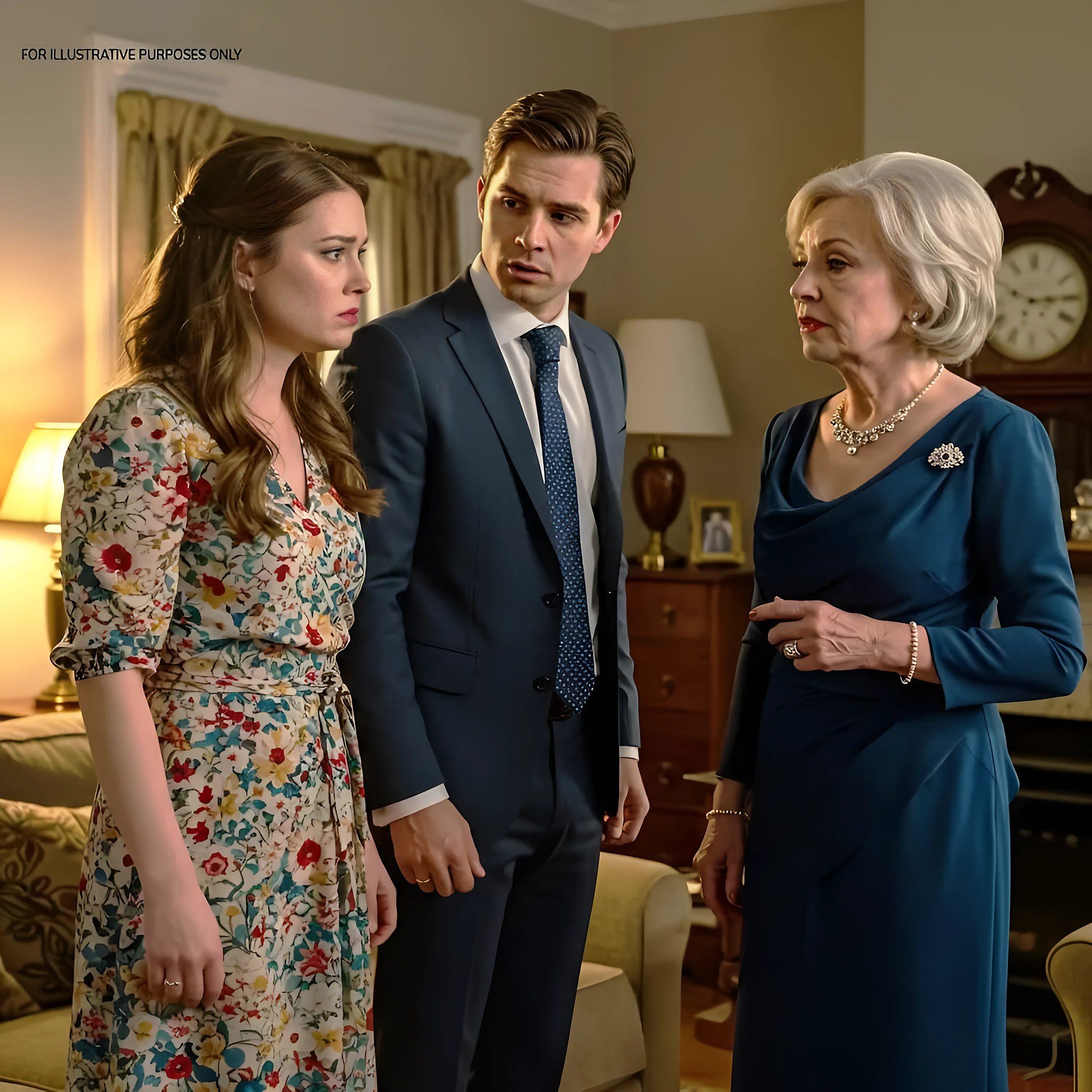
A demanding ultimatum from the groom.
‘Either you hand over the business and the dacha to my mum, or there will be no wedding!’ – declared the groom as if it was a business deal.

Veranna poured herself some coffee and went to the window. Dawn was just beginning and her mind was already racing with the day’s duties. Meeting with a supplier, checking accounting reports, calling a client from Tver in the afternoon. Her schedule was tight, but she liked the sense of order.
The small print shop Veranne had inherited from her father five years ago required constant attention. Her father, Pollan Dimitt, had always said that a business was like a child: neglect it for a moment and it could either cause trouble or make you sick. He was old-school – demanding, principled and loyal.
‘Veranne, remember the main thing,’ Pollan repeated to Dimitt, “three things will make you successful: keep your word, do not trust manipulators and respect labour – your own and others’.
Even their dacha in the Moscow suburbs was perceived as a duty, not a place of rest. It had its own order, its own rules. Veranna recalled how her father planned every spring what to plant and emphasised the importance of looking after the garden.

When Pollan Dimitt died suddenly of a heart attack, both the business and the cottage passed to Veranne. Many doubted that the young woman could cope, but in five years the printing company not only stayed afloat, but also began to flourish, and the cottage became a secluded place where Veranne energised.
Unexpected attitude of the groom
The phone rang. It was Amarcus.
‘Good morning, up already, workaholic?’ – came his cheerful voice.
‘Long time,’ Veranna smiled into the receiver. ‘I’m finishing my coffee.’
“What time will you be done today? Maybe we can meet up after work?”
Veranna glanced at her planner. ‘I’ll be free around six, but then I have to stop by the restaurant to finalise the wedding menu.’
‘Oh this wedding,’ Amarcus sighed with a note of weariness in his voice. ‘Sometimes I think it would be easier to just sign the papers and fly off to some island.’
‘Come on, the wedding is only a fortnight away,’ Verana laughed. “I’ve pretty much organised everything already. You don’t need to worry.”

“Exactly! You’ve taken care of everything, my practical girl.”
A few months before, Veranne had met Amarcus at the gym, where they had hit it off immediately. He was spontaneous, witty and charming – completely unlike the serious men she had met before. He seemed perfect.
Six months after they started dating, Amarcus proposed to her in a fine restaurant, and Verana accepted, certain that Amarcus was the right man for her.
Veranne’s first meeting with Amarcus’s mother, Irene Clark, had been revealing. Irene, a slender, impeccably groomed woman in her fifties, scrutinised Veranne. Over lunch, she remarked carelessly, “The most important thing in a family is to keep your man. Amarchik has a temper, but if you defer to him in small things, you will live in harmony.”
Verana nodded, though the thought seemed foreign to her. She had always been taught to be independent. Still, she remained silent, not wanting to upset anyone.
The wedding ultimatum
Two days before the wedding, Amarcus invited Veranna to a café for a ‘family council’. When she arrived, she found not only Amarcus waiting, but also his mother Irina.
‘Verochka, dear,’ Irene began, “Amarcus and I have been talking and we want to propose an idea… for the good of the family.
Veranna was overcome with a sense of unease. She felt that something was wrong.

‘We think,’ Amarcus joined in, “that we should reassure ourselves. You know, in case something goes wrong.”
‘What are you talking about?’ asked Verana, confused.
‘And we think,’ Irene continued, ‘that you should hand over your business and the summer house to me, or the wedding is cancelled!’
Verana’s stomach twisted. ‘What…?’
‘Don’t look at me like that,’ Irene said condescendingly, putting a hand on Verana’s shoulder. “It’s just a formality, for peace of mind. When you have children, I’ll sign it all back.”
Verana stared at them, speechless. Memories of Irene asking her about customers and business turnover flashed through her mind.
‘Why?’ asked Verana finally, looking directly at Amarcus. ‘Don’t we love each other?’
‘Of course we do,’ Amarcus answered quickly. “But it doesn’t mean anything. It’s just… insurance. You never know.”
Irene added: ‘A woman should be enjoying life, not worrying about papers.’

Veranna couldn’t believe what she was hearing. She had trusted Amarcus, and now he and his mother were demanding everything she had earned.
‘Look,’ Amarcus said, taking her hand. “It’s just a formality. Mum’s right – what does it matter whose name the assets are in?”
‘Since when do you care about my affairs?’ – Verana asked quietly. asked Verana quietly. asked Verana quietly.