For ten full years, I believed we were a real family.
My name is Emily, and I am thirty-eight years old. I met Daniel when I was twenty-eight, at the birthday celebration of a mutual friend.
He seemed gentle and uncomplicated from the very beginning. Daniel spoke quietly, listened closely, remembered exactly how I took my coffee, and always called if he was going to be late.
A year later, we decided to move in together.
Three years after that, we bought a house in a peaceful suburb. Daniel was having trouble with his credit history, so the bank agreed to approve the mortgage only in my name. I paid nearly all of the down payment, but whenever we argued, I never used it against him.
“This is our home,” I always insisted.
We opened a joint account, divided the household bills, renovated the kitchen together, and eventually brought home a small dog from a shelter.
Our friends and relatives had treated us like a married couple for years.
Sometimes Daniel even introduced me to people as his wife.
And yet, something was still missing.
A wedding ring.
At first, I told myself it did not matter. We had plenty of time. Then Daniel said we needed to focus on work. Later, he explained that we should finish the renovations first. After that, there was another reason: we needed to save more money.
Almost every year, a new excuse appeared for postponing it.
When our tenth anniversary arrived, I reserved a table at a comfortable, expensive restaurant. I was not expecting an extravagant proposal, a man dropping to one knee, or a wedding attended by hundreds of people.
I wanted only one thing: after ten years together, I wanted the man beside me to say that he was choosing me officially.
Partway through dinner, I carefully suggested that perhaps we could have a small ceremony one day, with only the people closest to us.
Daniel’s expression changed at once.
He set down his fork and laughed.
I still remember that laugh.
It was not the nervous laugh of someone afraid of hurting the woman he loved. It was the confident laugh of a man who was completely certain she would never leave him.
“Emily, I’m never going to marry you.”
For several seconds, I simply stared at him.
“Why?”
Daniel leaned back in his chair and shrugged as though the answer were obvious.
Then he said the words that made me wonder whether I had imagined our entire relationship differently from what it had really been.
“Because legal marriage is just a meaningless piece of paper. It doesn’t change anything. If you need some official document to feel secure in yourself, that’s your problem, not mine.”
A woman at the next table turned toward us before quickly looking away.
Heat spread across my face.
But I did not cry.
I did not make a scene, either.
I only smiled calmly.
“You may be right. Paper really doesn’t change anything.”
Daniel looked pleased.
He clearly believed the conversation had ended in his favor.
When we got home, he went almost straight to the bedroom and fell asleep soon afterward.
I remained alone in the kitchen.
In the darkness, I replayed ten years of our life in my mind.
I remembered helping him pay off his debts.
I remembered taking time off work when he was ill and staying beside him all night.
I remembered using my own savings for the house deposit.
I remembered adding Daniel to my health insurance.
And suddenly, everything became painfully clear.
Daniel wanted a woman who would carry out all the duties of a wife, but he had never intended to accept the responsibilities of a husband.
He liked my home, my stability, my care, my money, and my loyalty.
But the moment I asked for legal protection, he declared that it was “my problem.”
I opened my laptop.
First, I created a separate bank account and transferred into it the money I had saved from my own salary. In our joint account, I left only the amount needed to cover my share of that month’s expenses.
Then I changed the account details where my paycheck was deposited.
After that, I removed Daniel as the beneficiary of my insurance in the event of my death and called a close friend who worked as an attorney.
It was two in the morning, but she answered anyway.
She listened to everything I told her, then stayed silent for a moment.
“Emily, you do understand that the house documents were prepared only in your name, don’t you?”
“Absolutely.”
“Does Daniel remember that?”
“To be honest, I doubt he has ever cared enough to look.”
That night, I examined the papers not as a woman in love who trusted her partner, but as someone who had suddenly realized she needed to protect her own future.
By five in the morning, I had already found a small apartment I could rent.
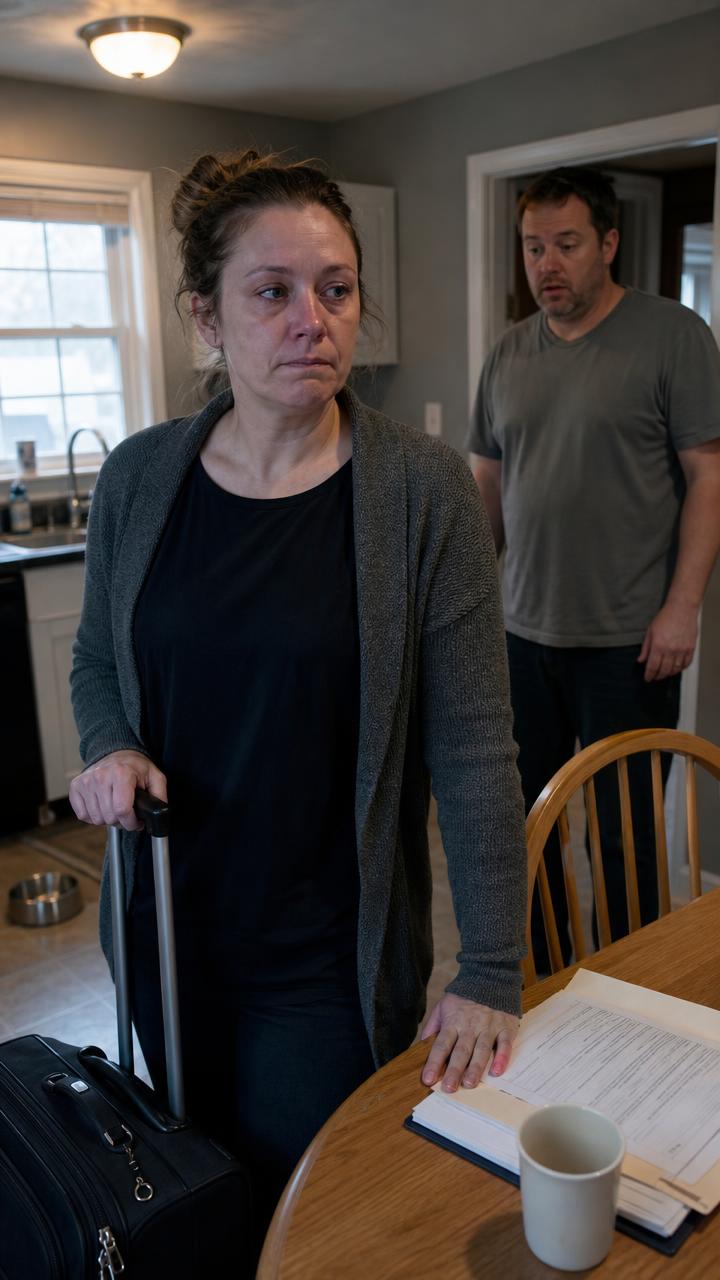
By six, a packed suitcase stood beside the front door.
On the kitchen table, I placed a folder containing the documents.
When Daniel walked into the kitchen, yawning and expecting to find the cup of coffee I had prepared for him every morning, he stopped where he was.
There was no coffee waiting for him.