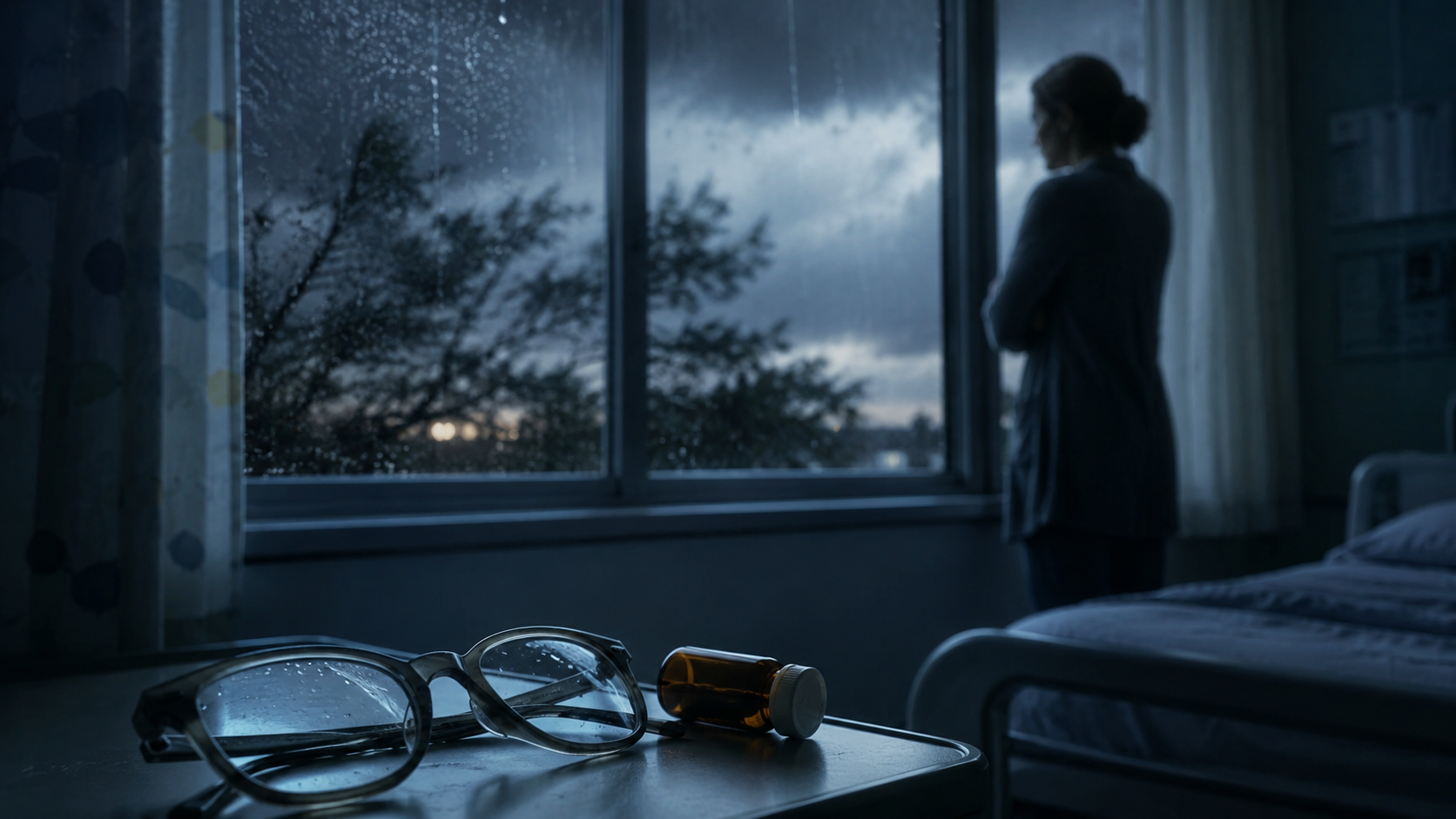
THE BOY WHO COULD SEE THE RAIN

Rain had been falling over Bellmere since before sunrise.

By four in the afternoon, the streets looked polished black beneath the traffic lights, and the windows of St. Catherine’s Children’s Hospital trembled whenever the wind pushed another wave of water against the glass.

Inside Room 314, eleven-year-old Noah Bennett sat perfectly still.

A pale blue blanket covered his legs. His hands rested on top of it, fingers loosely intertwined. Thick gray glasses hid most of his eyes.

His mother, Rachel, stood beside the window watching the rain.

She hated storms now.

Before Noah became sick, he had loved them.

He would run onto the porch whenever thunder rolled over the neighborhood. He used to count the seconds between lightning and thunder and shout the distance as if he were commanding a ship through dangerous waters.

“Six seconds! The storm is moving away!”

Or—

“Two seconds! It’s right above us!”

That had been nearly a year ago.

Before headaches.

Before dizziness.

Before Noah began walking into furniture.

Before he started complaining that rooms were becoming darker.

Before the morning he woke screaming because he could no longer see his own hands.

Nine months of doctors had followed.

Neurologists.

Ophthalmologists.

Specialists from three different cities.

Blood tests.

Brain scans.

Eye examinations.

Nothing explained it.

There was no tumor.

No visible damage to the optic nerves.

No genetic disorder anyone could identify.

And yet Noah insisted he could see almost nothing.

Only vague shadows.

Sometimes light.

Sometimes nothing at all.

Rachel had stopped asking how much.

The question made him anxious.

A soft knock came from the hospital-room door.

Rachel turned.

Dr. Helen Ward entered carrying a tablet.

Behind her stood a young woman Rachel had never seen before.

She looked perhaps twenty-two. Dark hair tied carelessly behind her head. Hospital ID hanging from her neck. A red notebook tucked under one arm.

“Rachel,” Dr. Ward said, “this is Mara Quinn. She’s completing a clinical observation placement with our rehabilitation team.”

Rachel gave a tired smile.

“Another person studying my son?”

Mara immediately looked uncomfortable.

Dr. Ward sighed.

“That isn’t how I meant it.”

“No, it’s fine.”

Rachel rubbed her forehead.

“I’m sorry. I haven’t slept much.”

Noah turned his face toward the voices.

“Mom?”

“I’m here.”

Dr. Ward approached his bed.

“How are you feeling today, Noah?”

“Head hurts.”

“Same place?”

“Behind my eyes.”

Mara watched him.

Not his face.

His hands.

Then the window.

A branch outside moved violently in the wind.

Noah flinched.

It was small.

So small Rachel never noticed.

But Mara did.

Her expression changed.

She glanced toward the window again.

Another branch swept across the glass.

Noah’s head shifted slightly.

Following it.

Mara said nothing.

Dr. Ward continued asking questions while Rachel explained the new medication schedule.

Ten minutes later, the two women left.

In the hallway, Mara caught Dr. Ward’s sleeve.

“He can see.”

Dr. Ward stopped.

“What?”

“The boy.”

“Mara—”

“He can see.”

Dr. Ward lowered her voice.

“You have been inside that room for ten minutes.”

“I know.”

“And this child has been examined by some of the best specialists in the state.”

“I know that too.”

“Then choose your next words carefully.”

Mara looked through the small window in the door.

Noah was sitting exactly as before.

His mother was adjusting his pillow.

“When the branch moved outside,” Mara whispered, “his eyes followed it.”

“That could be a reflex.”

“He followed it twice.”

Dr. Ward crossed her arms.

“Children with severe visual impairment can still react to light and motion.”

Mara shook her head.

“That wasn’t light.”

“What are you suggesting?”

“I don’t know yet.”

Dr. Ward studied her.

Mara looked young.

Too young, perhaps, to sound so certain.

But she had something Dr. Ward had learned not to ignore.

Attention.

Not knowledge.

Not experience.

Attention.

“Observe,” Dr. Ward finally said. “Nothing more.”

Mara nodded.

But even then, she knew that would not be enough.


Noah Bennett lived with his mother in a narrow brick house on Hawthorne Street.

They had moved there six months earlier.

Their old house had stairs.

This one did not.

Rachel had replaced sharp furniture with rounded pieces. She placed soft markers along the walls. She bought textured labels for kitchen cabinets.

She had transformed the entire home for a child who could no longer see.

The only other person living there was Rachel’s older brother, Grant.

Uncle Grant.

To Noah, he had always been simply Grant.

He had moved in after Noah’s father died.

That had happened two years earlier.

Michael Bennett’s car had gone off a mountain road during a winter business trip.

Police said he probably lost control on black ice.

Rachel had never fully recovered.

Grant became the person who held everything together.

He handled insurance paperwork.

He fixed the house.

He drove Noah to appointments when Rachel worked.

He learned every medication.

He cooked dinner.

When Noah began losing his vision, Grant researched specialists late into the night.

Rachel often told people she did not know what she would have done without him.

And she meant it.

That evening Grant arrived at the hospital carrying two paper bags.

“I brought dinner.”

Rachel looked at the clock.

“You didn’t have to.”

“You’ve been eating vending-machine crackers for two days.”

He placed the bags down and walked toward Noah.

“How’s my favorite criminal?”

Noah smiled.

“I’m your only nephew.”

“Exactly. Very competitive position.”

Grant squeezed his shoulder.

Noah relaxed immediately.

Mara watched from the hallway.

She had returned under the excuse of delivering rehabilitation forms.

Grant noticed her.

“Can I help you?”

Mara stepped inside.

“Just paperwork.”

Rachel introduced them.

Grant smiled politely.

But the smile did not reach his eyes.

“Another specialist?”

“Student,” Mara said.

“Good.”

Grant removed Noah’s water bottle from the bedside table.

“Maybe students will find what the experts missed.”

He opened his paper bag and pulled out a small plastic container.

Rachel frowned.

“What’s that?”

“His evening drops.”

“I thought the hospital was handling medication.”

“They are. These are the lubricating drops Dr. Salazar recommended.”

Grant turned toward Noah.

“Head back, buddy.”

Something happened then.

Noah’s smile disappeared.

Not gradually.

Instantly.

His fingers tightened around the blanket.

Mara saw it.

Grant did not.

Or pretended not to.

“Come on.”

Grant touched Noah’s chin.

Noah leaned back.

Grant placed two drops into each eye.

Noah inhaled sharply.

“Burning again?” Rachel asked.

“A little.”

Grant capped the bottle.

“Doctor said that’s normal.”

Mara looked at the label.

It had been partially scratched.

She could make out a pharmacy logo but not the medication name.

Grant slipped the bottle into his jacket pocket.

Mara felt something cold settle inside her stomach.


The next afternoon she arranged a simple test.

No cameras.

No formal examination.

Nothing Noah would recognize.

She sat across from him in the rehabilitation room.

Rachel was speaking with an insurance coordinator upstairs.

Grant had gone to buy coffee.

Dr. Ward watched through an observation window.

Mara placed three wooden objects on a table.

A cube.

A sphere.

A small toy airplane.

“Noah,” she said, “I’m going to put something in your hand.”

“Okay.”

She picked up the cube.

Then deliberately knocked the airplane from the table.

It fell silently onto a thick carpet.

No sound.

No impact.

No reason for Noah to know.

His eyes moved downward.

Only for an instant.

Mara’s heart began pounding.

She picked up the sphere.

Then slowly raised her left hand.

Noah looked toward it.

Mara froze.

“Noah.”

His face turned pale.

“What?”

“You can see me.”

“No.”

“Yes, you can.”

“No.”

“You watched my hand.”

“I heard you move.”

“I didn’t move.”

His breathing changed.

Fast.

Shallow.

Mara leaned forward.

“Noah, I’m not angry.”

“Stop.”

“You’re safe.”

“Stop!”

He shoved his chair backward.

The sound brought Dr. Ward into the room.

Noah covered his ears.

“Don’t tell him!”

The room went silent.

Mara felt every hair on her arms rise.

Dr. Ward crouched beside him.

“Tell who?”

Noah realized what he had said.

His lips began trembling.

“No one.”

“Grant?” Mara asked.

Noah squeezed his eyes shut.

Dr. Ward shot Mara a warning look.

But the damage was done.

“Noah,” Dr. Ward said softly, “has someone told you to pretend you cannot see?”

He shook his head violently.

“No.”

“Has someone frightened you?”

“No!”

“Has someone hurt you?”

Noah started crying.

Mara moved back.

Then Noah whispered something almost too quiet to hear.

“He said Mom would die.”

Dr. Ward stopped breathing.

Mara stared at him.

“Who said that?”

Noah pressed both hands over his mouth.

The rehabilitation-room door opened.

Grant stood there.

Three coffees balanced in a cardboard holder.

His expression was perfectly calm.

“What’s going on?”

Noah immediately became silent.

Mara had never seen fear move across a human face so quickly.


Security kept Grant outside Noah’s room while Dr. Ward contacted the hospital’s safeguarding team.

Rachel refused to believe them.

“You’re telling me my brother threatened my son?”

“We’re telling you what Noah said,” Dr. Ward replied.

“He loves Noah.”

“We haven’t accused him of anything.”

Rachel laughed bitterly.

“You called security.”

“Because Noah expressed fear.”

Rachel paced the consultation room.

“No. Absolutely not. Grant has been with us through everything.”

Mara sat quietly near the wall.

Rachel turned toward her.

“And you started this?”

Mara did not answer immediately.

“I noticed Noah responding visually.”

“My son is blind.”

“I don’t think he is.”

Rachel stared.

“You have no idea what we have been through.”

“I know.”

“No, you don’t.”

Rachel’s eyes filled.

“You didn’t hold him while he screamed because the lights went out inside his head. You didn’t watch him crawl across the bathroom floor because he was afraid to stand. You didn’t hear him ask whether he would remember what my face looked like when he grew up.”

Mara swallowed.

“You’re right.”

Rachel’s anger faltered.

“I don’t know what that was like.”

She continued carefully.

“But I also saw him track movement several times.”

Rachel shook her head.

“You’re wrong.”

“I hope I am.”

The door opened.

A hospital safeguarding officer entered.

Behind her stood Noah.

He was holding Dr. Ward’s hand.

His gray glasses were gone.

Rachel rushed toward him.

“Noah.”

He looked directly at her.

Not approximately.

Not toward her voice.

At her.

Rachel stopped.

Her mouth opened.

No sound came out.

Noah began crying.

“Mom.”

Rachel covered her mouth.

“You can see me?”

He nodded.

Her knees nearly collapsed.

She dropped to the floor and pulled him against her.

“You can see?”

“I’m sorry.”

“Why are you sorry?”

“I’m sorry.”

She held his face.

“Why did you tell us you couldn’t?”

Noah looked toward the door.

Even before Grant appeared on the other side of the hallway glass, Rachel understood.

Grant stood between two security officers.

He was no longer smiling.


“I never threatened him.”

Grant sat at the opposite end of a conference table.

Police had been called.

The hospital had already confiscated the bottle of eye drops.

Rachel sat beside Noah.

Mara remained only because Noah asked her to.

Grant looked at his sister.

“You know me.”

Rachel said nothing.

“You know I would never hurt that boy.”

“What did you tell him?”

“Nothing.”

Noah stared at the floor.

Grant leaned forward.

“Noah.”

The boy flinched.

A police officer immediately stepped between them.

“Do not address the child.”

Grant sat back.

His jaw tightened.

Rachel looked at her son.

“Please.”

Noah’s eyes filled with tears.

“Tell me.”

For several seconds he could not speak.

Then words began coming out in pieces.

The first time had been eight months earlier.

Grant had driven him home from soccer practice.

Noah had complained that his eyes felt strange.

Everything looked blurry.

Grant told him it was probably exhaustion.

That night he gave Noah eye drops.

The next morning the blur was worse.

A week later Grant told him the doctors thought his vision might disappear completely.

That part was a lie.

No doctor had said it.

Then came the threats.

Not violent threats.

Worse.

Careful ones.

Grant told Noah his mother’s heart was weak.

He said stress could kill her.

He said Rachel had already almost died after Michael’s accident.

He told Noah that if doctors believed Noah could still see, they would perform dangerous surgery.

If Noah resisted, Rachel would blame herself.

If Noah told anyone about the drops, police might arrest Rachel because the medicine belonged to her.

Every lie was designed for an eleven-year-old mind.

And every lie connected to the same fear.

Losing his mother.

“So I pretended,” Noah whispered.

Rachel looked shattered.

“All this time?”

Noah nodded.

“At first I really couldn’t see well.”

“What about now?”

“I can see.”

“How much?”

Noah looked around the conference room.

“The clock says six seventeen.”

Rachel sobbed.

For months she had guided him through doorways.

Fed him.

Read books aloud.

Described sunsets.

And he had been watching her the entire time.

Terrified to admit it.

Grant shook his head.

“This is insane.”

The officer placed the confiscated bottle on the table inside an evidence bag.

“You recognize this?”

“Lubricating drops.”

“The preliminary screening says otherwise.”

Grant’s expression changed.

Barely.

But Rachel saw it.

“What is it?”

The officer hesitated.

“We’ll need full laboratory confirmation. But the bottle appears to contain a medication capable of causing severe pupil dilation, blurred vision and light sensitivity.”

Rachel turned slowly toward her brother.

Grant said nothing.

“Why?”

His silence became an answer.

“Why would you do this?”

Grant looked at Noah.

Then at Rachel.

“I was protecting the family.”

Rachel stared at him as though he were a stranger.

“From what?”

“From losing everything.”


Michael Bennett had left behind more than grief.

He had left money.

A great deal of it.

Rachel had known about the life-insurance policy.

She had not known about the trust.

Michael’s father had created it years earlier for Noah.

The principal could not be touched until Noah turned twenty-one.

Except under one condition.

Major medical disability.

If Noah developed a permanent disability requiring long-term care, his legal guardian could petition the trust for early access to funds covering housing, treatment and support.

Grant knew.

Because Grant had helped Rachel organize Michael’s financial records after the accident.

Rachel stared at the detective.

“How much money?”

“Approximately 3.8 million dollars.”

She laughed once.

A broken sound.

“I didn’t even know.”

“Grant did.”

The detective placed several printed bank records on the table.

Petitions had already been prepared.

Medical expenses had been documented.

A property company had been created.

Grant Bennett listed himself as manager.

The planned purchase?

A large countryside home supposedly adapted for Noah’s disability.

Its seller was another company.

Also controlled by Grant.

Rachel looked at the documents.

“You were stealing from him.”

Grant’s face hardened.

“I was investing.”

“You were poisoning his eyes.”

“I was not poisoning him.”

“You made my child believe I would die if he told the truth.”

Grant stood suddenly.

The officers moved closer.

“You think I wanted this?”

His calm disappeared.

“For two years I carried you both!”

Rachel looked stunned.

“I handled Michael’s debts. I dealt with the insurance. I paid bills when you couldn’t get out of bed. I drove Noah everywhere. I gave up my apartment. My job stalled. My entire life became your tragedy.”

Rachel whispered, “So you thought you deserved his money?”

Grant laughed.

“You don’t understand.”

“No.”

Her voice became strangely calm.

“I finally do.”

Grant looked away.

And that was when Noah spoke.

“There’s another bottle.”

Everyone turned.

Grant went completely still.

The detective crouched.

“Where?”

Noah swallowed.

“In the garage.”

Grant closed his eyes.

“There’s a metal toolbox under the old workbench. The bottom comes out.”

Rachel stared at her brother.

“How do you know that?”

Noah wiped his face.

“I followed him.”


The police searched the Hawthorne Street house that night.

Inside the false bottom of the toolbox they found medication bottles.

Pharmacy receipts.

Prepaid phones.

Copies of Noah’s medical records.

Financial documents.

And something nobody expected.

Michael Bennett’s old watch.

Rachel recognized it immediately from a photograph.

The silver watch had supposedly disappeared in the crash.

She had assumed it was lost somewhere inside the wreck.

But Grant had it.

Beside the watch lay a key.

A rental-storage key.

The investigation changed direction within hours.

By morning, detectives were no longer examining only what Grant had done to Noah.

They were reopening Michael’s death.

Rachel spent the night sitting beside her son in the hospital.

Neither slept.

At three in the morning Noah whispered, “Mom?”

“Yes?”

“Are you mad?”

Rachel turned toward him.

“For what?”

“For lying.”

She took his hand.

“You were scared.”

“I watched you cry.”

Her throat tightened.

“I know.”

“I wanted to tell you.”

“I know.”

“He said you wouldn’t survive if I did.”

Rachel pressed his hand against her cheek.

“Look at me.”

Noah did.

She forced herself not to cry.

“You never have to protect me from the truth.”

His lower lip shook.

“Even if it’s bad?”

“Especially then.”

The rain stopped before sunrise.

For the first time in days, pale yellow light entered through the hospital window.

Noah turned toward it.

Rachel noticed.

She smiled sadly.

“You really can see.”

He gave the smallest smile back.

“Yeah.”

Then someone knocked.

Mara stood at the door.

She carried no notebook this time.

Only two cups of hot chocolate.

“I heard blind people aren’t supposed to drink these without supervision.”

Noah laughed.

It was the first real laugh Rachel had heard from him in months.


The storage unit belonged to Grant.

Inside, detectives found boxes of paperwork documenting years of secret financial problems.

Failed investments.

Loans.

Gambling debts disguised as business expenses.

Money borrowed from people Grant could not easily repay.

But the most important discovery was a laptop.

Deleted files were recovered.

Among them was an audio recording.

Michael’s voice.

Rachel listened once.

Never again.

The recording had been made eleven days before Michael died.

Michael had confronted Grant about missing money from a family business account.

Grant owed nearly half a million dollars.

Michael intended to tell Rachel.

He also planned to remove Grant from anything connected to Noah’s future trust.

The audio ended with Grant saying:

“You take everything away from me and you’ll regret it.”

Michael replied:

“You did this to yourself.”

The official investigation into the crash had found nothing suspicious.

But investigators now reexamined the vehicle records.

Michael had taken his car to Grant’s garage two days before the mountain trip.

Grant had replaced part of the braking system.

The part recovered after the crash had been classified as damaged by impact.

A second examination suggested otherwise.

Someone had tampered with it before the accident.

Grant denied everything.

He denied threatening Michael.

Denied sabotaging the car.

Denied deliberately harming Noah.

Denied planning to steal the trust.

His explanation remained simple.

He was the person who had helped everyone.

The person nobody appreciated.

The person everyone blamed once something went wrong.

But the evidence kept growing.

And then Noah remembered one final thing.

A conversation.

He had heard it months earlier while pretending to sleep in the back seat of Grant’s car.

Grant had been speaking on the phone.

At the time Noah had not understood.

Now he remembered the words.

“If they classify him permanently disabled, I can unlock it.”

Pause.

“No, Rachel has no idea.”

Another pause.

“And the kid does exactly what I tell him.”

The prepaid phone recovered from the garage contained the other half of that conversation.


Three weeks later, Noah left the hospital without his gray glasses.

There was no dramatic miracle.

No crowd.

No reporters.

Rachel refused every interview.

Noah’s eyes still required treatment.

Doctors believed repeated misuse of the medication had caused inflammation and severe sensitivity, but they were cautiously optimistic that permanent damage would be limited.

For Noah, the hardest part was not seeing again.

It was being seen.

At school, everyone knew something had happened.

Teachers watched him carefully.

Friends asked questions.

Some children whispered.

Noah hated pity more than anything.

So Mara gave him a challenge.

“Photography.”

He stared at her.

“You want the formerly blind kid to take pictures?”

“Exactly.”

“That’s messed up.”

“Probably.”

He smiled.

Mara handed him an old camera.

“Take one picture every day of something you’re glad you can see.”

At first he thought it was stupid.

Then he tried.

Day one:

His mother asleep on the couch with a book on her chest.

Day two:

Steam rising from spaghetti.

Day three:

A muddy dog jumping against a fence.

Day four:

Orange light beneath a storm cloud.

Day five:

His own reflection in a dark window.

He nearly deleted that one.

Instead he kept it.


Grant’s trial began seven months later.

Rachel attended every day.

Noah attended only once.

When he walked into the courtroom, Grant looked at him.

For the first time since the hospital, their eyes met.

Grant looked older.

Smaller somehow.

Noah had once believed Grant controlled everything.

The house.

The doctors.

His mother.

Whether she lived.

Whether he saw.

Whether he spoke.

Now Grant could not even stand unless a guard allowed it.

Noah understood something then.

Fear could make another person seem enormous.

Truth changed their size.

The prosecutor asked whether Noah wanted to testify.

He did.

Grant’s lawyer spoke gently.

“Your uncle took care of you for many years, correct?”

“Yes.”

“He brought you to school?”

“Yes.”

“He attended your soccer games?”

“Yes.”

“He stayed with you after your father died?”

“Yes.”

“He told you he loved you?”

Noah looked at Grant.

“Yes.”

The lawyer paused.

“Is it possible that some of the things you remember happened differently because you were frightened?”

Noah considered the question.

“No.”

“You’re certain?”

“Yes.”

“How?”

Noah looked around the courtroom.

Then back at Grant.

“Because being afraid was the whole point.”

No one spoke.

Grant looked down.


The jury convicted him on multiple charges involving Noah.

The investigation into Michael’s death lasted longer.

Eleven months after Noah entered St. Catherine’s Hospital, prosecutors added a homicide charge.

Rachel did not celebrate.

There are victories that do not feel like winning.

She sold the house on Hawthorne Street.

She moved with Noah to a small place near the river.

No extra bedroom.

No permanent guest room.

No memories of medicine bottles hidden behind cereal boxes.

No garage.

No locked toolbox.

No Grant.

On the first night, Noah complained that his room was too bright.

Rachel laughed so hard she cried.

“What?”

He grinned.

“You spent a year telling everyone you couldn’t see, and now you’re complaining about the curtains?”

“The sun is aggressive.”

“The sun is the sun.”

“It needs boundaries.”

She threw a pillow at him.

He caught it.

They both stopped.

For an instant Rachel remembered all those months when she believed he could not have seen the pillow coming.

Noah saw the thought cross her face.

“Mom.”

“I’m okay.”

“You’re doing the thing.”

“What thing?”

“The sad face you pretend isn’t a sad face.”

She sat on the edge of his bed.

“I keep thinking about what I missed.”

“You didn’t know.”

“I’m your mother.”

“He was good at lying.”

“So was I, apparently.”

Noah shook his head.

“He taught me.”

Rachel looked at him.

“He made every truth feel dangerous.”

That sentence stayed with her.

Because it explained more than doctors ever could.

Grant had not controlled Noah simply by frightening him.

He had altered the meaning of honesty.

Tell the truth, and Mom dies.

Tell the truth, and doctors hurt you.

Tell the truth, and the family disappears.

Silence becomes love.

Fear becomes responsibility.

Obedience becomes protection.

Once Noah believed those things, Grant barely needed to threaten him anymore.

Noah had become his own prison guard.

Rachel pulled him close.

“You know what truth means now?”

Noah rested his head against her shoulder.

“What?”

“Freedom.”

He thought about it.

“That sounds like something from a terrible inspirational poster.”

Rachel laughed.

“You’re impossible.”

“I can see the poster, though.”

She laughed harder.


A year after the rainy afternoon at St. Catherine’s, Mara received a package.

Inside was a photograph.

Rain covered a kitchen window.

Individual droplets were perfectly sharp.

Beyond the glass stood Rachel beneath a yellow umbrella, laughing at something outside the frame.

On the back, Noah had written:

Day 365.

Beneath that:

I used to think seeing meant knowing what was in front of you. It doesn’t. Sometimes people look at something every day and still don’t see it.

Mara placed the photograph on her desk.

Months later, when she became a full-time rehabilitation specialist, patients sometimes asked about it.

She never told them Noah’s entire story.

It belonged to him.

She only said a boy had taken it after a difficult year.

But there was one detail Mara never forgot.

The first moment in the hospital.

The rain.

The moving branch.

The tiny motion of Noah’s eyes.

Everyone had been searching for an explanation inside medical scans, neurological tests and laboratory results.

Yet the first real answer had appeared in something almost invisible.

A child looking at the rain.

And being terrified that someone might notice.

THE BOY WHO COULD SEE THE RAIN
Can you imagine what it’s like to have twenty-two children in a family?