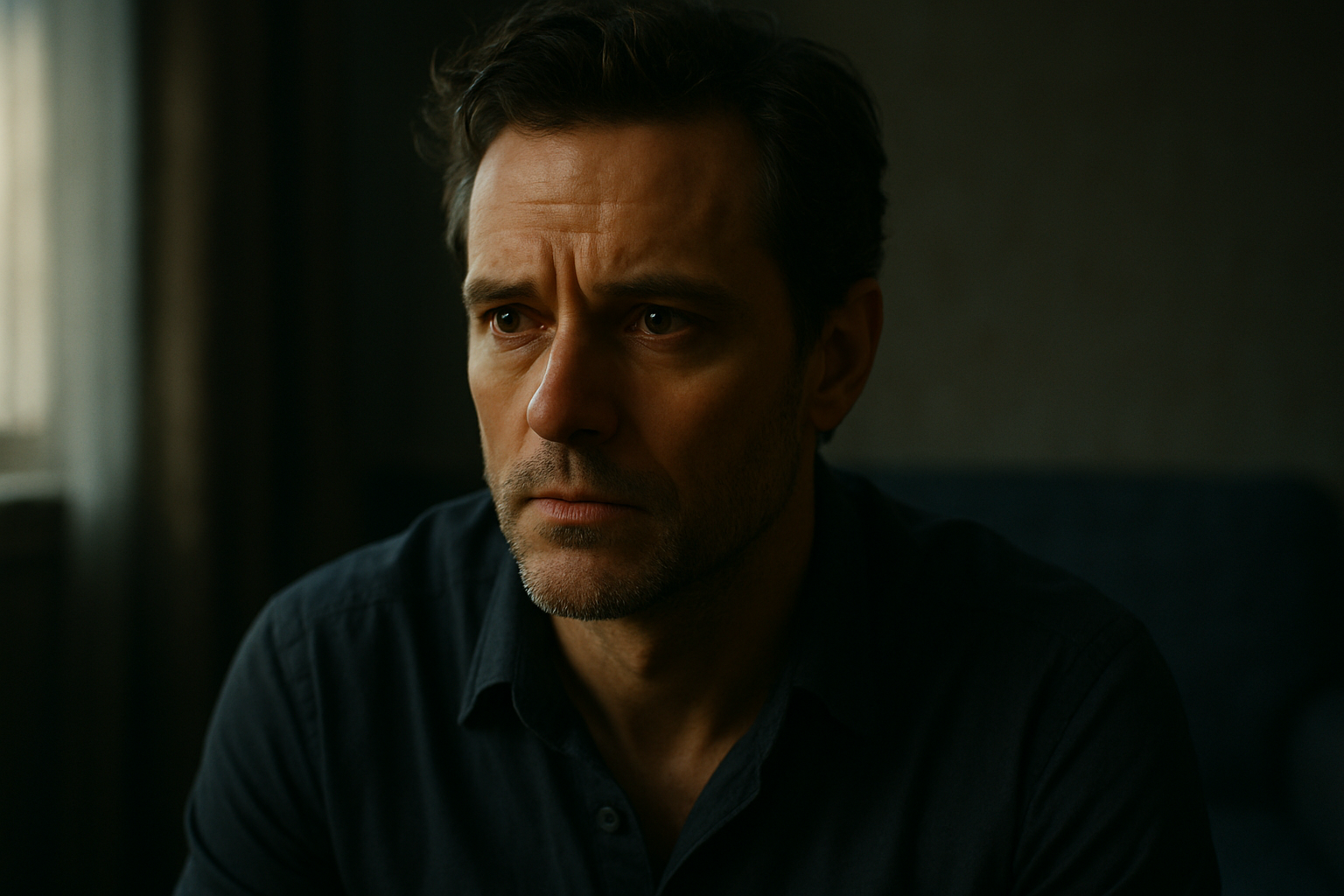
The Morning I Stopped Asking Permission
The strangest thing happened when I told Adrian I had handled it myself.
He did not laugh.
He did not sigh.
He did not lean back with that tired patience he wore whenever he thought I had made a puddle into an ocean.
He went still.
For one bare second, I saw the man I had almost forgotten. Not Dr. Adrian Vale, the gifted trauma surgeon who could stop bleeding with his hands and turn panic into procedure. Not the man everyone admired for his calm.
Just Adrian.
The man who once remembered how I took my tea. The man who warmed my side of the bed on winter nights before I climbed in.
Then his face closed.
“You handled what?” he asked.
“The appointment.”
“What appointment, Mara?”
I looked past him to the rain on the window. The city was gray and soft, and I wished it could soften his voice too.
“It’s a minor surgery,” I said. “Laparoscopic. They want to remove a cyst and look at some scar tissue. I’ll stay overnight. Probably come home the next day.”
“Probably?”
The word cracked through the kitchen.
His hand was wrapped around his coffee mug. The coffee had trembled up the side, leaving a dark little crescent near the rim.
I noticed because I noticed everything about him. I always had.
The way his shoulders sat after a bad shift. The way he breathed when he had lost a patient. The difference between a normal door closing and the careful quiet one that meant, Don’t ask me anything.
For years, I had called that love.
“Probably,” I repeated. “That’s what the surgeon said.”
“Who is the surgeon?”
“Dr. Liora Hale.”
“At Harbor Medical?”
“No.”
“Where?”
“Adrian.”
“What?”
“You’re doing it again.”
His brows drew together. “Doing what?”
“Turning me into a case.”
The words landed hard between us.
For a moment, only the coffee maker clicked as it shut itself off.
“I’m asking because I care,” he said.
“No.” My voice surprised us both because it did not break. “You’re asking because information makes you feel in control.”
He pushed back from the table. The chair scraped the floor, and my stomach tightened.
“You think I don’t care that you’re having surgery?”
“I think you care now that you know I didn’t make room for you to be in charge of it.”
His mouth opened. Closed.
In all our years together, Adrian’s silence had usually meant he was waiting for me to become reasonable again.
But that morning, his silence looked different.
Less like judgment.
More like impact.
“I would have helped,” he said.
A year earlier, that sentence would have softened me. I would have rushed toward it like a starving thing. I would have apologized for frightening him. I would have made his fear my responsibility.
But love has consequences.
Especially when it asks one person to disappear.
“You told me I didn’t need you for every little thing,” I said.
His jaw tightened. “Surgery is not a little thing.”
“It was when I was scared and calling you from urgent care.”
“That’s not fair.”
“No,” I said quietly. “It wasn’t.”
The apartment went still. The rain slipped down the glass. Somewhere far away, a siren wailed and faded into someone else’s emergency.
“What day?” he asked.
“Thursday.”
“This Thursday?”
“Yes.”
“Who’s taking you?”
“June.”
“June is getting married in three weeks.”
“And she still answered when I asked.”
There it was.
The wound opened in his face, then hardened.
“I have rounds,” he said, standing.
“I know.”
“I can move things.”
“I didn’t ask you to.”
He picked up his bag. At the door, he paused with his hand on the knob.
“Mara,” he said, and my name sounded like a place he had misplaced. “Do you want me there?”
I thought of every time I had wanted him without wanting to beg.
Every dinner I had eaten across from his silence.
Every appointment I had scheduled around his schedule.
Every little need I had disguised as casual so it would not frighten him away.
Then I thought of my own hands that morning, steady on the keyboard, sending an application for a job in New York without asking him first.
“No,” I said. “I don’t know how to want you there anymore.”
He did not slam the door.
Adrian never slammed doors.
He closed it quietly, carefully, like a surgeon closing an incision he had not admitted he made.
For the first time in seven years, I did not follow him.
I went to work because ordinary life is cruel that way. It does not bow its head for private heartbreak.
There were budgets. Meetings. Men with clean calendars talking about efficiency while I sat under fluorescent lights with pain low in my belly.
At eleven, my phone buzzed.
Adrian: Send me Dr. Hale’s full name.
I stared until the screen went dark.
Ten minutes later, it lit again.
Adrian: I’m not trying to take over. I just need to know who is operating on you.
Need.
That word would have moved me once.
I typed, deleted, typed again.
Me: I have it handled.
The dots appeared. Vanished. Appeared again.
Adrian: You keep saying that like it’s supposed to comfort me.
Me: It comforts me.
He did not answer.
That silence did not feel empty.
It felt like cause and effect.
When I came home that night, a brown paper bag sat on the kitchen island.
Inside were ginger tea, low-sodium soup, unscented soap, loose cotton pajamas, and a folder labeled POST-OP NOTES in Adrian’s precise handwriting.
He was not home.
But his effort filled the apartment like someone had entered without knocking.
I stood over the bag a long time.
It would have been easy to cry. Easy to tell myself, He is trying.
Maybe he was.
But I had spent years being grateful for late, partial care. I no longer trusted my gratitude.
Inside the folder were recovery instructions, a medication chart, questions for my surgeon, and one blank page at the back.
On it, Adrian had written one sentence.
I should have asked sooner.
I sat down slowly.
There it was again.
The almost of him.
The almost apology. The almost tenderness. The almost understanding that might have saved us if it had arrived before I began saving myself.
I folded the page and put it back.
Then I made my own tea.
The pre-op appointment was the next afternoon. June arrived twenty minutes early with bottled water, insurance forms, and a bridal magazine she claimed was for moral support.
“If I look at one more centerpiece,” she said, dropping into the chair beside me, “I may run away from my own wedding and start a goat farm.”
“You hate goats.”
“I’ll learn.”
June had been my best friend since college, when she found me crying in a laundry room because someone had dumped my wet clothes on the floor. She had not asked why I was crying over laundry.
She had simply said, “We’re stealing someone else’s dryer sheet and starting over.”
That was June.
She never made my feelings audition before she believed them.
The waiting room smelled like antiseptic and old magazines. Across from us, an old man held his wife’s purse while she filled out forms. He held it with both hands, not embarrassed at all. Like something precious had been entrusted to him.
June followed my gaze. “You okay?”
“Adrian found out.”
Her mouth tightened. “How did that go?”
“He asked if I wanted him there.”
“And?”
“I said no.”
She did not cheer. That was why I loved her.
She squeezed my wrist. “Did it feel true?”
I thought about lying.
“It felt necessary,” I said.
“Sometimes necessary feels like truth until the rest of you catches up.”
Dr. Liora Hale was calm, silver-haired, and plainspoken. She explained the procedure with a diagram turned toward me, not June. The cyst looked benign. The scar tissue was likely from endometriosis. There were risks, because surgery always carried risk, but nothing suggested disaster waiting in the wings.
For the first time in days, I breathed.
Near the end, Dr. Hale glanced at the paperwork.
“You listed June Bellamy as your emergency contact?”
“Yes.”
“No partner or family member you want added?”
It was an ordinary question.
It still opened a hollow place under my ribs.
“No,” I said. “June is the person to call.”
June looked down at her hands. I knew she was trying not to cry, which made me want to cry, so we both stared hard at the anatomy diagram while Dr. Hale kindly pretended not to notice.
Afterward, June drove me home through late-afternoon traffic.
“You know,” she said carefully, “you don’t have to decide everything at once.”
“I know.”
“You can take the job if they offer it and still not know what happens with Adrian.”
“I know.”
“You can love someone and still leave.”
I looked at her.
She kept her eyes on the road. “Love is not a legal contract with suffering.”
That sentence stayed with me.
When I entered the apartment, the kitchen was clean. The coffee stain near the cabinet had been wiped away. The folder was gone from the island.
In its place sat white tulips.
My favorite.
I wanted to hate them. I wanted to be the kind of woman who could see only manipulation.
But once, years earlier, on a rainy weekend trip, I had told Adrian tulips looked like they were keeping secrets.
He had remembered.
That was the cruelty of it.
He had not forgotten me entirely. He had remembered me in pieces, like a song he could hum but no longer understand.
He came home after nine, smelling of rain and hospital soap. I was on the couch with my laptop, preparing for the New York interview.
His eyes flicked to the screen.
“Interview?”
“Tomorrow morning.”
“So they responded.”
“Yes.”
“What exactly is the position?”
“Director of Strategic Operations for the East Coast division.”
His face changed slightly.
If I had not spent seven years studying him, I would have missed it.
“What?” I asked.
“Nothing.”
“Adrian.”
“It’s a big role.”
“I know.”
“You’d be good at it.”
The words were simple. But from him, they felt almost startled, as though they had escaped before he could make them smaller.
“Thank you,” I said.
He stood near the doorway. “I took Thursday off.”
My chest tightened. “Why?”
“Because you’re having surgery.”
“June is taking me.”
“I know.”
“Then why?”
“Because if something happens and you need me, I don’t want to be in the middle of a shift.”
It was the right answer.
That made it harder.
It was right, but it came after so many wrong ones.
“You can’t build a bridge on the morning I’m already crossing the river,” I said.
He flinched.
“What do you want from me, Mara?”
I gave a soft, humorless laugh. “That’s the question now?”
“Yes.”
“I wanted you to notice before my silence became inconvenient.”
He rubbed both hands over his face.
When they dropped, he looked exhausted in a way sleep could not fix.
“I know,” he said.
Not, That isn’t fair.
Not, I’ve been busy.
Just, I know.
A small, treacherous part of me stepped toward him.
“What do you know?”
He looked at the tulips. “That I made you feel like needing me was a character flaw.”
My throat tightened.
“I told myself I was helping you become stronger,” he said. “I told myself you leaned on me too much. But the truth is, I liked being needed until it required something I did not know how to give.”
Outside, a car passed through a puddle.
I had imagined this conversation so many times. In my fantasies, I was fierce. I made the perfect speech. He finally understood.
But now that he stood there saying the thing I had needed, I did not feel triumphant.
I felt late.
“Why now?” I asked.
“Because you stopped asking.”
“That’s not an answer.”
“It’s the only one I have tonight.”
I picked up my laptop. “My interview is at eight. I’m going to bed.”
“Mara.”
I paused.
“I’m sorry.”
I kept my back to him because if I turned around, the apology might enter through an old unlocked place.
“I believe you,” I said. “I just don’t know what it changes.”
The interview went well.
I knew because halfway through, Vivian Hart, the senior vice president from New York, stopped sounding like she was interviewing me and started sounding like she expected me there.
She asked how I would handle a department that had been underperforming for three quarters.
“I’d stop treating morale like a side effect,” I said, “and start treating it like infrastructure.”
She smiled.
“Most people start with numbers.”
“Numbers tell you where the bleeding is,” I said. “They don’t tell you why the wound keeps reopening.”
The metaphor slipped out before I could stop it. Maybe living with a surgeon had done that to me. Maybe pain makes everyone fluent in anatomy.
“That,” Vivian said, “is exactly why your name came up.”
My name came up.
Before I could ask what she meant, we moved on.
By the end, she told me there would be a final conversation after my surgery, if I was still interested.
If I was still interested.
As if New York were waiting politely at the edge of my life.
Thursday morning, June arrived in leggings, sunglasses, and a sweatshirt that said BRIDE in rhinestones.
“I wore this so the nurses understand my authority,” she said.
“You look like you’re about to threaten someone over brunch reservations.”
“Exactly.”
The joke helped until we reached the hospital.
Then the smell of disinfectant hit me, and all the bravery I had assembled in private began to loosen.
Hospitals had always belonged to Adrian in my mind. The beeps, the rubber soles, the clipped voices. Being there without him felt like standing in a country whose language I only understood because someone had once translated it.
June took my hand.
“Still necessary?” she asked.
I nodded.
“Then we keep walking.”
In pre-op, I changed into a gown that tied badly and made me feel both exposed and anonymous. A nurse covered me with a warm blanket. Dr. Hale came by with a calm smile. The anesthesiologist explained the process, and I nodded while counting ceiling tiles.
Then my phone buzzed in the plastic bag with my clothes.
The nurse handed it to me.
It was Adrian.
Adrian: I’m downstairs.
My breath stopped.
Another message appeared.
Adrian: June told me only because the start time changed and she panicked about traffic. I’m not coming up unless you ask. I just needed to be close enough if you did.
The old Mara would have felt rescued.
The new Mara felt invaded, moved, angry, relieved, and angry about the relief.
I typed with cold fingers.
Me: Don’t come up.
After a long pause, he answered.
Adrian: Okay.
Then another message.
Adrian: I’m here anyway.
I turned the phone face down and hated him for making my heart hurt.
I hated that he respected the boundary and still stood near it.
I hated that part of me wanted to ask him upstairs.
The surgery took longer than expected.
I learned that later.
At the time, there was only the anesthesiologist telling me to think of somewhere peaceful, then darkness folding over the room.
When I woke, the world returned in pieces.
Light.
Throat pain.
Blankets.
Someone saying my name as if pulling it through water.
“Mara? You’re in recovery. Everything went fine.”
Fine was a word people used when fear needed somewhere to sit.
Dr. Hale came by. The cyst had been larger than the imaging showed. There were adhesions, and she had removed them. Nothing looked malignant, but pathology would confirm.
I nodded because nodding was easier than feeling.
When they wheeled me into the overnight room, June was waiting. Her eyes were red, but she smiled too brightly.
“You look terrible,” she said.
“You look like a rhinestone emergency.”
She laughed and cried at once. Then I cried, which hurt, which made us laugh harder, because the body has a cruel sense of humor.
Only then did I notice the second chair near the window.
Adrian was sitting in it.
He had changed into jeans and a dark sweater, but the hospital still seemed to cling to him. His elbows rested on his knees. His hands were clasped so tightly his knuckles were pale.
“I told him he could come up after,” June said quickly. “Not before. After. The surgery ran long, and I got scared.”
“It’s okay,” I whispered.
Adrian stood but stopped at the foot of the bed.
That restraint undid me more than if he had rushed to my side.
“I didn’t talk to your surgeon,” he said. “I didn’t ask for your chart. I didn’t make decisions. June told me what she wanted to tell me, and I sat downstairs until she came to get me.”
I looked at his hands.
They were trembling.
Not enough for everyone to notice.
But I noticed. I had memorized those hands.
“You’re shaking,” I said.
He immediately clasped them behind his back.
“I was scared.”
I believed him.
That was the hardest part.
The night passed in shallow pieces. June left around midnight after I made her go home. Adrian stayed in the chair. He did not touch me without asking. When I needed help sitting up, his hand hovered near my back until I nodded.
At three in the morning, half awake and full of medication, I heard him whisper, “I’m sorry.”
I did not know if he was speaking to me or to the dark.
By morning, I was cleared to leave.
“I can drive,” Adrian said.
June looked at me.
I was tired. My body hurt. My heart hurt more because kindness, when it comes late, does not erase damage. It only makes damage harder to hate.
“I’ll go with June,” I said.
Adrian nodded.
At the door, he asked, “Can I bring food later?”
I almost said no.
Then I remembered his trembling hands.
“You can leave it at the door,” I said.
His face tightened, but he nodded. “Okay.”
That was how the strange middle began.
Not with screaming.
Not with slammed doors.
With soup left outside the apartment. With texts asking permission. With the painful discovery that boundaries can feel both cruel and merciful.
Recovery forced me into stillness, and stillness made room for memory.
For three days, I slept on the couch because getting into bed hurt too much. June came every morning before work. Her fiancé, Miles, delivered dinner at night like a man entrusted with national security.
Adrian did not push in.
Each evening, he left something outside the door. Soup. Electrolyte drinks. A heating pad. A novel I had mentioned months earlier.
The first time I found tulips wrapped in brown paper, I sat on the entryway floor and cried so hard I had to hold a pillow against my abdomen.
Not because I forgave him.
Because grief is not only for endings.
Sometimes it is for the version of love that arrives carrying proof it could have done better all along.
On the fourth day, pathology came back benign.
I read the message three times before calling June. She screamed so loudly Miles thought something terrible had happened. Then all three of us cried on speakerphone.
Afterward, I stared at Adrian’s contact.
He deserved to know.
That was not the same as needing him.
Me: Pathology is benign.
He called immediately.
I let it ring.
Then I answered, because healing, I was learning, did not always mean refusing every door.
“Mara?” His voice was rough.
“It’s benign.”
For a moment, he said nothing.
Then I heard him exhale, and the sound broke in the middle.
“Thank God.”
There were a hundred things we could have said.
Instead, we stayed on the phone, breathing across the distance between us.
Finally, he asked, “Do you need anything?”
I almost smiled. “That question is becoming a habit.”
“I’m trying to ask instead of assume.”
“I have everything I need tonight.”
“Okay.”
A pause.
“Adrian?”
“Yes?”
“Thank you for staying at the hospital.”
His silence changed. I felt it.
“Thank you for letting me.”
In a simpler story, that would have been the turning point.
Illness would have frightened us into honesty. Honesty would have become tenderness. Tenderness would have carried us back.
But real life is less obedient than fiction.
Fear can reveal love without repairing trust.
A week after surgery, Vivian called from New York.
The offer came while I stood by the window watching rain turn the streetlights silver.
Director of Strategic Operations. A twenty-two percent salary increase. Relocation support. A team that needed rebuilding. A start date in six weeks, flexible because of my recovery.
“We know it’s a significant move,” Vivian said. “Take a few days to think it over.”
I looked around the apartment.
Adrian’s books. My scarf beside his coat. Tulips on the table. The couch where I had slept. The kitchen island where I had clicked submit before remembering I had not told him.
“I don’t need a few days,” I said.
Vivian went quiet.
“I accept.”
After I hung up, I did not feel triumphant.
I felt cleanly terrified, like I had stepped onto a bridge and looked down only after my feet had left the ground.
Adrian came home an hour later.
He noticed immediately.
“You got it,” he said.
“Yes.”
“And?”
“I accepted.”
The keys slipped in his hand. He caught them before they fell, but the movement was clumsy.
His hand trembled.
This time, he did not hide it fast enough.
“Adrian,” I said.
“It happens when I’m tired.”
“How long?”
He set the keys in the bowl with careful precision. “This isn’t about me.”
“That’s not an answer.”
His laugh was short and empty. “No. It isn’t.”
The room shifted.
Until that moment, I thought I understood our story.
I was the woman learning not to disappear. He was the man realizing too late that neglect had consequences. New York was the door.
But the tremor in his hand was a new sentence written beneath the old one.
“Tell me,” I said.
He shook his head. “Not tonight.”
I almost let him refuse.
Then I remembered all the times I had softened because his silence looked painful.
“If you need time, say that,” I told him. “But if you’re saying not tonight because you’re deciding what I can handle, I can’t accept that.”
His eyes lifted.
There it was.
The old reflex, caught in the light.
He sat at the dining table and rested his hands flat on the wood.
“I started dropping instruments six months ago,” he said.
The sentence entered quietly.
Everything changed around it.
“At first, I thought it was stress. Too much caffeine. Not enough sleep. Then my right hand started shaking after long shifts. I hid it. Changed how I stood in the OR. Passed off certain procedures. Told myself I was being careful.”
My throat tightened.
“I saw a neurologist,” he continued. “Then another. It’s not Parkinson’s. Not a tumor. It’s a movement disorder. Likely manageable. But surgery is complicated now. Maybe temporarily. Maybe permanently.”
I sat down across from him because my legs no longer trusted me.
“Why didn’t you tell me?”
The answer was in his face before he spoke.
Shame.
Fear.
Pride.
Love twisted into something protective and damaging.
“Because you had spent years arranging your life around mine,” he said. “My shifts. My moods. My career. I watched you make yourself smaller so I could keep being impressive. Then the one thing I was impressive at started slipping out of my hands.”
His fingers curled against the table.
“I thought if I told you, you would stay. Not because you wanted to, but because you’re loyal. You would turn my fear into your responsibility. So I pushed you to make your own decisions. I told myself it was kindness.”
My chest hurt.
“You pushed me away without telling me why.”
“I know.”
“You made me feel needy for wanting a partner.”
“I know.”
“You let me go through pain alone because you were afraid I’d take care of yours.”
His eyes filled. “Yes.”
The honesty did not comfort me.
It made me angrier.
Reasons are dangerous. They make wounds look like architecture.
“Do you understand,” I said slowly, “that you still made the decision for me?”
He closed his eyes.
“You decided I would stay if I knew. You decided my loyalty was a trap. You decided I couldn’t love you and choose myself at the same time. So instead of trusting me with the truth, you gave me loneliness and called it freedom.”
One tear slipped down his face.
“I’m sorry,” he said.
“I know you are.”
“I was scared.”
“I know that too.”
After a long silence, Adrian reached into his bag and placed an envelope on the table.
“There’s something else.”
My body went cold. “What?”
“Vivian Hart called me three months ago.”
I stared.
“She knew me from an operations panel. She was looking for someone who understood systems and people. She asked if I knew anyone in strategic operations who was underused where they were.”
His voice roughened.
“I gave her your name.”
The words moved slowly through me.
“The New York job.”
“I didn’t create it. I didn’t ask them to offer it to you. I told her you were brilliant and that this city had no idea what it was wasting.”
I stood too fast, and pain pulled through my abdomen. He half rose, instinctively reaching for me, then stopped himself.
“You recommended me for a job across the country and didn’t tell me?”
“I thought they might not call.”
“But they did.”
“Yes.”
“And when I applied, you acted offended I hadn’t asked you.”
His face folded with shame. “Because I thought I was ready to let you choose. Then you actually chose, and I realized I had been lying to myself.”
I laughed once, sharp and broken.
“So my independence was still part of your plan.”
“No.”
“How is it not?”
“I wanted you to have the door. I didn’t want to push you through it.”
“But you kept the map hidden.”
He had no answer.
“What’s in the envelope?”
“A letter. Not for them. For you. I wrote it after Vivian called because I needed to put the truth somewhere. You don’t have to read it.”
I looked at the envelope.
Then at the man who had loved me badly and tried, in his broken way, to save me from the wreckage of him by becoming part of the wreckage himself.
He had seen me.
That was the tragedy.
He had seen my talent, my shrinking, my hunger for a larger life.
He had simply not trusted either of us with what he saw.
“I need to think,” I said.
He nodded. “I’ll stay somewhere else tonight.”
Before he left, he stood in the doorway and looked back at the apartment as if memorizing the life we had failed to protect.
“I am proud of you,” he said.
This time, I believed him completely.
That did not make it enough.
June’s wedding was sixteen days later, on a bright afternoon that looked almost staged.
My dress was dark green because June said it made me look “expensive and emotionally unavailable,” which she considered a compliment. My incisions were healing. My offer letter was signed. Most of my belongings were sorted into piles: New York, donate, or too complicated to decide before midnight.
Adrian and I had not officially ended things.
Official endings require language, and for two weeks we had lived in logistics. Bills. Lease. Movers. Clothes.
I had not read his letter.
I carried it in my purse anyway.
June noticed.
“You brought it?” she asked while someone pinned flowers into her hair.
“I don’t know why.”
“Yes, you do.”
“What if reading it makes leaving harder?”
“Then leaving was always hard,” she said. “The letter just tells the truth.”
The ceremony was simple and beautiful. June cried before Miles finished his vows. Miles cried because June cried. Everyone laughed softly, and the room warmed with it.
When the officiant spoke of love not as possession but as witness, I looked down at my hands.
Witness.
That was what I had wanted from Adrian.
Not rescue.
Not permission.
Not management.
Someone close enough to say, I see you. I am here. Your life is not an inconvenience to mine.
At the reception, I drank champagne too quickly and danced carefully. For a few hours, I let myself be happy without turning happiness into analysis.
Then I saw Vivian Hart near the bar.
Off-screen, she looked softer, in a navy dress with sparkling water in her hand.
June waved her over.
I looked between them. “You know Vivian?”
June winced. “Before you get mad—”
“That is never a good opening.”
Vivian smiled apologetically. “June is my cousin.”
Of course.
The universe had a flair for drama.
June grabbed my hand. “Listen. Vivian mentioned months ago that she needed someone brilliant for a New York role. I told her about you first. Not Adrian. Me.”
I blinked.
Vivian nodded. “June gave me your name at a family dinner. Later, I asked Adrian for a professional opinion because he had crossed paths with your company. He gave one.”
The room seemed to tilt.
“You both hid it.”
“Yes,” June said. “And I’m sorry.”
Her apology was immediate. Clean. Without defense.
That difference hurt.
“For what it’s worth,” Vivian said, “the role is yours because of you. Recommendations get a name into a room. They don’t answer questions the way you answered them.”
I nodded, but my mind was already somewhere else.
The opportunity I thought was my private rebellion had been built, in part, by people who loved me.
Carefully.
Badly.
Both.
For one wild second, I wondered if that made the choice less mine.
Then I remembered my hand clicking submit.
My voice accepting the offer.
My body healing.
My boxes waiting.
No one could choose my life for me unless I abandoned it at the threshold.
I went out to the terrace. The evening air was cool. The water beyond the building held the last light in broken gold.
There, under a string of lights, I opened Adrian’s letter.
The paper was soft at the edges from being carried for days.
Mara Voss is the kind of person organizations claim to want and rarely know how to keep. She sees systems without losing sight of people. She can identify a structural weakness in a meeting no one else wants to have and still remember who has been quietly carrying the extra work. She is decisive but never careless. Compassionate but not weak. If she has a flaw, it is that she has spent too long mistaking other people’s certainty for evidence that they know better than she does.
They don’t.
There was more.
Projects I had forgotten to be proud of. Problems I had solved so quietly no one thought to call them leadership.
He had listed them all.
At the end, the tone changed.
I am writing this because I do not know whether I will have the courage to say it well. Mara deserves a life that does not require her to shrink in order to be loved. If New York gives her even one room where she remembers her own scale, then she should go. Even if I am not invited into that room. Especially if I have taught her to believe she needs permission to enter it.
By the time I finished, I was crying.
Not beautifully.
Just enough that the harbor blurred into gold.
“Mara?”
I turned.
Adrian stood at the edge of the terrace.
For a second, I thought he had crashed the wedding. Then I saw Miles through the glass doors, giving me an apologetic little shrug.
Not a grand gesture.
Just a groom who believed closure should have hors d’oeuvres.
Adrian wore a dark suit. He looked thinner. His right hand was tucked in his pocket.
“I can leave,” he said immediately.
I folded the letter. “No.”
He stayed where he was.
“June said you might have read it.”
“June says a lot.”
“She does.”
The faintest smile passed between us and disappeared.
“I’m angry,” I said.
“You should be.”
“I’m grateful too. That makes the anger messier.”
“I know.”
“No,” I said gently. “You don’t get to know this one. It’s mine.”
His face changed.
Then he nodded. “You’re right.”
I looked down at the letter. “You saw me more clearly than you treated me.”
His eyes filled.
“That might be the saddest part,” I said. “You knew I was capable. You knew I was disappearing. You knew I deserved more. And somehow you still thought the loving thing was to make decisions around me instead of with me.”
“I was ashamed.”
“I know.”
“I thought if you saw me losing the thing that made me useful, you’d stay out of pity.”
“That’s insulting to both of us.”
“Yes.”
“And maybe I would have stayed for a while,” I admitted. “Maybe I would have tried to fix everything. Maybe I would have confused love with management because that’s what I do when I’m scared. But you didn’t give me the chance to become better than my pattern. You built another pattern around it.”
He looked toward the water. “I am beginning to understand that.”
The humility in his voice hurt because it was real.
For a moment, I wanted to reach for him. I wanted to say we could start again now that the secrets had names.
But wanting is not always instruction.
Sometimes it is only memory asking for one more performance.
“I leave in four weeks,” I said.
“I know.”
“I’m still going.”
“I know.”
“I think we should end this before I go. Not because I don’t love you.” My voice shook. “Because I do. And I don’t know how to learn who I am if I keep measuring my growth by whether it saves us.”
Adrian closed his eyes.
When he opened them, he looked devastated but not surprised.
“I don’t want that,” he said.
“I know.”
“But I won’t ask you to stay.”
“Thank you.”
He took a breath that shook. “Can I ask one thing?”
I waited.
“When you’re in New York and something wonderful happens, don’t hear my voice asking if it’s reasonable. Hear your own.”
The tears came harder.
“That was two things,” I said.
He laughed, and it broke in the middle.
Then he stepped forward slowly enough that I could have stopped him.
I did not.
He reached for me not with possession, not with panic, but with the care of someone approaching a door he no longer had a key to.
I let him hold me.
His arms came around me gently, mindful of my healing body.
For the first time in months, Adrian did not feel like a diagnosis, a judge, or a house I was failing to keep clean.
He felt like a man.
A frightened, flawed, loving man who had hurt me.
I held him back because both could be true.
When we separated, his face was wet. So was mine.
Neither of us apologized.
Leaving took longer than I expected.
Not the logistics. Those were manageable.
Movers came. Boxes filled. Addresses changed. My body grew stronger. Work threw me a goodbye party with grocery-store cake and speeches from people who suddenly remembered everything I had done once I was no longer available to keep doing it quietly.
The hard part was the apartment.
Every drawer held evidence.
Movie tickets. Batteries. A scarf I had borrowed during a snowstorm. A cracked mug we never threw away because it had survived three moves and seemed to deserve retirement on its own terms.
Love leaves artifacts everywhere.
That is one of its most inconvenient habits.
Adrian came the Sunday before I left to divide the last things.
We were gentle with each other by then, which was almost worse than fighting.
“You take the bookshelves,” he said.
“I can buy bookshelves.”
“I know. But you like these.”
“You like them too.”
He looked at them, then at me. “I liked watching you arrange them.”
So I took the bookshelves.
The tulip vase became a debate neither of us wanted to win. Finally, he wrapped it and placed it in my box.
“You should have it,” he said. “You’re the one who thinks tulips keep secrets.”
I smiled despite myself. “You remember that.”
“I remember a lot.”
“I know.”
There was no accusation in it this time.
Just truth.
He had moved into a short-term rental near the hospital. He was reducing surgical duties while his doctors adjusted treatment. He had started therapy, which he told me with the embarrassed pride of someone admitting he had learned to use a basic tool after years of insisting bare hands were enough.
“I don’t know what my career looks like now,” he said.
“That must be terrifying.”
“It is.”
I waited.
He smiled sadly. “See? That. I’m trying not to let your kindness become an assignment.”
“Good.”
“I’m also trying to tell the truth before it turns into strategy.”
“That’s even better.”
At the door, we did not kiss.
A kiss would have been too easy to misread.
Instead, he pressed his forehead lightly to mine for one breath.
One shared pause between what had been and what would not be.
“Goodbye, Mara,” he whispered.
“Goodbye, Adrian.”
After he left, I stood in the empty apartment and listened.
For years, I thought silence meant absence.
That day, it felt like space.
New York was loud from the moment I arrived.
Horns. Voices. Subway heat. Shoes striking pavement with impatient purpose.
My temporary apartment was small, overpriced, and full of light.
The first night, I ate noodles from a cardboard container on the floor between half-open boxes. A siren screamed down the avenue.
I did not think of Adrian first.
I noticed that.
Then I kept eating.
The job did not transform me overnight.
Nothing real does.
I was still nervous in meetings. I still overprepared. I still heard an old voice asking whether I was allowed to take up so much room.
But each time, I answered with evidence.
I had moved.
I had healed.
I had accepted.
I had left.
I had survived a sadness that once would have made me bargain myself away.
One afternoon, during a budget review, a senior manager dismissed a coordinator’s concern as “emotional.”
Something old rose in me. The reflex to smooth things over.
Instead, I leaned forward.
“Emotion is data,” I said. “It tells us where people are carrying pressure the system refuses to name. Let’s not waste it.”
The room went quiet.
Then the coordinator began to speak again.
That evening, walking home through cold rain, I laughed out loud on the sidewalk.
Not because everything was fixed.
Not because I no longer missed Adrian.
I missed him in small, strange ways. When I saw tulips. When I passed a hospital and caught the smell of antiseptic. When something good happened and part of me still turned toward the person who had known earlier drafts of me.
But missing him no longer felt like instruction to go back.
In December, a package arrived.
Inside was the cracked mug, wrapped in three layers of paper, with a note in Adrian’s handwriting.
It survived another move after all. Thought it should retire somewhere with better light.
Below that, one more line.
My hands are steadier. I’m learning to ask for help before I become impossible to love.
I sat at my tiny kitchen table and read it twice.
Then I placed the mug on the windowsill beside a failing basil plant. It looked ridiculous there, cracked and stubborn, holding nothing but winter light.
I texted him a photo.
Me: It looks smug.
An hour later, he replied.
Adrian: It has always been smug.
I smiled.
There was tenderness.
Distance.
And the quiet mercy of knowing not every love has to become forever to become meaningful.
Months later, June called to tell me she was pregnant.
She cried. I cried. Miles cried in the background, because apparently that had become his primary hobby.
That spring, I flew back for the baby shower.
The city greeted me with rain, of course. June was round and glowing and bossy. Miles had developed strong opinions about stroller suspension. Their house was full of flowers, food, relatives, and the soft chaos of people preparing to love someone they had not met yet.
Adrian arrived near the end.
I saw him before he saw me.
He was carrying gifts in one arm and laughing at something Miles’s father said. He looked well. Not unchanged. Not magically healed. But well in the honest way people look when they have stopped pretending not to be wounded.
His hand still trembled faintly when he set the gifts down.
He did not hide it.
That moved me more than steadiness would have.
When he saw me, his smile came slowly.
“Mara.”
“Adrian.”
For a moment, we stood in June’s crowded living room with a whole history between us and no need to explain it to anyone.
“You look happy,” he said.
“I am.”
The answer surprised me with its simplicity.
His smile deepened, sad and warm. “Good.”
“You look lighter.”
“I’m working less in the OR. Teaching more. Apparently residents enjoy it when I explain things without terrifying them.”
“Growth.”
“Painful,” he said, “but yes.”
We moved near the window. Rain stitched silver lines down the glass.
“I’m sorry,” he said.
I looked at him. “For what part?”
A small laugh. “Still fair.”
Then he sobered. “For making love feel like a test you kept failing. For confusing being needed with being trapped. For not trusting you with the truth.”
The apology was not new.
But it was steadier now. Less desperate to be forgiven. More concerned with being accurate.
“Thank you,” I said.
“I don’t expect anything from it.”
“I know.”
And I did.
That was the difference time had made.
I could accept an apology without turning it into a bridge I was obligated to cross.
June called my name from across the room, demanding I settle a frosting dispute even though both cakes had already been eaten.
“I should go prevent a crisis,” I said.
“Life or death,” Adrian said.
“Obviously.”
Before I walked away, he said, “Mara?”
I turned.
“I’m glad you went.”
The sentence entered me gently.
No hook.
No hidden plea.
Just blessing.
“I am too,” I said.
On the flight back to New York, I watched the clouds turn pink beneath the setting sun and thought about endings.
People talk about them as doors closing.
Clean.
Final.
But some endings are more like rivers changing course. The water is the same. The land remembers. Nothing flows where it used to, and still, somehow, life grows along the new banks.
Adrian noticed when I stopped asking him first because my silence finally affected him.
But I had noticed something too.
My own voice had not disappeared just because I had spent years not trusting it.
Fear could be carried without being obeyed.
Love, real love, did not always ask people to stay. Sometimes it learned, too late but still truly, how to let them become whole somewhere else.
When the plane descended, New York glittered beneath me in a thousand hard pieces.
Streets. Bridges. Windows. Lives stacked upon lives, each lit by private hope and private grief.
My phone buzzed as we touched down.
June: Baby kicked during the cake argument. Clearly she has opinions.
I laughed, gathered my bag, and stepped into the aisle.
At baggage claim, I caught my reflection in the dark glass.
Tired from travel. Hair loose. Green coat open. One hand on my suitcase.
For a second, I saw the woman I had been in that rainy kitchen, afraid to click a button without permission.
Then the reflection shifted.
The woman looking back was still afraid sometimes.
Still tender.
Still capable of loving people who had hurt her without handing them the rest of her life as payment.
She did not look dramatic.
She did not look transformed in a way strangers would notice.
She looked like someone who had finally come back to herself.
And the strangest thing happened.
This time, I noticed first.

