They Told Everyone I Was Dead — Until the Records Started Breathing

The first person to say my name after the lawsuit arrived was my brother.

Not my mother.

Not my father.

My brother.

He called at 4:37 in the morning, when the city outside my apartment still looked unfinished and blue, when the only sounds in my room were the refrigerator humming and the rain touching the fire escape.

I knew it was him before I answered.

Not because I had saved his number.

I had deleted it two years earlier.

But there are some names your body remembers even after your mind has decided to survive without them.

“Julian,” I said.

There was a breath on the other end.

A broken one.

“Mara,” he whispered. “Please don’t hang up.”

I sat up slowly, the blanket falling from my shoulder.

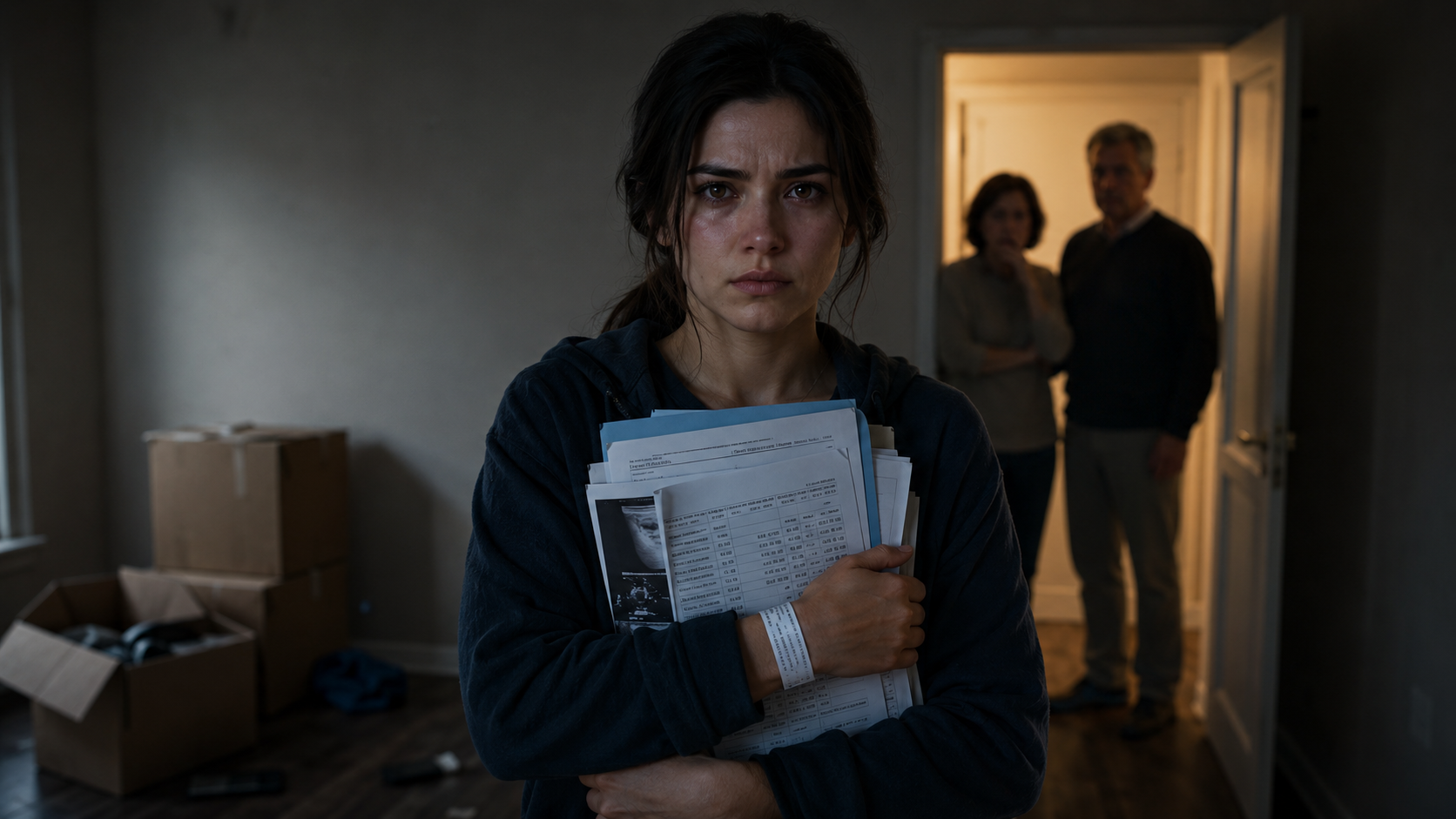
The last time my brother had called me, I had been sitting on a borrowed mattress in my best friend’s living room, six days after abdominal surgery, still walking bent over, still holding my discharge papers in a plastic folder because those papers were the only proof I had that I existed.

Back then, Julian had not asked if I was safe.

He had not asked if I needed food.

He had said, “Mom says you’re being dramatic again,” and then he had blocked me.

Now he was crying.

I listened to him cry for three seconds.

Then I said, “Why are you calling?”

“They got the papers.”

“I know.”

“Dad is losing his mind.”

“That sounds uncomfortable for him.”

“Mara, please.”

That word.

Please.

It sounded almost funny coming from my family.

They had spent my whole life treating please like a luxury I had to earn.

Please don’t embarrass us.

Please stop making your mother nervous.

Please be grateful.

Please forgive your father.

Please remember family comes first.

But when I begged for my apartment key back, there had been no please.

When I begged for my laptop, my camera, my work files, my grandmother’s watch, my medical cards, there had been no please.

When I found out my parents had told neighbors, cousins, old teachers, and church friends that I had died from “complications,” there had been no please.

There had only been silence.

A memorial post.

And a donation page.

“Say what you called to say,” I told him.

Julian swallowed hard. “I didn’t know they were going to go that far.”

I looked across my dark bedroom at the framed hospital bracelet on my wall.

People think you frame beautiful things.

Diplomas.

Wedding photos.

Awards.

I framed the plastic band they put around my wrist the night I almost died, because it had my name on it, my date of birth, my patient number, and the word discharged printed beside a date my parents later told everyone came after my funeral.

“You helped them empty my apartment,” I said.

He went quiet.

Rain tapped the glass.

“I helped Dad carry some boxes,” he said.

“You carried my life down three flights of stairs.”

“I didn’t know where everything was going.”

“You knew I wasn’t dead.”

He made a sound like someone stepping on broken glass.

“Mara…”

“No. Say it.”

He breathed hard into the phone.

“You knew I wasn’t dead,” I repeated.

“Yes,” he whispered.

There it was.

The first honest thing anyone in my family had said in two years.

It did not feel like relief.

It felt like a bruise being pressed.

I closed my eyes and saw the apartment again.

My apartment.

A narrow third-floor place above a laundromat, with yellow kitchen cabinets, uneven floors, and a window that looked into a brick wall. It had been ugly, overpriced, and mine. I had paid every deposit myself. I had painted the bedroom green. I had built my editing desk from two filing cabinets and a salvaged door.

I had been twenty-six and proud of that place in a way my parents hated.

They had always preferred me dependent.

Dependency made them generous.

Independence made them cruel.

Three nights after my emergency surgery, while I was still in the hospital learning how to stand without crying, my parents went to that apartment with the spare key I had given them for emergencies.

They told the landlord I had passed.

They told him they were grieving.

They told him they had to clear out “their daughter’s belongings.”

Then they sold what they could, threw away what embarrassed them, and kept whatever made them feel powerful.

My father sold my work computer.

My mother sold my camera lenses.

Someone pawned my grandmother’s gold watch.

Someone took my savings envelope from the kitchen drawer.

Someone deleted my name from their life and collected sympathy for it.

“You didn’t think this would reach court?” I asked.

Julian cried harder.

“I thought you’d give up.”

That answer should have shocked me.

It didn’t.

In my family, honesty only arrived when lying stopped being useful.

“You thought I’d stay gone,” I said.

“I thought you’d move away.”

“I did move away.”

“I mean…” His voice cracked. “I thought you’d disappear.”

I looked around my bedroom.

The desk.

The secondhand dresser.

The stack of client contracts.

The small orange cat sleeping at the foot of my bed like he had personally invented safety.

“I tried that,” I said. “It didn’t suit me.”

“Mara, Dad says your lawyer is trying to make this criminal.”

“My lawyer is trying to make it factual.”

“Mom says she can’t survive this.”

“Strange. I survived being declared dead.”

He said nothing.

I could hear movement behind him. A door closing. A floorboard creaking. For one second, I imagined him standing in our parents’ kitchen, surrounded by the same oak cabinets, the same family photos where my face had probably been removed or turned against the wall.

Then he said, “There’s something you don’t know.”

My hand tightened around the phone.

“There’s a lot I don’t know, Julian.”

“No. I mean… there’s someone who saw everything.”

I stopped breathing.

“Who?”

“The old night porter from your building. Mr. Keane.”

The name moved through me like a key entering an old lock.

Mr. Keane.

He had worked evenings at the building for nearly twenty years, though my place was too small and cheap to need a proper porter. He fixed pipes, signed for packages, carried groceries for elderly tenants, and watered the dead plant in the lobby because he said even failure deserved routine.

I remembered him calling me “Miss Mara” in a voice roughened by cigarettes and kindness.

I remembered him bringing me ginger tea once when he heard me coughing through the wall.

I remembered asking the landlord about him after I got out of the hospital.

“He retired,” the landlord had said.

But his eyes had slid away when he said it.

“My lawyer tried to find him,” I said. “No one knew where he went.”

“Dad knew.”

My stomach turned cold.

“Explain.”

Julian sniffed. “Dad paid him.”

“For what?”

“To stay quiet.”

The room seemed to tilt slightly.

I put my feet on the floor.

My cat lifted his head and blinked at me, offended by movement at such an unreasonable hour.

“Julian,” I said carefully, “what exactly did Mr. Keane see?”

“He saw Mom and Dad at your apartment. He heard Dad tell the landlord you were dead. He saw them load everything into the van. And he kept something.”

“What?”

“The building camera file.”

My heart began to pound so hard I could feel it in my throat.

Julian whispered, “Dad thought Mr. Keane deleted it.”

“But he didn’t.”

“No.”

I stood up.

“Where is he?”

“I don’t know.”

“Don’t lie to me.”

“I’m not. I swear. Dad knows. Or he did.”

“Then why are you telling me this now?”

Julian’s answer came after a long, ugly silence.

“Because Mom told me yesterday that if this gets worse, they’re going to say you were unstable after surgery. That you made all of this up for money.”

I almost laughed.

Not because it was funny.

Because some families repeat the same cruelty so often that eventually it becomes predictable enough to bore you.

“Of course they are.”

“Mara, I didn’t know they’d do that.”

“You keep saying what you didn’t know. Try saying what you did.”

He cried again.

And this time, I let the silence stretch until he had nowhere to hide inside it.

“I knew you called,” he said finally. “I knew you texted. I knew Dad blocked you. I knew Mom kept the donation money longer than she said. I knew they sold your equipment.”

My throat tightened.

“And you said nothing.”

“I was afraid of them.”

That sentence landed differently than I wanted it to.

Because I believed him.

I had been afraid of them too.

My mother’s sadness could fill a room until everyone drowned in it.

My father’s anger did not always shout. Sometimes it simply went cold and quiet and made you feel like your entire future depended on guessing what would please him.

Julian had grown up learning that loyalty meant staying useful and silent.

But fear was not a clean excuse.

Fear explained the shape of the knife.

It did not uncut the wound.

“I need Mr. Keane’s location,” I said.

“I’ll try to find it.”

“No. You’ll do more than try.”

“Mara—”

“You called me. You wanted the sound of your guilt to turn into forgiveness. That’s not how this works. You want to be useful? Find the witness.”

He inhaled sharply.

“And Julian?”

“Yes?”

“If you warn Dad, if you tell Mom, if you delete anything, I will add your name to the complaint.”

He whispered, “You wouldn’t.”

I looked at the framed hospital bracelet again.

“I’m not the sister you remember.”

Then I ended the call.

For a long time, I stood barefoot in the dark with the phone in my hand.

The old Mara would have shaken apart.

The old Mara would have called Tessa immediately, crying so hard she couldn’t speak.

The old Mara would have wondered whether she was being cruel.

But the old Mara had died in a different way.

Not the way my parents announced.

Not in a coffin.

Not in a hospital bed.

She died slowly, piece by piece, while waiting for people who loved control more than they loved her.

The woman left behind did not cry easily.

She made coffee.

She opened her laptop.

She emailed my lawyer.

Subject: Possible witness — urgent.

By 7:15, Tessa was at my door with wet hair, two coffees, and the expression of a woman prepared to commit several crimes in my defense.

Tessa had been my emergency contact before I knew I needed one.

She was the friend who picked me up after discharge when my parents “couldn’t handle the drama.”

She was the friend who let me sleep on her couch and never once called it generosity.

She was the friend who said, “We are going to make a folder,” while I lay there feverish, broke, and terrified.

That folder became two folders.

Then a box.

Then four binders.

Hospital.

Messages.

Property.

Money.

Witnesses.

The first binder had saved my sanity.

The fourth was about to ruin my parents’ lives.

Tessa stepped inside, saw my face, and lifted the coffee like a peace offering.

“Is this a speak-first morning or a drink-first morning?”

“Mr. Keane may have the security footage.”

She lowered the coffee.

“Oh.”

“And my father paid him to stay quiet.”

Her eyes sharpened.

“Oh.”

“And Julian wants to be useful because consequences finally developed teeth.”

Tessa handed me one coffee.

“Good. I hope they bite him gently. Then harder.”

At 9:00, we were in a glass conference room downtown, sitting across from my lawyer, Celia Grant.

Celia looked nothing like the kind of lawyer my parents imagined me having.

They would have expected someone loud. Flashy. Expensive in a way that announced itself.

Celia wore plain black suits, spoke softly, and had the emotional temperature of a locked filing cabinet.

She frightened people by listening too carefully.

When I finished telling her about Julian’s call, she wrote one line on her legal pad.

Find Keane.

Then she looked up.

“This is significant.”

“How significant?”

“If he confirms what your brother said, very.”

Tessa leaned forward. “Define very.”

Celia tapped her pen once.

“Right now, their defense rests on confusion, grief, and family misunderstanding. They claim they reasonably believed Mara had abandoned the apartment after a medical crisis. They claim the death announcement was a tragic miscommunication spread by others. They claim the donations were meant to help with medical debt and later became confused with memorial support.”

Tessa’s mouth twisted. “That’s disgusting.”

“Yes,” Celia said. “But disgusting is not always legally fatal. Evidence is.”

I placed my hospital folder on the table.

“We have evidence.”

“We have strong evidence,” Celia agreed. “Hospital records proving you were alive and conscious. Discharge records. Messages you sent asking for your belongings. Bank receipts showing deposits matching the online sales. Screenshots of the memorial page. The donation records. The landlord’s revised statement.”

She paused.

“But a witness who heard them lie in real time and preserved security footage would make their version very difficult to maintain.”

Tessa smiled without warmth.

“I love difficult for them.”

Celia turned to me. “Can you handle seeing the footage if it exists?”

I thought about my parents entering my apartment.

My mother opening drawers.

My father unscrewing my hard drive.

Julian carrying boxes.

My life reduced to items.

Could I handle seeing it?

No.

Would I watch it anyway?

Yes.

“I can handle facts,” I said.

Celia studied me for one second longer than usual.

Then she nodded.

At 10:12, Julian sent the address.

Not to me.

To Celia.

A small mercy.

Mr. Keane was living in a senior housing complex on the edge of the city, thirty minutes from my old apartment and a lifetime from who I had been when I lived there.

Celia called first.

Then she asked if I wanted to come.

I said yes too quickly.

Tessa drove.

She did not play music. She did not fill the silence with advice. That was one of the reasons I loved her. She knew that some silences were not empty. Some were full of teeth.

Mr. Keane opened his door wearing slippers, a cardigan, and the face of a man who had been waiting to be found.

He was thinner than I remembered.

Older.

But his eyes were the same.

Sharp.

Sad.

Kind in a way that made my chest hurt.

“Miss Mara,” he said.

I had not expected my own name to undo me.

For two years, I had heard my parents twist it into absence.

Poor Mara.

Our late daughter.

She’s gone now.

To hear it said like I was standing in front of someone who knew exactly where I belonged almost broke something open inside me.

“Hi, Mr. Keane,” I said.

His mouth trembled.

“I should have called you.”

I didn’t know what to say.

Celia did.

“Mr. Keane, we’re not here to pressure you. We’re here because you may have information about what happened at Ms. Vale’s apartment.”

Ms. Vale.

My chosen name.

Not Raines.

I had legally changed it six months after my parents declared me dead.

My mother said it was dramatic.

I thought it was accurate.

Mr. Keane stepped aside.

“Come in.”

His apartment was small and painfully neat. A chair by the window. A stack of mystery novels. A framed photo of a woman who had to be his wife. On the table sat a brown envelope, a flash drive, and a notebook with a cracked black cover.

He touched the notebook first.

“I wrote things down,” he said. “Memory gets slippery when you get old. Paper doesn’t.”

I felt Tessa glance at me.

Paper doesn’t.

Mr. Keane sat slowly.

“They came on a Thursday,” he said. “Your mother, your father, and your brother. I remember because garbage pickup was late that week and the hall smelled awful.”

Celia opened her recorder, asked permission, then began.

Mr. Keane talked for forty minutes.

He said my father arrived first, carrying a box of black trash bags.

He said my mother wore sunglasses indoors.

He said Julian looked pale and kept asking if they should wait.

He said the landlord came down, confused, because my rent had been paid through the month.

My father told him I had died.

My mother covered her face.

Julian said nothing.

Mr. Keane said he knew it was a lie because he had spoken to me the day before surgery. I had told him I would be away for medical reasons. He also knew because a nurse from the hospital had called the building asking whether anyone could bring me a phone charger from my apartment. She had left her name and number at the desk.

“I told your father that,” Mr. Keane said. “I said, ‘Sir, the hospital called yesterday.’”

My hands turned cold.

“What did he say?”

Mr. Keane looked at the table.

“He said, ‘She’s dead to this family either way.’”

Tessa whispered something under her breath.

Celia’s face did not change, but her pen stopped moving for half a second.

“And Mrs. Raines?” Celia asked.

Mr. Keane swallowed.

“She said, ‘Don’t be sentimental, Harold. Girls like Mara always come crawling back if you leave them something to crawl back to.’”

The room blurred at the edges.

I stared at the brown envelope.

Girls like Mara.

Not daughters.

Not children.

Girls like Mara.

As if I were a category of problem.

Mr. Keane continued.

He saw them remove boxes, electronics, clothing, books, framed photographs, and a small wooden case I knew immediately.

My grandmother’s watch had been inside it.

He tried to stop them when they carried out my desk.

My father gave him cash.

Five hundred dollars.

“Not as a bribe,” Mr. Keane said quickly, ashamed. “At least, not how he said it. He said it was for my trouble. For helping keep the building calm. He said grief made people unreasonable.”

“Did you take it?” Celia asked.

“Yes.”

He covered his face with one hand.

“I needed medication that month.”

I should have been angry.

Part of me was.

But another part remembered Mr. Keane fixing the lobby heater with duct tape because the landlord was cheap. I remembered him eating soup from a thermos at midnight. I remembered that my father had always known exactly where people were weak and exactly how much pressure to apply.

“What changed?” I asked.

Mr. Keane looked at me.

“You came back.”

“I didn’t come back.”

“Yes, you did. Not to the building. To the truth.” He pushed the brown envelope toward Celia. “A few weeks after, I saw your mother’s memorial post. Then I saw the donation link. I knew then it wasn’t just family cruelty. It was money.”

He tapped the flash drive.

“I copied the hallway camera before the system erased. I also took photos of the van. License plate. Boxes. Your father handing the landlord a paper. I kept the phone message from the nurse too.”

Celia’s eyes lifted.

“You still have the message?”

Mr. Keane nodded.

“Old answering machine. My wife used to say I kept everything.”

He looked at me.

“She was right.”

For the first time that day, I cried.

Not loudly.

Not dramatically.

Just one tear, then another.

Because the world had taken so much from me that I had forgotten strangers could save things.

My parents had counted on everyone looking away.

They had forgotten that sometimes the quietest people keep the best records.

The next three weeks were not peaceful.

They were surgical.

Celia moved with frightening precision.

She filed the amended evidence packet.

Hospital admission logs.

Surgical notes.

Discharge instructions.

The nurse’s call record.

My text messages.

My father’s reply: Stop making this harder than it needs to be.

Bank receipts.

Pawnshop receipts.

Online resale screenshots.

Donation transfers.

Photos of my parents’ van outside my building.

Mr. Keane’s sworn statement.

The security footage.

I watched the footage only once.

Tessa sat beside me.

Celia sat across from me.

On the screen, the hallway outside my old apartment appeared in washed-out gray.

The date glowed in the corner.

I had been alive on that date.

Breathing through pain.

Learning to sit up.

Calling my mother and getting voicemail.

Then my parents entered the frame.

My father unlocked the door.

My mother looked over her shoulder like she was afraid of being caught, not afraid of losing a child.

Julian followed with boxes.

At first, I felt nothing.

Then my mother came out carrying my green winter coat.

The one I had saved for two months to buy.

She held it against herself, checked the sleeves, then folded it over her arm.

Something inside me went very still.

Not the computer.

Not the camera.

The coat.

That was what hurt.

Because theft is not always about value.

Sometimes it is about the small proof that someone touched your life and decided it belonged to them.

At minute eleven, my father came out carrying my desk drawer.

At minute fourteen, Julian carried my books.

At minute nineteen, my mother came out with the wooden case.

I stopped the video.

Tessa put her hand over mine.

“Do you want to stop?”

“No.”

I pressed play.

Mr. Keane appeared at the end of the hall.

He spoke to my father.

There was no audio, but the body language was clear.

My father stepped close.

My mother turned away.

Julian stared at the floor.

Then my father took something from his wallet and pressed it into Mr. Keane’s hand.

The old man did not look proud.

He looked trapped.

The video continued until the hall was empty.

Until my door stood open.

Until my apartment looked like a mouth with all its teeth pulled out.

When it ended, Celia closed the laptop gently.

No one spoke.

Finally, I said, “They didn’t even turn off the light.”

Tessa’s face crumpled.

That was the detail that stayed with me.

Not the boxes.

Not the van.

The light.

They emptied my apartment and left the bedroom light burning.

As if the room were waiting for someone who would never come home.

Except I did.

Not to that apartment.

But to myself.

My mother called the day after the amended filing.

She used my aunt’s phone.

I answered because Celia said sometimes people confess when frightened.

She was right.

“Mara,” my mother said.

Her voice had the softness she used in public.

The voice that made people touch her shoulder and say, “You poor thing.”

“Diane,” I said.

She gasped.

I had never called her by her name before.

“You’re my daughter.”

“I was your daughter when you wrote my memorial post.”

Silence.

Then a small, wounded laugh.

“You’ve become so cold.”

“No,” I said. “I’ve become documented.”

She inhaled sharply.

“Your father and I made mistakes.”

“You committed fraud.”

“You always use such ugly words.”

“They’re accurate words.”

“You were sick. You weren’t thinking clearly. We were scared.”

“You told people I died.”

“We thought we lost you.”

“I called you from Tessa’s couch.”

“You were hysterical.”

“I asked for my laptop.”

“You cared about things more than family.”

I looked at my desk, at the new laptop I had bought in installments, at the bills I had paid late because my parents had sold the equipment that kept my business alive.

“I cared about rent,” I said.

“You humiliated us.”

There it was.

Not grief.

Not fear.

Humiliation.

The true family emergency.

My mother started crying, but the sound was thinner now. Less powerful through distance. A performance without a stage.

“Do you know what people are saying about us?”

“Yes.”

“How can you do this to your own parents?”

I almost smiled.

“I learned from you.”

She stopped crying.

“What does that mean?”

“You showed me that family can announce someone dead when it benefits them. I’m only announcing what you did while I’m alive.”

Her voice went flat.

“You will regret this.”

“I already regret giving you my spare key.”

She hung up.

A month later, we sat across from them in a mediation room with beige walls and a coffee machine that made everything taste faintly burned.

My father looked smaller in person than he had in my nightmares.

That surprised me.

For two years, he had been a giant shadow in my head. A voice. A locked door. A hand slamming down on a table.

But across from me, he was just a man in an expensive watch, sweating through his collar while his lawyer whispered instructions he did not want to hear.

My mother wore white.

Of course she did.

She looked like someone auditioning for innocence.

Julian sat three chairs away from them with his own lawyer. He had not looked at our parents once.

Mr. Keane was not in the room, but his statement was.

So was the footage.

So were the bank receipts.

So were the hospital records.

My parents’ lawyer began with phrases that sounded polished and dead.

Family breakdown.

Emotional distress.

Medical confusion.

Miscommunication.

Regrettable handling of property.

Celia let him finish.

Then she opened the first binder.

The sound of those metal rings clicking open felt like a door unlocking.

“Let’s use dates,” she said.

For the next ninety minutes, she rebuilt the truth in front of everyone.

June 3 — emergency admission.

June 4 — surgery.

June 5 — patient conscious and responsive.

June 6 — nurse call to apartment building requesting personal items.

June 7 — parents enter apartment.

June 7 — father tells landlord tenant is deceased.

June 7 — security footage shows removal of property.

June 8 — first resale listing posted.

June 9 — memorial post published.

June 10 — donation page receives first payment.

June 12 — patient discharged alive.

June 13 — patient sends message requesting return of property.

June 13 — father replies: Stop making this harder than it needs to be.

Celia did not raise her voice.

She did not need to.

Facts have their own volume when arranged correctly.

Every time my mother began to cry, Celia paused.

Waited.

Then continued.

That was the beautiful thing about documents.

They had no manners to exploit.

They did not get uncomfortable.

They did not forgive because crying made the room awkward.

They simply waited to be read.

My father lasted until the bank receipts.

Then he slammed his hand on the table.

“This is insane,” he snapped. “She left us years before this. She moved out, changed her attitude, acted like she was better than everyone.”

His lawyer touched his sleeve.

“Victor—”

“No,” my father said, pulling away. “She needed a lesson. She thought independence meant she didn’t owe us respect.”

The room went still.

My mother whispered, “Stop.”

But it was too late.

The sentence was already alive.

A lesson.

Not confusion.

Not grief.

Not panic.

A lesson.

Celia leaned back slightly.

“Thank you, Mr. Raines,” she said. “That clarifies intent.”

For the first time, my father looked afraid.

Not sorry.

Afraid.

I watched him understand that anger, his favorite weapon, had finally misfired.

My mother covered her face.

Julian closed his eyes.

And I felt something I did not expect.

Not joy.

Not victory.

Grief.

A clean, final grief.

Because some part of me, some foolish child inside my ribs, had still hoped that if the proof became undeniable enough, my parents might look at me and say one true sentence.

We hurt you.

We lied.

We stole.

We are sorry.

But they could not give me that.

They could only confess by accident.

The settlement changed after that.

Restitution for stolen property.

Compensation for lost business income.

Return of memorial donations through a supervised process.

Payment of legal fees.

A public correction.

A no-contact agreement.

And one line my mother fought harder than all the money.

One line that said:

Mara Vale was alive and recovering from surgery at the time statements were made representing her as deceased.

Alive.

Such a small word.

Such a terrible thing to have to prove.

My mother looked at me when they finally agreed.

Her eyes were red, but dry now.

“Was this worth losing your family?”

I looked at her white dress.

At my father’s clenched jaw.

At Julian, who looked ruined and relieved.

Then I touched the empty place on my wrist where my grandmother’s watch used to be.

“I lost my family when you sold the things I needed to come home,” I said.

She flinched.

This time, I did not comfort her.

Two weeks later, the correction was posted.

It was stiff, legal, bloodless.

But it existed.

People read it.

People shared it.

People found the old memorial page and the donation comments.

Some were cruel, because the internet can smell pain and arrive hungry.

But others were kind.

Women wrote about mothers who opened credit cards in their names.

Men wrote about fathers who sold tools, cars, heirlooms, anything they could call “family property.”

People wrote about being erased not by strangers, but by the people who knew exactly where to cut.

One comment stayed with me.

They didn’t mourn you. They monetized your absence.

Tessa sent it to me with no words.

She didn’t need any.

The returned donation money went where it should have gone in the first place.

Not to my parents.

Not to me.

To a recovery fund for patients who leave the hospital with no one safe to call.

The first time Celia showed me the receipt, I cried harder than I had cried in months.

Not because it fixed anything.

Because something rotten had been forced to feed something good.

Mr. Keane testified in a separate hearing.

He wore his cardigan.

He brought his notebook.

My father refused to look at him.

My mother looked at him like he had betrayed her personally by refusing to remain useful and poor.

Afterward, I found Mr. Keane sitting outside the courthouse, hands folded over his cane.

“I’m sorry,” he said again.

I sat beside him.

For a while, we watched people move in and out of the courthouse with folders and coffee cups and faces full of private disasters.

Then I said, “I was angry at you.”

He nodded.

“You should be.”

“I still am a little.”

“You should be that too.”

I looked at him.

“But you kept the truth.”

His eyes filled.

“My wife used to say cowardice is not always one big thing. Sometimes it’s a hundred small silences.”

I thought about Julian.

About myself.

About all the years I had swallowed words to keep dinner peaceful.

“She sounds smart,” I said.

“She was terrifying.”

I smiled.

“I would have liked her.”

“She would have liked you.”

That hurt in a good way.

Before I left, he handed me a small envelope.

“I forgot this was in the office drawer until last week.”

Inside was a photograph.

My old apartment, before everything.

My green bedroom wall visible through the open door.

My desk covered in papers.

My grandmother’s wooden watch case sitting beside my lamp.

And there, on the edge of the frame, my own reflection in the hallway mirror, blurred but unmistakable.

Alive.

Busy.

Mine.

I kept that photo.

Not because I wanted to live inside what they took.

Because I wanted proof of what I had built before they tried to turn it into a ghost story.

One year after the settlement, I moved into an apartment with better light.

Not bigger by much.

Not fancy.

But the door had a new lock, and only three people had keys.

Me.

Tessa.

The cat sitter, because my orange disaster of a cat had strong opinions about meal schedules.

Julian texted sometimes.

Not often.

Never demanding.

The first message came three months after court.

I started therapy today. I told the truth about what happened. I’m sorry I waited until consequences made honesty safer than silence.

I read it twice.

Then I put the phone down.

I did not answer that night.

But I did not block him.

That was not forgiveness.

Not exactly.

It was a door still closed, but no longer nailed shut.

Sometimes that is enough for one day.

My parents moved to another town.

They told a softer version there.

A sad version.

A version where everyone had suffered, mistakes had been made, and their daughter had been “influenced by outsiders.”

Some relatives believed them.

Some relatives did not.

A few sent me messages about forgiveness.

Most of those messages came from people who had never once asked where I slept after surgery.

I stopped answering them.

Instead, I built.

I rebuilt my design studio.

I took clients again.

At first, small ones.

Then better ones.

Then the kind I used to think were impossible.

My work changed.

It became cleaner.

Braver.

Less apologetic.

Tessa said betrayal had given me excellent brand discipline.

I told her that was an awful thing to say.

She said awful did not mean inaccurate.

We laughed until my cat ran out of the room offended.

On the second anniversary of the day they emptied my apartment, I did something strange.

I took the day off.

Not to mourn.

To mark ownership.

I bought pancakes at a café I used to avoid because twelve dollars for breakfast had once felt irresponsible.

I bought a green velvet chair because I liked it.

I framed Mr. Keane’s photo.

Then I went home, placed the chair by the window, and watched my cat claim it within thirty seconds.

That evening, I opened the first binder.

The tabs had faded.

Hospital.

Messages.

Property.

Money.

Witnesses.

Legal.

I ran my fingers over them and thought of the woman who made those labels while weak, broke, shaking, and terrified that truth would not matter if lies were loud enough.

I wanted to reach back to her.

Not to tell her everything would be easy.

It would not.

Not to tell her justice would feel clean.

It rarely does.

Not to tell her family would understand.

Some people prefer losing you to admitting what they did.

I wanted to tell her something simpler.

They can empty a room.

They can sell your tools.

They can turn your name into a memorial.

They can collect sympathy over a grave they invented.

But they cannot make you dead while you are still willing to breathe.

They cannot erase someone who learns to keep records.

They cannot bury a woman who becomes her own witness.

I closed the binder.

Not forever.

Just for the night.

Then I turned on my lamp, opened my laptop, and started a new project.

On the first blank page, before the client name, before the sketches, before the work, I typed two words for myself.

Still here.

And I smiled.

Because I was.

Not just alive in the medical sense.

Not just legally alive.

Not just breathing inside a body my parents had tried to turn into evidence against me.

Alive in an apartment no one could enter without permission.

Alive with friends who stayed.

Alive with a name I chose.

Alive with records, receipts, witnesses, and a voice that no longer shook when I used it.

My parents told everyone I died.

But what they forgot was simple.

Dead women don’t keep receipts.

Dead women don’t sign affidavits.

Dead women don’t walk into court wearing the truth like armor.

And dead women do not come back to collect what was stolen.

I was never dead.

I was gathering proof.

They Told Everyone I Was Dead — Until the Records Started Breathing
I picked up an old man on a lonely winter track, and having him stay overnight changed my life forever