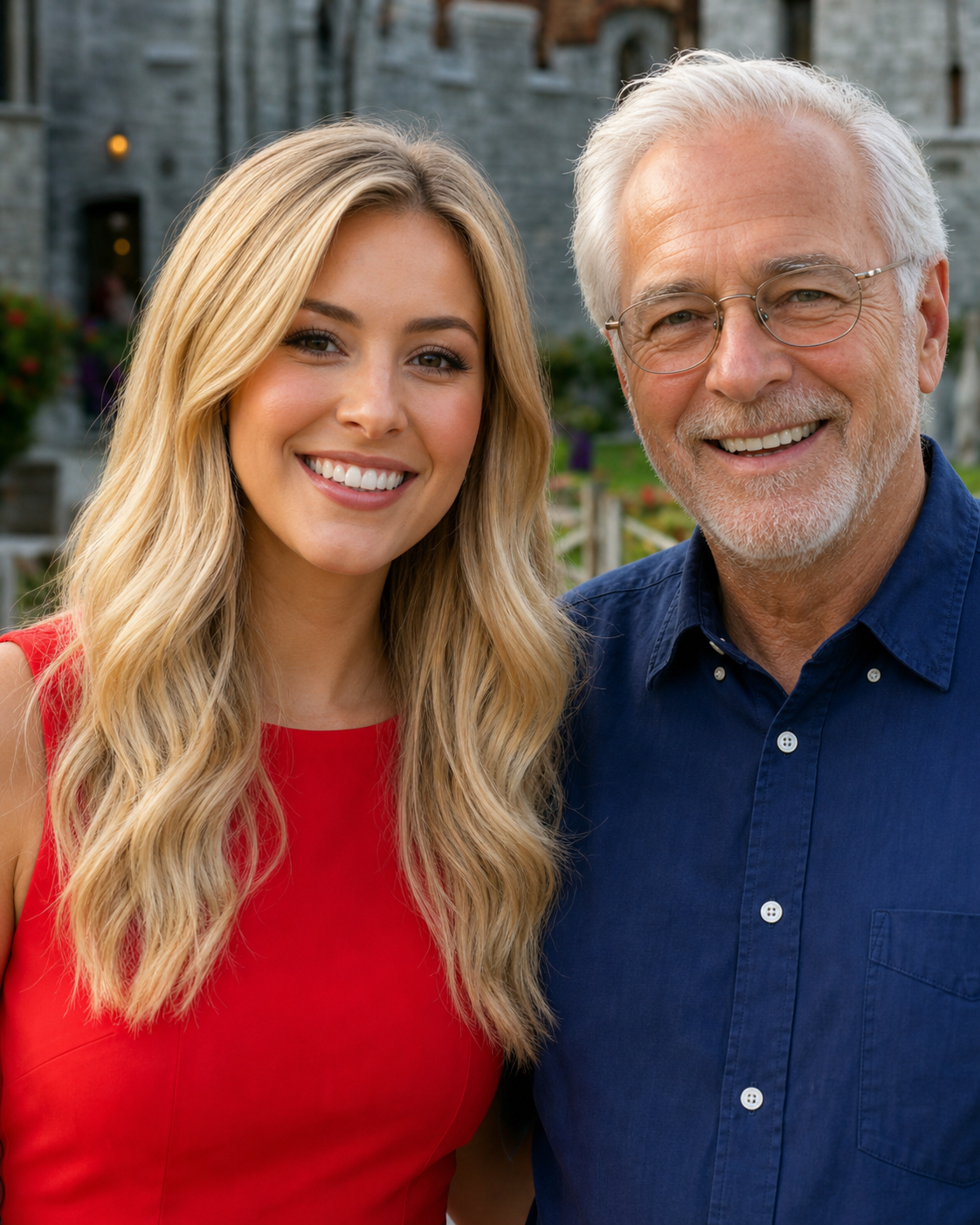
I chose to marry a man decades older than me because I believed he could offer something I couldn’t give my children on my own—stability.
At thirty, I was raising two kids by myself: one in kindergarten, the other in second grade. Their father had vanished not long after our youngest was born, leaving no explanation, no trace, and no support.
I worked full-time as an accountant, but no matter how hard I tried, it never seemed to be enough. We were always on the edge—one unexpected bill away from everything collapsing.
And I was constantly exhausted.

So when Richard entered my life, offering security and a way out of that constant struggle, I said yes.
I married a man old enough to be my father.
We met on a day I almost didn’t go out at all. I had left my children with a babysitter so I could attend an important work meeting. That’s where I first saw him.
Richard was one of the founders of the company—calm, controlled, and composed in a way that made him stand out. He spoke softly, never raised his voice, and carried himself like someone who always knew exactly what he was doing.
We began with simple conversation, but what caught my attention was how carefully he listened. It wasn’t something I was used to.
It became clear fairly quickly that he was interested in me.
Despite being forty years older, he was in good health, charismatic, and surprisingly easy to talk to.
We started meeting for dinner. At first, I told myself it was nothing serious—just a few casual evenings. But there was something comforting about him. He was predictable, steady… everything my life wasn’t.
It didn’t feel like love. There was no spark, no rush of emotion. Instead, it felt like stepping into a quiet space where, for a little while, I didn’t have to carry everything on my own.
Then one evening, things shifted.
I was venting about something trivial—my daughter refusing to eat oatmeal and insisting on a brand of cereal that was far too expensive for me to keep buying.

“I only got it once,” I said with a tired smile. “Now she expects it every day.”
“You don’t have to live like that,” Richard replied.
I laughed lightly. “That would be nice.”
“I mean it,” he said, his tone suddenly serious. “Not just about breakfast.”
Before I could respond, he reached across the table and took my hands.
“I can give you a stable life,” he continued. “A real home. Security for you and your children. A future without constant worry.”
My breath caught. “Richard… what are you saying?”
He gave a small, calm smile. “I’m asking you to marry me.”
Then he placed a ring box on the table.
Inside was a diamond and sapphire ring that looked impossibly expensive.
“Let me take care of you,” he said.
I stared at it, my mind racing. I had been in love once before. I had trusted someone, built dreams around him—and in the end, he had left me alone with two children and no support.
I didn’t love Richard. But I did like him. And he hadn’t claimed to love me either. In a strange way, that made the decision feel… practical.
“Is it really that difficult?” he asked, his voice calm but carrying a hint of tension.

I hesitated only a moment longer. Then I told myself I was doing what a responsible mother should—choosing stability over uncertain dreams.
“Okay,” I said, extending my hand. “Yes.”
At first, everything seemed almost too good.
Richard spent time with my children, and they took to him easily.
One weekend, he took them out for the afternoon. When they came back, they were full of excitement.
“Mom, we met a really nice lady!” Ava said.
“She had so many toys,” Mason added. “Games, puzzles—everything!”
I glanced at Richard.
“A friend of mine works with children,” he explained smoothly. “I thought they’d enjoy spending time there.”
I didn’t question it.
I wish I had.
Soon after, he began discussing schools—private institutions with excellent reputations and opportunities.
“That could be really good for them,” I admitted.
“I’ll handle everything,” he said. “Money isn’t an issue.”
Those words reassured me more than they should have.
I didn’t realize how dangerous that kind of comfort could be.
On our wedding day, everything looked perfect. Soft lighting, pale flowers, a carefully arranged setting.
But something inside me felt uneasy. A quiet pressure in my chest that I couldn’t explain.
At one point, I slipped away to the restroom just to breathe.
While I stood there, trying to steady myself, a woman walked in and approached me directly.

“Do you know Richard?” I asked.
She leaned closer and whispered, “Check the bottom drawer of his desk before you leave for your honeymoon… or you’ll regret it.”
Then she walked out without another word.
I tried to dismiss it. Told myself there had to be some harmless explanation.
But that night, after Richard fell asleep, I quietly went into his study.