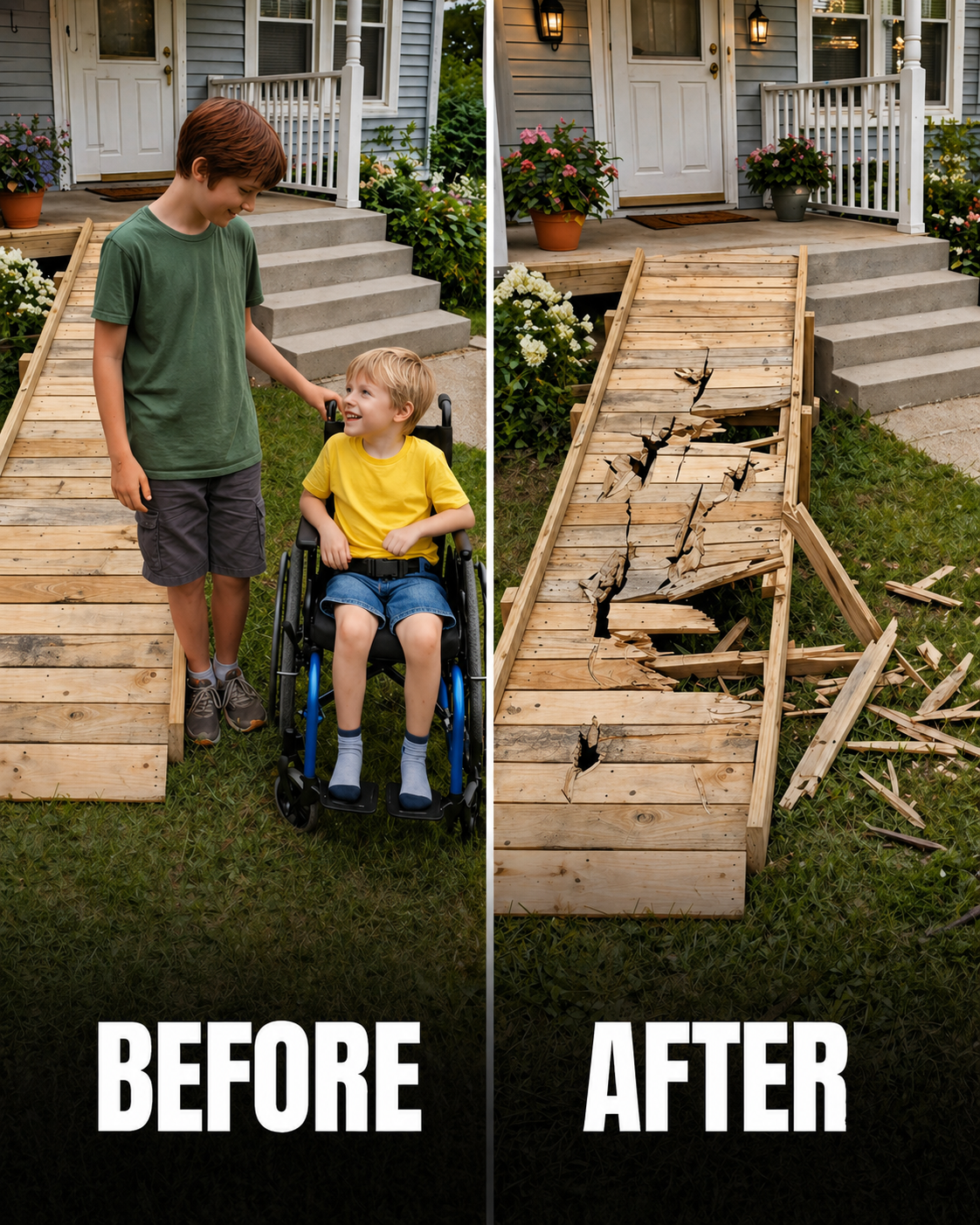
I thought it would be just another ordinary afternoon—nothing unusual, nothing worth remembering. But my son noticed something the rest of us had overlooked. By the next morning, everything on our street had changed in a way no one could have predicted.
My son Ethan is 12. He’s the kind of child who simply can’t ignore something that feels unfair, even when it has nothing to do with him.
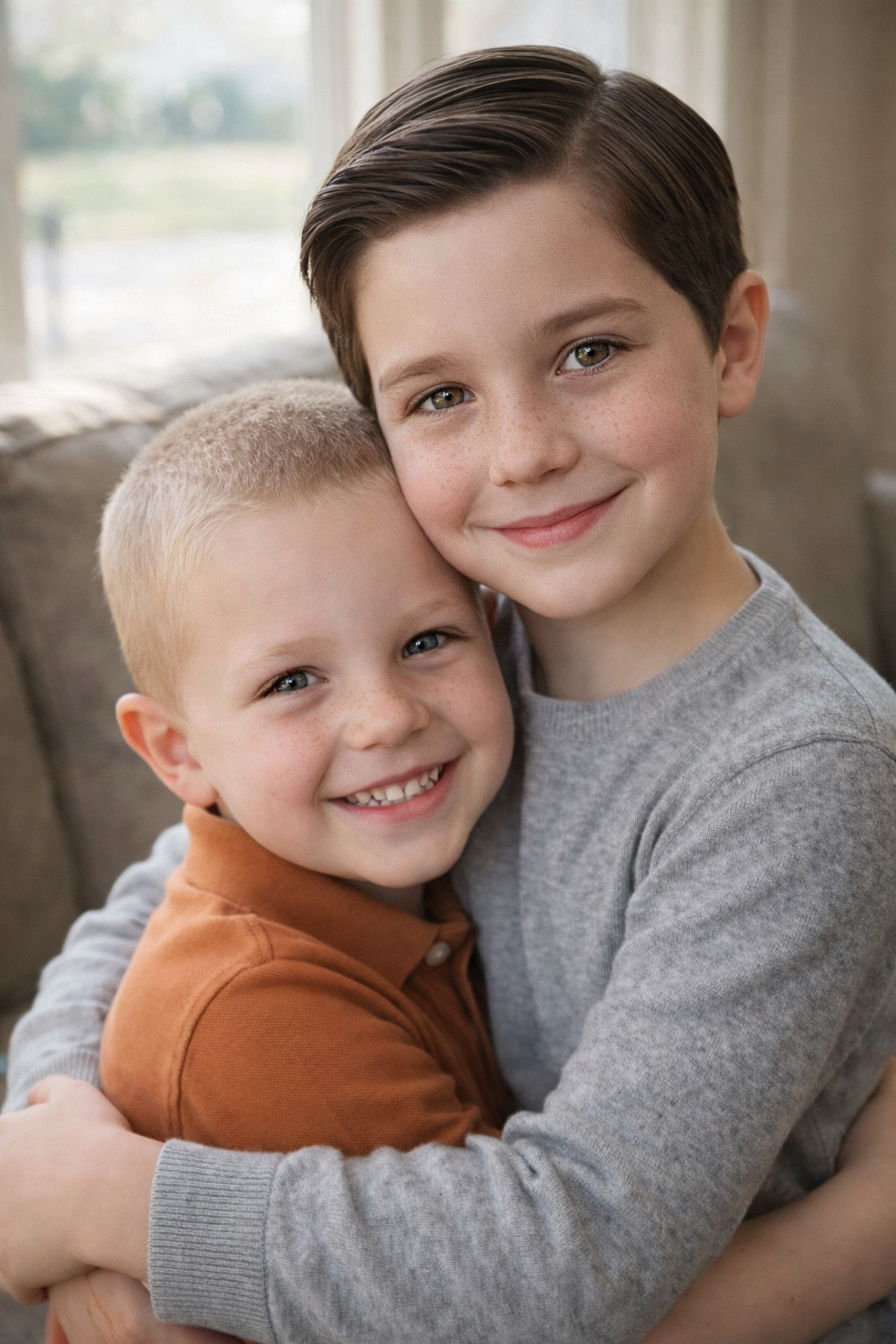
Our neighbor’s boy, Caleb, is nine. He’s quiet, thoughtful, and almost always sitting on the front porch in his wheelchair. He watches the neighborhood like it’s a world he can see—but not truly be part of.
At first, I didn’t give it much thought. Kids find ways to entertain themselves wherever they can. But Ethan saw something different.
He noticed that Caleb only ever watched.
One afternoon, while we were bringing in groceries, Ethan paused and looked across the street. Caleb was there again, hands resting lightly on his wheels, watching other kids ride their bikes.
Ethan frowned. “Mom… why doesn’t Caleb ever come down?”
I followed his gaze and noticed the quiet sadness on Caleb’s face.
“I’m not sure,” I said gently. “But we could go ask later, if you want.”
That immediately lifted Ethan’s mood.
“Why doesn’t he come down?”
That evening, we walked over—and for the first time, I truly understood.
There were four steep steps leading down from the porch.
No railing to help. No ramp. No safe way for him to get down independently.
We knocked on the door, and Caleb’s mother, Renee, answered. She looked exhausted, like someone carrying more than she could manage.
“Hi, I live across the street,” I said. “Sorry to bother you, but… is there a reason Caleb doesn’t come out to play?”
Renee gave a small, tired smile. “He wants to. But we don’t have a safe way to get him down unless someone carries him every time.”
And suddenly, everything made sense.
Ethan looked deeply concerned.
“We’ve been trying to save for a ramp for over a year,” she added quietly. “But it’s expensive, and insurance won’t help.”
We thanked her and walked home—but neither of us could stop thinking about it.
That night, Ethan didn’t turn on his games or pick up his phone. Instead, he sat at the kitchen table with paper and a pencil, sketching something carefully.
“Insurance won’t help.”
Before his father passed away three months earlier, he had taught Ethan how to build things. It started with simple projects—a birdhouse, a shelf—but Ethan had grown to love it.
Now he sat there, completely focused.
“What are you working on?” I asked.
Without looking up, he said, “I think I can build a ramp.”
And I knew he meant it.
The next day after school, Ethan emptied his savings jar onto the table.
Coins and bills—everything he had saved.
“That’s for your new bike,” I reminded him.
“I know.”
“Are you sure about this?”
“He can’t even leave his porch, Mom.”
That was all he needed to say.
We went to the hardware store together. Ethan chose wood, screws, sandpaper, and a few tools we didn’t have. He asked detailed questions, checked measurements, and wrote things down.
This wasn’t a child playing around.
He had a real plan.
For the next three days, Ethan worked nonstop after school. He barely rested—just dropped his backpack and got straight to work.
Measuring. Cutting. Adjusting. Sanding.
I helped when I could, but he led every step.
He knew exactly what he was doing.
By the third evening, his hands were scratched and sore. But when he stepped back and looked at the finished ramp, he smiled.
“It’s not perfect,” he said, “but it’ll work.”
I couldn’t have been prouder.
We carried the ramp across the street together.
Renee came outside, confused at first—then stunned.
“You made this?” she asked softly.
Ethan nodded, suddenly shy.
We set it in place.
Then Renee turned to Caleb. “Do you want to try?”
He hesitated—then slowly rolled forward.
The moment his wheels touched the ramp and he made it down to the sidewalk on his own… I’ll never forget his expression.
It wasn’t just happiness.
It was freedom.
Other kids quickly gathered around. Someone asked if he wanted to race.
Caleb laughed—really laughed—and joined them.
For the first time, he wasn’t just watching.
Ethan stood quietly beside me, proud but silent.
The next morning, shouting woke me.
I ran outside barefoot—and froze.
Mrs. Harlow stood in front of Caleb’s house, visibly furious.
“This is an eyesore!” she snapped.
Before anyone could react, she grabbed a metal bar and swung it hard.
The wood cracked.
Caleb screamed.
Ethan stood frozen beside me.
Mrs. Harlow didn’t stop until the ramp was completely destroyed.
“Fix your mess,” she said coldly, dropping the bar before walking away.
Silence fell over the street.
Caleb sat back at the top of the steps.
Watching again.