My daughter kept mentioning a teacher who mocked her during class. At first, I brushed it off—until I saw that same name listed as the coordinator of the school charity fair. The woman who had humiliated me years ago had reappeared… and this time, she had chosen the wrong child.
School had been the most difficult chapter of my life. I gave it everything I had, but there was one teacher who made sure I never left her classroom feeling good about myself. Even now, I can’t understand what she gained from tearing me down in front of others.
Her name was Mrs. Mercer.
She mocked my clothes. Called me “cheap” in front of everyone as if it were a fact worth announcing. Once, she looked directly at me and said, “Girls like you grow up to be broke, bitter, and embarrassing.”

I was thirteen.
That night, I skipped dinner. I never told my parents—I was afraid she’d fail me in English. And it didn’t help that some classmates were already teasing me about my braces.
I didn’t want to make things worse.
The day I graduated, I packed a bag and left that town behind. I promised myself I would never think about Mrs. Mercer again. Years passed. Life moved forward. I built something steady—a home, a routine, a future.
So why was her name suddenly back in my world?
It started with Ava.
She came home one day unusually quiet. My daughter is fourteen—quick, expressive, never short on opinions. So when she sat at the table pushing food around her plate, I knew something wasn’t right.
“What happened?” I asked gently.
“Nothing, Mom… there’s just this teacher.”
I set my fork down.
Bit by bit, Ava explained how one teacher kept singling her out—calling her “not very bright,” turning her into the class joke.
“What’s her name?” I asked.
She shook her head. “I don’t know yet. She’s new. Mom, please don’t come to school… the other kids will laugh. I can handle it.”
But she couldn’t.
I could see it.
“Okay,” I said slowly. “Not yet.”

Still, something about it felt too familiar. And I knew I wouldn’t ignore it for long.
I planned to go to the school myself—but the next day, I was diagnosed with a serious respiratory infection and told to stay in bed for two weeks. That same evening, my mother showed up with food and the kind of expression that made it clear I had no say in the matter.
She took over everything—meals, school runs, the house. Calm, reliable, steady. I was grateful.
But lying there while Ava walked into that classroom every day made me feel helpless in a way illness never had.
“Is she okay?” I asked every afternoon.
“She’s okay,” Mom would say. “Now eat something.”
I waited. I recovered. And I made myself a promise: the moment I could stand, I would deal with that teacher.
Then the school announced a charity fair—and something in Ava changed.
She signed up immediately.
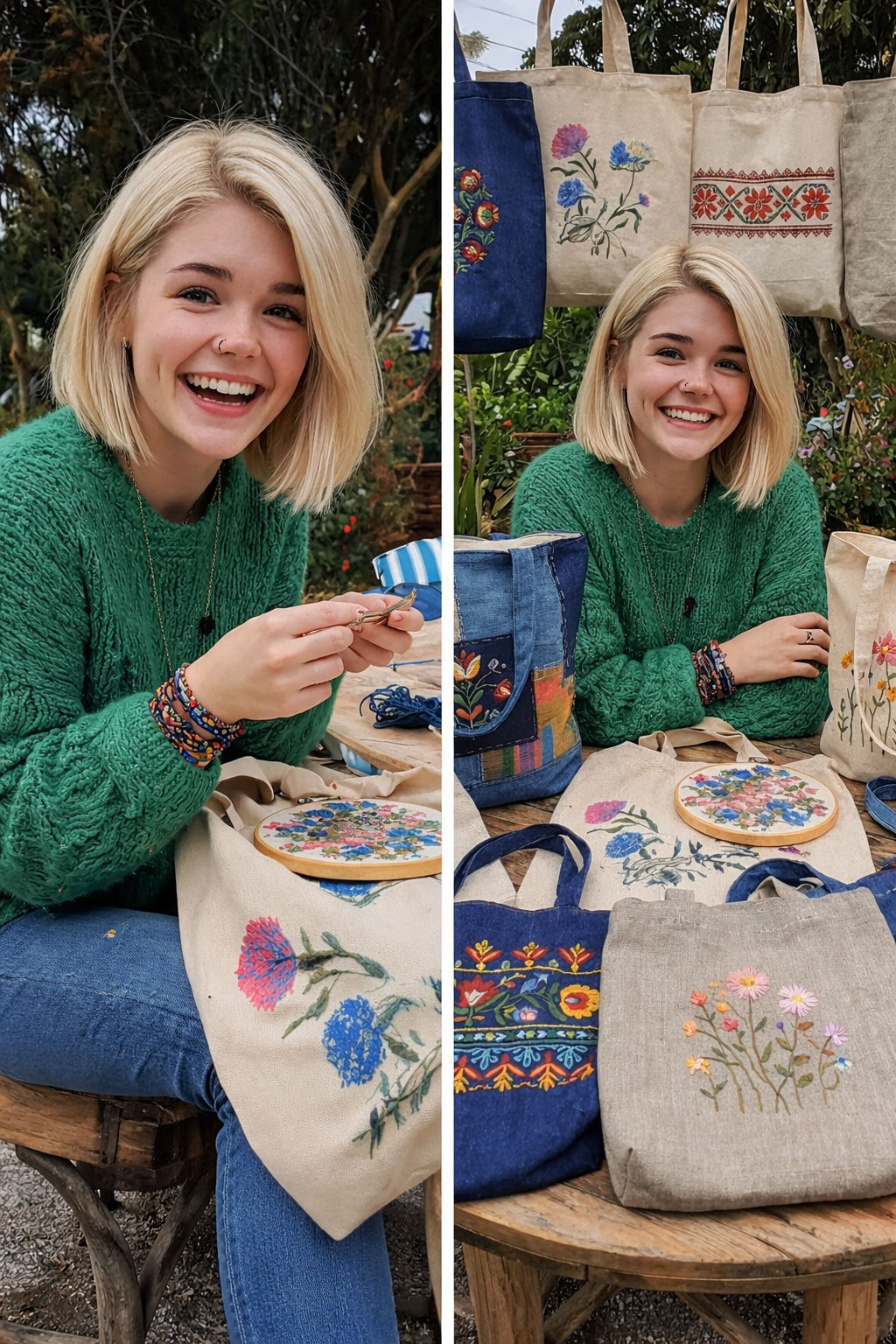
That same night, I found her at the kitchen table with fabric, thread, and a needle.
“What are you making?” I asked.
“Tote bags,” she said, focused. “Reusable ones. All the money will go to families who need winter clothes.”
For two weeks, she stayed up late every night. I’d come downstairs and find her sewing carefully, concentrating under the kitchen light.
“You don’t have to push yourself this hard,” I told her.
She smiled. “People will actually use them.”
I was proud. Deeply proud.
But I couldn’t stop wondering who was behind that event—and who was hurting my daughter at school.
I found out midweek.

The school sent home a flyer. At the bottom, under “Coordinator,” was a name I hadn’t seen in over twenty years.
Mrs. Mercer.
I read it twice.
Then I checked the school website.
The moment her photo appeared, my stomach dropped.
It was her.
She hadn’t just returned to my life—she had inserted herself into my daughter’s world. The same woman who had humiliated me at thirteen was now doing the same to Ava.
I folded the flyer carefully.
I would go to that fair.
And I would be ready.
The gym smelled of cinnamon and popcorn. Tables lined the walls, filled with handmade items and baked goods. The room buzzed with voices and laughter.
Ava’s table stood near the entrance.
She had arranged twenty-one tote bags in perfect rows, with a handwritten sign explaining that all proceeds would go toward winter clothing drives.
Within minutes, people gathered. Parents examined the bags, impressed. Ava was glowing.
I stood back, watching her.
For a moment, I thought maybe everything would be okay.
Then I saw her.
Mrs. Mercer.

Older, yes—but unmistakable. The same rigid posture. The same expression of quiet judgment.
Her eyes landed on me.
“Cathy?” she said.
“I was planning to speak with you,” I replied calmly. “About my daughter.”
“Daughter?”
I pointed to Ava.
Mrs. Mercer stepped forward and picked up one of the bags, holding it delicately—as if it didn’t deserve a proper grip.