After nearly a decade of struggling to conceive, we finally brought our newborn daughter home. But during her very first bath, my husband suddenly went still, staring at her back before saying something that made my heart stop: “We can’t keep her.” In that instant, I knew something was terribly wrong.
I stood beside the small tub, watching Daniel carefully bathe our baby.
He leaned over her, supporting her fragile neck with one hand while gently pouring warm water over her shoulder with a plastic cup. Every movement was slow and deliberate, as if she might shatter.
Ten long years had led us here. Years filled with schedules, injections, endless doctor visits, and heartbreaks that no one else seemed to count.
And now, Sophia was finally in our arms.
Our daughter.
Even saying those words felt unreal, like they might break if I spoke them too loudly.
Sophia was finally here.
Our surrogate, Kendra, had given birth just days ago.
Even now, it all felt distant and surreal, like something that had happened to someone else.
We had done everything “right.” Legal agreements. Counseling sessions. Medical evaluations. Every document signed, every boundary clearly defined.
We thought preparation could shield us from pain.
Maybe we were wrong.
When Kendra called us in tears after the transfer succeeded, I cried too. When we saw Sophia’s heartbeat for the first time on the ultrasound screen, Daniel had to sit down.
Kendra had given birth only four days earlier.
At every appointment, we watched our daughter grow inside another woman’s body, always afraid to fully believe in our happiness.
The pregnancy had been smooth. No complications. No warnings. Nothing to suggest what was waiting for us.
Daniel gently turned Sophia over to rinse her back.
Then he froze.

At first, I assumed he was just being extra careful. But then the cup slipped slightly in his hand, water spilling unnoticed into the tub.
“Dan?”
No response.
“Daniel, what is it?”
His eyes were fixed on one spot on her upper back, wide with something I couldn’t yet understand.
“This can’t be happening…” he whispered.
A chill ran through me. “What can’t be happening?”
He looked up at me, panic written all over his face. “Call Kendra. Right now.”
I stared at him. “Why? What’s going on?”
His voice broke, louder now. “We can’t keep her like this. Just look at her back.”
Nothing he said made sense.
I stepped closer and leaned in.
The moment I saw it, my chest tightened and tears filled my eyes.
“No… oh God… no…” I cried. “What did they do to you, baby?”
The memory of the birth came back in fragments.
We hadn’t been there.
The call came late. Kendra had already been in labor for hours when the hospital finally contacted us.
We rushed there, only to be told to wait.
“I don’t like this,” I had said. “I was supposed to be there when she was born.”
Daniel understood my fear instantly. “The contract is solid,” he assured me. “She can’t take the baby. Everything’s fine.”
But waiting in that hospital hallway felt endless.
By the time we were finally brought in, it was evening.
Kendra was asleep.
Sophia too—wrapped tightly, lying in a bassinet like a tiny angel.
It took everything in me not to scoop her up immediately.
“She’s healthy,” the nurse whispered.
A pediatrician confirmed it with a quick smile before leaving the room.
A few days later, we brought her home.
Everything felt normal… until that moment in the bathroom.
I stared at Sophia’s back.
At first, my brain refused to process what I was seeing.
A thin, straight line. Neat. High on her back. The skin slightly pink, still healing.
Not a birthmark.
Not a scratch.
“That’s a surgical closure,” Daniel said quietly. “Someone operated on her.”
My heart pounded. “No… what kind of operation?”
“I don’t know,” he said. “But it must’ve been urgent.”
“Call the hospital,” he added. “And call Kendra.”
Kendra didn’t answer.
By the fourth attempt, Daniel’s fear had turned into anger.
He wrapped Sophia in a towel. “We’re going back.”
At the hospital, we were directed to pediatrics after explaining everything.
A doctor we didn’t recognize examined Sophia carefully—her breathing, her temperature, the incision.
Finally, he said, “She’s stable. The procedure was successful.”
“What procedure?” I demanded.
He explained that during delivery, they had discovered an issue that required immediate correction to prevent infection.
“A minor surgery was performed.”
Daniel stepped forward. “And you didn’t think to inform us?”
“We obtained consent,” the doctor replied.
My voice went quiet. “From whom?”
“From me.”
We both turned.
Kendra stood in the doorway, pale and shaken.
“They said it couldn’t wait,” she said quickly. “They told me it could spread… that it was dangerous.”
“We never got a call,” Daniel snapped.
I turned back to the doctor. “How many times did you try to reach us?”
“They needed a decision immediately.”
“That’s not what I asked. How many times?”
A pause.
“Once.”

Something inside me went still.
“They looked for you but couldn’t find you,” he added.
“And that was enough?” I asked.
“The child needed treatment.”
I looked down at Sophia.
She had already endured pain before I even learned her cry.
The anger came then.
“Did it save her?” I asked.
“Yes.”
I nodded slowly. “Then I’m grateful.”
Kendra exhaled, thinking that was the end of it.
But it wasn’t.
“I believe you meant well,” I told her.
She started crying.
“But you made a decision that wasn’t yours to make.”
“I know,” she whispered.
“No,” I said quietly. “You don’t.”
I looked at the doctor. “When did I stop being her mother in this process?”
Silence.
“Not one of you gets to decide when I matter.”
The doctor tried to justify the urgency, but I cut him off.
“We were in that hospital. One phone call isn’t enough.”
I adjusted Sophia in my arms.
“I want everything. Records. Notes. Consent forms. Names.”
He nodded.
“And I want a formal review.”
Daniel stepped beside me. “And the policy that allowed this.”
Kendra wiped her face. “I thought I was helping.”
“I believe you,” I said. “But I need to understand why the system failed me.”

The doctor had no answer.
On the drive home, Daniel spoke quietly.
“I should’ve checked her more carefully.”
“No,” I said. “This isn’t your fault.”
“I should’ve pushed to be in the room.”
“You don’t get to rewrite this,” I told him gently.
He sighed. “I hate that we missed it.”
“We didn’t miss her,” I said, looking back at Sophia.
“She’s here. That’s what matters.”
At home, everything was exactly as we left it.
The towel. The cold water.
Daniel stared at the tub like it had betrayed him.
“I can’t,” he said.
“Give her to me.”
I bathed Sophia slowly, carefully.
After a while, Daniel said, “She’s stronger than we thought.”
I looked at her small body, at the thin scar.
“She always was.”
“We just didn’t see it.”
I thought about the years it took to reach this moment.
All the quiet tears. All the silent pain.
All the times motherhood felt out of reach.
And now she was here.
Alive. Strong. Ours.
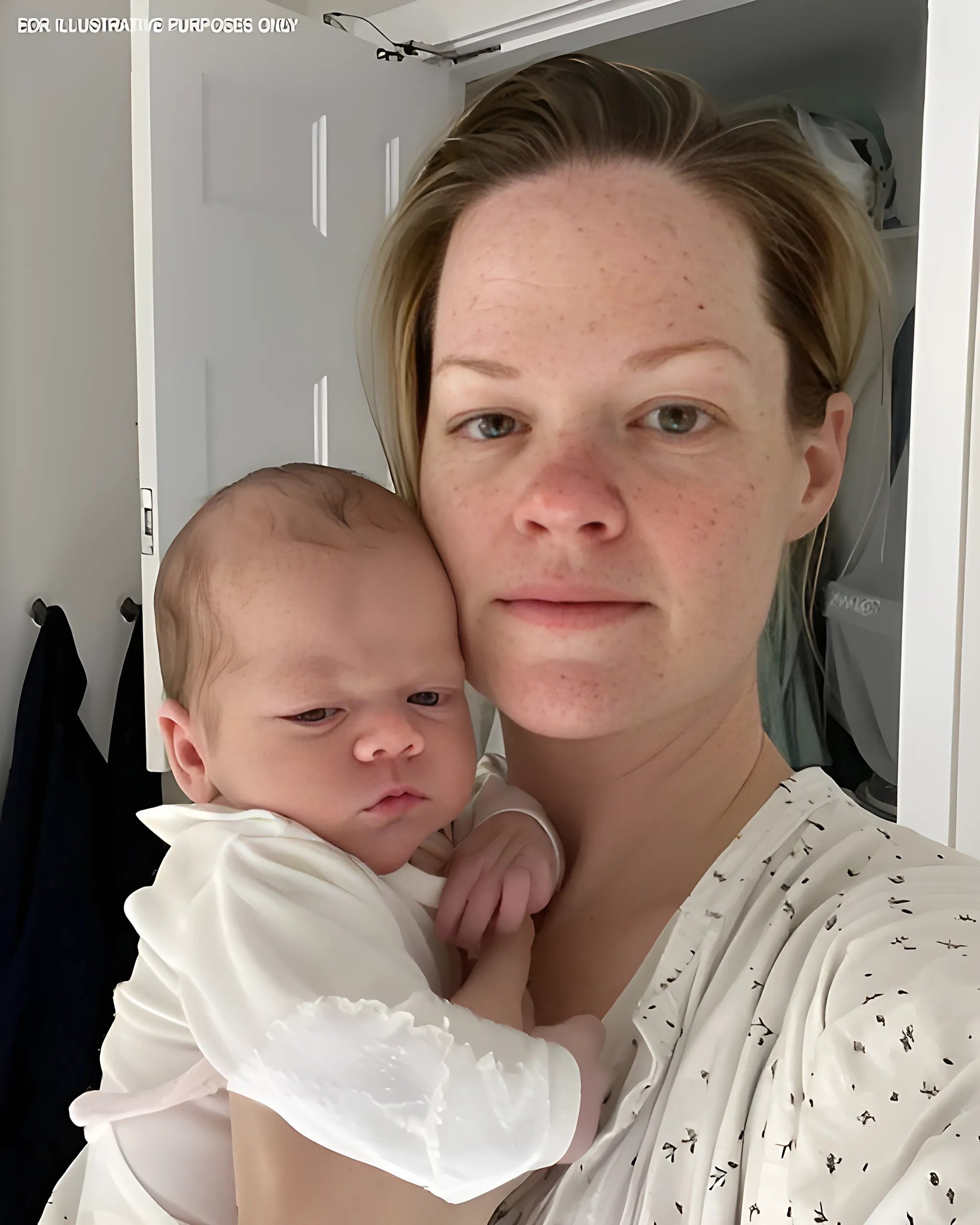
“We’re here now,” I said.
Daniel met my eyes.
And for the first time since the shock, the fear began to change.
Because they had treated me like an afterthought.
Like something secondary.
They were wrong.
I lifted Sophia from the water and wrapped her gently in a towel. She made a small protesting sound, and Daniel laughed—soft, unsteady, but real.
I kissed her damp hair.
No one would ever decide again whether I mattered.
I already did.