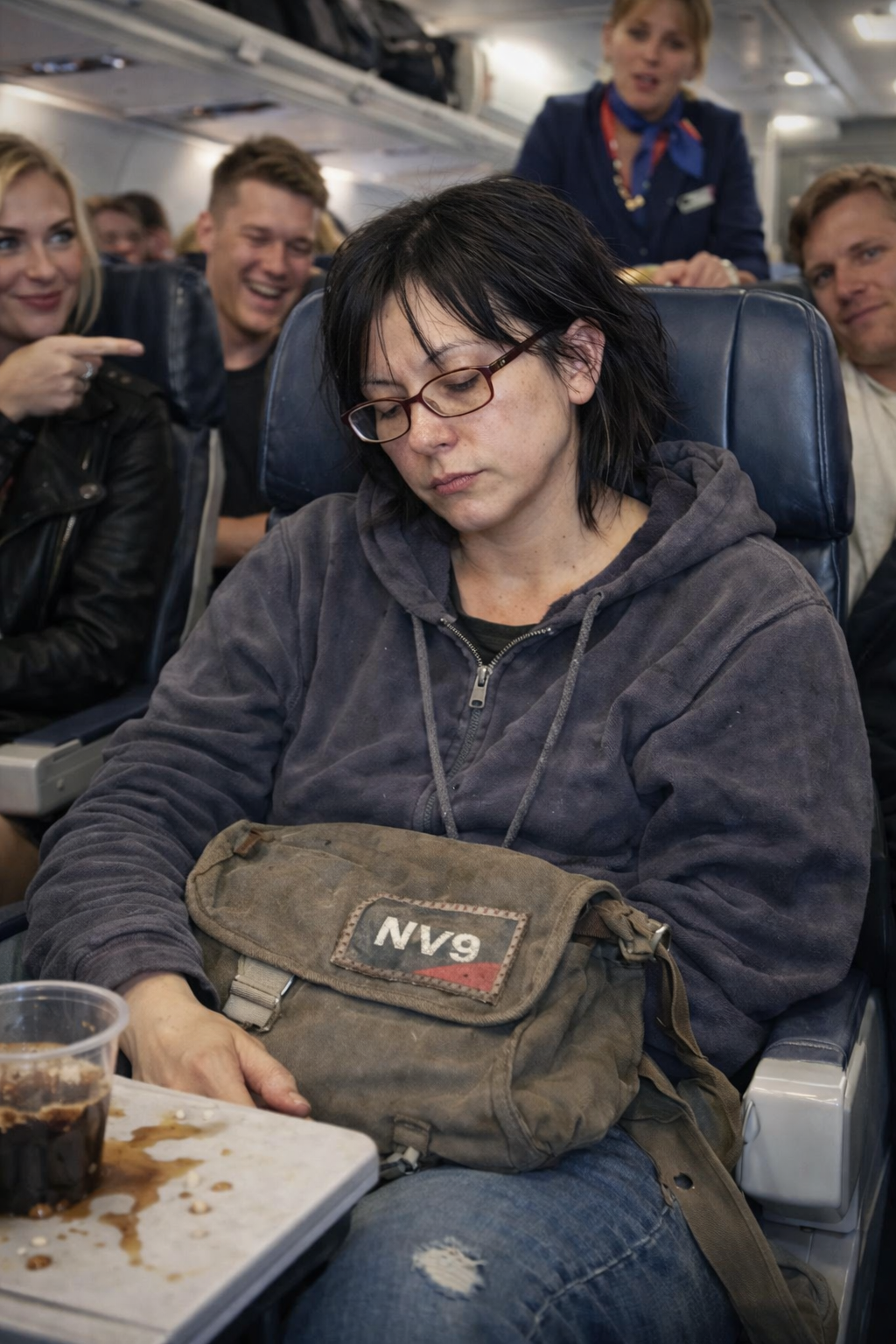
They had been quietly mocking the woman seated in 9A—her creased hoodie, her scuffed canvas bag—right up until the moment the cockpit requested “Night Viper Nine.”
That was when every single passenger on board understood that the quiet woman they had dismissed was the only person standing between them and disaster.
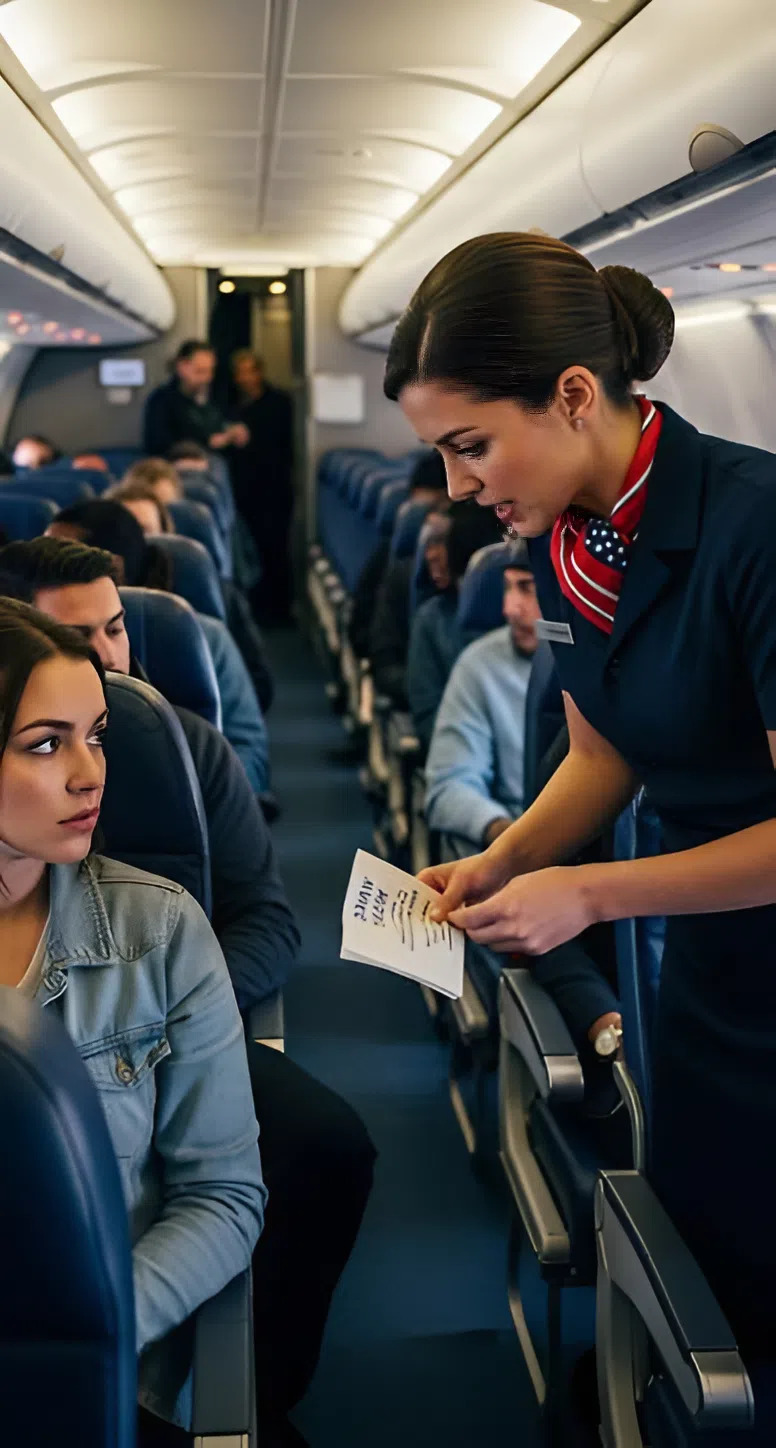
The aircraft suddenly plunged, so sharply that coffee leapt from cups and splattered across tray tables.
A baby’s cry pierced the air from somewhere near the rear.
Across the aisle, a man clutched both armrests so tightly his knuckles turned bone-white.
Rachel didn’t scream.
She tilted her head slightly, studying the overhead panel, then glanced at the flight attendant rushing past her row. In a composed, measured tone, she asked,
“Is the cabin pressure dropping?”
The attendant halted abruptly, as though she’d just been addressed with something offensive rather than urgent.
She forced a tight, brittle smile.
“Ma’am, please remain seated. Let the crew handle the situation.”
The plane shuddered again.
A strained laugh came from a couple of rows ahead—the kind people produce when fear creeps in and they’re trying to mask it.
The young man sitting next to Rachel—early twenties, dressed in a flashy designer track jacket and pristine white sneakers—shot her a sideways grin.
“You one of those online experts?” he said. “Because now’s really not the time.”
His friend across the aisle leaned in, a flawless fade haircut and a gold chain catching the flickering cabin lights.
“She probably watched a couple of videos and thinks she can land the plane.”
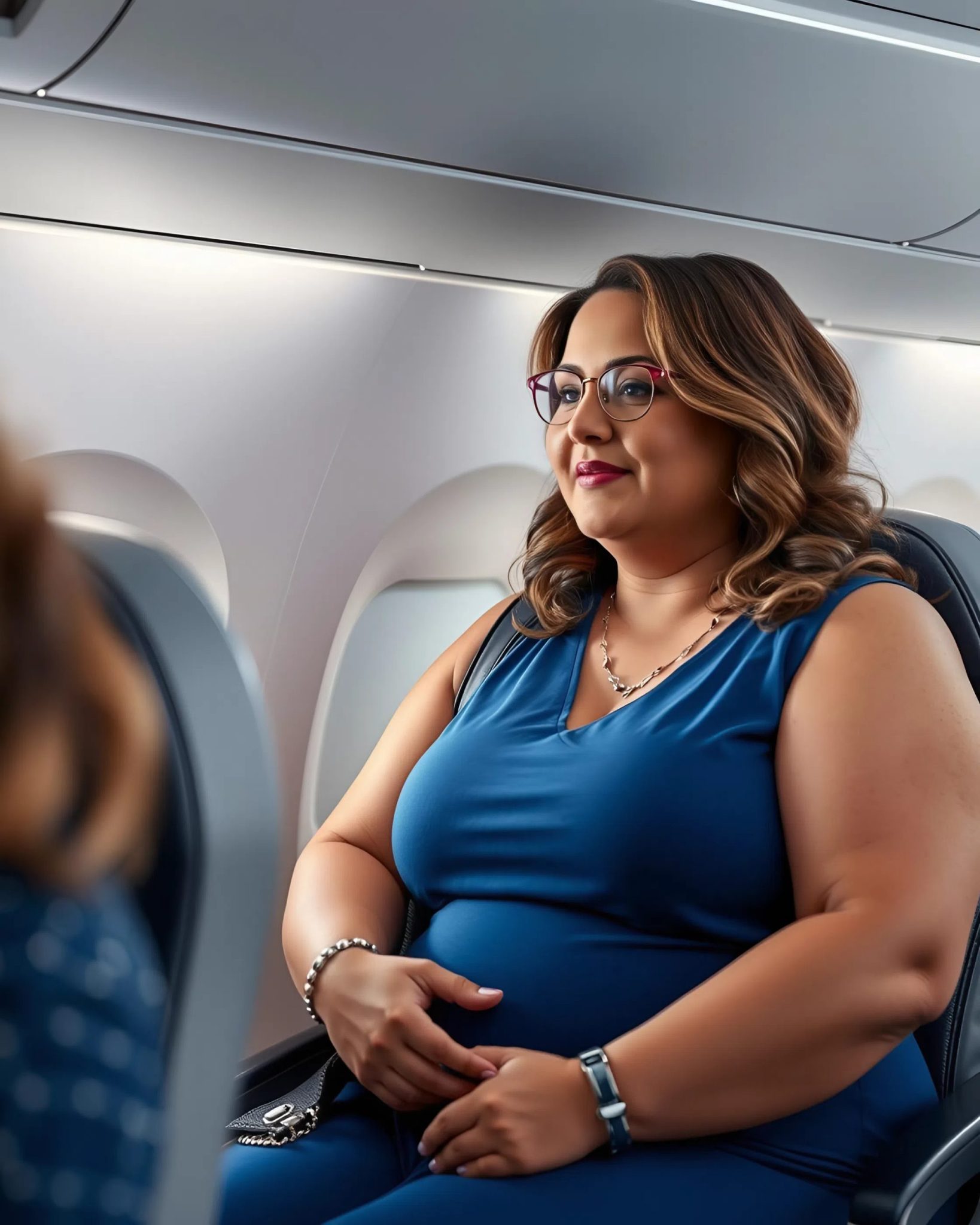
Three rows back, a sharply dressed woman in a cream blazer lifted her voice so others could hear. Her posture alone suggested she was used to being obeyed.
“Excuse me,” she said, staring directly at Rachel. “Some of us paid good money not to sit through amateur theatrics at thirty thousand feet.”
Several passengers nodded.
Fear had already begun to spread through the cabin.
Judgment simply gave it direction.
Rachel remained still in seat 9A—dark hair loosely falling around her face, part of it tucked into the collar of her worn charcoal hoodie. Her thin-framed glasses sat low on her nose. One hand rested lightly on a faded fabric bag that looked like it had seen years of use.
She didn’t respond.
Instead, she calmly adjusted her glasses and turned her gaze toward the wing.
That silence unsettled people more than any argument would have.
The aircraft dipped again.
This time, the overhead bins rattled violently, drawing sharp gasps from several passengers.
A young boy toward the back began to sob uncontrollably.
A woman in pink, seated across from Rachel, leaned toward her husband and spoke loudly enough to be heard.
“I swear, there’s always someone who wants attention the moment something goes wrong.”
Her husband, a broad, flushed man in a golf pullover, gave Rachel a slow once-over.
“No offense,” he began—the kind of phrase that always precedes one—“but she doesn’t exactly look like someone with useful insight.”
More nods followed.
More tight-lipped expressions.
More judging glances lingering on her hoodie, her faded jeans, her worn-out sneakers.
As if capability always came dressed in perfection.
As if panic respected polished appearances.
Another tremor ran through the aircraft.
The lights flickered again.
Rachel’s fingers tightened briefly around her bag—just for a second.
Then she released it.
Turning slightly toward the aisle, she called out again to the flight attendant. Not loudly, not dramatically—just clearly enough to cut through the rising tension.
“When did the altitude warning begin?” she asked.
That was enough.
The attendant snapped.
Her name tag read CINDY. Her blonde curls were pinned back too tightly, and her strained smile had cracked under pressure.
“Ma’am,” Cindy said sharply, “you’re making the other passengers nervous.”
Rachel met her gaze.
“I’m not the one causing the plane to shake.”
Cindy blinked, momentarily caught off guard.
For a fraction of a second, she seemed unsure how to respond.
Then she straightened, muttered something under her breath about difficult passengers, and hurried away.
The young man beside Rachel chuckled.
“Cold,” he said. “Still weird, though.”
His friend scoffed.
“What’s next? She gonna fix the weather too?”
Another violent jolt slammed through the cabin, sending several passengers’ heads into their seatbacks.
A man in a blue polo shirt near the middle of the plane suddenly stood up, ignoring his wife’s grip on his sleeve.
“Hey!” he shouted, pointing toward Rachel. “Stop acting like you know something. My daughter’s already terrified.”
His wife hissed urgently for him to sit down.
He didn’t.
“I’m not about to sit here and listen to some random woman in a hoodie pretend she’s part of the flight crew.”
Rachel slowly turned her head and looked at him.
There was no anger in her expression.
No embarrassment either.
Just a steady, unshaken calm.
That, somehow, irritated him even more.
Then the captain’s voice crackled through the intercom.
But it wasn’t the same composed, confident tone from takeoff.
This one came fractured—buried in static, clipped, and strained.
“If anyone on board has advanced navigation training, experience with aviation systems, or emergency instrument handling, please identify yourself to the cabin crew immediately.”
Silence swallowed the cabin.
A deep, unnatural silence.
Even the low hum beneath the floor suddenly felt louder than before.
For a moment, even the crying child fell quiet.
Then the murmuring began.
“What did he just say?”
“Passengers?”
“Is this actually happening?”
Cindy stood frozen in the aisle.
Passengers glanced around, waiting.
Expecting someone.
A calm, capable figure to rise—
a pilot heading home,
a retired officer,
someone in a tailored coat with steady eyes and quiet authority.
No one moved.
Then Rachel raised her hand.
The man in the tracksuit burst out laughing so abruptly he nearly choked.
“Oh, you’ve got to be kidding me.”
His friend slapped the armrest, shaking his head.
“No chance. Absolutely no way.”
The woman in the cream blazer leaned forward into the aisle, disbelief written across her face.
“This is beyond ridiculous.”
Cindy stared at Rachel.
“You?”
Rachel had already unfastened her seatbelt.
“Yes.”
Cindy’s expression hardened, as if personally offended.
“Do you actually have training?”
Rachel stood, slipping the worn fabric bag over her shoulder.
“Enough.”
That single word seemed to ripple through the cabin like an insult.
Near the front, a sharply dressed businessman stood up, partially blocking the aisle.
His silver hair was slicked back, his shirt pristine, his watch expensive. His face carried the rigid confidence of someone rarely questioned—and never ignored.
“This is not a game,” he said firmly. “You cannot seriously allow someone from row nine to walk into the cockpit just because she claims she has ‘enough.’”
From farther back, another voice joined in.
A woman in a flawless navy dress, diamond studs glinting in her ears, spoke with cool disdain.
“Just look at her. She looks like she slept in an airport chair.”

A few scattered laughs followed.
Not many.
But enough.
Fear always needs somewhere to land.
Rachel didn’t acknowledge any of it.
She simply waited.
Then the cockpit door opened.
The co-pilot stepped out.
Tall. Broad-shouldered. Mid-thirties, perhaps. His dark hair was cropped short, and tension sharpened every line of his face.
His eyes scanned the cabin quickly.
He saw panic.
He saw the businessman blocking the aisle.
He saw Cindy.
Then his gaze locked onto Rachel.
“Who claimed navigation experience?”
“I did,” Rachel answered.
The businessman immediately turned toward him.
“This is absurd. You cannot be serious.”
The co-pilot ignored him entirely.
His attention stayed on Rachel.
“What kind of experience?”
Rachel met his gaze without hesitation.
“Analog backup systems. Terrain interpretation. Instrument drift. Emergency rerouting.”
Something shifted in his expression.
Not trust.
Not yet.
But recognition.
Understanding.
“What’s your name?”
Rachel paused—just a fraction too long.
Then she said, “Rachel Morgan.”
The businessman let out a dry, dismissive laugh.
“That means nothing.”
For the first time, Rachel looked directly at him.
Her face remained composed—but now there was steel beneath it.
“You’ve already spent over a minute debating my hoodie,” she said evenly. “That’s a long time when your instruments are lying.”
The cabin fell silent.
No one laughed this time.
The co-pilot stepped aside.
“Come with me.”
But the businessman moved fully into the aisle.
“No.”
The word landed hard.
“You are not putting everyone on this plane in the hands of a stranger who looks like she just walked out of a bus station.”
The aircraft suddenly rolled left, violently enough to draw screams.
A plastic cup bounced across a tray.
Near the wing, a little girl cried out for her mother.
The co-pilot grabbed the top of a seat to steady himself.
Rachel didn’t stumble.
She remained balanced, one hand resting lightly on a seatback—as though her body anticipated the motion before it happened.
The co-pilot noticed.
His eyes narrowed slightly.
The businessman noticed too—and it only fueled him.
“This is exactly how bad decisions get made,” he insisted. “You need a professional.”
Rachel held his gaze.
“Then I suggest you stop delaying one.”
He opened his mouth—
But nothing came out.
She stepped past him.
Her bag brushed against his sleeve as she moved by.
He stood there, stunned—like a piece of furniture someone had simply walked around.
Halfway down the cabin, a teenager pulled out his phone and began recording.
“Yo,” he whispered, equal parts fear and excitement, “this is insane.”
Rachel walked toward the cockpit without rushing.
That calm—more than anything—silenced the cabin.
Not because they trusted her.

Because they couldn’t understand her.
At the cockpit door, the co-pilot lowered his voice.
“Before I let you in, answer one thing.”
Rachel turned slightly.
“Go ahead.”
“What made you ask about the pressure?”
“The reaction in row twelve—ears before masks. The change in the sound under the floor. And the roll is compensating too late.”
He studied her for a moment.
The plane shuddered again.
Then he opened the door.
“Get in.”
Inside, the captain was hunched over the controls, jaw clenched tight, sweat soaking into the collar of his white shirt.
The cockpit wasn’t chaos in the way movies depicted.
It was worse.
Not a single overwhelming alarm—
But scattered warnings.
Intermittent tones.
Numbers shifting in ways that didn’t belong together.
The kind of problem that demanded precision, not panic.
The captain looked up sharply.
When he saw Rachel, his expression hardened.
“No.”
The co-pilot shut the door behind them.
“She called the pressure issue before anyone else. She knows analog systems.”
The captain’s eyes moved over Rachel—
Her worn hoodie.
Her glasses.
The old fabric bag slung over her shoulder.
Then something about the bag caught his attention.
A faded stitched patch on the side.
Two letters and a number—almost completely worn away.
For just a moment, something shifted in his expression.
It was brief—but unmistakable.
Then he looked at her again, this time with far more attention.
Rachel stepped closer to the control panel.
“Your primary instrument feed isn’t failing all at once,” she said. “It’s drifting—layer by layer.”
The captain stiffened slightly.
“We’re aware of that.”
Rachel shook her head faintly.
“No. You know something’s wrong. You don’t yet understand how wrong it is.”
He held her gaze.
“Who exactly are you?”
Rachel’s eyes moved quickly—from the altitude panel to the backup display, then to pitch, then the weather overlay.
“Who I am isn’t the urgent question.”
The co-pilot reached over and handed her the spare headset.
“Can you interpret this?”
Rachel leaned forward.
Her eyes scanned the instruments.
Her right hand lifted, resting lightly against the edge of a display—not pressing, just feeling—like a pianist searching for the correct key in total darkness.
“The left altimeter is feeding clean noise,” she said. “It’s not random interference. It’s being stabilized against a faulty reference.”
The captain frowned.
“That doesn’t make sense.”
“It does,” Rachel replied, “if the pressure sensor started lagging and the system is compensating by smoothing the error.”
The captain stared at her.
The co-pilot remained silent.
Rachel shifted her focus to the right display.
“That one isn’t consistent with your climb rate,” she added. “And the storm layer is distorting your horizon cues.”
The captain swallowed.
“How can you tell?”
Rachel finally turned to him.
“Because if you trust what that panel is telling you… you’ll begin your descent too early.”
A heavy silence settled over the cockpit.
Outside the windshield, dense storm clouds pressed in so tightly they looked almost solid.
Inside, the captain’s breathing had grown shallow.
“Say it plainly,” he said.
Rachel did.
“You’re higher than one system says, lower than another, and the software is averaging the lie between them.”
The co-pilot’s face drained of color.
The captain whispered,
“That would explain the delayed corrections…”
Rachel gave a single nod.
“Show me your terrain backup.”
The captain hesitated.
“It’s outdated.”
“Perfect,” Rachel replied. “Older systems don’t pretend to be smarter than they are.”
That caught his attention.
He switched the display.
A rough, grainy terrain map appeared—basic, unattractive… and honest.
Rachel lowered herself into the jump seat like it was familiar territory.
Like she had done it many times before.
Maybe she had.

Her bag slipped from her shoulder and rested near her boots.
The worn patch—NV9—faced the captain.
He looked at it.
Then at her.
Something shifted again—deeper this time.
Recognition.
“Wait…” he said quietly. “No.”
Rachel didn’t look up.
“Not now.”
But the captain leaned in, voice low.
“Night Viper Nine?”
The co-pilot glanced between them.
“What does that mean?”
Rachel said nothing.
The captain’s voice changed—less shock now, more memory.
“I read a report during training,” he said. “Mountain reroute. Corrupted data. Zero visibility. The flight still landed safely. The call sign was Night Viper Nine.”
Rachel’s jaw tightened.
“That report should have stayed buried.”
The co-pilot stared at her.
“So… you’re real?”
Rachel put on the headset.
“Would you prefer to discuss archived paperwork,” she said calmly, “or would you prefer to land this aircraft?”
That ended it.
The captain stepped aside.
For the next several minutes, no one wasted breath on unnecessary words.
Rachel’s movements weren’t dramatic.
That was the first thing the captain noticed.
No sudden gestures.
No cinematic urgency.
Just precision.
Controlled, efficient actions.
A finger adjusting a dial.
A thumb initiating a test sequence.
A quiet instruction given without hesitation.
“Cross-check the left backup.”
“With what?” the co-pilot asked.
“With the one you stopped trusting ten minutes ago.”
He followed her instruction.
Then froze.
“It matches your estimate.”
Rachel pointed at the terrain display.
“Keep that. Ignore the polished interface trying to reassure you.”
The co-pilot nodded tightly.
The captain studied her profile as the instrument lights carved sharp shadows across her face.
She looked tired.
Not weak.
Not afraid.
Just tired in a way that suggested she had carried far too much, for far too long—and learned to endure it without asking anyone for help.
The intercom clicked.
Cindy’s voice came through, strained and thin.
“Captain, the passengers are—”
Rachel reached for the microphone before he could respond.
“This is passenger 9A,” she said, her voice calm and steady. “Everyone remain seated. Fasten belts securely. Lock service carts. We are correcting course.”
In the cabin, the effect was immediate.
Her calm achieved what authority could not.
Some passengers resented it.
Others clung to it.
Most simply didn’t know what to think.
Back at seat 9A, Rachel’s bag rested beneath the window.
A little girl with pigtails, seated two rows behind, stared at it as though it held answers.
Her mother—a weary woman in a denim jacket, dark circles under her eyes—held her hand and whispered softly,
“It’s okay… it’s okay…”
But the girl kept watching the cockpit door.
“Is she a pilot?” she asked.
Her mother glanced around.
At the same people who had mocked Rachel minutes earlier.
The man in the tracksuit had gone pale.
The woman in the cream blazer held her arms so tightly they trembled.
The businessman who had blocked the aisle now stared straight ahead, silent.
“I don’t know,” the mother admitted quietly. “But she sounds like someone who does.”
Across the aisle, an older man in a worn brown jacket leaned down and carefully picked up the notebook Rachel had taken from her bag earlier.
He looked to be around seventy.
His hands were rough, steady—the hands of someone who spent a lifetime repairing things instead of discarding them.
He opened the notebook.
The pages were filled with small, precise handwriting.
Not thoughts.
Not stories.
Coordinates.
Weather logs.
Altitude notes.
Landing markers.
Instrument tolerances.
He turned another page.
In the corner, neatly written—

R.M.
He stared at it for a long moment.
Then slowly closed the notebook, his expression no longer curious—
But certain.
Beneath it, barely visible with age, were the faded letters: NV9.
He closed the notebook at once.
Not out of fear.
Out of respect.
“This woman isn’t pretending,” he said quietly.
The woman in the pink cardigan turned toward him.
“And how exactly would you know that?”
He lifted the notebook slightly.
“Because this isn’t a diary,” he replied. “It’s a lifetime.”
No one responded.
Even the loudest voices had begun to fade.
The teenager who had been filming lowered his phone just a little.
His friend leaned in and whispered,
“Dude… I think this is actually serious.”
From the cockpit, Rachel’s voice came again—this time calm, focused, meant only for the pilots.
“Your correction lag is making the tail feel heavier than it actually is. Don’t fight that. Use manual trim—trust it.”
The captain followed her direction.
The aircraft responded.
Not perfectly—
But noticeably better.
One warning tone cut off.
Then another.
The co-pilot exhaled deeply, as if releasing breath he’d been holding far too long.
“How did you even catch that?” he asked.
Rachel didn’t stop working.
“Because the plane isn’t panicking,” she said quietly. “The people inside it are.”
That line stayed with him.
Years later, he would still remember it.
The captain switched frequencies.
A controller’s voice broke through—distorted by distance and storm interference.
Rachel listened carefully.
Then she asked for the last stable terrain reference, runway alignment options, and updated wind data—with a clipped precision that made the captain look at her again, this time with unmistakable disbelief.
She wasn’t guessing.
She was fluent in this.
Even after years away—she still belonged here.
“Nearest safe landing?” she asked.
“Denver,” the co-pilot replied. “We can reach it… if the false readings don’t interfere with final descent.”
Rachel gave a small nod.
“They won’t.”
The captain glanced at her.
“You sound very sure of that.”
“I am.”
“You haven’t even seen the next storm wall yet.”
“I don’t need to,” she said. “I need the terrain—and the truth.”
She tapped the outdated display.
“This is ugly,” she added. “Ugly is reliable. Ugly doesn’t try to impress you.”
For the first time, the co-pilot almost smiled.
Then the aircraft hit another patch of turbulence.
Not a sudden drop—
But a prolonged, rattling vibration.
Like a massive hand testing the integrity of the plane.
In the cabin, passengers cried out again.
The businessman gripped his seat so tightly his wedding ring scraped against the plastic.
The woman with diamond earrings shut her eyes, whispering a hurried prayer.
The tracksuit guy—the loudest skeptic before—now looked pale and nauseous.
Across from Rachel’s empty seat, the little girl clutched her stuffed bear.
In a small, uncertain voice, she asked her mother,
“Did we make her sad?”
Her mother blinked.
“What?”
“The lady in the hoodie,” the girl said. “Everyone was mean to her.”
Something shifted in the mother’s face.
Because children have a way of cutting straight to the truth adults avoid.
“I think…” she said softly, “we forgot our manners when we got scared.”
The older man in the patched jacket, still by the window, shook his head slightly.
“No,” he said. “Some people forgot them long before that.”
No one challenged him.
Cindy moved through the aisle again, checking seatbelts with trembling hands.
When she reached row 9, she paused.
The empty seat seemed smaller without Rachel in it.

The faint impression of her bag still marked the cushion.
The notebook was no longer there—it rested in the older man’s hands now.
Cindy swallowed hard.
She looked like she wanted to say something.
Instead, she moved on.
Inside the cockpit, Rachel reached into her bag and pulled out a folded piece of paper.
It was old.
Edges worn.
Creases permanent.
The captain noticed the hand-drawn contour lines.
“A paper map?” he asked, almost incredulous.
Rachel unfolded it across her knee.
“Back when people trained for when things go wrong.”
The co-pilot glanced at it—and then looked back at her with newfound respect.
“That’s a western ridge approach sketch.”
“Yes.”
“Who taught you that?”
Rachel didn’t look up.
“My father.”
Both men were caught off guard.
The captain had expected something official—an instructor, a commanding officer.
Not that.
Rachel folded the map again.
“He flew whatever he could—crop dusters, mail routes, anything that paid. He used to say that fancy systems make people lazy. Said if I could read a mountain from paper, I’d never have to beg a screen to think for me.”
The captain studied her hands.
No jewelry.
No polished nails.
Just steady, capable hands.
Hands that had fixed more than most people ever noticed breaking.
The co-pilot asked quietly,
“Is that how you got into aviation?”
Rachel exhaled lightly.
“Partly.”
That single word carried more behind it.
Neither man pressed further.
The captain checked the heading again.
It matched Rachel’s correction perfectly.
For a brief moment, something close to calm settled over the cockpit.
Then the radio crackled again.
A different voice.
Not air traffic.
Not weather control.
Airline operations.
Smooth. Controlled. Corporate.
“Captain, confirm that no unauthorized personnel are actively managing flight controls.”
The captain glanced at Rachel.
Rachel didn’t turn.
The voice continued:
“Advisory from legal and safety departments is to maintain command strictly within assigned crew.”
The co-pilot grimaced.
Even now.
Even here.
Fear of liability.
Fear of blame.
While hundreds of lives hung in the balance.
Rachel extended her hand.
“Give me the mic.”
The captain hesitated—then handed it over.
Rachel pressed the button.
“Your crew requested navigation support,” she said calmly. “I am providing it. If anyone on your end would rather debate titles than survival, they’re welcome to do so from the ground.”
Silence.
Then a different voice came through.
Older.
Lower.
“Who is this?”
Rachel didn’t shift her gaze.
“Someone who remembers when pilots were trusted to use judgment.”
A pause.
Then, almost disbelieving—
“Night Viper Nine?”
Both pilots looked at her.
Rachel closed her eyes briefly.
Just for a second.
When she opened them, they were steady again.
“Not today,” she said, releasing the mic.
No one on the other end spoke again.
In the cabin, time stretched in strange ways.
Five minutes felt like forty.
Passengers checked watches, phones, screens—anything to anchor themselves.
The teenager replayed the video he had taken—now muted—watching Rachel walk toward the cockpit again and again.
His friend whispered,
“Delete it if this goes bad.”

He didn’t.
Instead, he lowered the phone—his expression shifting into something closer to guilt.
Near the front, the businessman leaned toward the woman in the cream blazer.
“This airline will never recover from this,” he muttered.
She nodded stiffly.
Neither of them mentioned how they had treated Rachel.
Not yet.
People rarely confront themselves that quickly.
The older man opened the notebook again—more carefully this time.
Inside the back cover was a photograph.
Faded.
Three figures standing beside a small propeller plane.
A man in a worn cap.
A younger Rachel—thin, sharp-eyed, all focus.
And an older woman, smiling into sunlight, her hand resting on Rachel’s shoulder.
On the back, written in ink:
For the girl who reads storms before they speak.
The man swallowed and closed the notebook.
The mother in denim noticed.
“What is it?” she asked quietly.
He shook his head.
“Proof she mattered long before any of us decided she didn’t.”
The mother looked toward the cockpit again.
“Maybe that’s the problem,” she said.
He turned to her.
She glanced around the cabin.
“We expect people to look expensive before we believe they’re capable.”
The words settled heavily over the row.
No one argued.
Too many of them knew exactly who she meant.
Back in the cockpit, Denver was no longer a possibility—
It was becoming reality.
Rachel adjusted the descent carefully.
Not smooth in a showy way.
Smooth in a disciplined, deliberate way.
The kind that respected how easily overconfidence could kill.
The captain watched as the mountain line began to appear through breaks in the cloud.
“If I had followed the primary reading…” he said slowly, “we would have descended earlier.”
Rachel nodded.
“Too early.”
The co-pilot’s face tightened.
“How close would we have been?”
Rachel looked out into the gray horizon.
“Close enough to make headlines—for all the wrong reasons.”
Silence followed.
Then the captain asked quietly,
“Why did you disappear?”
The question lingered.
Not necessary.
Not helpful for the landing.
But human.
Rachel’s mouth pressed into a thin line.
“I didn’t disappear,” Rachel said quietly. “People sitting in offices simply lost interest in a woman who refused to sign off on a prettier version of an ugly truth.”
The captain’s brow furrowed.
“The Oregon incident.”
Rachel didn’t respond.
The co-pilot glanced between them.
“What happened in Oregon?”
Rachel adjusted the trim slightly.
“Faulty instrument readings. Weather boxed us in. Someone higher up wanted the report cleaned up—to protect a contract.”
The captain understood immediately.
“And you refused.”
“Yes.”
“And after that?”
Rachel’s eyes stayed on the terrain display.
“I learned how quickly the truth becomes inconvenient when money gets involved.”
The co-pilot stared at her.
“They erased your record?”
“They… simplified it.”
The captain’s jaw tightened.
He’d been in aviation long enough to know exactly what that meant.
“Procedural disagreement,” Rachel continued. “Difficult personality. Not aligned with the program anymore. That’s the official version.”
The co-pilot’s hands clenched.
“And the real one?”
Rachel looked at him.
“I brought people home,” she said. “Then I made the wrong people uncomfortable.”
The cockpit fell silent.
Because some sentences don’t need explaining—they land on their own.

Outside, the runway approach began to form through thinning storm clouds.
The turbulence eased.
The wind did not.
Rachel guided the captain through the final corrections.
Not because he lacked skill—
But because his nerves were frayed, and hers, somehow, were not.
“Stay with the feel—not the fear,” she said.
The captain let out a short, incredulous laugh.
“That sounds like advice for a horse.”
“My father told me that once, over a field in eastern Oregon,” Rachel replied. “Turns out it works for both.”
The co-pilot actually smiled.
It vanished when the aircraft trembled again.
The landing gear deployed with a heavy mechanical thud.
A wave of breath moved through the cabin.
The little girl hugged her bear tighter.
“Please,” she whispered.
Her mother closed her eyes.
The businessman lowered his head—for the first time without pretense.
The woman with the diamonds stopped trying to look composed.
Cindy braced herself near the jump seat, staring toward the cockpit like she wished she could rewind everything she had said.
Rachel’s voice came over the intercom one last time before touchdown.
“We are aligned. Remain seated. We are bringing you in.”
Not trying.
Not hoping.
Bringing.
It sounded like certainty.
That was what people remembered later.
Not just that she saved them—
But how she spoke while doing it.
The wheels hit the runway.
Firm enough to jolt.
Controlled enough to prove skill.
A collective gasp filled the cabin.
Then another bounce—
Then the long, powerful roar of deceleration.
No spin.
No skid.
No chaos.
Just speed bleeding away beneath them.
The aircraft held steady.
And suddenly—
The cabin erupted.
Crying.
Applause.
Laughter tangled with relief and disbelief.
Hands over faces.
Heads pressed into shoulders.
A woman near the back began praying again—this time in gratitude.
The little girl shouted,
“We landed!”
Her mother broke down in tears, kissing her hair.
The tracksuit guy sat frozen for a moment, then looked at Rachel’s empty seat and exhaled like the air had been knocked out of him.
The businessman covered his face.
Only briefly.
But long enough.
In the cockpit, the captain’s hands began to shake after the plane had fully slowed.
That surprised him.
He was used to holding himself together in the moment.
It was afterward that the body collected its due.
He turned to Rachel.
For a second, it looked like he might salute her.
Instead, he said simply,
“Thank you.”
Rachel removed the headset and placed it down with care.
“You had the skill to do the rest,” she said. “You just needed better truth.”
The co-pilot stared at her.
“You talk like this happens often.”

Rachel stood.
“No,” she said. “I talk like panic likes costumes—and truth usually doesn’t wear one.”
She picked up her bag.
The captain glanced again at the faded patch.
NV9.
“What should we tell them?” he asked.
Rachel paused, her hand resting on the cockpit door.
“That they’re home.”
He opened it.
The moment she stepped back into the cabin—
Silence fell.
Because no one prepares for what comes after judgment.
There is no script for sudden shame.
The applause began with the little girl.
Just her.
Small hands clapping with everything she had.
Then her mother joined.
Then the older man.
Then the co-pilot behind Rachel.
And then—
Everyone.
Not neat.
Not synchronized.
Raw. Emotional. Grateful.
Rachel stood there in her worn hoodie, faded sneakers, and old canvas bag—
And every person who had measured her by the wrong things now had to face her.
The businessman rose halfway.
He seemed ready to speak.
Then sat back down.
The woman in the cream blazer stared at her lap.
The woman in pink dabbed at her eyes, suddenly trying to look like she had never judged at all.
The tracksuit guy leaned into the aisle as Rachel passed.
His confidence was gone.
“I’m sorry,” he said.
Rachel stopped.
Looked at him.
His ears flushed red.
“For earlier,” he added. “All of it.”
Rachel gave a small nod.
Then moved on.
She didn’t make him carry it longer than necessary.
That somehow made it heavier.
Near the exit, Cindy stepped into her path.
The cabin quieted again.
Her eyes were wet, her voice unsteady.
“I judged you,” she said. “I was wrong.”
Rachel studied her for a moment.
Cindy looked like she was bracing for something harder.
Rachel’s voice softened.
“You were afraid.”
Cindy swallowed.
“That doesn’t make it right.”
“No,” Rachel said. “But it is a reason. Learn to tell the difference.”
Cindy nodded slowly, as if she understood that those words would stay with her far longer than the flight itself.
At the aircraft door, the captain’s voice came over the cabin speaker.
It was steadier now—but still edged with emotion.
“This is Captain Ellis speaking. Today, this aircraft—and every person on board—made it to the ground because a passenger from row 9 stepped forward when we needed her most. She has my respect, the respect of my entire crew, and more gratitude than I can fit into a single announcement.”
Applause rose again, louder this time.
Rachel closed her eyes for just a moment.
Then she stepped into the jet bridge—and disappeared into the flow of people.
By the time airport staff, airline officials, and camera crews began trying to shape the story into something controlled and presentable, Rachel Morgan was already deep in the terminal crowd, moving with the same quiet purpose she had carried down the aisle.
Near a coffee stand, a college student from the flight hurried after her.
Backpack slung over one shoulder. Hair tied in a messy ponytail. Eyes still wide with the kind of shock that comes from seeing the world rearrange itself.
“Wait!” she called.
Rachel stopped.
The girl held up her phone—not to record, but almost out of instinct.
“My name’s Nina,” she said. “I was on that flight. People are already asking who you are. The airline’s putting out some vague statement.”
Rachel adjusted the strap of her bag.
“They don’t need my name.”
Nina frowned.
“They should know.”
Rachel looked past her.
Families embracing.
Suitcases rolling over polished floors.
A little boy in dinosaur pajamas wrapping his arms around his grandfather.
“They already know what matters,” she said quietly. “They made it home.”
Nina hesitated.
She wasn’t satisfied—but she was perceptive enough to understand that Rachel wasn’t avoiding attention out of pride.
She was avoiding something older than that.
“Can I at least say thank you?” Nina asked.
Rachel’s expression softened—just a fraction.

“You already did.”
And then she walked away.
Nina stood there, watching until the crowd swallowed her completely.
The airline press conference began before most passengers had even retrieved their luggage.
A spokesperson in a navy suit stood beneath harsh lighting, speaking in the careful, polished language designed less for truth—and more for legal safety.
“We are grateful that Flight 472 landed safely following a systems irregularity. Our trained crew performed admirably under pressure.”
A reporter raised a hand.
“Passengers say a woman from row 9 provided critical navigation support.”
The spokesperson smiled—a thin, practiced expression.
“A passenger assisted under crew supervision.”
“Who was she?”
“We are still confirming identities.”
Another voice cut in.
“Video shows her entering the cockpit while passengers objected. Was she trained?”
The spokesperson adjusted his tie.
“We do not comment on personal backgrounds.”
From the back of the room, Nina almost laughed.
Because what she had lived through was already being flattened into something safer.
Something smaller.
Beside her stood the older man in the worn brown jacket.
Rachel’s notebook rested carefully under his arm, as if it were fragile.
“They’re shrinking her,” he said.
Nina turned.
“You knew what that notebook was.”
He nodded.
“Forty-two years as an aircraft mechanic,” he said. “Not military—crop dusters, charters, rescue planes when they could afford me. I know what real notes look like.”
“What’s your name?”
“Walter.”
Nina gestured toward the stage.
“They’re making her sound like she just got lucky.”
Walter’s jaw tightened.
“Luck doesn’t write wind speeds in pencil because ink runs when your hands shake.”
Nina stared at him—then at the notebook.
“Can I see it?”
Walter opened it carefully.
Page after page of precise handwriting.
Adjustments.
Margins.
Cross-checks.
Hand-drawn approach lines.
At the back—the photograph.
Nina read the words twice.
For the girl who reads storms before they speak.
Something caught in her throat.
“This should be public.”
Walter closed the notebook gently.
“Maybe,” he said. “But not in the wrong hands.”
Within hours, blurry passenger videos began spreading online.
Not through official channels.
Through awe. Through fear. Through people needing to share what they had survived.
A clip of Rachel standing in the aisle in her worn hoodie while others protested.
A clip of the co-pilot saying, “Come with me.”
A shaky recording of the landing—full of crying, applause, and disbelief.
A fragment from near the wing where a child’s voice rang out:
“She did it!”
No clear image of Rachel’s face existed.
And somehow—that made the story grow larger.

Who was the woman in 9A?
Was “Night Viper Nine” a real call sign?
Why had the cockpit recognized her?
What did she mean when she said the instruments were lying?
The internet responded the way it always does—
With brilliance and nonsense tangled together.
Some called her a myth.
Some claimed she was a former government pilot.
Others insisted it was all staged.
Some obsessed over her clothing, as if a hoodie itself required explanation.
But one kind of comment rose above everything else:
Stories.
People describing how they had been dismissed.
Ignored.
Underestimated.
Talked over—because they looked too young, too old, too poor, too plain, too quiet.
The story stopped being about one flight.
That’s when it truly spread.
Three days later, Nina found the first real lead.
Not through leaks.
Not through secrets.
Through an old article buried deep in a local Oregon archive.
Ten years old.
Small regional newspaper.
The headline:
Local Pilot Assists Emergency Ridge Approach After Navigation Failure.
No photo.
Just a short column and a quote from a county official mentioning “a contract pilot who requested privacy.”
The location matched.
The situation felt familiar.
And in one paragraph—almost overlooked—the article referenced a pilot known by a call sign:
Night Viper Nine.
Nina read it three times.
Then she called Walter.
He picked up on the second ring.
“I found something.”
He listened.
Then said simply,
“I’ll drive.”
They met at a diner just outside the airport.
Cheap coffee.
Honest pie.
Walter placed Rachel’s notebook between them.
Nina opened her laptop.
Between the notes and the article, a picture slowly formed.
Rachel had never been part of some glamorous secret program, the way the internet imagined.
The truth was simpler.
And heavier.
She grew up around planes in eastern Oregon.
Her father taught her everything—weather patterns, paper maps, rough landings, stubborn engines, and the habit of checking everything twice.
Later, she worked contract flight support for a federal emergency program—handling mountain routes, weather reroutes, rescue coordination, and manual instrument methods most modern crews barely trained in anymore.

Not classified.
Not glamorous.
Just difficult—and essential.
And she had been very good at it.
Then came Oregon.
A systems supplier error.
A near-failure on a mountain approach.
Rachel challenged the official report.
After that—
Silence.
No scandal.
No headline fall.
Just absence.
The kind of absence that feels intentional.
Walter leaned back and exhaled slowly.
“They didn’t destroy her,” he said. “They just stopped saying her name.”
Nina looked down at the notebook.
“That might be worse.”
On a return flight, Cindy sat quietly after service, replaying Rachel’s words in her mind.
You were scared.
That’s not an excuse.
No.
But it’s a reason. Learn the difference.
She thought about how quickly she had sided with the confident passengers.
How easily she had mistaken calm for arrogance—because it didn’t look the way she expected.
At the airline debrief, Cindy spoke up.
“She identified the problem before we did,” she said. “And passengers mocked her openly… while I helped shut her down.”
The room went still.
A supervisor asked carefully,
“Are you saying crew behavior contributed to passenger tension?”
Cindy swallowed.
“I’m saying mine did.”
Some executives shifted uncomfortably.
Cindy continued anyway.
Because once you see yourself clearly, it becomes difficult to return to the version that flatters you.
The businessman from row six—Martin Keene—fared no better.
A senior executive.
Corner office.
Polished authority.
Until the video surfaced.
He watched it alone in his office.
His own face.
His own voice.
“You can’t let someone like her in there.”
He looked like a man who had confused arrogance with leadership.
The online reaction was brutal.
But the worst response came from his own daughter.
That evening, she sent him a screenshot of the clip.
Then one sentence:
I hope you’re at least as ashamed as I am.
Martin sat in silence for a long time after that.
The woman in the cream blazer—Vanessa Cole—posted a carefully worded statement online, claiming her remarks had been “taken out of context during a stressful situation.”
No one accepted her explanation.
Because the context itself was the problem.
The woman in the pink cardigan quietly deleted half her social media posts and later told friends that the internet had simply become too harsh.
The security liaison who had questioned Rachel over the radio was reassigned to administrative review.
Not for disagreeing—
But for choosing procedure over people in the middle of a live emergency.
Captain Ellis gave his statement on the fifth day.
He did not say Rachel’s name.
That was intentional.
But he refused to let the truth be diluted.

“There was no luck involved,” he said during a recorded interview. “What I saw was skill, judgment, experience, and composure under pressure. We accepted help from someone who understood failing instruments better than anyone available to us at that moment. And I would make that same decision again—without hesitation.”
The clip spread quickly.
Almost as quickly as the passenger footage.
It mattered that a professional said it.
It mattered even more that his voice wavered slightly when he did.
At a small elementary school outside Denver, the little girl from the flight sat in art class, carefully drawing.
A plane above mountains.
A woman in a gray hoodie at the front.
Big glasses.
Dark hair.
A small bear in the corner—because, in her mind, important moments always needed witnesses.
At the bottom, she wrote in uneven but determined letters:
THE LADY WHO BROUGHT US HOME
Her mother, Elise, cried when she saw it.
Not because of the drawing itself—
But because of what her daughter had whispered that night:
“Mom… the grown-ups looked at her clothes and forgot to look at her face.”
Children rarely lie.
And they judge with uncomfortable accuracy.
Elise framed the picture.
A week after the flight, a civic aviation board announced a public commendation for
“an unidentified civilian whose actions contributed to the safe landing of Flight 472.”
The wording was awkward.
The intent was sincere.
Captain Ellis was invited.
So was co-pilot Ben Ruiz.
Rachel received an invitation too—sent to an old email address pulled from outdated licensing records.
No one expected a reply.
None came.
Still, on the day of the ceremony, one chair remained on stage.
Unlabeled.
Empty.
The moderator acknowledged that the honoree had declined public recognition.
Then Captain Ellis stepped forward.
He glanced at the cameras.
At the audience.
At the empty chair.
Then quietly folded the prepared speech in his hand and set it aside.
“I saw a lot of fear that day,” he said. “Some of it was honest. Some of it disguised itself as authority. And in the middle of all of it stood a woman who never raised her voice, never asked for recognition, and never made the situation about her pride. She saw the problem, named it plainly, and kept working while others debated whether she looked qualified enough to matter.”

He paused.
The room was completely silent.
“If she ever hears this,” he added, turning slightly toward the empty chair, “I want her to know something. Some of us believed her the moment we understood what we were seeing. We just wish we had understood sooner.”
That line led the evening news across multiple states.
Rachel didn’t watch any of it.
In a small garage outside Pendleton, Oregon, she stood over the open hood of an aging pickup, her hands deep in a carburetor that had long outlived its best years.
The air smelled of oil, rubber, and stale coffee.
A radio murmured classic country in the background.
Hank, her employer—a broad man with a gray beard and a bad knee—walked in, wiping his hands on a rag.
“They’re talking about that mystery plane woman again,” he said casually.
Rachel tightened a bolt.
“Seems to happen.”
Hank leaned against the doorway, watching her.
He’d known her for three years.
Knew she worked early, fixed what others gave up on, and never spoke much about the life she’d lived before arriving with a toolbox and a quiet reference from a forgotten crop pilot.
He also knew better than to push too hard.
“You ever hear the name Night Viper Nine?” he asked lightly.
Rachel didn’t freeze.
That told him enough.
She simply wiped her hands.
“Maybe,” she said.
Hank nodded.
He didn’t ask more.
“Hell of a story,” he muttered.
“Seems that way.”
He gave her a look, then stepped back out.
Rachel stood alone.
For a moment, a faded tattoo showed beneath the grease on her wrist.
Then her sleeve slipped back into place.
For most people, that would have been the end.
A plane lands.
A mystery grows.

The world moves on.
But people rarely leave something like that alone.
Not when they feel they owe it something.
Nina was the first to find Rachel.
Not because Rachel was careless—
But because Walter was patient.
Between the notebook, old records, maintenance receipts, and small-town connections, they traced her path back to eastern Oregon.
It took two weeks.
When Nina suggested showing up unannounced, Walter shook his head.
“We don’t chase people just to satisfy curiosity,” he said.
“So what do we do?”
He thought for a moment.
“Something kinder.”
They mailed the notebook.
No questions.
No demands.
Just a simple note:
You left this behind.
Thank you—for all of it.
—Walter and Nina
Three days later, a plain envelope arrived.
Inside—
The same card.
Turned over.
In careful handwriting:
You handled it with care.
Tell the little girl to keep drawing.
—R.M.
Walter smiled like a man who had just found something rare.
Nina nearly shouted with excitement.
“She answered.”
“She did.”
“That means she doesn’t hate us.”
Walter gave her a sideways look.
“Us? I wasn’t one of the fools in row nine.”
She laughed.
Then quieted.
“Do you think she’ll ever step forward?”
Walter shook his head.
“No. And maybe the people who need her most are the ones who’ll never get to claim her.”
At first, that sounded sad.
Later, Nina realized it was something else.
Wisdom.
And so the story stayed where it belonged.
Not on a stage.
But in people.
Like a mirror.

Years later, those who had been on Flight 472 remembered her.
Not as a legend—
Though some tried to make her one.
Not as a mystery—
Though she remained one.
They remembered her as a correction.
A quiet one.
A human one.
A woman mistaken for weakness because of how she looked.
A stranger whose calm unsettled authority.
A passenger who didn’t ask to be believed—
Only to be listened to in time.
And if the story changed people—
It wasn’t because she saved a plane.
It was because she showed a cabin full of adults what they had been reading wrong all along.
Thank you for reading this story.
If it stayed with you—even a little—feel free to share your thoughts.

