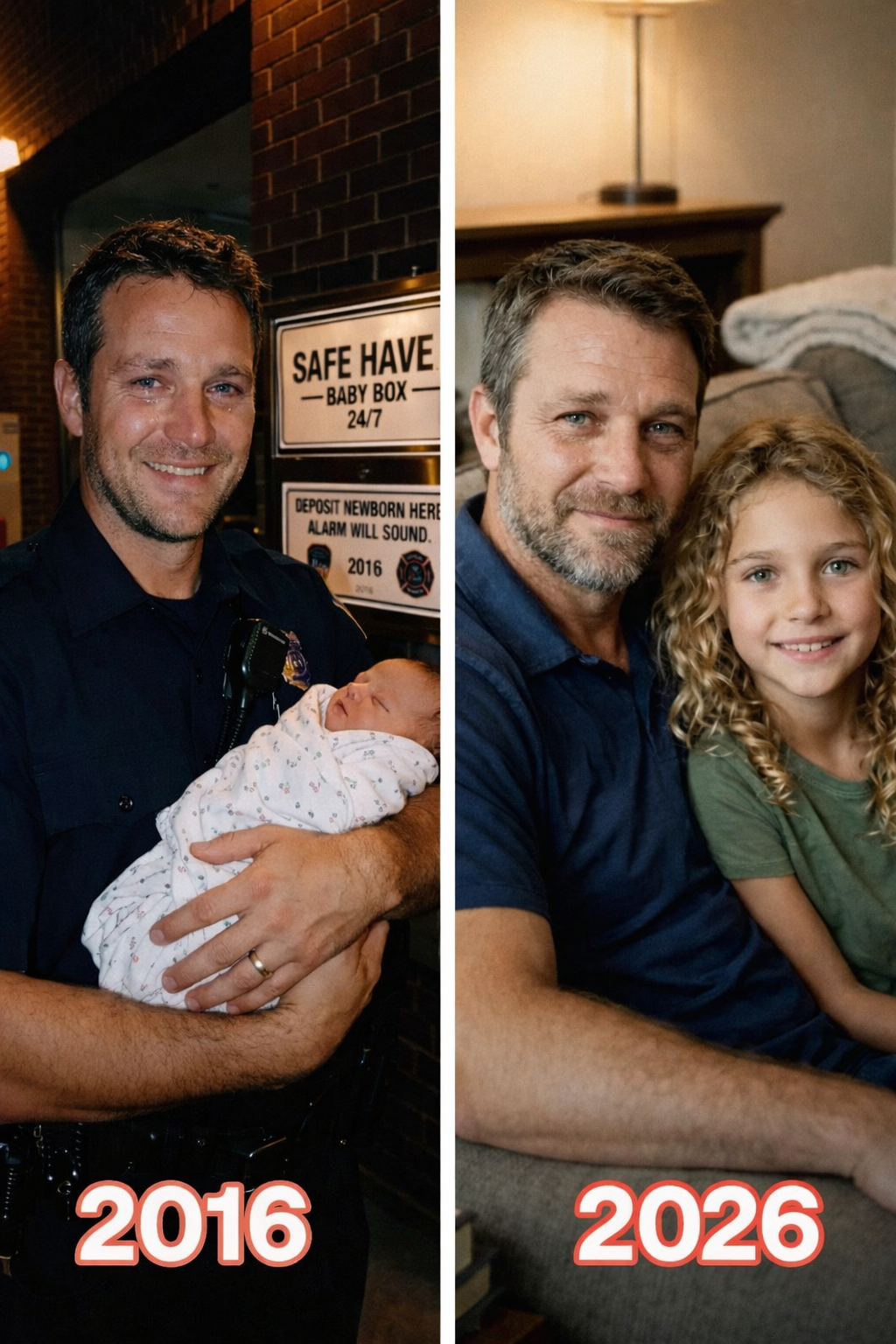
Ten years ago, I opened the Safe Haven box at my fire station and found a newborn baby girl inside. She looked up at me with a calm, steady gaze—as if she already knew I was the one who would carry her in. My wife and I later adopted her. Just last week, the woman who had left her there showed up at my door and told me she had chosen me long before that night.
It was exactly 3:07 a.m. when the Safe Haven alarm rang through the station, sharp and urgent. Everyone looked up, but I was already on my feet before my partner finished speaking.
“The Safe Haven box just went off.”
The compartment was built into the wall, its small green indicator glowing softly. Warm air hummed inside. I reached forward and opened it.
Inside, wrapped in a pale, soft blanket, lay a newborn girl.
She wasn’t crying.
Most infants left there arrived distressed or wailing. But this one was quiet, breathing evenly, almost peacefully.
When I leaned closer, she opened her eyes and looked straight at me—so calm it stopped me in my tracks.
“She’s not crying,” I murmured.
My partner stepped beside me. “No… she’s not.”
I gently lifted her. She was so light, and her tiny fingers curled around my sleeve like she was holding on.
My partner gave me a look. “Call Sarah.”
“At three in the morning?”
He shrugged. “You already know you will.”
He was right.
When Sarah answered, still half-asleep, I told her everything. Within seconds, she was fully awake.
“I think you should come see her,” I said—and I knew that sentence carried weight we weren’t ready to name.
By the time Sarah arrived, the first light of morning was just touching the station doors.
We had spent seven years trying to have a child.
Seven years of appointments, disappointment, and silent car rides where she held it together until the doors closed.
She stepped into the room and stopped when she saw the baby in my arms.
“Oh my God,” she whispered. “Can I hold her?”
I nodded.
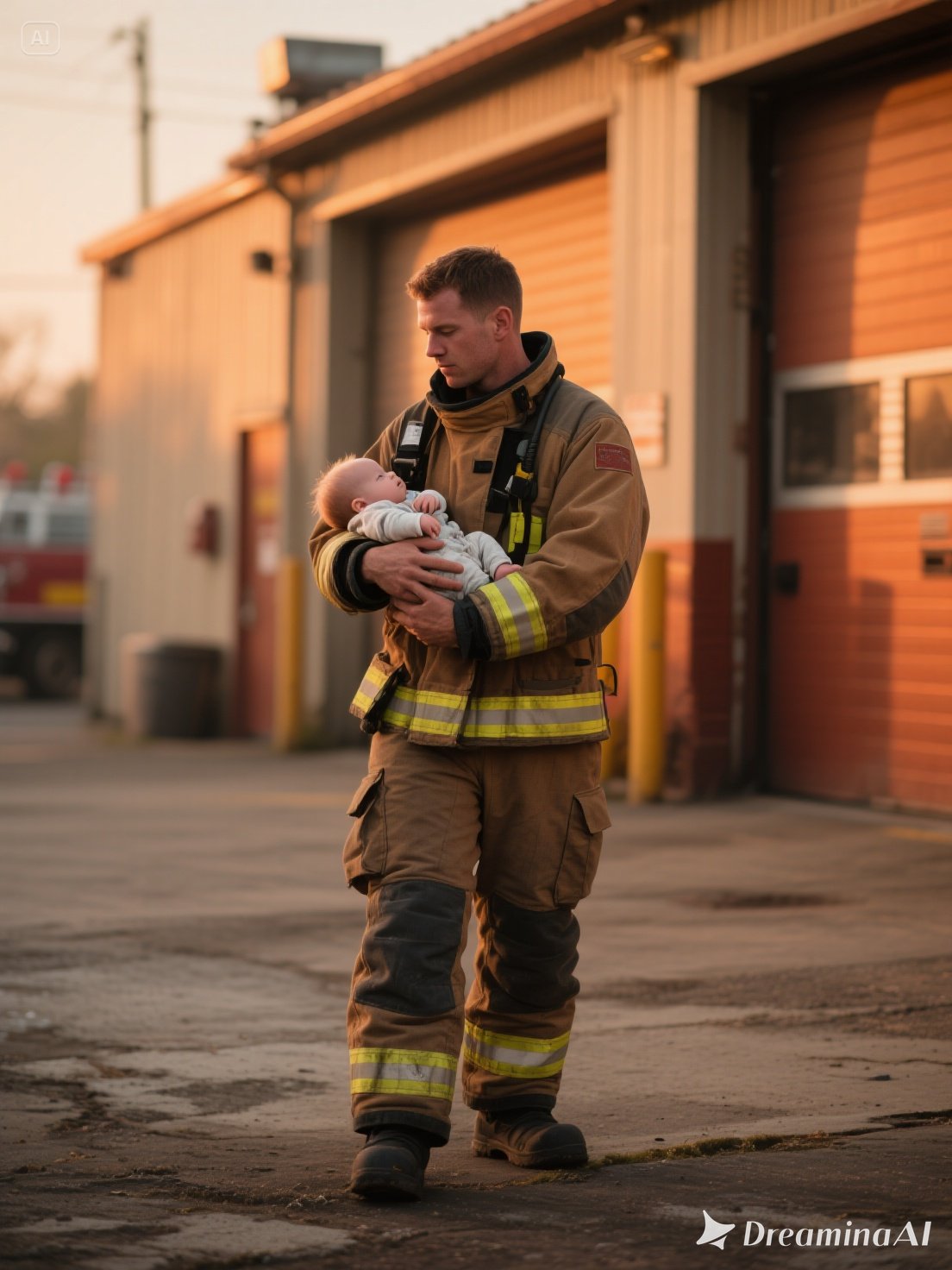
As soon as the baby was in her arms, Sarah’s eyes filled with tears. She adjusted the blanket gently, like that instinct had been waiting years to come alive.
“She’s so tiny,” she said softly. Then she looked at me. “Arthur… can we keep her?”
I knelt beside her, looking at the baby again. She looked safe. She looked like she belonged.
“She looks like she’s meant to be with you,” I said, my voice thick.
Sarah’s hands trembled. “Even if we don’t get to keep her… if there’s even a chance, I need us to try.”
“We’ll try,” I said.
And in that moment, everything changed.
No one ever came forward.
Days turned into weeks. Weeks into certainty.
A few months later, she officially became our daughter.
We named her Betty.
Betty grew into the kind of child who filled every room with life. She had strong opinions before she could tie her shoes and collected rocks like they were treasures.
When she was six, she climbed into my lap and said, “If I had a hundred dads, I’d still choose you.”
“What if one had better snacks?” I teased.
She thought seriously for a moment. “They still wouldn’t be you.”
The years passed quickly, the way good ones do.
But one quiet question stayed with me all that time:
Who left her there—and why our station?
Last Thursday evening, just after sunset, there was a knock at the door.
“I’ll get it,” I told Sarah.
A woman stood outside, wearing a dark coat. Her sunglasses were unnecessary in the fading light, but she held onto them anyway.
“I need to talk to you about the baby from ten years ago,” she said.
Everything inside me went still.
Behind me, I heard Sarah stand up.
“I left her there,” the woman continued. “And it wasn’t random. I chose you.”
When she lowered her glasses, something clicked in my memory.
Rain. A narrow alley. A teenage girl trying to disappear into herself.
“Amy?” I said quietly.
She nodded, relief and pain crossing her face at once. “You remember.”
Sarah stepped closer. “Arthur… who is this?”
“She’s someone I met years ago,” I said.
Back then, it had been pouring rain. I had just finished a shift when I saw her sitting alone in an alley, hugging herself against the cold.
I stopped. Gave her my jacket. Bought her food. Sat with her for hours.
At one point, she asked, “Why are you helping me?”
I told her, “Because sometimes it matters when someone sees you.”
Now, standing on my porch, she said, “You told me I was worth more than what I’d been given.”
Sarah folded her arms. “And how does this connect to Betty?”
Amy took a breath. “It connects to everything.”
Inside, we sat down.
“I eventually got my life together,” she explained. “Not right away, but I did. Then I got sick—a heart condition. Around that same time, I found out I was pregnant.”