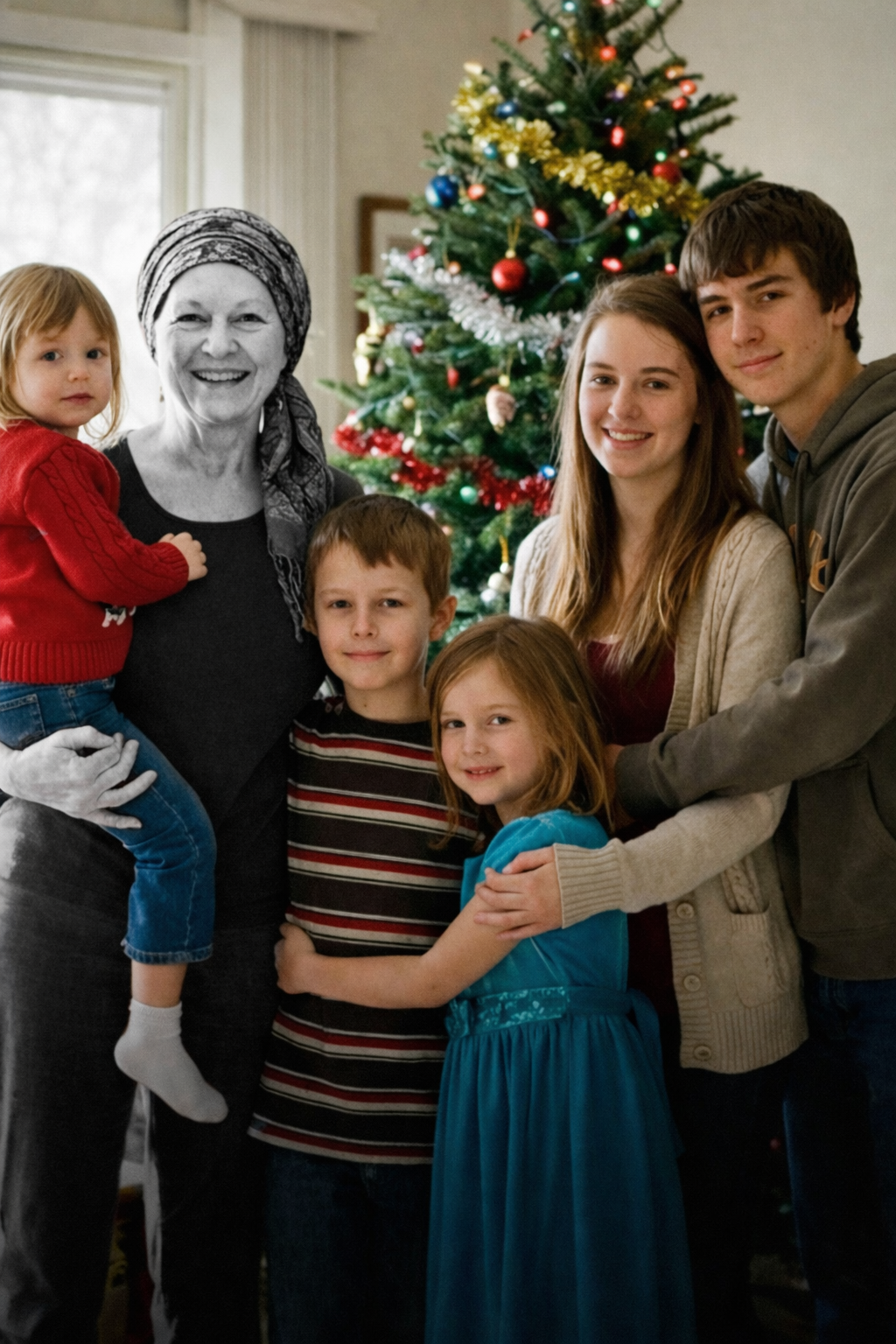
When my mother was diagnosed with cancer, my father left us for another woman. At 18, my twin brother and I became guardians to our three younger siblings. Five years later, our father turned up on our doorstep as if nothing had happened.
My name is Anna, and I have a twin brother.
Daniel and I were twenty-four when things finally slowed down enough for me to breathe a sigh of relief. But when our lives fell apart, we were just eighteen years old.
I have a twin brother.
I’d just finished high school. We were still arguing about which hall of residence was cheaper. We still believed that adulthood came with warnings and instructions.
There were five of us. Daniel and me. Then Liam. Then Maya. Then Sophie. Back then, they were nine, seven and five years old. Small. Loud. Always hungry. They were always asking questions with no right answers.
“Can you pick me up tomorrow morning?”
“Is Mum coming home tonight?”
“Why is Dad acting so weird?”
Nothing was right, but no one had told them that yet.
There were five of us.
The diagnosis came on a Tuesday. I remember because Mum had made pancakes that morning and apologised for them being burnt.
“I’ll do better tomorrow,” she said, smiling too much.
On Friday, we sat in a cold office with beige walls, while a doctor used words I didn’t understand but somehow already hated. Cancer. Aggressive. Treatment.
Daniel squeezed my knee under the table. Dad didn’t say much. He just kept looking at his mobile.
Cancer. Aggressive. Treatment.
Three days later, Dad called a family meeting in the living room.

“I’ll keep this short,” he said.
That should have been my first clue. He didn’t sit down. He stood by the door, as if he already knew he wouldn’t be staying.
“I’ve met someone,” he said. “A while ago.”
Maya gasped. Sophie crawled onto Mum’s lap. Liam stared at the carpet.
Dad called a family meeting in the living room.
“I can’t do this,” Dad continued. “I’m not strong enough to watch her get sick. I deserve a bit of happiness too.”
Daniel stood up.
“So what, you’re just going to leave?”
Dad shrugged. “I’m going to live with her. She gives me love and joy. I can’t live in constant sadness.”
Mum didn’t cry. That hurt more than if she had.
“What about the little ones?” I asked.
‘I’m not strong enough to watch her get sick.’
He looked at me as if I’d asked something unreasonable.
‘You’re grown-ups now. You’ll manage just fine.’
And then he packed a bag. No goodbye hug. No promises. No plans. The front door closed, and something in our house never opened again. After that, he was gone.
No phone calls. No birthday cards. No money.
No text messages asking how the treatment was going.
Nothing.
And then he packed a bag.
Mum grew smaller. Her voice grew quieter. Her steps grew slower. I slept in the hospital chair next to her bed when Daniel could stay at home with the little ones. One night she reached for my hand.

“Promise me something,” she whispered.
“I promise,” I said, without knowing what she was asking of me.
“Don’t let them take the children away from you. Keep them together.”
Daniel stood on the other side of the bed.
“We will,” he said. “I swear.”
She smiled. Just once. For the last time.
“Promise me something.”
Days later, we sat in the courtroom, and the judge looked tired. We probably were, too.
“Do you understand the responsibility you are taking on?” she asked.
Daniel nodded. “Yes.”
“So do I,” I said.
The gavel fell. And just like that, at the age of eighteen, we stopped being siblings who had lost their mother.
We became parents. Overnight. And as I stood there, holding court papers in my hand instead of university prospectuses, I had no idea that wasn’t even the hardest part.
We became parents. Overnight.
The years that followed are hard to summarise, because at first they didn’t feel like years at all.
They felt like one long struggle for survival, where days blurred into one another and weeks slipped by without us noticing.
The beginning was brutal. Daniel and I enrolled at the adult education centre because it was the only option that made sense. Close to home. Flexible timetables.
Tuition fees we could barely afford, but which were still manageable. We sat at the kitchen table late at night, laptops open, calendars spread out between empty cups.
The beginning was brutal.
“If I go to class in the morning, I can take her to school,” I said.
“Okay,” replied Daniel. “Then I’ll work in the morning and be back at three to pick her up.”
“And Liam has a dentist’s appointment on Thursday.”
“I’ll swap my shift.”
That’s how decisions were made. Not based on what we wanted, but on what the children needed.
If one of us had an exam, the other stayed at home. If one of us took on an extra shift, the other took care of homework, dinner, baths and bedtime stories.