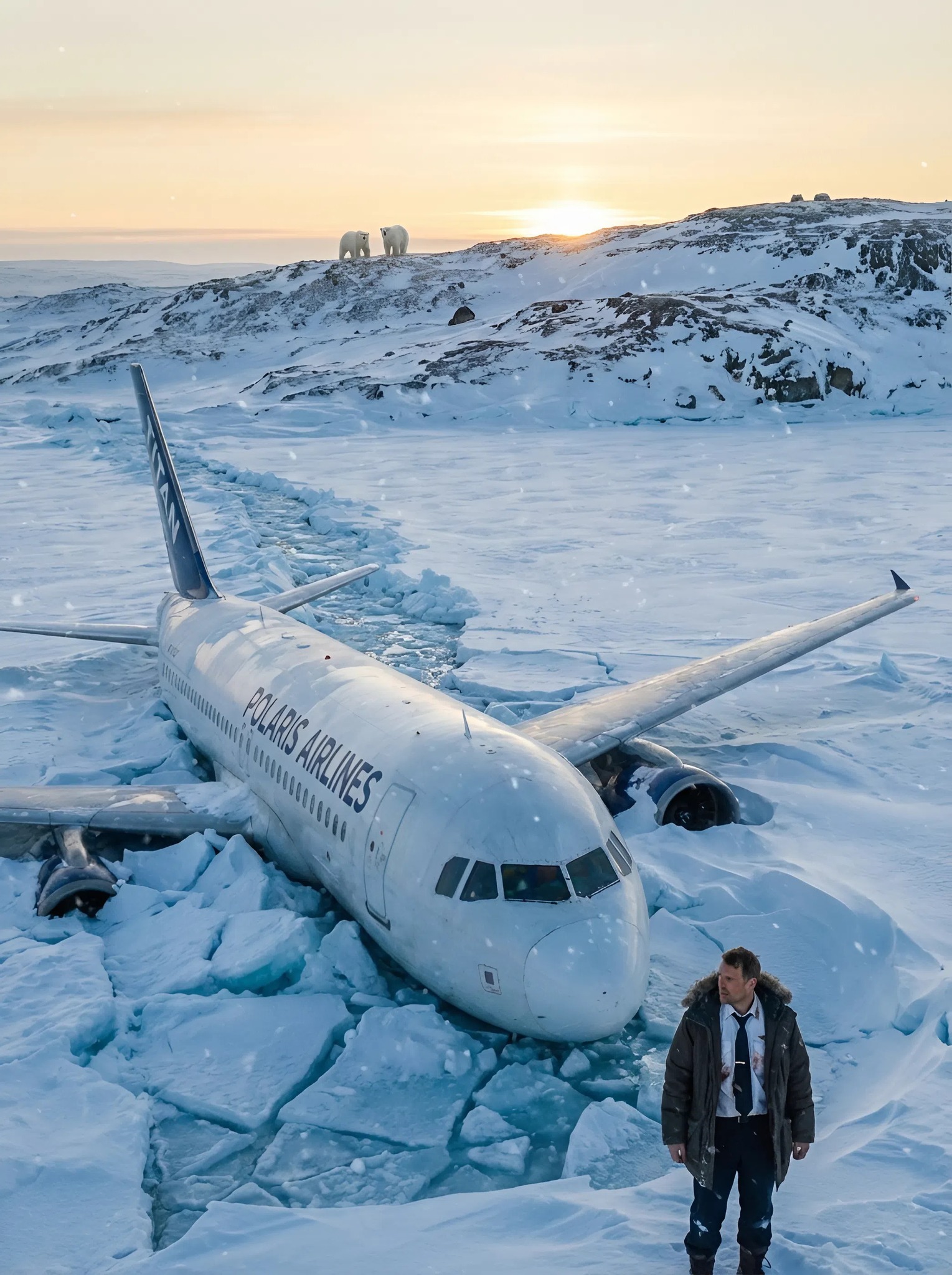
Flight 2A219, which disappeared from radar screens on 4 December 1983 with 150 passengers on board, remained one of the most mysterious pages in aviation history for a long time. After the last radio communication, it seemed that the airliner had simply vanished into the icy Arctic sky, and months of extensive search operations yielded no clues.
But exactly four decades later, in January 2024, modern satellite systems detected a large metal object in the thickness of the Arctic ice sheet. The wreckage of the aircraft, ‘preserved’ at a depth of about 24 metres under the ice, became the starting point for a discovery that opened the way for researchers to make a breakthrough and literally shook the scientific community.
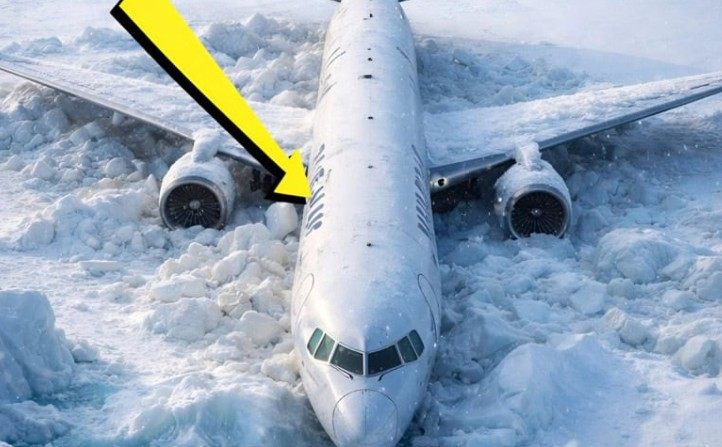
Scientists who entered the aircraft, which had been preserved almost intact due to extreme cold — like a real ‘time capsule’ — were confronted with a frightening scene. Passengers’ personal belongings, children’s toys, bags and luggage lay as if the flight had ended just a minute ago.
But the real scientific shock came later, when researchers discovered the flight attendant’s diary and the flight doctor’s medical records. These documents indicated that the plane did not crash in the usual sense: it made an emergency landing in conditions that were close to impossible. Moreover, according to the records, some of the passengers showed remarkable resilience and tried to survive in the icy darkness of the Arctic.
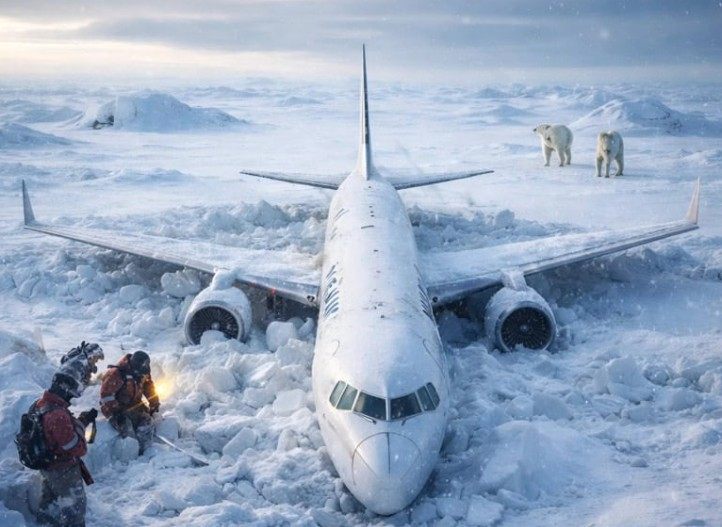
Analysis of the black boxes shed light on a rare natural phenomenon that caused the tragedy. It turned out that at an altitude of about 10,500 metres, the aircraft encountered unusual atmospheric turbulence, which caused the engines to ice up almost instantly and lose thrust. The technical limitations of the aircraft and sudden temperature changes disrupted its stability and led to a critical situation. The data obtained provided scientists with unique material for improving flight safety in polar latitudes: the cabin of the airliner turned out to be not only a place where people died, but also an invaluable ‘archive’ of information for research.
Despite the harsh conditions, including the appearance of polar bears approaching the camp and interfering with the work, the scientific teams continued to study the biological and technical samples recovered from the wreckage. Particular attention was drawn to the captain’s notes, which described the last hours in detail: how the crew maintained order, distributed scarce food supplies and tried to act as organised as possible. These materials have become a rare sociological and psychological testimony to the strength of the human will to survive, even in conditions that seem hopeless.

The discovery of flight 2A219 finally put an end to one of the darkest mysteries of the 20th century. This discovery not only gave the families of the victims a long-awaited sense of clarity and inner peace after decades, but also prompted the creation of truly new safety protocols for flights in the Arctic regions. The tragedy, hidden for decades under the polar ice, was explained thanks to the capabilities of modern science — and, as a result, helped to make future flights in harsh latitudes much safer.