
My Ex Won the $3M House I Inherited from My Late Mother – He Had No Idea It Was Part of My Plan

The day my ex took ownership of my mother’s $3 million home, I kept my head down and my reaction quiet. He mistook my silence for defeat, never realizing it was part of something bigger.

I’m 30. You can call me Delaney. Before anyone starts judging me, I want you to understand that my mom’s house wasn’t just any property.

It carried her laugh in the kitchen, her perfume in the hallway, and it is the only place left that still feels like her.

I also want it noted that Ryan, my ex-boyfriend, actually abandoned me the moment my mom got sick.

The shift happened suddenly, as if I’d become “too much” to love.

My ex-boyfriend, actually abandoned me the moment my mom got sick.

My mom’s name is Margaret, and while she believed in heirlooms, handwritten notes, and second chances, I believed in her.

The house she cherished and looked after for years sat on a quiet street. It boasted white columns and a wraparound porch that creaked as if it were whispering secrets. She used to call it “our lucky roof.”

To me, that house was sacred.

Ryan knew that.

She used to call it “our lucky roof.”

When she was diagnosed with cancer, I moved back in. I handled the nurses, the insurance calls, and the late-night panic attacks. Ryan handled none of it.

“I can’t do hospitals,” he told me one night in the apartment we shared, shoving clothes into a duffel bag. “You’re different lately. It’s always about your mom.”

“She’s dying,” I said.

“I know. That’s the problem.”

He left that night.

Ryan handled none of it.

There was no dramatic slam of the door, just quiet footsteps and the soft click of the lock.

That hurt more.

When my mom passed last year, sudden and brutal, she left me one thing: her $3 million historic home.

There were no shared assets, no split intentions, just me.

By then, Ryan and I had been broken up for two years. But to my surprise, he showed up at the funeral like a grieving family member.

She left me one thing: her $3 million historic home.

He wore a dark suit. His eyes were red, and he was as charming as ever in public.

But I later learned he was calculating in private.

“Your cousin informed me about the loss. I loved your mom, too,” Ryan whispered, his hand on my back.

I didn’t answer.

Three weeks later, I was served papers.

Ryan was suing me for the house. Yep! You read that right.

He was calculating in private.

The man claimed that my mom had “intended the house for us.” But that wasn’t all. He also claimed he’d “contributed” to renovations.
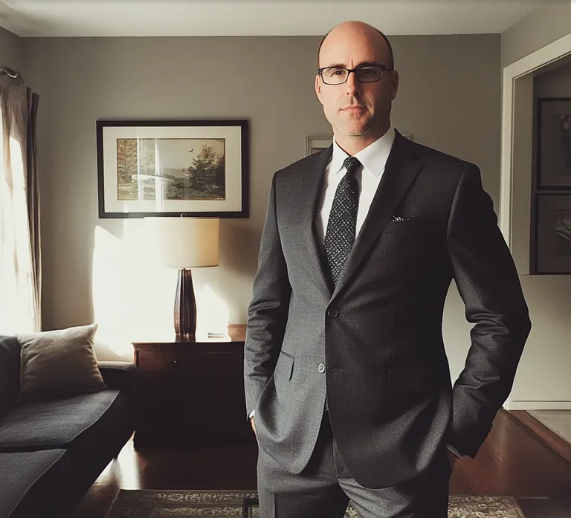
The worst part was that suddenly there were witnesses. A contractor named Dale swore he’d been paid in cash by Ryan. A neighbor, Mrs. Crenshaw, said he was “basically the man of the house.”

I sat in my attorney’s office, staring at the complaint.

“This is weak,” my attorney, Mr. Caldwell, said at first. “But weak cases can win if someone pushes hard enough.”

The worst part was that suddenly there were witnesses.

“I don’t understand,” I said. “He didn’t pay for anything.”

My attorney leaned back. “Then we prove it.”

I started digging.

If I did nothing, Ryan would build whatever story he wanted. So I pulled out old bank statements. I tracked Venmo payments. I even drove to where this Dale person had an office, unannounced.

“Did Ryan ever pay you?” I asked him while standing in his doorway.

“He didn’t pay for anything.”

Dale wiped his hands on a rag. “I don’t recall.”

“You signed an affidavit.”

He shrugged. That was when I realized something was off.

People weren’t just lying. They were coordinated.

One afternoon outside the court, during a preliminary hearing, I saw Ryan near the side entrance. He was speaking to a man in a gray suit who was not part of either legal team.
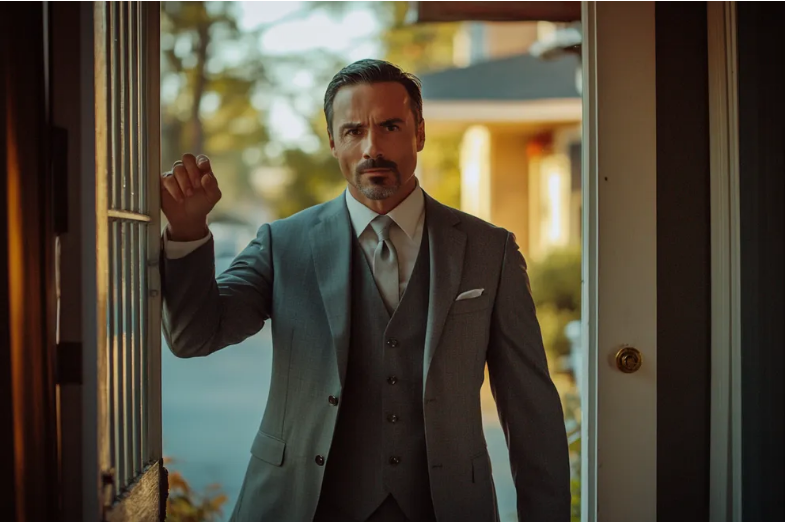
People weren’t just lying.

Ryan looked around, then slipped something small and fast into the man’s hand.

I assumed it was cash, folded tight.

My stomach dropped.

That was when I stopped fighting the way he expected.

Instead of reacting, I shifted. I asked my attorney to slow down our aggressive filings. I let Ryan think I was overwhelmed. I even cried once in the hallway where he could see me.

It was cash, folded tight.

“You okay?” he asked, pretending concern.

“I just want this over,” I said softly.

He smiled as if he’d already won.

The final hearing came faster than I expected.

Ryan’s team presented witnesses who spoke confidently. Dale repeated his claim. Mrs. Crenshaw dabbed at her eyes and talked about how Ryan “fixed the porch and planted roses.”

“I just want this over.”

When it was my turn, I told the truth. No theatrics. No desperation. Just facts.

It didn’t matter.

The judge ruled in Ryan’s favor, just like that.

It didn’t make sense to me, but he still got the keys.

The courtroom buzzed. I felt every eye on me.

I left with my head hanging low; my defeat was obvious.

When it was my turn, I told the truth.

Outside the courthouse, Ryan stopped me as if he wanted to console me.

Instead, when he leaned close, he whispered, “Watch me turn your mommy’s castle into my kingdom.”

I smiled. “Congratulations.”

He looked confused for half a second. Then smug again.

Three days later, I woke up to 50 missed calls from my ex.

I stared at the screen calmly, then I smiled because I realized what I’d planned had played out as expected.

I woke up to 50 missed calls from my ex.

When he called again, I answered.

“What did you do?!” he demanded the second I picked up.

“I’m not sure what you mean.”

“You filed something! I got a notice from the state preservation office!”

I sat up slowly. “Oh. That.”

“I can’t alter a load-bearing wall, I need approval to change fixtures, and there are annual inspections? What is this?”

“You filed something!”

“That would be the historic landmark designation.”

“What do you mean? You lost the house!”

“Yes,” I said evenly. “But you won a preservation liability.”

He went silent.

What Ryan didn’t know was that months before the final hearing, I quietly filed an application to have the house designated as a protected historic landmark in my mother’s name. I didn’t tell anyone except my attorney.

“That would be the historic landmark designation.”

The application required documentation, architectural surveys, preservation reports, and proof of historical value.

It took weeks to compile everything. With my attorney present, I met with city planners. I wrote a personal letter about my mom’s restoration work. I paid the fees out of my savings.

I figured if I were going to lose, I’d make sure he didn’t win.

The approval letter arrived the morning after the judge handed him the keys.

It took weeks to compile everything.

The designation legally barred any structural renovations, commercial rezoning, resale without state authorization, and required the registered owner to fund strict preservation standards and annual inspections.

Within 72 hours, he received formal notice that tearing down walls, modernizing interiors, or flipping the property would result in massive fines and potential forfeiture.

The $3 million “kingdom” he won in court was now a preservation obligation he could neither alter nor profit from.

“You did this on purpose,” he said.

“I protected my mother’s home.”

“You did this on purpose.”

“You set me up!”

I laughed softly. “No, Ryan. You did that to yourself.”

And that was only the beginning.

Ryan tried to fight the designation immediately. He filed an objection with the state board, but the paperwork showed I’d initiated the process months earlier while I was still the legal owner.

The historical society had documented original hardwood floors, hand-carved banisters, and a rare stained-glass window that my mom had restored herself. The house was officially protected in her name.

And that was only the beginning.

A week later, Ryan called again. “This place is a money pit,” he snapped. “They’re requiring specialized contractors. Do you know how much that costs?”

“I imagine it’s expensive,” I replied.

“I can’t even list it without state approval!”

“That must be frustrating.”

“Stop talking like that!” he shouted.

A week later, Ryan called again.

I let silence stretch. Power shifted in silence.

Eventually, he said, “We need to talk.”

We met on neutral ground at a coffee shop downtown. I placed my phone face down on the table.

Ryan arrived looking tired. No tailored suit. No victory glow.

“You think you’ve won,” he said quietly.

“Well, I lost in court.”

“You know what I mean.”

“You think you’ve won.”

He leaned forward. “If you hadn’t pulled that stunt, I could’ve sold it by now.”

“Flipped it,” I corrected.

“Whatever. I invested time.”

“You invested lies.”

His jaw tightened. “Careful.”

“Or what? You’ll find another contractor to swear you paid him?”

“You invested lies.”

His eyes flickered. There it was, a crack.

“I saw you outside the courthouse,” I continued. “You handed something to a man in a gray suit. Who was he?”

“You’re paranoid.”

“Am I? Because my attorney couldn’t identify him. He wasn’t on record.”

Ryan sat back. “You’re reaching.”

“Then tell me his name.”

“Who was he?”

He hesitated too long.

I tilted my head. “Was it worth it?”

“What?”

“Buying a judgment.”

Ryan slammed his hand lightly on the table. “I didn’t buy a judge.”

“I didn’t say judge. I just assumed you paid someone involved. Maybe a witness or someone who nudged paperwork.”

“I didn’t buy a judge.”

Ryan finally laughed once. “You can’t prove anything.”

“I don’t need to. I just need to ask the right people, the right questions.”

He stood halfway, then sat back down. “Look, you don’t understand how this works, and the house won’t be yours anyway.”

“I don’t care about the house anymore. Explain how it works.”

“Dale needed an incentive. He wouldn’t lie for free.”

There it was.

“You can’t prove anything.”

My pulse pounded, but I kept my face steady. “Incentive?”

“A few thousand. That’s it. It’s not like I bribed a judge.”

“So you paid a witness to submit a false affidavit.”

He realized too late. “You twisted that.”

“Did I?”

Ryan’s breathing changed. Fast. Uneven. “If that gets out. Dale goes down too.”

“You twisted that.”

“Yes,” I agreed. “He would.”

He studied me. “You’re recording this, aren’t you?”

“My attorney is sitting right there by that table,” I lied, pointing at a random man in a suit who looked official.

Ryan’s shoulders dropped. “You wouldn’t.”

“I would.”

He rubbed his face. “What do you want?”

“You’re recording this, aren’t you?”

“The house belongs to my family.”

“You lost it.”

“You cheated to get it,” I corrected him.

Ryan shook his head. “You’re not going to the police.”

“Try me.”

“You’d destroy both of us.”

“You cheated to get it.”

“Nope,” I said calmly. “Just you.”

Ryan stared at the window for a long time. “What’s your offer?” he asked finally.

“You sign the property back to me. No profit or payout. You walk away.”

“And the recording?”

“It stays with me unless I ever need it.”

He laughed weakly. “You’ve changed.”

“What’s your offer?”

“You, too.”

He looked almost impressed. “If I refuse?”

“Then I take this to the district attorney. Paying a witness to lie in a civil case can carry serious penalties. You’re in finance, Ryan. Imagine what that would do to your license.”

We sat there in silence for nearly a minute.

Finally, Ryan said, “Draw up the papers.”

“If I refuse?”

Two weeks later, we signed the transfer documents in Mr. Caldwell’s office.

Ryan didn’t meet my eyes.

When it was done, he paused at the door. “You really think she’d be proud of you?”

I met his gaze steadily. “I know she would.”

He left without another word.

Ryan didn’t meet my eyes.

The following Saturday, I unlocked the front door of my mom’s house again. The air inside smelled like wood polish and faint lavender. Nothing had changed structurally. Ryan had not dared.

I walked into the kitchen and rested my hand on the counter where my mom used to roll dough.

“I got it back,” I whispered.

In my soul, I heard Mom’s laugh.

Later that evening, I invited Mr. Caldwell over to review preservation guidelines.

“I got it back.”

We sat on the porch as the sun dipped low.

“So what will you do?” he asked.

I looked at the stained-glass window glowing amber in the light. “I’m starting a nonprofit in her name. Historic home restoration for families who can’t afford it.”

He smiled. “That’s ambitious.”

“She always said a ‘lucky roof should shelter more than one story.'”

“So what will you do?”

He nodded and left soon afterward.

For the first time in years, the house felt peaceful instead of fragile. I wasn’t the woman Ryan left when things got hard. I was someone who acted, planned, and protected what mattered.

As the evening settled, I stood alone in the hallway where my mom’s perfume used to linger.

I looked around at the restored banister, the preserved walls, the life waiting to fill it again.

And I finally realized it was home.

I was someone who acted, planned, and protected what mattered.

If this happened to you, what would you do? We’d love to hear your thoughts in the Facebook comments.

If this story resonated with you, here’s another one: My ex-husband refused to assist in paying for our five-year-old daughter’s surgery, but instead, he suddenly bought a new car. I wasn’t one to be played with, so I made one call he never expected.

My Ex Won the $3M House I Inherited from My Late Mother – He Had No Idea It Was Part of My Plan
My daughter wants to put me in a nursing home to take my money. I decided to teach her a life lesson.