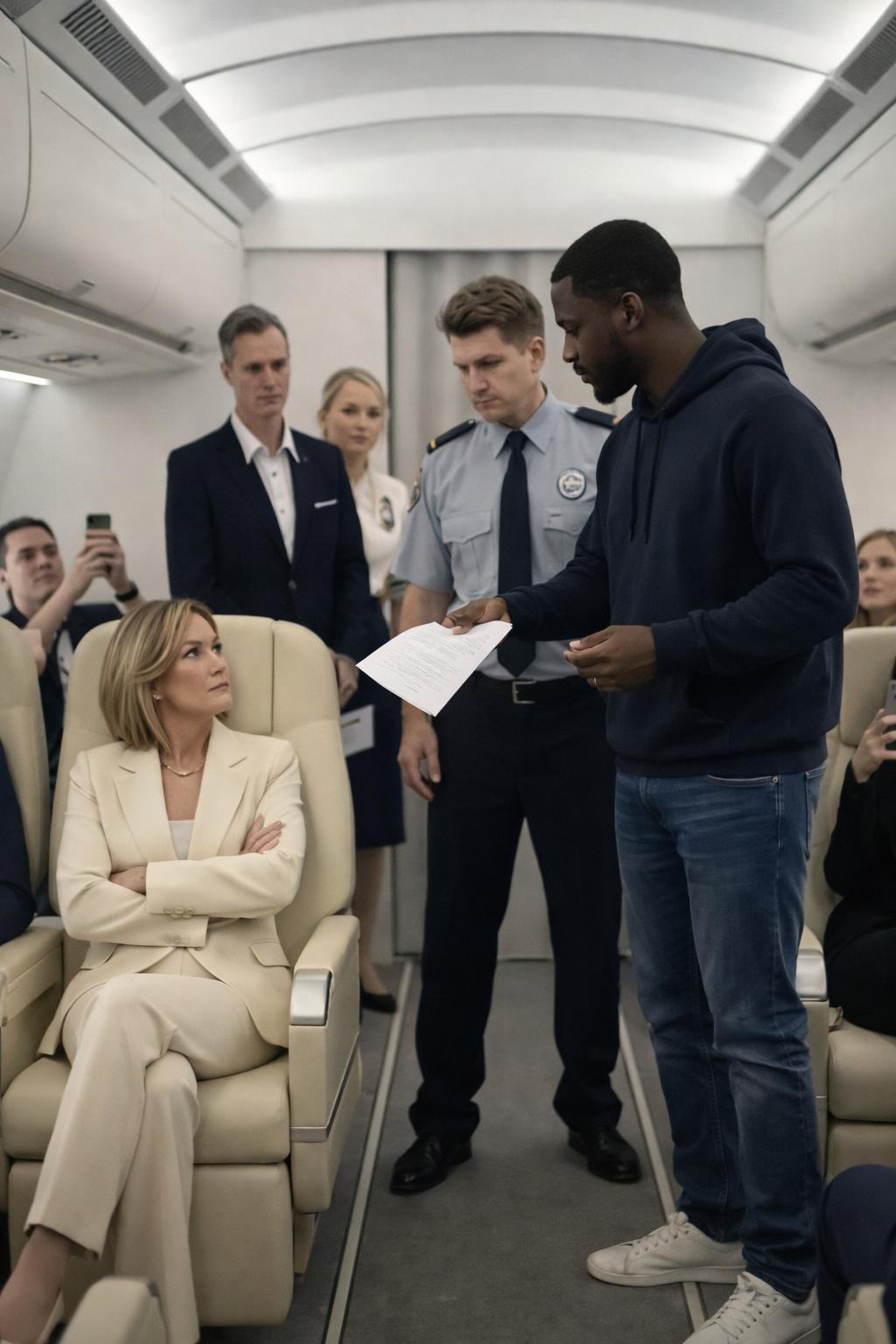
She sat down in his seat in first class, confident that no one would dare to object. He sat calmly, holding a newspaper and a cup of black coffee in his hands, his gaze calm and restrained, but hiding an unwavering determination. When he quietly uttered the words that turned the situation upside down: ‘I am the owner of this airline,’ the woman froze in place, unable to believe her eyes.
The plane was preparing for take-off shortly after two o’clock on a warm spring day. The terminal was buzzing with its usual hustle and bustle: suitcases clattered across the shiny floor, announcements echoed through the hall, people hurried to the boarding gates, some sat by the power sockets as if guarding their devices, others dragged their suitcases along, oblivious to those around them. Everything seemed normal, but if you looked closely, you could see a man whom almost no one noticed.
Daniel Cole was modestly dressed: a dark grey hoodie, worn jeans, white trainers that had long since lost their original appearance. No expensive suits, no accessories, no signs of wealth. The only thing that stood out was a black leather briefcase with a barely noticeable D.C. monogram. In one hand he held a cup of coffee, in the other a boarding pass with seat 1A.
Front row. First class. The seat he always had on this airline.
Daniel Cole was no ordinary passenger. He was the founder and CEO of the company, owning 68% of the shares. But on that day, he was passing through the terminal like a regular person, wearing a hoodie, without luxury or attention. No one knew his true status, and that was part of his quiet experiment: to see everything with his own eyes, without filters, without smiles imposed by status or position.
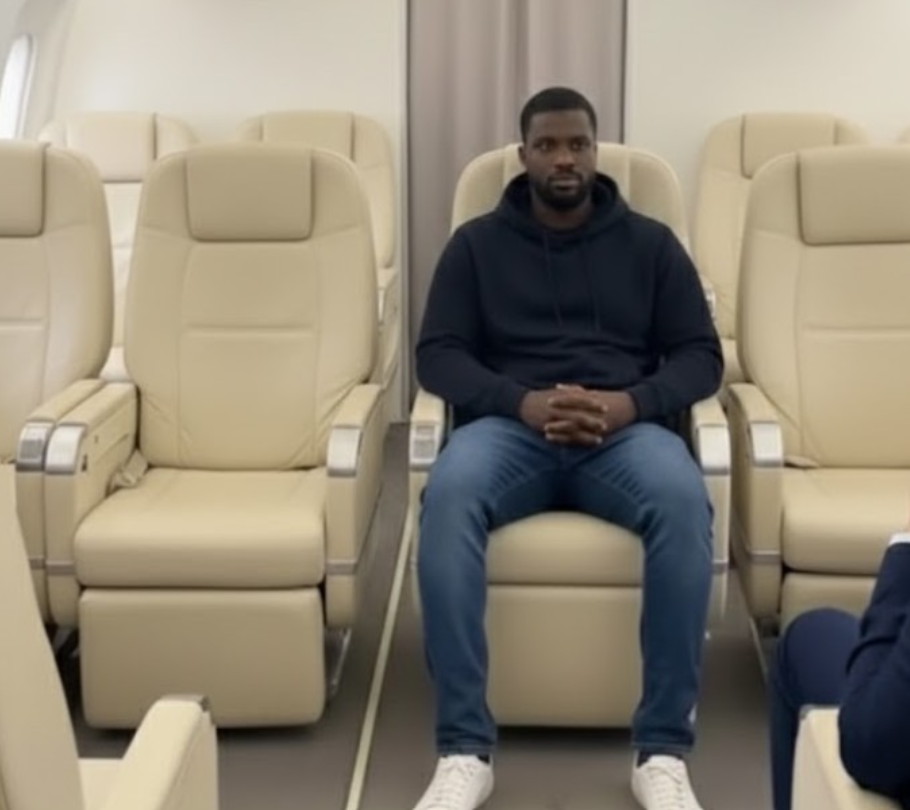
He sat down early, nodded to the crew and took seat 1A. He put his coffee on the table, unfolded the newspaper and took a deep breath. In less than two hours, he had to be at an important board meeting that could affect the future of the company. For months, he had been monitoring internal controls, analysing passenger complaints, reports of discrimination, and staff behaviour, trying to understand where the real problems lay and where they were just statistics.
The data was worrying, but statistics don’t tell the whole story. Daniel wanted to see the reality with his own eyes. No assistants, no announcements, no recognition — just observation, just honest verification.
Suddenly, a sharp voice rang out from behind him. A hand with a perfect manicure grabbed his shoulder sharply, and hot coffee spilled onto his newspaper and jeans.
‘Excuse me?’ he said, standing up.
A woman in her forties, wearing a cream designer suit, with perfect hair and massive accessories, looked at him with a confident smile. Without hesitation, she sat down in seat 1A.
‘Please,’ she said, smoothing her jacket. ‘The problem is solved.’
Daniel looked at her calmly. ‘I think this is my seat,’ he said quietly.
The woman assessed his gaze and narrowed her eyes. ‘First class is in the front, economy is in the back,’ she said slowly. The passengers noticed the tension, several phones were raised, the air seemed thick.
Flight attendant Emily approached with a professional smile. ‘Problem?’ she asked, putting her hand on the woman.
‘Yes,’ she replied loudly. ‘This man is sitting in my seat.’
Daniel showed his boarding pass: ‘Seat 1A, this is my seat.’ Emily glanced at it. ‘Sir, your seat is further back,’ she said tensely.
‘It would be nice if you checked the ticket more carefully,’ Daniel replied calmly.
The woman snorted: ‘In that outfit, you think you deserve this seat here?’
A teenager in the third row turned on the live stream. Hundreds, then thousands of viewers watched the situation unfold.
Senior supervisor Mark Reynolds approached. ‘You’re delaying the flight. Please move,’ he said to Daniel without even checking his ticket.
‘You haven’t even checked it,’ Daniel replied. ‘If you don’t comply, security will remove you,’ Mark added.
Daniel remained calm, knowing that the situation confirmed his fears: prejudice based on appearance still existed.
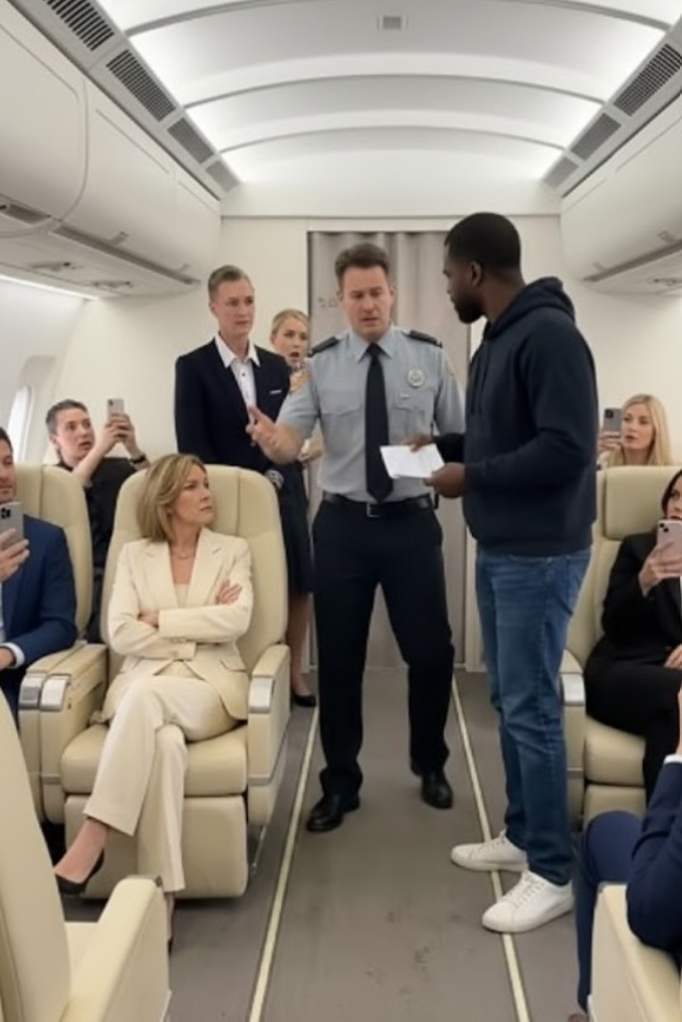
When security approached, one of the employees, Lewis, carefully checked the ticket. ‘Seat 1A,’ he said. The cabin fell silent. Daniel took out his phone and opened a secure app: the airline’s logo, then the text: ‘Daniel Cole — CEO, 68% stake.’
He showed the screen to the employee, then to Mark, then to the woman, who now sat as if she had lost her confidence. ‘I own this airline,’ he said quietly.
The woman turned pale. ‘That’s… impossible,’ she whispered. ‘Technically, every seat here is mine,’ Daniel replied. The live broadcast exploded, with hundreds of thousands of viewers watching the event.
Daniel called the legal department, HR and PR on speakerphone. There were suspensions, dismissals, a press conference — before sunset.
The woman — Linda Harper, senior director of brand strategy and a public activist on diversity and inclusion — burst into tears. ‘You talk about equality, but you didn’t show basic respect,’ Daniel said. ‘Intentions don’t repair the damage,’ he added.
The plane took off later with a new crew. Daniel took seat 1A.
A few days later, the company implemented reforms: mandatory anti-bias training, cameras for staff, passenger protection protocols, and a £50 million annual equality programme. The video garnered over 15 million views. Other airlines followed suit.
A year later, Daniel boarded the same plane. Same seat, different atmosphere. Passengers of all nationalities were treated with equal respect and courtesy.
He smiled, realising that respect does not depend on class or clothing, but on the choice and courage to say, ‘Please check your ticket.’