On the morning the will was read, the Stars and Stripes outside a downtown law firm hung motionless in the heavy summer air, while the seal of the State Bar gleamed on the glass door — as if silently judging who deserved justice and who did not.
My name is Eleanor. I’m 69 years old. And on the day my husband’s will was revealed, my sons split thirty million dollars between them like it was a card game. Steven took the construction companies. Daniel got the restaurant chain, the estates, the luxury condos, the sports cars — everything. Absolutely everything. And I, after forty-five years of marriage, after giving my whole life to that family, received a dusty envelope that looked like it belonged in the trash.
My daughter-in-law Jessica laughed in my face and said, “At least you can use it to store recipes, mother-in-law.” Steven didn’t even glance at me. Daniel sighed, as if my very existence was an inconvenience. Humiliated and broken, I walked out of that office feeling like my life had lost all meaning. But what they didn’t know was that later that night, when I opened that despised envelope in the quiet of my home, I would find something that would change everything forever.
Arthur had been gone just a week. Pancreatic cancer took him in six cruel, painful months. For forty-five years, he had been my partner, my shelter, the man who built an empire from nothing, working day and night. I was always by his side. When he stayed up until dawn reviewing numbers, I brought him coffee and waited. When he traveled for weeks on end, I ran the house and raised our two sons without ever complaining. When the banks refused to lend him money to expand, I sold my mother’s jewelry to help him get the capital he needed.
I never asked for recognition. I never wanted credit. I simply loved my husband and trusted he’d take care of me when the time came. How wrong I was.
The will reading took place at the office of Rose Albright, our family lawyer. I arrived early, wearing my best violet dress — the one Arthur had given me for our last anniversary. I thought it would be just a formality. After half a century together, it only made sense he’d ensure I was provided for. My sons could inherit the business, but surely I’d have enough to live with dignity.
Rose began reading in her usual cold, professional tone. “To my son Steven, I leave the construction companies valued at twelve million dollars.” Steven grinned like a boy on Christmas morning. “To my son Daniel, I leave the restaurant chain, which brings in eight million a year.” Daniel leaned back in satisfaction. The coastal estates, the condos downtown, the luxury cars, the main accounts — everything was divided between them like the spoils of war. Thirty million dollars split while I sat there, invisible, waiting for my name.
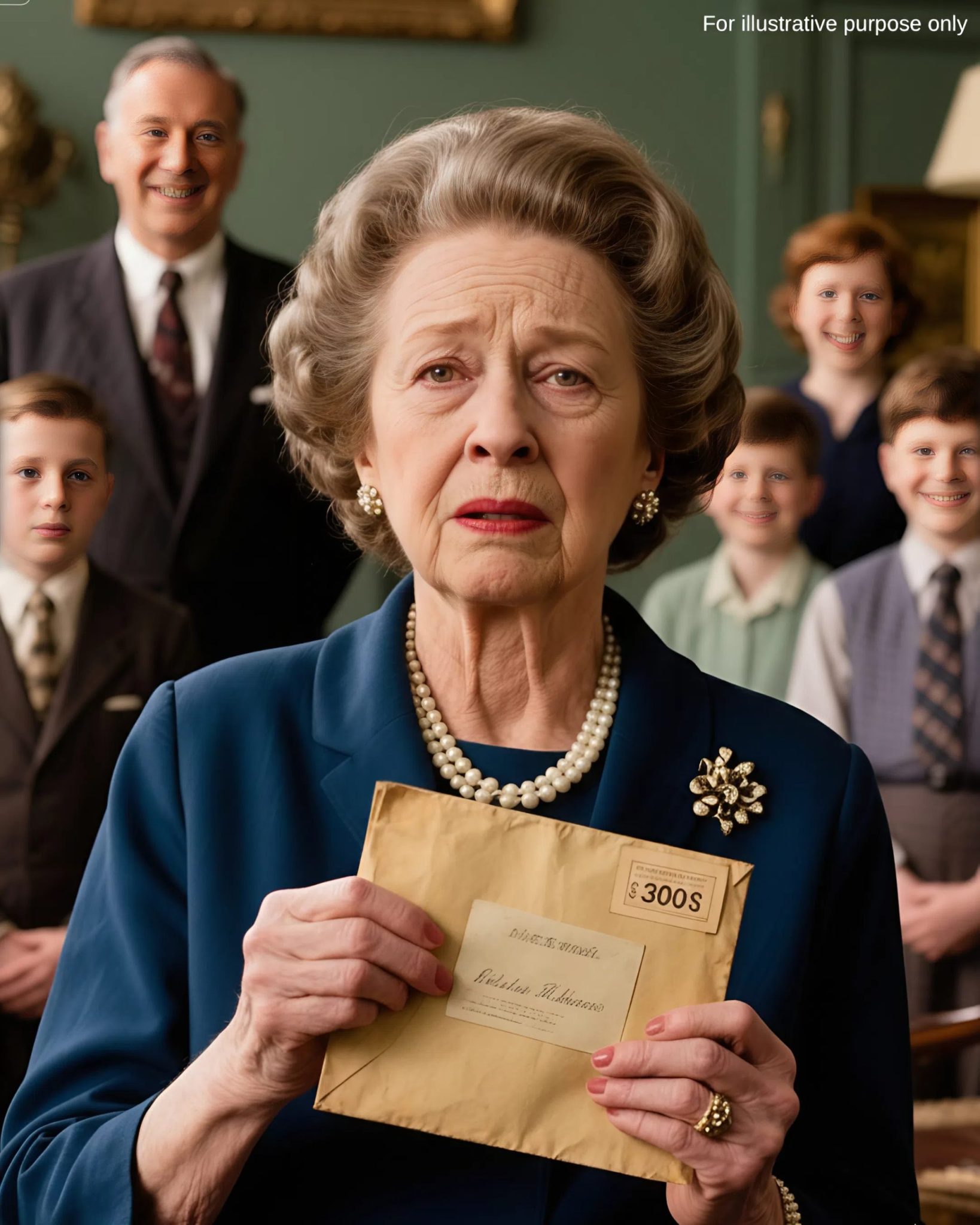
When Rose finally reached the end, she paused, shuffled some papers, and said, “For Mrs. Eleanor Herrera.” My heart raced. Finally, I’d hear what my husband had left me. Rose continued, “I leave her this personal envelope,” and handed me a yellowed, dusty envelope that looked like it had been forgotten in some drawer for years.
I took it with trembling hands as my sons exchanged smug looks. Jessica couldn’t resist laughing. “At least you can use it to store recipes, mother-in-law.” Steven didn’t even look up from his papers. Daniel sighed again, visibly annoyed by my presence.
The envelope felt weightless in my hands — empty, mocking. Rose closed the will folder and turned to my sons, explaining the procedures for claiming their inheritance. They discussed wire transfers, deeds, and corporations — the usual mechanics of wealth — as if I didn’t exist, as if I were a ghost sitting in that leather chair.
I stood up slowly, slipped the envelope into my purse, and left. No one said goodbye. No one asked if I needed help. No one offered a ride. I walked out with a shattered heart, feeling as though forty-five years of love and sacrifice had been reduced to that worthless envelope.
I wandered through the same streets where I’d spent my adult life, where I’d built the very family that now treated me like nothing, and I cried harder than I had since childhood. That night, sitting alone in my living room, with silence pressing down like a gravestone, I decided to open it.
My hands shook as I broke the brittle seal. Inside was a single folded sheet of paper. I opened it slowly, and there it was — Arthur’s unmistakable handwriting. That elegant script I’d seen in thousands of love notes, birthday cards, and kitchen reminders. But this time, the words stole my breath.
“For the woman who always truly loved me. Bank account number 8 [Music] C H E. Swiss International Bank, Geneva.” And below, a final line that made me tremble: “What you find here is only the beginning. They didn’t deserve to know the truth, but you do.”