Every Christmas Eve at our house turned into a small celebration of flavours and aromas. Mum would prepare a real feast: ham glazed with honey, fluffy mashed potatoes, green beans with bacon bits, and a tray of cornbread that filled the whole flat with a cosy aroma.
But the most unusual thing was something else: no matter what was going on in our lives, Mum always served a second helping. A separate plate, carefully arranged as generously as ours.
A plate for Eli
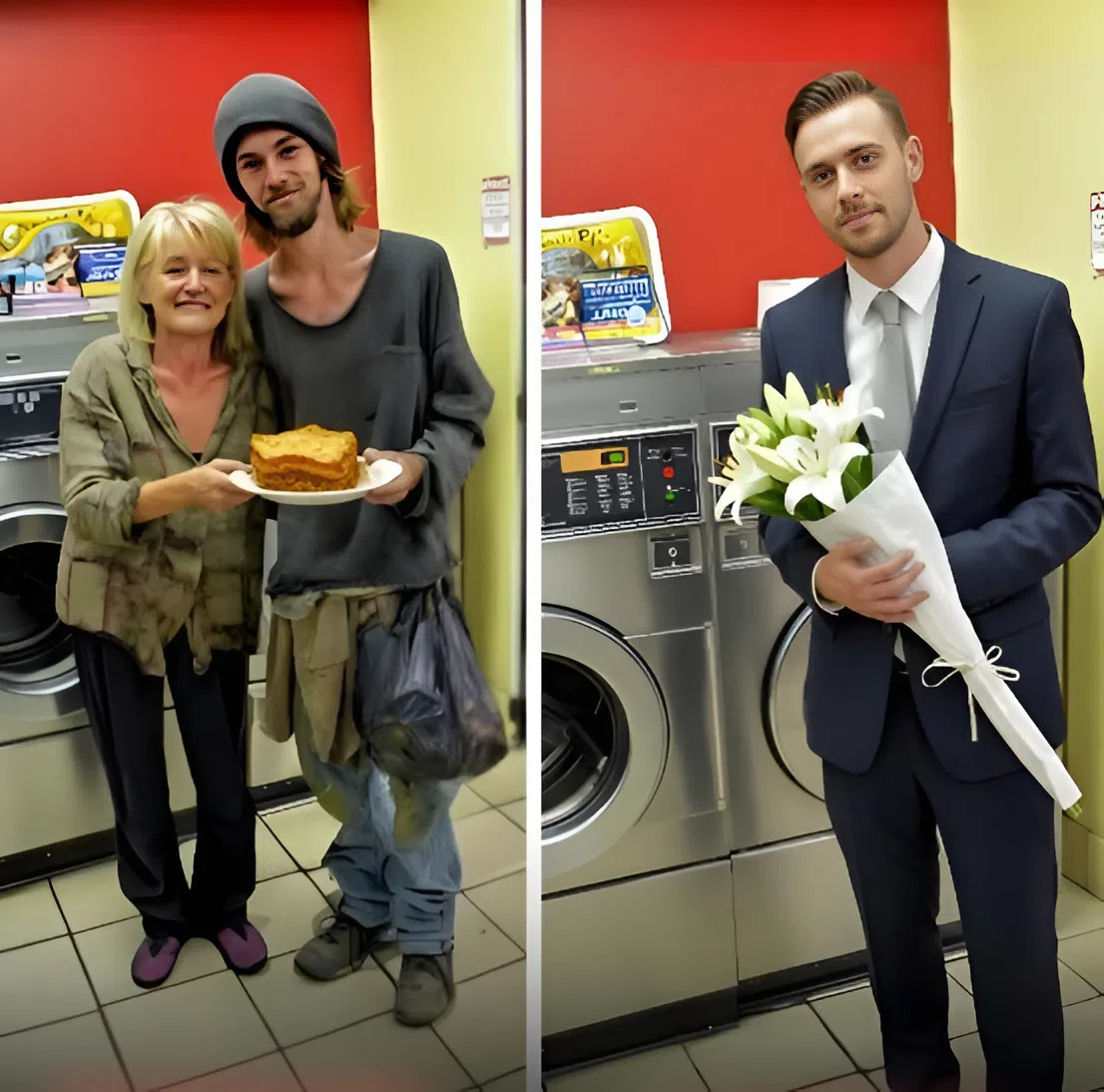
This food was not ‘in reserve’ or for unexpected guests. It was intended for a young man named Eli, who spent the night in our laundry room nearby. He usually sat in the same corner, covered with a thin blanket, as if trying to become invisible.
Mum never pretended not to notice him. Every year, at Christmas, she remembered him — quietly, without loud words, as a person who simply needed warmth.
She cooked a full dinner for him, not ‘leftovers.’
She spoke to him respectfully, not condescendingly.
She reminded me that kindness requires no reason.
Teenage blindness
When I was a teenager, I reacted predictably: I rolled my eyes and thought it was a strange idea. At the time, it seemed to me that it was only worth helping those who ‘could respond in kind’. I simply did not understand my mother’s generosity — the kind that asks for no reward.
Later, Mum found out that Eli was alone and had lost his family. After that, she started caring for him even more: besides food, she gave him gloves, a warm jumper, and a gift card for the grocery store. Sometimes she offered more than she could afford, even though she lived modestly herself.
‘If a person says they don’t want to be a burden, it doesn’t mean they don’t need someone around,’ my mother said once.
‘Dinner is still on’
I remember how my mother once cautiously offered to help Eli find a room. He refused. Not abruptly — rather, with weary politeness.
‘I can’t… I don’t want to be a burden,’ he said.
My mother didn’t press the issue. She just nodded and replied softly, ‘All right. But dinner is still on.’
There was something unchanging in those words — like a promise that keeps a house standing even when everything around it is falling apart.

She didn’t demand explanations.
She didn’t set conditions.
She left the person the right to choose — and at the same time didn’t take away her support.
When life moved on — and stopped
Years passed. I moved out, got a job, fell in love, broke up, tried to build relationships again. Adult life went on as usual until something happened that was impossible to prepare for.
My mother fell ill. Illness does not choose the ‘kindest’ and does not give discounts for good deeds. It was a difficult year: I learned that grief sometimes begins long before the farewell. That festive lights can seem inappropriate, and cheerful melodies — like they belong to someone else.
My mother passed away in October.
By December, I was already ‘holding my own,’ but inside I felt like I was on autopilot — existing without feeling.
Sometimes traditions aren’t about the holiday. They’re about a lifeline when you’re being tossed about by the waves.
Christmas Eve without her
On Christmas Eve, I stood in the kitchen and looked at my mother’s old baking tray. It seemed to hold her voice, her familiar movements, her confidence: everything will be fine as long as there is food on the table and a place for people.
And suddenly, it sounded so clear inside, as if she were there: ‘Ela needs homemade food for Christmas. It’s our tradition.’

I made dinner. I wrapped everything the way my mother did — neatly, with care, as if the packaging could also warm him. And then I went to the laundry room, shivering from the cold and excitement.
I was afraid he wouldn’t be there.
I was afraid I wouldn’t be able to say a word.
And I was afraid to feel how much I missed my mum.
The man in the corner — and the man in the suit
I headed for that very spot in the corner… and stopped, as if I had been abruptly held back.
Eli was there. But it was no longer the Eli I remembered. He wasn’t sitting, hiding under a blanket, slouching as if trying to take up less space.
He was standing.
He was wearing a suit. His hair was neatly trimmed, his face clean-shaven. And in his hand was a bouquet of white lilies.
When he saw me, his eyes immediately filled with tears.
‘Hello,’ he said hoarsely. ‘You came.’
My throat tightened.
‘Eli…?’ I managed to say.

He nodded once, confidently, like a man who had been gathering his courage for a long time.
‘I brought dinner,’ I said, feeling my heart beating loudly in my chest.
He smiled, but it was a shaky smile, as if it mixed gratitude and pain.
Sometimes change looks like a miracle. And sometimes it looks like the beginning of a conversation you’re not ready for.
The phrase that turned everything upside down
I couldn’t take it anymore and asked directly:
‘Eli, what’s going on?’
He looked at me as if he were choosing each word carefully so as not to hurt me.
‘Your mother was hiding something from you,’ he said quietly. ‘Before she died, she asked me not to tell you.’
My head spun, and for a second, the whole world became too small.
‘What was she hiding?’ I whispered.
Eli sighed slowly and looked at the flowers in his hands.
‘In those years when I slept in the laundry room, your mother brought me more than just food,’ he said. ‘She helped me get my life back.’

He told me how my mother secretly helped him get his documents back, how she paid for his first courses, how she convinced him that there was no shame in accepting help if it came from a place of love. My mother left him a considerable amount of money, hiding it from me.
‘When I first rented a room,’ he continued, ‘she cried. Not because I was leaving, but because she knew I would no longer be lost.’
I felt my eyes fill with tears.
‘Why didn’t I know about all this?’ I asked.
Eli looked me straight in the eye.
“Because she didn’t want you to ever feel obligated to continue anything. She used to say,
“When kindness becomes a duty, it ceases to be kindness.””
He took a step forward and handed me the flowers.
‘Today I came to say thank you to her. For the first time, not as someone who needs help, but as someone who has been able to stand on their own two feet.’
I accepted the flowers. At that moment, I understood something I hadn’t fully realised before.
My mother left me more than just memories.
She left me a path — how to remain human, even when your heart is broken.
I smiled through my tears.

‘Would you like to come in?’ I asked. ‘Dinner is getting cold.’
Eli smiled too.
‘Your mother always said that hot food doesn’t like to wait.’
And on that Christmas Eve, the table was full again.
Not because everyone was in their place,
but because someone once taught us:
there should always be room for one more at the table.
The result
That night, I came to continue my mother’s tradition — simply to bring food to a person she remembered. But it turned out that along with this second plate, our family always had another story: one that was not obvious, unspoken, carefully hidden for the sake of someone’s dignity. Sometimes kindness leaves behind not only a warm dinner, but also secrets that change one’s view of the past.