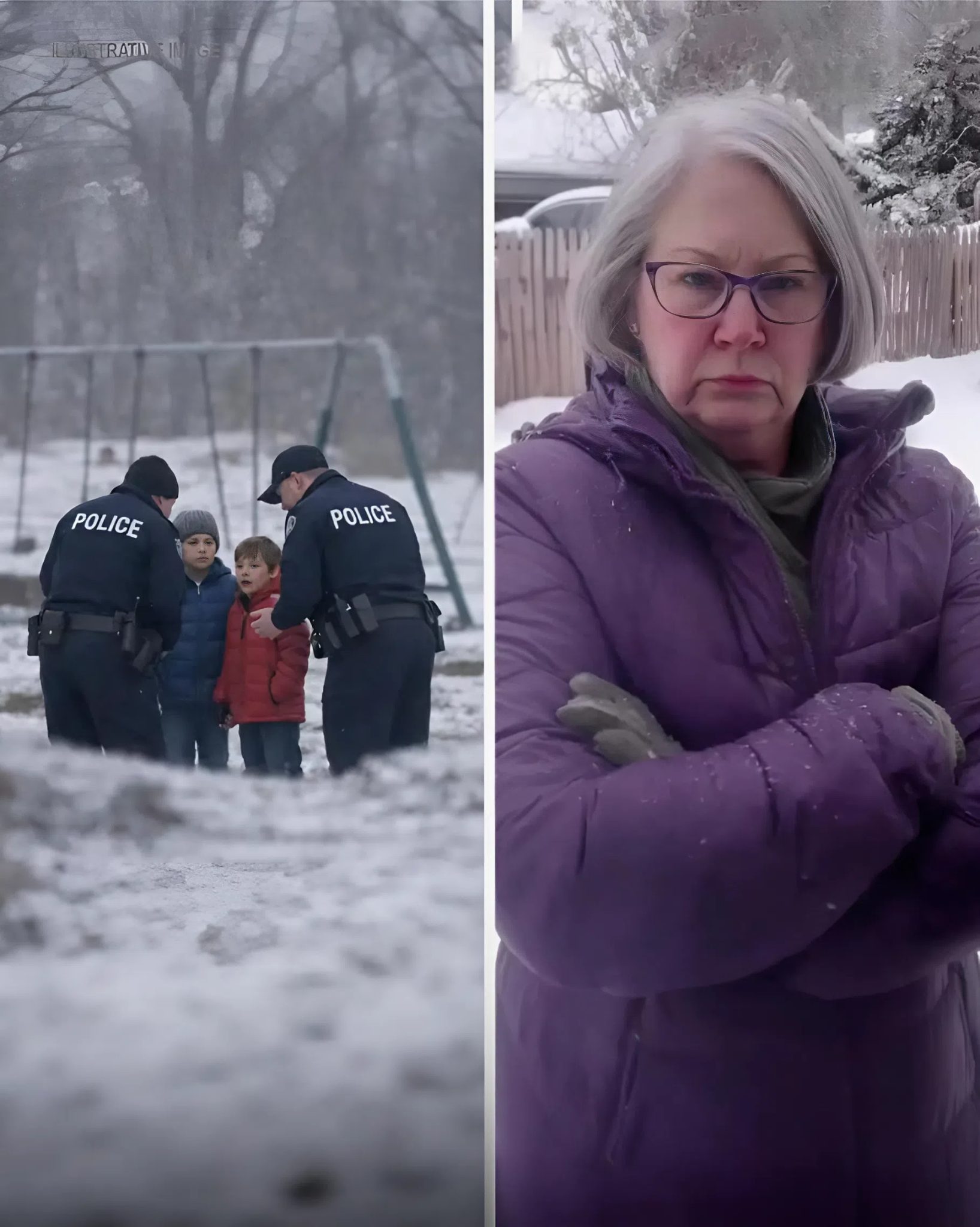
I am 35 years old, mother of two lively boys, and most of the time I feel like I am running my daily life almost single-handedly. My children love to be outside, and we live on a normal family street with the usual amount of noise. Then the neighbor across the street decided that children’s laughter was a problem and made such a big deal out of it that I didn’t expect.
My husband, Mark, works a lot. So much so that he’s not home in the morning when the boys wake up, and he comes home in the evening just in time for bedtime.
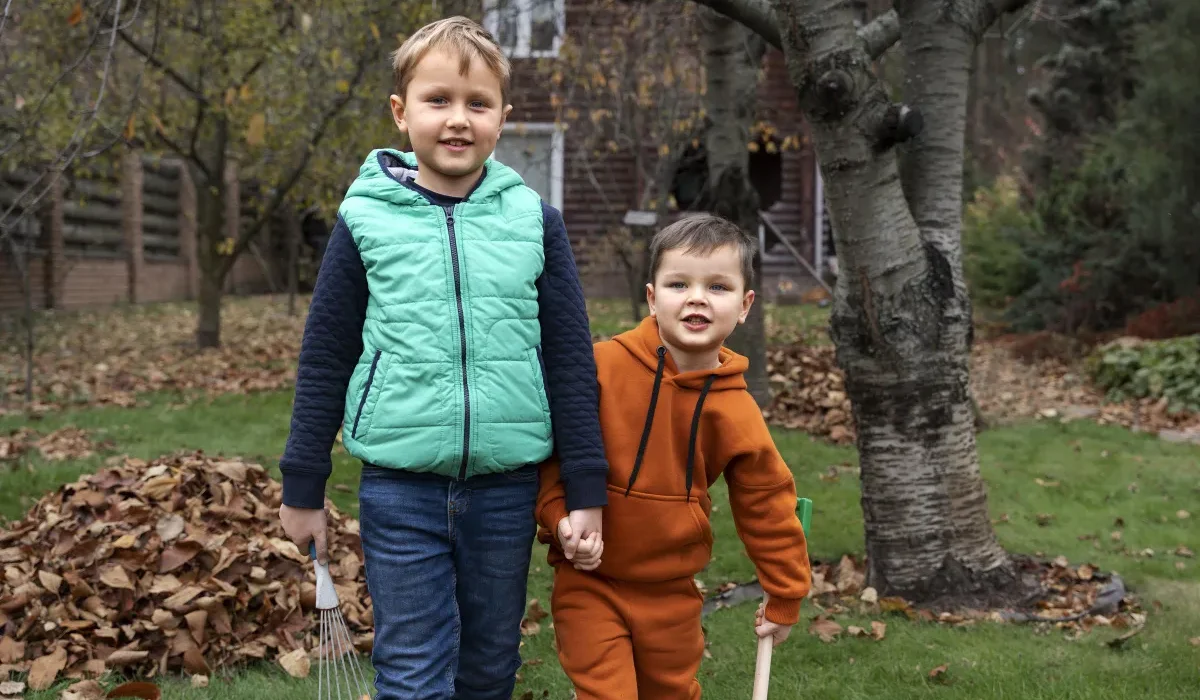
So most of the day is left to me. Liam is 9 and Noah is 7. School, snacks, homework, arguments, dinner, baths, bedtime, and then the next day all over again.
It’s exhausting, but honestly, my kids aren’t the problem.
They really love playing outside. As soon as someone shouts, “Playground?”, they throw down their tablets and run for their bikes.
They are loud sometimes, of course. They run around in front of the house, play tag, play ball with the neighborhood kids, or go down to the small playground at the end of the street. They don’t go into other people’s yards, they don’t poke at cars, they don’t kick balls at windows.
Sometimes they shout, laugh, yell “goal!” or “wait for me!”. Normal children’s voices. Not the kind of screaming that makes someone panic.
In a family neighborhood, this would be perfectly acceptable. Except that Debora lives here.
Deborah lives right across from us. She’s in her fifties, neat and tidy, with a bob haircut, and her clothes always match the flower beds. Her yard is immaculate, not a single leaf dares to stay there.
And she looks at my sons as if they were stray dogs.
I first really noticed her when the boys were racing their scooters in front of her house. Noah screamed with laughter because Liam almost crashed into a trash can. I was standing on the porch, smiling, when Deborah’s shutters flew open. She stared at me as if someone had just broken her window.

I told myself, okay, she’s grumpy. Every street has one.
But it didn’t go away. When the kids were outside, I always saw movement behind the shutters. Curtains fluttering, a figure behind the storm door. She was watching. Judging.
One afternoon, Liam and Noah were playing soccer on the grass in front of our house. I was sitting on the porch with a lukewarm cup of coffee.
“Mom, look at this shot!” Liam shouted.
Noah screamed as the ball went wide.
And then I saw Deborah crossing the street, heading toward us.
“Excuse me,” she said. Her voice was tense, as if she were deliberately clenching it.
I stood up. “Hi, is there a problem?”
She smiled, but her eyes didn’t smile. “The screaming,” she said. “The children shouldn’t be screaming outside. It’s not appropriate.”
I blinked. “They’re playing,” I replied. “They’re not even near your yard.”
“It’s very disturbing,” he said. “I moved here because it’s a quiet street.”
I looked around at the chalk drawings, the basketball hoops, the bicycles. “This is a family neighborhood,” I said slowly. “Almost every house has children.”
He clenched his jaw. “Just keep them under control, please.”
With that, he turned and walked away as if he had done something heroic.
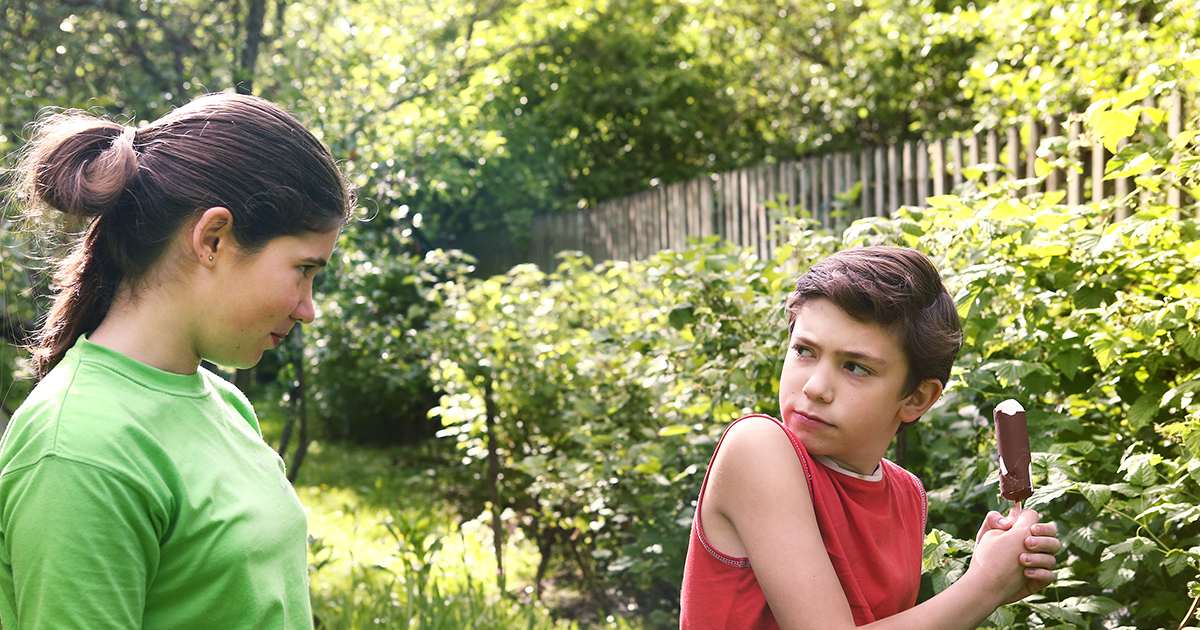
The boys looked at me blankly.
“Are we in trouble?” Noah asked.
“No,” I said. “Everything’s fine. Go play.”
I tried to let it go. I didn’t want a neighborhood war. I didn’t want my kids to feel like criminals just for laughing outside.
I pretended not to see the stares from behind the blinds. The peeking through the storm door. The dramatic sighs when she walked to her car and the boys rode their bikes nearby.
I thought she would get tired of it.
He didn’t.
Last week, however, I reached my limit.
The boys wanted to go to the playground with Ethan, who lives three houses down. I watched them walk down the sidewalk. It’s only a two-minute walk. I could still see them from the porch for a while.
The playground is small, and there are almost always parents there.
I went back to the kitchen and started loading the dishwasher when my phone rang.
It was Liam.
I answered. “Hi, what’s up?”
“Mom… the police are here.”
My breath caught in my throat. “What? Where are you?”
“At the playground. They’re talking to us. Can you come?”
“I’m on my way,” I said. “Stay there, don’t go anywhere.”
I put everything down and ran.
When I got there, my sons and Ethan were standing by the swings. Two police officers were a few steps away from them. Noah’s eyes were glistening with tears. Liam looked as if he had forgotten to breathe.
“Ma’am?” one of them called out. “Are you their mother?”
“Yes,” I replied, panting. “What’s going on?”
“We received a report about unsupervised children,” he said. “The caller also said there was suspicion of drug use and uncontrollable behavior.”
I just stared at him. It was as if the sentence had bounced off my head.
“Drugs?” I repeated. “They’re seven and nine years old.”
The police officer shrugged wearily. “We have to respond to every call.”
I pointed to our house. “We live there. I saw them walking away. There are other parents here. I was home the whole time.”
He looked around. Strollers, parents, normal playground noises.

The other cop’s face softened. “They seem fine to me,” he said quietly.
They asked a few more questions, then let it go.
“Will we be okay?” whispered Noah, tugging at my shirt.
“Yes, buddy,” said the second officer. “Someone called us, that’s all.”
I tried to stay calm. “What about the caller?”
The first officer sighed. “There’s not much we can do. He says he was worried. They have the right to make a phone call.”
“They,” I repeated.
He didn’t give a name. He didn’t need to.
When I turned around, I saw the curtains move in the house across the street. Deborah was watching.
That evening, Mark walked through the door and I was waiting for him.
“Deborah called the police on the kids,” I blurted out.
He froze. “What?”
I told him everything. The phone call. The playground. The word “drugs” hanging in the air. The boys’ faces. The phrase, “You have the right to make a phone call.”
By the time I finished, my hands were shaking again.
“She said they might be doing drugs,” I said. “Our kids.”
By the time I finished, my hands were shaking again.
“He said they might be doing drugs,” I said. “Our children.”
Mark stared at me. “They’re seven and nine,” he said slowly.

“And he said he could call again anytime,” I added. “As many times as he wanted.”
There was silence. His jaw tightened.
Then he asked, “What do you want to do?”
“Cameras,” I said. “Outside. In the front yard, on the sidewalk, on the street. Everything in sight. Everything should be recorded.”
He didn’t argue.
“Okay,” he said. “You buy them tomorrow, and I’ll install them after work.”
The next morning, after dropping the kids off at school, I didn’t go home. I went in and stood among the security cameras, looking for something unusual. Finally, I bought two outdoor cameras and a doorbell camera. Nothing fancy, just something that would clearly record.
Mark installed them that evening.
Noah sat on the stairs and asked again, “Are we in trouble?”
“No,” I replied. “Someone else will be in trouble. These will help prove it.”
He nodded as if it made perfect sense and went back to counting screws.
The next day, the real nerve-wracking began.

The boys came home, ate quickly, and were about to rush out.
“Stay on our street,” I said. “If you go to the playground, let me know first.”
They jumped on their bikes and disappeared around the corner.
I sat out on the porch and opened the camera app on my phone.
Less than ten minutes later, I got a notification from the doorbell camera.
Deborah stepped out onto her porch and stared at the kids. She didn’t call, she just watched, her face stern.
Later, when the boys screamed because of some bug, the camera also captured the curtains moving.
The same thing happened over the next few days.
Children laughing, curtains moving. A ball bouncing, a door opening. A bicycle bell ringing, Deborah stepping out, looking around, going back inside.
All on camera.

By Friday, I was tense, but ready.
That afternoon, Liam ran up the driveway. “Mom! Ethan is at the playground. Can we go?”
“Yes,” I said. “Take your brother with you and stay where I can see you on the camera.”
They left. I left my phone on the counter with the live feed on and wiped down the kitchen counter.
The doorbell camera signaled again.
I pressed it.
Deborah was standing on her porch, phone in hand, looking straight at the playground.
My heart skipped a beat.
“Don’t do it,” I muttered to my phone.
Then she lifted the phone to her ear.
I started recording the screen.
I recorded her standing, talking, watching. Then I switched to the other camera, which showed the street and the edge of the playground.
The kids were running around. Noah was chasing a ball. Liam was laughing with Ethan. Nothing dangerous. Nothing wild. Just kids.
Twenty minutes later, a police car turned onto our street.

I took a deep breath, grabbed my phone, and walked over to the playground.
The same officer who had responded last time got out of the car. He looked tired.
“Ma’am, we’ve received another call,” he said.
“From Deborah?” I asked.
He didn’t say anything, but his gaze shifted to the house across the street.
Deborah was already standing outside in her driveway, arms crossed, clearly waiting for “justice to be served.”
“Before we replay this,” I said, “I want to show you something.”
He frowned. “Okay.”
I pulled up the screen recording and handed him the phone.
First clip, Deborah on the porch, phone to her ear, eyes on the kids.
Second clip, the playground, a completely normal scene.
He watched it and his face tensed.
“Do you have more footage like this?” he asked.
“Yes,” I said. “From the whole week. She always watches them when they’re outside. Last time she said they might be drug addicts. My sons are afraid of her.”
He nodded and walked over to Deborah.

I stayed by the swings, but I was close enough to hear what was happening.
“Ma’am,” the police officer addressed her. “We saw video footage from the neighbors’ cameras.”
Deborah blinked. “Footage?”
“Yes. Of you standing outside, watching the children, and calling us when nothing dangerous is happening.”
“That doesn’t matter,” she snapped. “It’s still disturbing. I have a right to peace and quiet. They’re screaming all the time.”
The other police officer, who had been silent until then, folded his arms. “They’re on the playground,” he said. “Kids are loud.”
Deborah snorted. “Not like this. They’re screaming like animals. This isn’t normal.”
A nearby mother said in a low voice, “Are you serious?”
Another parent said more loudly, “They’re children, not monks.”
Deborah shook her head as if she had just realized that others could hear her.
The first police officer remained calm. “You have the right to call if you see a real danger,” he said. “But these repeated calls, without evidence, without an emergency, without a crime…”
He paused for a moment.

“This is misuse of the emergency number.”
Deborah’s face turned red. “I’m not abusing anything. I’m reporting what I hear.”
“There are children playing on the recording,” said the second police officer. “If we get another call like this, it could result in a fine for a misdemeanor. Do you understand?”
Deborah was angry and felt cornered.
“Fine,” she spat. “I won’t call again. But if something happens, it’s on you.”
She turned on her heel, stormed out, and slammed the door.
The first police officer came back to me.
“You did the right thing by documenting it,” he said quietly. “If she calls again, save these videos.”
“Thank you,” I replied. “Last time, my boys thought they were in trouble with the police.”
He shook his head. “They’re not in trouble. They’re kids. Tell them that.”
The next week was surprisingly calm.
The kids were back outside playing, riding bikes, playing tag, and kicking soccer balls in front of the houses.

Deborah’s blinds remained closed.
There was no more conspicuous peeping, no staring from behind the door, no phone in her hand when my sons laughed.
On the third day, Noah ran up to me, sweaty and grinning.
“Mom, did the mean lady go away?” he asked.
“No,” I said. “She still lives here.”
He furrowed his brow. “Then why isn’t she angry anymore?”
I looked across the street at the closed curtains.
“Because,” I replied, “he realized that now others can see what he’s doing.”
That was all it took.
I didn’t yell at him. I didn’t make a scene. I didn’t start a neighborhood war.
I protected my children, gathered evidence, and remained calm.
Now, when my sons are outside laughing too loudly, my stomach doesn’t cramp up. Because what if Deborah picks up the phone again?

It won’t be me on the defensive, it will be her.
Zamraštil čelo. „Tak proč už není naštvaný?“
Podíval jsem se na ulici, na zatažené záclony.
„Protože,“ odpověděla jsem, „si uvědomila, že teď vidí i ostatní, co dělá.“
To stačilo.
Nekřičela jsem na ni. Neudělala jsem scénu. Nezačala jsem sousedskou válku.
Ochránila jsem své děti, shromáždila důkazy a zůstala klidná.
Teď, když jsou moji synové venku a smějí se příliš hlasitě, nemám žaludeční křeče. Co když Debora znovu zvedne telefon?
Nebudu to já, kdo se bude bránit, ale ona.


