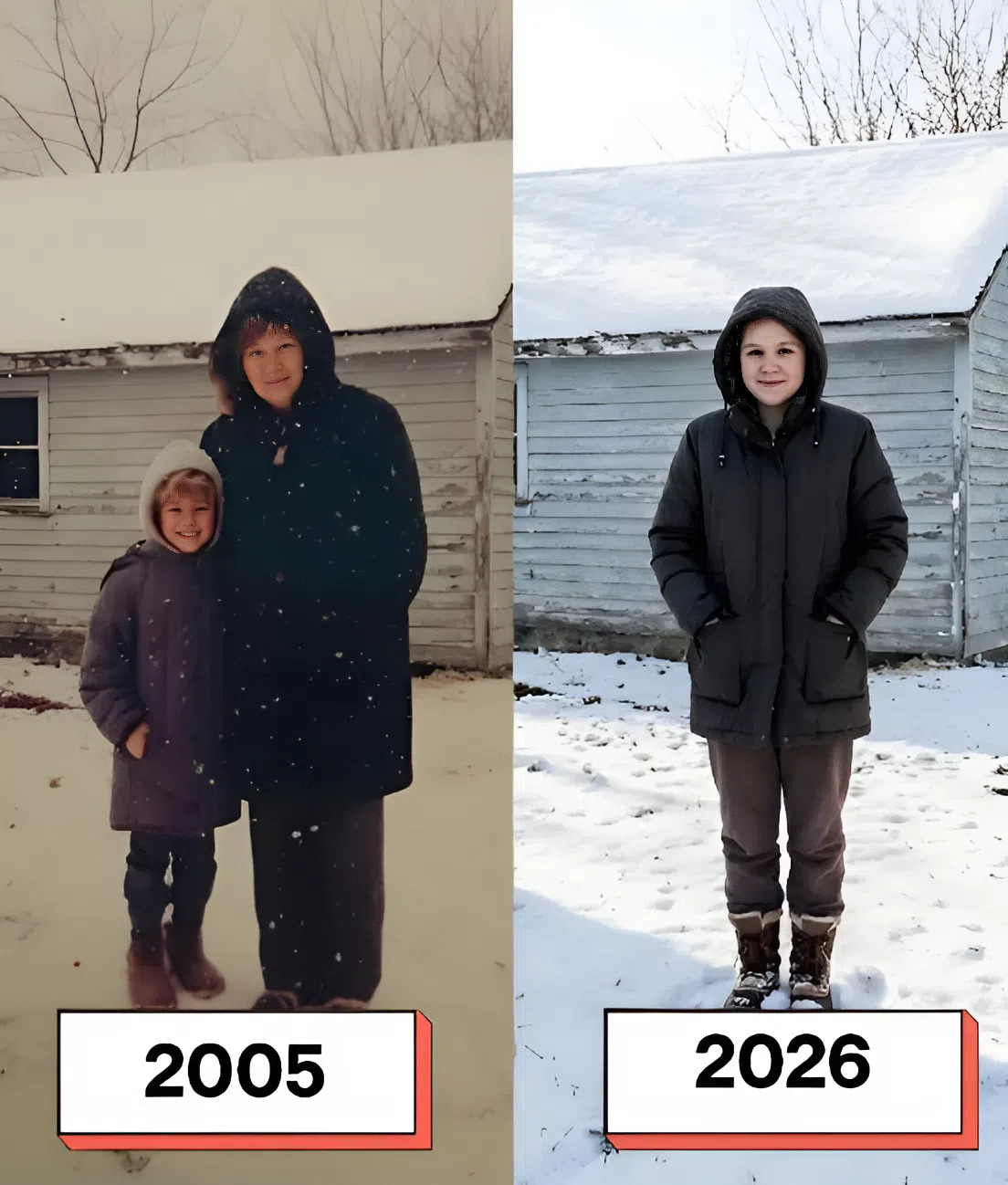
For as long as I can remember, Grandma Evelyn was my whole world. My father was hardly ever around, and my mother died when I was twelve — after the accident, the house suddenly felt empty and unfamiliar.
Then my grandmother took me in and didn’t just ‘take me in,’ she raised me as if I were her own daughter. Her small house on the outskirts of town seemed like a quiet fortress: a swing in the yard, the smell of cinnamon pies, night-time conversations in the kitchen when it was dark outside and the tea was cooling in our cups.
Behind the house was a neat vegetable garden, and a little further away was an old basement with heavy metal doors. These doors always remained locked. Not only was I not allowed to go down there, I wasn’t even allowed to go near it. It was her only rule, spoken without threats, but in such a way that I didn’t want to argue.
Home was a place where I felt safe.
My grandmother’s care was my main refuge after losing my mother.
The basement door was the only ‘off-limits’ area in our house.
‘Darling, there are old dangerous things in the basement. You could hurt yourself, so the door is closed,’ she said calmly, as if it were a simple household rule. I nodded and asked no more questions. As a child, it’s easy to accept other people’s boundaries if you trust them with all your heart.
Years passed. I moved to the city when I met my fiancé, Noah. But my connection with my grandmother remained strong: almost every weekend I would return to her — to help around the house, to laugh, to sit with her. These trips were my way of maintaining stability in a world that had taught me to lose too early.
A few months ago, my grandmother fell ill. It all happened quietly and quickly — without loud words or drama, as if she had simply grown tired and decided to rest. She was gone, and the emptiness left after the funeral was so dense that even the air in the house seemed different.
Sometimes the hardest thing is not saying goodbye, but returning to the place where a person was alive just ‘yesterday.’

After the ceremony, Noah and I went to her house to sort through her belongings. My grandmother had lived there for four decades, and every shelf, every box held a little piece of history. Packing it into boxes and labelling them with a marker was almost unbearable — it was as if I were packing away my own memories to put them somewhere.
When we finished the bedrooms, I stopped in the hallway at that very door to the basement. It remained locked — as always. And at that moment, the thought really struck me for the first time: I had never seen the key. Not once.
‘We should probably open the basement,’ I said to Noah. ‘Maybe there are some of Grandma’s things in there that need to be sorted out.’
We couldn’t find the key among the bundles and boxes.
The door looked as if it hadn’t been opened in a very long time.
Curiosity mixed with guilt and anxiety.
We had to pick the lock. The metal didn’t give way immediately: Noah fiddled with it until the mechanism finally clicked, as if reluctantly giving in. The doors opened heavily and slowly, and cold air rose from the darkness — damp, thick, as if from another time.
I turned on the light and stepped onto the stairs. Cobwebs hung in the corners, dust lay in a thick layer, and the silence sounded too loud. With every step inside, a strange feeling arose: both the anticipation of an answer and the fear of knowing it.
At the bottom, I froze. My throat felt tight, and my heart stopped beating for a second. What I saw was not ‘dangerous old things’ in the usual sense — not just junk or tools.
There were signs of a carefully hidden past: objects and boxes, neatly arranged as if they were returned to again and again, but at the same time not allowing anyone else to touch them. Some things looked very personal, like part of someone’s story, hidden not from prying eyes, but from pain.
At that moment, I realised that my grandmother was not so much ‘guarding the basement’ as guarding a secret.
‘My God… she hid it for forty years?’ I blurted out in a trembling voice. I didn’t scream out of horror — rather out of shock and the sudden realisation that my grandmother had lived next to me, smiled, baked pies, and carried something inside her that I knew nothing about.
I looked back at Noah, and I could see from his face that he too felt that we had accidentally crossed an invisible line. In the cool silence, it became clear to me that after the discovery in the basement, I would never be able to perceive our family history in the same way again. Ahead lay questions, answers, and difficult conversations — but the path back to ignorance was closed.
The bottom line: sometimes a ‘locked door’ in the house is not about security, but about a person’s attempt to hide what they have experienced and protect their loved ones from the painful truth. Going down to the basement, I saw not only my grandmother’s house for the first time, but also her silence — and I realised that my life was changing from that moment on.